History
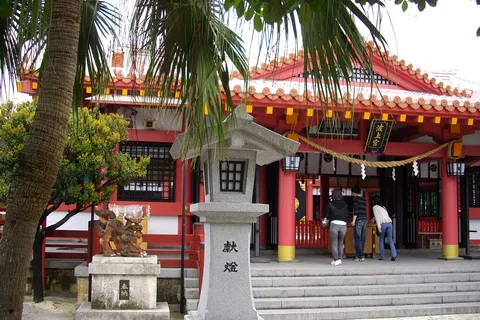
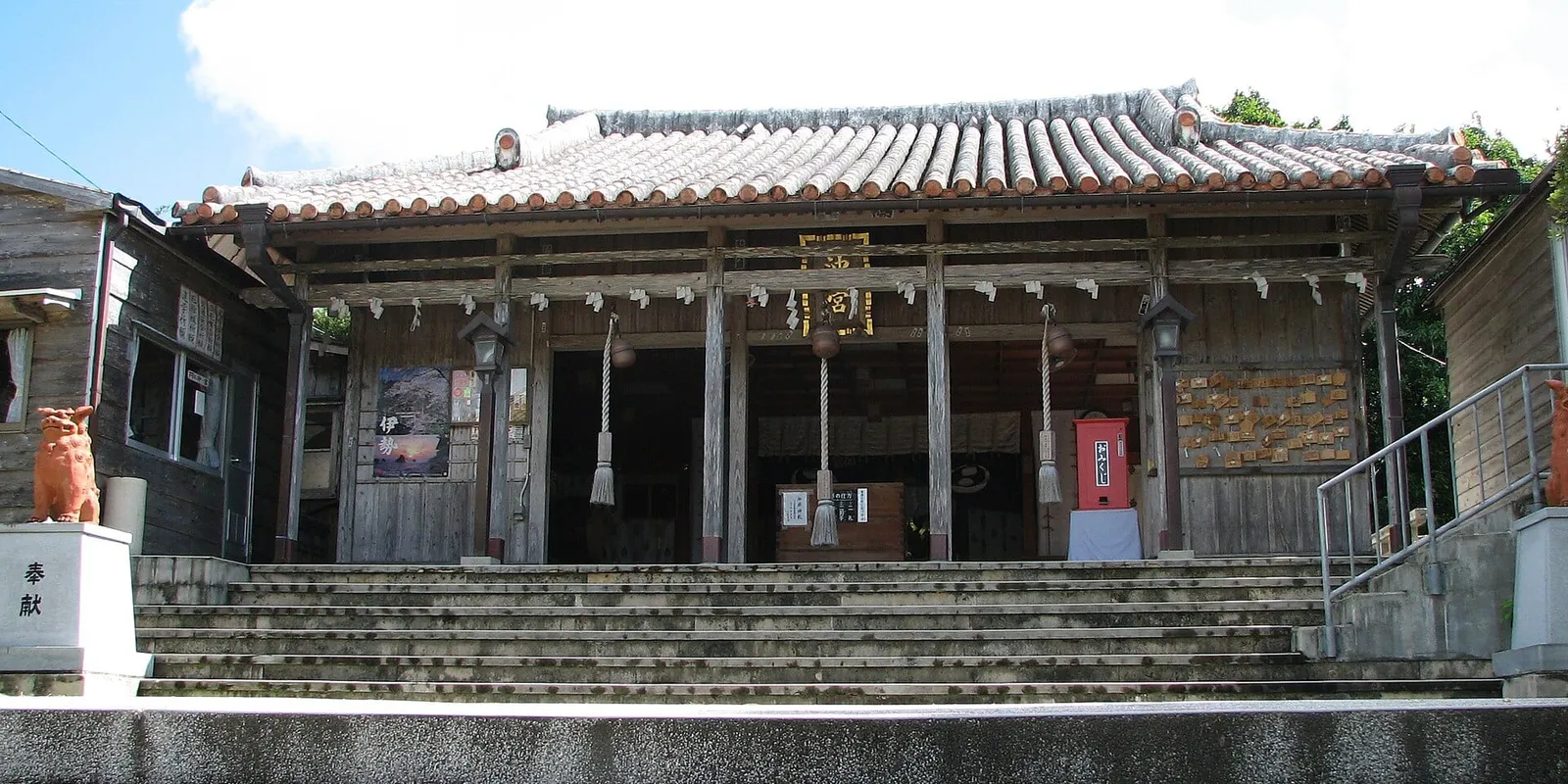
Okinogu is a shrine in 奥武山 Park in Naha, Okinawa. Its reading is not given on the official site; the reading above is from Japanese Wikipedia. According to the official site, the enshrined deities include Tenjukume Ryuguo-o Ongami (天受久女龍宮王御神), as well as Tenryu Oongami (天龍大御神, the “father deity”), Amekushin Otome-o Ongami (天久臣乙女王御神, the “mother deity”) and the Three Kumano Deities, and the chief deity Tenjukume Ryuguo-o Ongami is given as another name for Amaterasu Omikami. Japanese Wikipedia says the shrine is one of the Ryukyu Hassha and became an independent (tanritsu) shrine in 2020, ending its tie with Jinja Honcho.
The official history quotes the Ryukyu-koku Yuraiki (published by the Ryukyu royal government in 1713). Something glowing was seen in Naha Harbor, and the king, finding it strange, had it searched out. The dead tree that was pulled up was an extraordinary one, and it was enshrined in a shrine built for it as “truly a sacred tree of Horai.” After that, it is said, it was revered by the king and the people at large as the god of safe voyages enshrined at Naha Port. The official site adds that it was relied on in prayers for safe passage on the tribute ships to China, the tribute ships to Satsuma, and the island routes.
The date of founding is not consistent even within the official site. One passage says “the founding is unclear, but the Ryukyuan records place it in the time of Minamoto no Tametomo,” while another says a record puts it in 1451, in the reign of King Sho Kinpuku. This page therefore does not settle on a single founding date.
The shrine’s location has moved over time. Per the official site, it originally stood at what is now Naha Port, and in 1908 (Meiji 41), because of harbor construction, it was moved to the land next to the precincts of Asato Hachiman Shrine, one of the Ryukyu Hassha. The main hall was designated a National Treasure but burned down in World War II (the official site’s same page gives both “Showa 10” and “Showa 13 (1938)” for the designation). After the war it was temporarily moved to Todo-cho in 1961 and relocated in 1975 to its present place in 奥武山 Park.
Highlights
Besides the main hall, the grounds include Sumiyoshi Shrine, Yasaka Shrine, Benzaiten-gu, and the Gongen-do and ancestral spirits hall. The official precinct guide says the deities of the “twelve children of the age of the gods” (神代十二子) are enshrined here: those of rat, ox and tiger at Sumiyoshi Shrine; rabbit, snake, horse, sheep, monkey, rooster, dog and boar at Yasaka Shrine; and dragon at Benzaiten-gu. A route for visiting them in order is also shown.
天燈山 Utaki, behind the shrine, has a good view and, per the official site, overlooks the city of Naha. A divine message is said to say that the place where the chief deity descended and is enshrined is 天燈山, and a stone monument was erected there in 1957 (Showa 32). The official site also says that a 2012 field survey by the Japanese History Source Research Society confirmed a year and the words “Namu Amida Butsu” on an old stone monument carved with Sanskrit characters, making it the oldest monument in Okinawa bearing a Japanese era date.
The official site also presents Okinogu as a “holy site of karate.” It promotes “Karate Pilgrimage: Michi” and “Karate Kagura: Michi,” and its announcement says the 2025 autumn grand festival coincided with Karate Day and a karate festival was held at the same time. Amulets include one for Busaganashi, a martial-arts deity.
Visiting Tips
Prayer and purification requests are accepted the same day, 9:00 AM–4:00 PM, at the reception office on the left as you face the main hall. A service takes about 20 minutes, and booking through the official LINE account is also offered. Guideline offerings on the official site are from ¥3,000 for Shichi-Go-San; from ¥5,000 for general prayers, protection from misfortune, car purification, first shrine visits and similar; and from ¥10,000 for an individual business owner and from ¥30,000 for a company for business prosperity. Visiting hours themselves are not stated on the official site, and prayers may be unavailable during festivals and weddings, so it is safest to call the shrine office (098-857-3293) beforehand.
Limited-edition goshuin are announced one after another on the official site. The October 2026 Halloween goshuin and the August “Wish Wind Chime” goshuin are ¥1,000, and the May 4 Tenshabi special goshuin with a horse-oil set is ¥1,500. The fee and hours for the regular goshuin could not be confirmed on the official site. The site also has a page for “remote-worship goshuin,” through which goshuin and other items can be ordered.
To get there, it is about 10 minutes by monorail from Naha Airport, then a 3-minute walk to the first torii below the shrine (the official site writes the stop as 奥武山駅, but it is generally written 奥武山公園駅). During the Naha Festival and the Industrial Festival, vehicle entry into the park is restricted.
Annual Festivals
The following could be confirmed from the official site’s announcements and annual-events page.
- Monthly rites: Held on the 1st of each month in the solar calendar and on the 1st and 15th of each lunar month.
- Spring Grand Festival: The 23rd day of the third lunar month. In 2026 it was held on May 9.
- Autumn Grand Festival: Held on October 25 in 2025 (coinciding with Karate Day, with a karate festival at the same time) and on October 15 in 2026.
- New Year’s vehicle purification (January 11) / Golden Mochitsuki Festival (January 2): Announced as held in 2026.
- Summer Great Purification (June 30): In 2026 the figurines (人形) were burned on June 30.
- Kannon, Koshin and Ryujin festivals: Per the official site, held on the 18th (Kannon), 7th (Koshin) and 3rd (Ryujin) of the lunar month.
- Kodomo Oki no Mode: A monthly service for the children (up to junior high age) of members of the shrine’s supporters’ association.
- Okinogu Grand Cultural Festival (November): In 2026, as its second edition, a ballroom dance event (November 12–15) and a skateboard/BMX event are announced.
Dates mix the lunar and solar calendars and vary by year, so check the “News” section of the official site for the latest.
Nearby Food & Sightseeing
- 奥武山 Park: The park where Okinogu stands. Per the official site, it holds the 奥武山 General Athletic Park, Okinawa’s first athletic park (opened in 1959), with Okinawa Cellular Stadium Naha and a martial arts hall, and the stadium is where the Yomiuri Giants hold spring camp.
- Yomochi Shrine (奥武山): A shrine listed on Okinogu’s official site as a subordinate shrine, inside the park. The official site says 奥武山 has three shrines: Yomochi Shrine, Gokoku Shrine and Okinogu.
- Okinawa Gokoku Shrine: One of the three shrines of 奥武山 named on the official site (Gokoku Shrine).
Frequently Asked Questions
- Q. What are the visiting hours and when can I request a prayer?
- A. Visiting hours themselves are not given on the official site. Prayer and purification requests are accepted the same day, 9:00 AM–4:00 PM, at the reception office on the left as you face the main hall (they may be unavailable during festivals, weddings and similar). A service takes about 20 minutes, and booking through the shrine's official LINE account is also offered.
- Q. Can I get a goshuin at Okinogu?
- A. Yes. The official site announces many limited-edition goshuin by period: the October 2026 Halloween goshuin (through October 31) and the August "Wish Wind Chime" goshuin are ¥1,000, and the May 4 Tenshabi set is ¥1,500. The fee and hours for the regular goshuin could not be confirmed on the official site. What is offered changes over time, so check the latest announcements.
- Q. How do I get there, and is there parking?
- A. Per the official site, it is 10 minutes by monorail from Naha Airport plus a 3-minute walk to the first torii below the shrine (the monorail stop is generally written 奥武山公園駅). It is a 10-minute walk from Naha Port and a 35-minute walk from Tomari Port. No parking information was found on the official site. During the Naha Festival (October 10–12) and the Industrial Festival (October 23–25), vehicle entry into the park is restricted.
- Q. What kind of shrine is Okinogu, and what is its history?
- A. The official site says that, according to the Ryukyu-koku Yuraiki (published by the Ryukyu royal government in 1713), something glowing was seen in Naha Harbor, and the king had a dead tree retrieved that was deemed a sacred tree of Horai and enshrined in a shrine built for it. It was thereafter revered as a god of safe voyages by the king and the people at large. According to Japanese Wikipedia, it is one of the Ryukyu Hassha (eight shrines) and became an independent (tanritsu) shrine in 2020, ending its tie with Jinja Honcho.
- Q. What is its connection to karate?
- A. The official site presents Okinogu as a "holy site of karate" and promotes "Karate Pilgrimage: Michi" and "Karate Kagura: Michi." Its announcements say the autumn grand festival on October 25, 2025 coincided with Karate Day, and a karate festival was held at the same time with karate demonstrations offered.
Plan Your Visit
Before you go, you can book a stay and get your shrine-visit items ready.
Amazon links open Amazon.co.jp (Japan) in English; whether an item ships overseas depends on the product.
※ Contains ads (PR). Links open external sites such as Amazon, Rakuten, Trip.com and Booking.com.