History
Nogi Jinja enshrines General Nogi Maresuke, a Meiji-era army general, and his wife Nogi Shizuko. Nogi is remembered above all for commanding the Siege of Port Arthur during the Russo-Japanese War, a costly but ultimately successful campaign that made him a household name both in Japan and abroad. Later in life, he served as head of the Gakushuin Peers’ School, where he was involved in the education of the future Emperor Showa, then the crown prince.
The shrine’s founding traces directly to the events of September 13, 1912, the day of Emperor Meiji’s state funeral. That evening, moments after the cannon signaling the departure of the imperial hearse from the palace was fired, Nogi and his wife took their own lives at their residence in an act of ritual loyalty to their departed sovereign, known as junshi. This act, virtually unprecedented in modern Japan, sent shockwaves through society, and many who were moved by the couple’s devotion began calling for a shrine to honor their memory.
Baron Yoshiro Sakatani, then mayor of Tokyo, organized the Chuo Nogi-kai society to lead the effort, and a small shrine was first established within the grounds of the Nogi residence. Formal approval to establish a full shrine followed in 1919, and on November 1, 1923, Nogi Jinja was consecrated on the very site where the couple had lived. Nogizaka Station, the nearest train station today, takes its name from the shrine.
Highlights
One of the most significant features on the grounds is the Former Nogi Residence, preserved within the adjoining Nogi Park. Built in 1902, the house is one of the few surviving examples of Meiji-era Japanese-Western hybrid residential architecture, and its modest, understated design offers a glimpse into Nogi’s personal character. It is also the site where the couple ended their lives, and while the interior is generally closed to the public (opening only for special exhibitions), visitors can view the exterior.
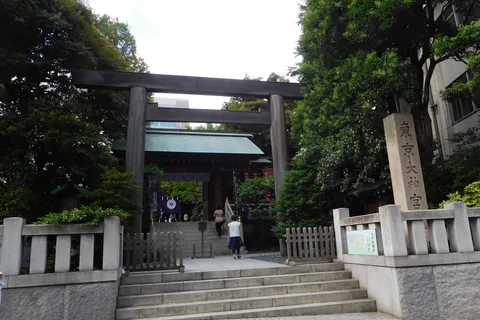
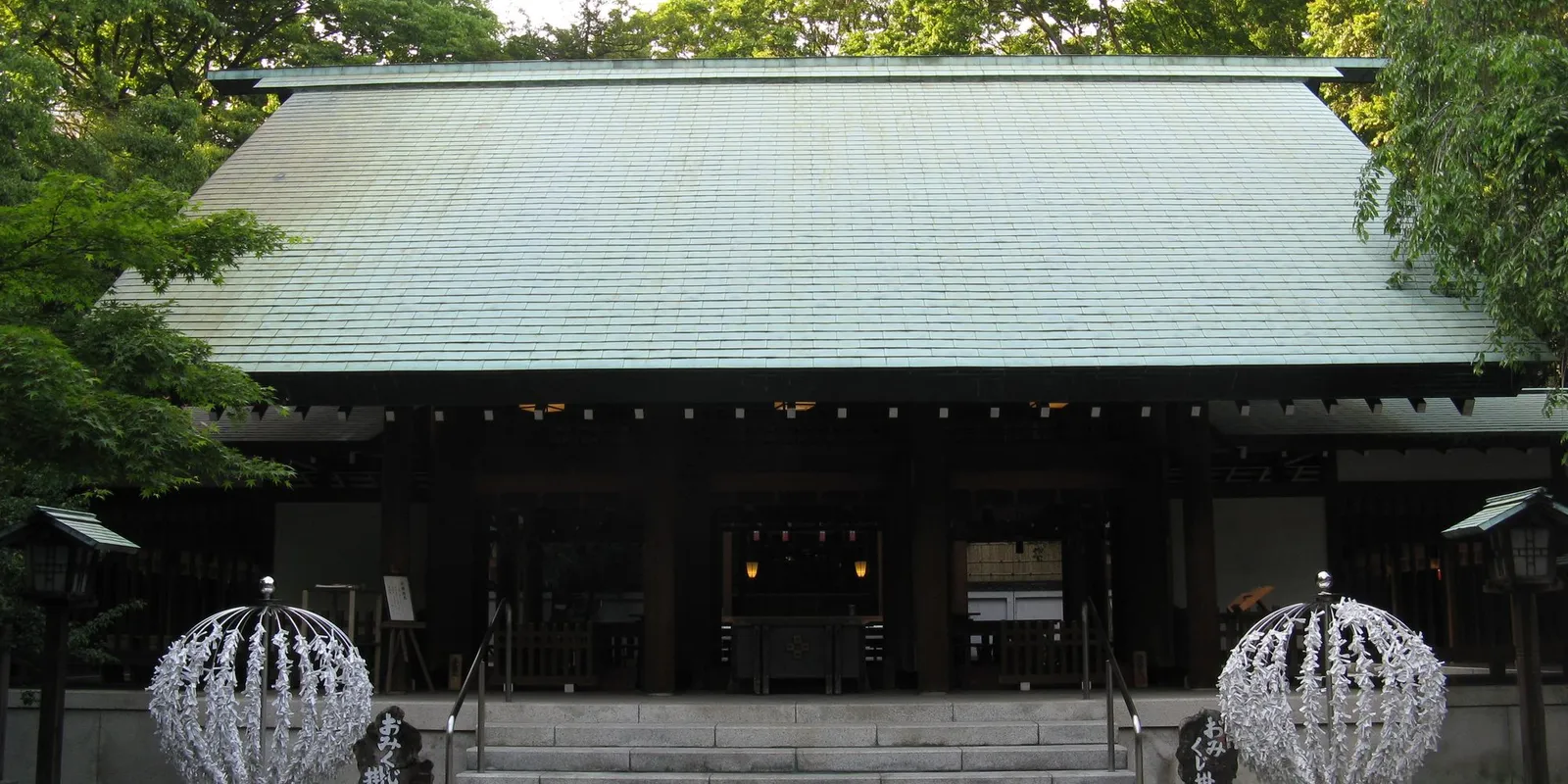
The main hall is built in the shinmei-zukuri style, and despite its central Tokyo location, the shrine grounds retain a notably tranquil atmosphere. Within the precincts stand two subsidiary shrines: Seisho Jinja, dedicated to Yoshida Shoin and other reform-minded figures from the last years of the shogunate, and Akasaka Oji Inari Jinja, both worth visiting alongside the main shrine. The shrine is also known for its plum trees, and a seasonal amulet called the “Plum Fragrance Charm” is offered each spring when the blossoms are in bloom, drawing additional visitors during that period. The Nogi couple’s grave lies at Aoyama Cemetery in nearby Minami-Aoyama, where a memorial service is also held each year on the shrine’s main festival day.
Visiting Tips
Nogi Jinja’s location, just a minute’s walk from the exit of Nogizaka Station on the Tokyo Metro Chiyoda Line, makes it one of the most accessible shrines in central Tokyo. Despite sitting in the fashionable Aoyama and Akasaka district, the grounds are lushly wooded and quiet, offering a welcome contrast to the surrounding city.
The shrine is known for blessings related to marital harmony and good relationships, drawn from the historical account of the Nogi couple’s shared devotion and their decision to face death together. It’s worth remembering that this is a solemn and historically significant story, not merely a curiosity, and visitors are encouraged to approach the shrine with an appreciation for its historical weight. Wedding ceremonies are held on the grounds, reflecting the shrine’s association with marital bonds, and it is a popular choice for couples marking anniversaries. As there is no visitor parking, plan to arrive via Nogizaka Station.
Annual Festivals
- Main Festival (September 13): The most important observance at Nogi Jinja, held on the anniversary of General Nogi and Shizuko’s deaths, with an accompanying memorial service at their grave in Aoyama Cemetery.
- Plum Blossom Season (February–March): A seasonal highlight when the shrine’s plum trees bloom, marked by the availability of a limited-edition “Plum Fragrance” amulet.
- Youth Study Programs: Held around the time of the main festival, these programs are organized to pass on the spirit of devotion associated with General Nogi and his wife to younger generations.
Nearby Food & Sightseeing
- Nogi Park and the Former Nogi Residence: The park adjoining the shrine, where visitors can view the exterior of the house where the Nogi couple lived, offering a deeper sense of the man behind the shrine.
- Tokyo Midtown: A large commercial complex an easy walk from Nogizaka or Roppongi Station, with restaurants, shops, and green garden space, convenient for a meal or some shopping after your visit.
- Aoyama Cemetery: One of Tokyo’s most prominent cemeteries, resting place of the Nogi couple and many other notable historical figures, with attractive greenery that also makes it a pleasant walking route.
Frequently Asked Questions
- Q. Who is enshrined at Nogi Jinja?
- A. Nogi Jinja enshrines General Nogi Maresuke, a Meiji-era army general, and his wife Nogi Shizuko. Nogi is best known for commanding the Siege of Port Arthur during the Russo-Japanese War. Following Emperor Meiji's death, the general and his wife took their own lives in an act of loyalty (junshi), and the shrine was founded to honor their devotion and the bond between them.
- Q. What are the visiting hours at Nogi Jinja?
- A. The shrine grounds are open from 6:00 to 17:00. The amulet office is open 9:30–17:00 on weekdays and 9:00–17:00 on weekends and holidays.
- Q. Can I receive a goshuin (shrine stamp) here?
- A. Yes, for ¥500 (a limited-edition version is ¥1,000), available from 9:00 to 17:00. Goshuin are also offered for the shrine's subsidiary shrines, Seisho Jinja and Akasaka Oji Inari Jinja.
- Q. Is there parking at Nogi Jinja?
- A. No visitor parking is available. The shrine is extremely convenient by train, just about a minute's walk from Nogizaka Station on the Tokyo Metro Chiyoda Line, so public transportation is recommended.
- Q. What is the Former Nogi Residence?
- A. It is the house where General Nogi and his wife actually lived, preserved within the adjoining Nogi Park. Built in 1902, it is one of the few surviving examples of Meiji-era Japanese-Western hybrid residential architecture, and is the site where the couple took their lives in 1912.