History
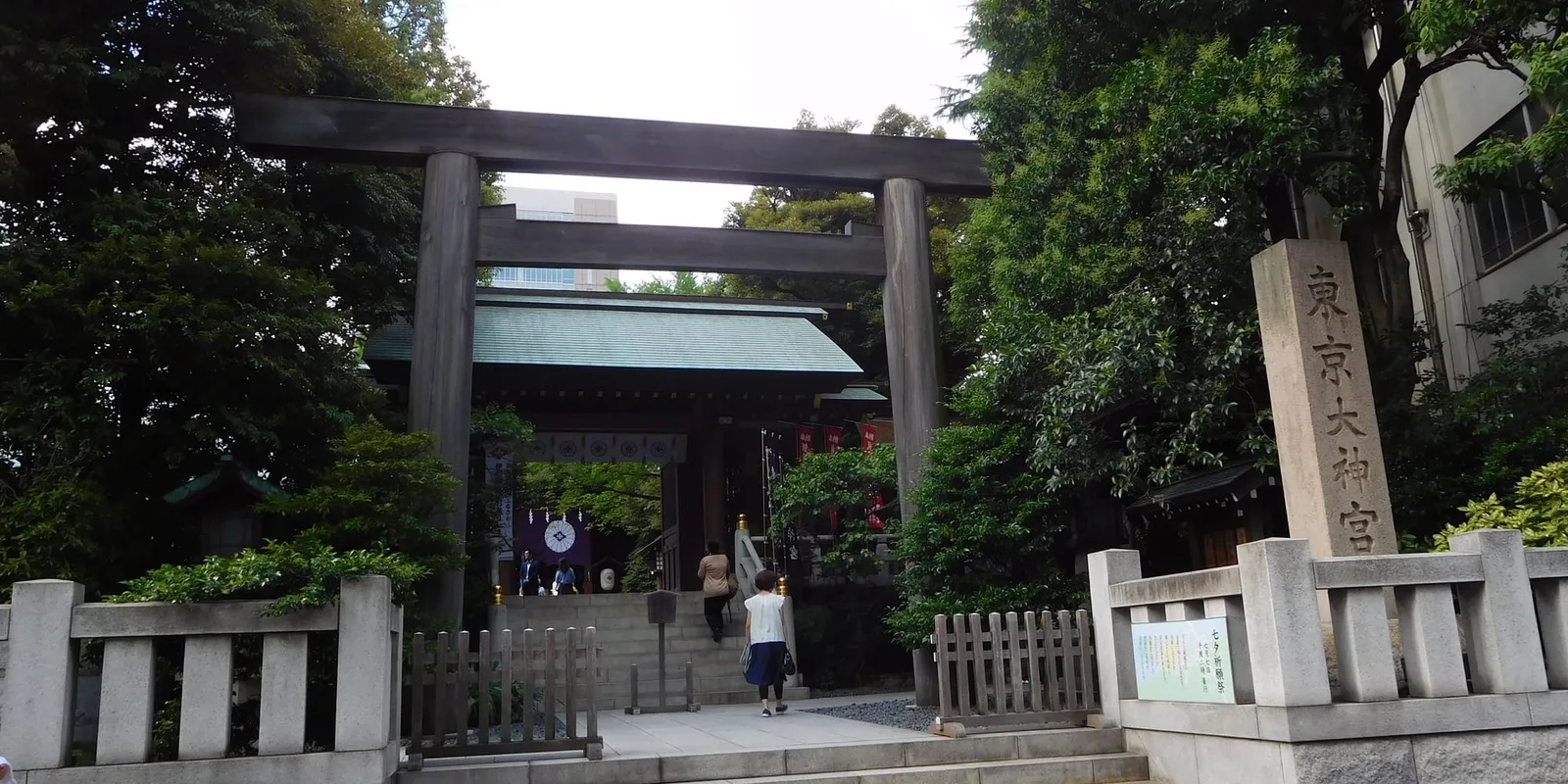
Tokyo Daijingu was founded in 1880 by imperial decree of the Meiji Emperor, established in the Hibiya district as a hall of distant worship where residents of Tokyo could pay their respects to Ise Jingu without making the long journey to Ise. Its principal deities are Amaterasu Omikami of the Inner Shrine at Ise and Toyouke Omikami of the Outer Shrine, worshipped alongside the Three Creator Deities and Yamatohime no Mikoto. Because it enshrines the very same deities as Ise Jingu, it became known as “Tokyo’s Ise Shrine,” and for generations it has served as a spiritual home for the people of Edo and Tokyo who could not travel all the way to Ise themselves.
The shrine’s buildings were destroyed in the Great Kanto Earthquake of 1923, after which it was relocated to its present site in Fujimi, near Iidabashi. It was known for a time as Iidabashi Daijingu before being renamed Tokyo Daijingu in 1946. In 1901, the shrine also became the first in Japan to hold a Shinto wedding ceremony open to the general public, modeled on the style used for an imperial wedding, earning it lasting recognition as the birthplace of the modern Shinto wedding.
Highlights
The greatest appeal of Tokyo Daijingu is the composed stillness of its grounds, tucked into a corner of central Tokyo’s office district, and the atmosphere of enmusubi — the bonds between people — that pervades the shrine. Because it enshrines the deities of Ise together with the Three Creator Deities, who govern the forces that bring all things into being and connect them to one another, the shrine draws a steady stream of young women hoping for romantic success and good relationships, with lines forming in front of the main hall on weekends. The shrine’s “enmusubi suzu” (matchmaking bell) charms and “koi mikuji” (love fortunes) are distinctive offerings found nowhere else.
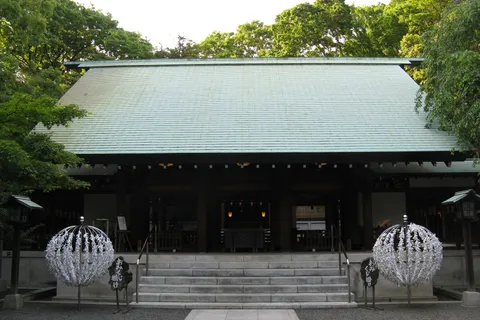
As the birthplace of the Shinto wedding ceremony, the grounds include a solemn ceremonial hall still used for weddings today, and on weekends visitors may spot brides in white kimono and grooms in formal montsuki hakama. The greenery that makes visitors forget they are in the heart of the city, paired with the refined elegance of the shrine buildings, continues to captivate all who visit.
Visiting Tips
The grounds are compact, so worship itself takes only 15–30 minutes, but allow extra time if you plan to queue for the enmusubi bell charms, love fortunes, or other amulets. The shrine gets especially crowded on weekends, on auspicious “taian” days, and around Valentine’s Day, so a weekday or early-morning visit is recommended. Goshuin stamps are available at the shrine office on the grounds from 9:00 AM to 5:00 PM.
Annual Festivals
- Setsubun Festival (February 3): A rite to drive away misfortune and pray for good health through the coming year, featuring a bean-scattering ceremony.
- Grand Festival (April 17): The most important festival of the year at Tokyo Daijingu, giving thanks for the deities’ blessings and praying for the prosperity of parishioners and worshippers.
- Tanabata Festival (July 7): A summer tradition inspired by the legend of the Weaver Star and Cowherd Star, drawing crowds who come to pray for good relationships and romantic fulfillment.
- Niiname-sai Harvest Festival (November 23): A festival of thanks for the year’s harvest, held in step with the imperial court’s own Niiname-sai rite.
Nearby Food & Sightseeing
- Cafe Rag Time: A jazz-filled coffee shop just a few minutes’ walk from the shrine, open since 1986 and perfect for a quiet break after paying your respects.
- Kagurazaka: A cobblestone district that still carries the atmosphere of its geisha-quarter past, lined with everything from traditional ryotei restaurants to modern cafes, within easy walking distance of the shrine.
- Yasukuni Shrine: One of Chiyoda’s best-known shrines, its grounds along Yasukuni-dori famed for cherry blossoms, and often visited together with Tokyo Daijingu on the same trip.
Frequently Asked Questions
- Q. What are the visiting hours?
- A. The grounds are open 6:00 AM–9:00 PM; the amulet office is open 8:00 AM–7:00 PM.
- Q. When is the goshuin office open?
- A. 9:00 AM–5:00 PM, for ¥500.
- Q. Is there parking?
- A. No dedicated parking lot — use nearby coin-operated parking.
- Q. Why is it known for matchmaking?
- A. It enshrines the Three Creator Deities, who are believed to bind and bring all things into being, making it a popular destination for prayers for romance and good relationships.
- Q. How do I get there?
- A. About a 3-minute walk from the west exit of JR Iidabashi Station.