History
Tradition traces the founding of Oasahiko Jinja back to the era of Emperor Jinmu. Amenotomi no Mikoto, grandson of Amenofutodama no Mikoto and guiding ancestor of the Imbe clan, is said to have led his clan’s ancestors to settle in Awa Province, where they spread the cultivation of hemp and paper mulberry, and enshrined their ancestral deity Amenofutodama no Mikoto here as “Oasahiko no Okami.” Sarutahiko no Okami is worshipped alongside as a second deity, and the shrine is listed as a Myojin Taisha in the Engishiki shrine registry compiled in 927, marking it as one of Awa Province’s most venerable shrines.
By the medieval period the shrine had become established as the ichinomiya, the highest-ranked shrine of Awa Province. During the Edo period it received deep patronage from the Hachisuka clan, lords of the Tokushima domain, who funded the upkeep of its buildings and rites. Revered as the overall guardian shrine (sokochinju) of both Awa and neighboring Awaji Province, it continues today to draw worshippers from across Shikoku and the Kansai region seeking protection from bad directions, protection from misfortune, and traffic safety.
Highlights
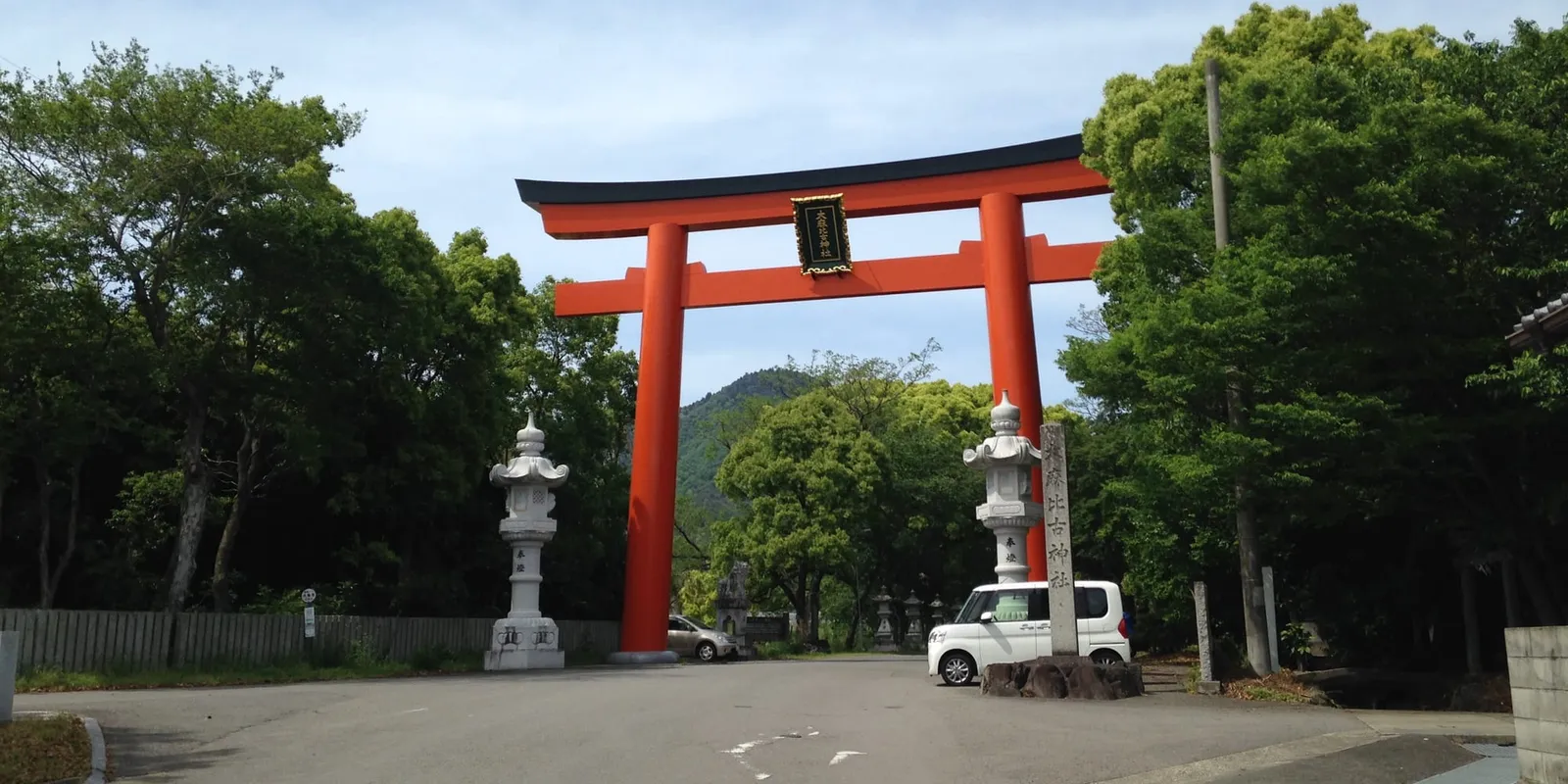
A grand torii gate roughly 14 meters tall marks the entrance to the grounds, and the approach path leading from it to the main hall runs beneath a stately avenue of pine and camphor trees. Within the grounds stands a sacred camphor tree believed to be over 1,000 years old, and worshippers regularly stop to pray before it, hoping to share in its vitality.
Tucked away deeper in the grounds is a quiet stone arch bridge known as the German Bridge (Doitsu-bashi, also called Megane-bashi). It is said to have been built around 1919 by German prisoners of war interned at the nearby Bando POW camp during World War I, as a token of gratitude before their repatriation, using German engineering techniques that hold the stones in place without mortar. Designated a historic site by Tokushima Prefecture, it survives today as a monument to the unusual chapter of Japanese-German exchange that took place here.
Visiting Tips
Visiting just the approach and main hall takes about 30 minutes, but allowing closer to an hour lets you also walk back to see the German Bridge. The approach path is mostly flat and covered in fine gravel, making it easy walking, and the sacred camphor tree is a pleasant spot to pause. Goshuin stamps are available at the shrine office from 8:00 to 17:00; the grounds draw more than 150,000 hatsumode visitors over the first three days of the New Year, so it’s worth allowing extra time if visiting then.
Annual Festivals
- New Year’s Visit (January 1–3): More than 150,000 worshippers visit over the first three days of the year, making this one of Tokushima’s most popular hatsumode destinations.
- Autumn Grand Festival: A local lion-dance preservation group performs a vigorous shishimai lion dance before the main hall as part of the shrine’s autumn rites.
- Nagoshi no Oharae (June 30): A purification rite marking the year’s midpoint, praying for good health through the remaining half of the year.
- New Year’s Festival (January 1): The year’s first major rite, praying for the peace and wellbeing of parishioners and worshippers in the year ahead.
Nearby Food & Sightseeing
- Naruto Kanko Kisen: Sightseeing boats that carry visitors up close to the Naruto whirlpools, among the largest tidal whirlpools in the world, in the strait just a short drive from the shrine.
- Otsuka Museum of Art: One of Japan’s largest art museums, displaying full-size reproductions of world masterpieces on ceramic board, about a 15-minute drive from the shrine.
- Funamoto Udon Oasa: A popular handmade-udon shop just next to Ryozen-ji, the first temple of the Shikoku pilgrimage, serving Naruto’s chewy local-style udon.
Frequently Asked Questions
- Q. What are the visiting hours at Oasahiko Jinja?
- A. The grounds are open 6:00–17:00 (the shrine office and goshuin reception are open 8:00–17:00).
- Q. When can I get a goshuin, and how much does it cost?
- A. Goshuin are available at the shrine office from 8:00 to 17:00, for ¥300.
- Q. Is there parking at Oasahiko Jinja?
- A. Yes, free parking is available on the grounds with space for about 1,000 cars.
- Q. What is the German Bridge (Doitsu-bashi) at Oasahiko Jinja?
- A. A stone arch bridge said to have been built around 1919 by German prisoners of war interned at the nearby Bando POW camp during World War I, using German engineering techniques that hold the stones together without mortar. It is designated a historic site by Tokushima Prefecture.
- Q. How do I get to Oasahiko Jinja?
- A. About 20–25 minutes on foot (or about 6 minutes by taxi) from Bando Station on the JR Kotoku Line, or by Tokushima Bus to the Oasa-jinja-mae stop, then about 6 minutes on foot.
Related Shrines
Kyoto Prefecture, Kita Ward, Kyoto
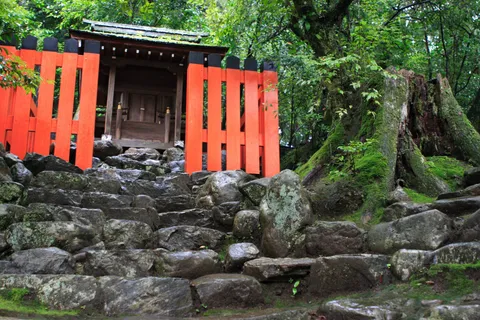
Kamigamo Jinja
Kamigamo-jinja
- Protection from Misfortune
- Protection from Lightning
- Protection from Bad Directions
Shiga, Otsu
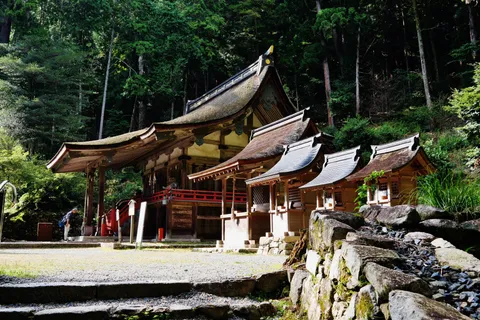
Hiyoshi Taisha
Hiyoshi Taisha
- Protection from Bad Directions
- Protection from Misfortune
- Good Fortune
Fukuoka, Dazaifu
Kamado Jinja
Kamado-jinja
- Good Relationships
- Protection from Bad Directions
- Protection from Misfortune