History
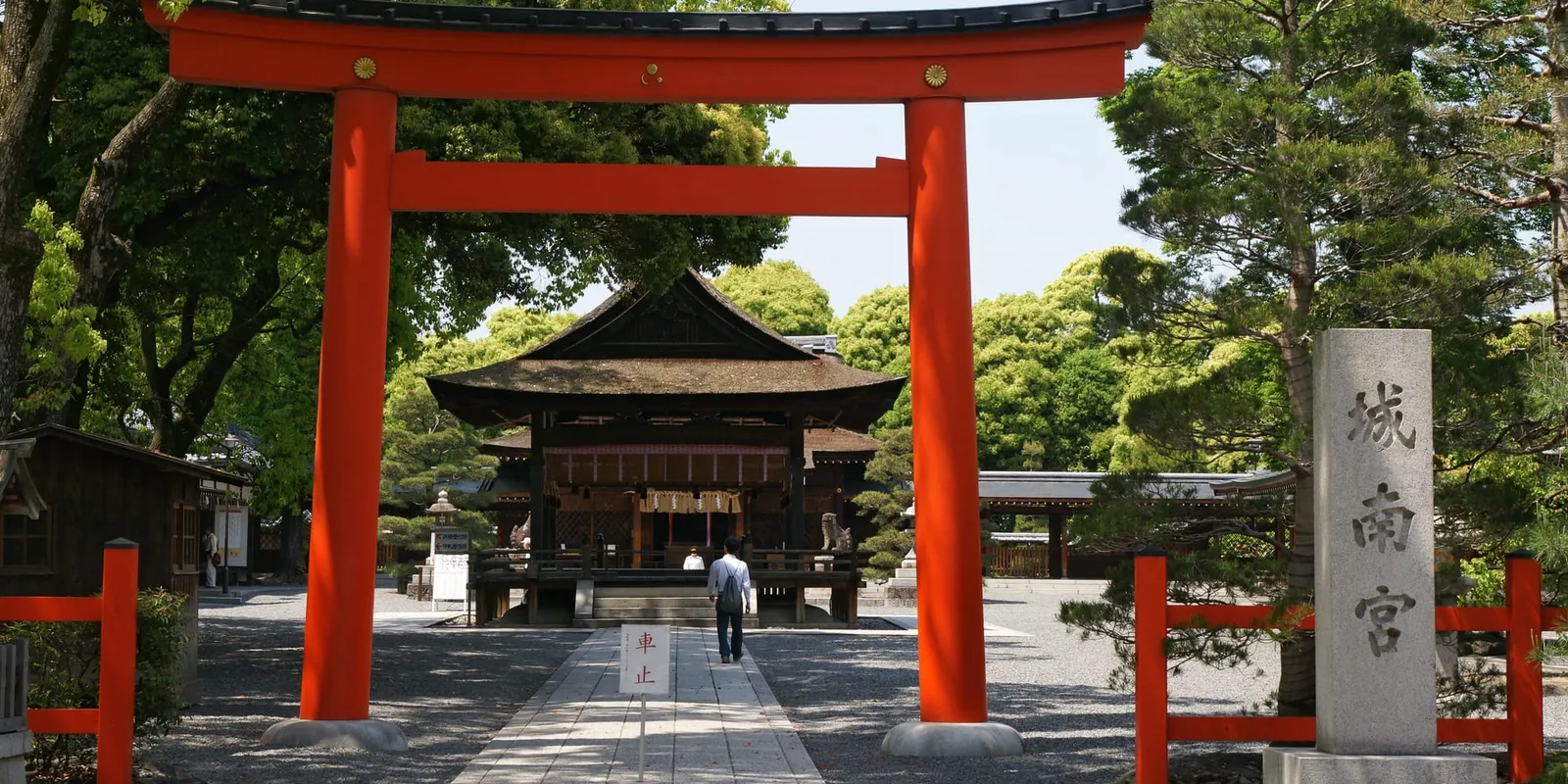
Jonangu stands in the Toba district of Fushimi-ku, Kyoto, and is known as the “great shrine of hoyoke” (protection from bad directions). According to tradition, when the capital moved to Heian-kyo in 794 (Enryaku 13), the deity Kuninotokotachi no Mikoto was enshrined together with Yachihoko no Kami (Okuninushi) and Okinagatarashihime no Mikoto (Empress Jingu) and venerated as “Jonan Daijin” to pray for the safety of the capital and the nation. The name Jonangu means “the shrine south of the Heian capital.”
In the late Heian period, Retired Emperors Shirakawa and Toba built the Jonan Detached Palace (Toba Rikyu) around the shrine, and it became a base for their cloistered rule. Jonangu was revered all the more as the palace’s guardian shrine, and the palace buildings were used as purification quarters before Kumano pilgrimages and as lodgings for “katatagae” (avoiding an unlucky direction by sleeping elsewhere first), so that retired emperors and nobles could pray to be spared from directional misfortune. For this reason Jonangu’s power over directional protection has been known since the Heian period. In 1221 (Jokyu 3), Retired Emperor Gotoba is said to have held a yabusame horseback-archery gathering at Jonangu to assemble warriors, a prelude to the Jokyu War.
Highlights
The shrine’s garden, “Rakusuien,” is also called the “Genji Monogatari Flower Garden” and is planted with more than 80 kinds of plants described in The Tale of Genji. Its origin lies in Retired Emperor Shirakawa building the Jonan Detached Palace inspired by Hikaru Genji’s mansion, the Rokujoin. Designed by the landscape architect Nakane Kinsaku, it consists of five gardens of differing character: Spring Mountain, the Heian Garden, the Muromachi Garden, the Momoyama Garden, and the Jonan Detached Palace Garden. The Heian Garden recalls a shinden-style aristocratic residence, with a pond and winding stream, and is the setting for the April 29 Kyokusui no Utage.
The garden is known for its seasonal flowers: camellias and weeping plums bloom on Spring Mountain (the Weeping Plum and Camellia Festival runs February 18–March 22), followed by cherries, wisteria, and azaleas from April to May. In autumn, about 120 maples across three gardens form the “Eight Scenes of Autumn Foliage,” usually at their best from mid-November to early December. About 130 varieties of camellia are grown, around 30 of which begin blooming in autumn.
Within the grounds, Mahataki Shrine, a small “shikinaisha” shrine listed in ancient records, is enshrined as a subsidiary shrine. Across the road, the site of the Toba Detached Palace is a national historic site, maintained as Toba Rikyu Park, where the original artificial hill “Autumn Mountain” remains. (Jonangu’s “Spring Mountain” was created later.)
Visiting Tips
Hoyoke prayer services are accepted from 9:00 AM to 4:00 PM without a reservation. People come from across Japan to pray for safety when moving, building, commuting, or traveling, and for protection from all-directions-blocked bad luck; a prayer talisman and a large tamagushi offering branch are presented. From July 1 to 7, a car purification ritual is held in which cars drive through a ring of reeds about 5 meters in diameter to pray for traffic safety.
The garden requires an admission fee, and the amulet office (9:00 AM–4:30 PM) and the garden’s last entry (4:00 PM) differ, so watch the time if you arrive late in the day. From July 1 to August 31 the fee drops to a flat ¥300, but only the northern “Spring Mountain and Heian Garden” areas are open during that period. In busy seasons such as the weeping plum season the parking lot fills early, so walking from Takeda Station on the Kintetsu Kyoto Line or Karasuma Line (about 15 minutes), or taking a bus or taxi from JR Kyoto Station, is convenient.
Annual Festivals
These are the main events from the official annual schedule for 2026–2027; dates and times may change, so check the official website.
- Gantan-sai (January 1) and Harai Kagura (January 1–3): A New Year ceremony, and a sacred dance in which shrine maidens ring bells to purify New Year visitors.
- Yudate Kagura (January 20, 3:00 PM): Shrine maidens with sashes tied back splash water from a large cauldron inscribed 1823 using bamboo leaves to drive off evil and pray for good health.
- Setsubun Festival (February 3, 9:00 AM): Ritual “Yumiya no Gi” (bow-and-arrow) and “Mameuchi no Gi” (bean-throwing) ceremonies, praying for protection from bad directions and misfortune and for household safety.
- Nanakusa-gayu Day (February 11, 10:00 AM–3:30 PM): The spring seven herbs, including seri, nazuna, suzuna, and suzushiro, are offered before the deity, and visitors eat seven-herb rice porridge (¥500 per serving) to pray for health and long life.
- Weeping Plum and Camellia Festival (February 18–March 22): Weeping plums and camellias bloom, centered on Spring Mountain.
- Kyokusui no Utage (April 29, 3:00 PM for about 50 minutes): In the Heian Garden, poets in Heian-period costume compose waka and sake cups float down a stream. Viewing requires advance application.
- Reisai (July 20) and Osuzumi Kagura (July 20, 6:00–8:30 PM): Shrine maidens perform a sacred dance as lanterns light the worship hall, with night stalls along the approach.
- Jonan Festival (third Sunday of October): A festival that has continued since the late Heian period, with three mikoshi processing through the parish from shortly after noon.
- Hitaki-sai (November 20, 3:00 PM): About 10,000 prayer sticks inscribed with visitors’ wishes are burned.
- Autumn foliage (mid-November to early December): The garden’s “Eight Scenes of Autumn Foliage” reach their peak.
Nearby Food & Sightseeing
- Toba Rikyu Park: A park on the site of the Toba Detached Palace built by Retired Emperor Shirakawa and others, where the original artificial hill “Autumn Mountain” remains. A good way to picture Jonangu’s origins.
- Fushimi Sake Brewery Area: The sake-brewing district of Fushimi, also introduced as a nearby attraction on Jonangu’s official website.
- Fushimi Inari Taisha: The head shrine of Inari shrines nationwide, famous for its thousands of torii gates and located in the same ward. Many visitors pair the two shrines.
Frequently Asked Questions
- Q. What are the visiting hours and admission fees?
- A. Amulets and goshuin are available 9:00 AM–4:30 PM, and prayer services are accepted 9:00 AM–4:00 PM. The Shinen garden (Rakusuien) is open 9:00 AM–4:30 PM (last entry 4:00 PM). According to the official fee table, adults (junior high and older) pay ¥800 and elementary students ¥500 in the regular period; ¥1,000 and ¥600 during the weeping plum and camellia festival (February 18–March 22); and a flat ¥300 from July 1 to August 31.
- Q. Can I get a goshuin at Jonangu?
- A. Yes, from 9:00 AM to 4:30 PM. The two regular types are Jonangu and Mahataki Shrine, at about ¥300 each (the official site does not list the amount, so this is based on visitor reports). Seasonal limited-edition goshuin and a cut-paper goshuin tied to the April 29 Kyokusui no Utage (¥1,000) are also offered.
- Q. Is there parking?
- A. Yes, free parking is available, with room for 160 cars and 20 large buses in normal periods. In busy seasons such as the weeping plum season the lot can fill by about 8:30 AM with waits of 60–90 minutes, so public transport is recommended.
- Q. What is hoyoke (protection from bad directions), and when do people pray for it?
- A. Hoyoke is a prayer to ward off misfortune from unknowingly traveling in an inauspicious direction or from a poor house layout. People pray for it when moving house, starting construction, commuting, traveling, or to remove "all-directions-blocked" bad luck. Prayer services are accepted 9:00 AM–4:00 PM and no reservation is needed.
- Q. When is Kyokusui no Utage held?
- A. Every year on April 29 (Showa Day), starting at 3:00 PM and lasting about 50 minutes, in the garden's Heian Garden. Poets in Heian-period dress compose waka beside a flowing stream. Viewing requires advance application, with details usually announced on the official website in early March.
Plan Your Visit
Before you go, you can book a stay and get your shrine-visit items ready.
Amazon links open Amazon.co.jp (Japan) in English; whether an item ships overseas depends on the product.
※ Contains ads (PR). Links open external sites such as Amazon, Rakuten, Trip.com and Booking.com.