History
According to shrine records, Shirahige Jinja was founded in the 25th year of Emperor Suinin’s reign, its shrine buildings said to have been established by the imperial princess Yamatohime no Mikoto, who is also credited with founding Ise Jingu. With a history stretching back more than 2,000 years, it is regarded as the oldest major shrine in Omi Province. Its enshrined deity, Sarutahiko no Okami, is said to have led the way for the heavenly grandson’s legendary descent to earth, and has long been worshipped as a “deity of guidance,” revered for blessings ranging from longevity and good relationships to the blessing of children, good fortune, academic success, and traffic safety.
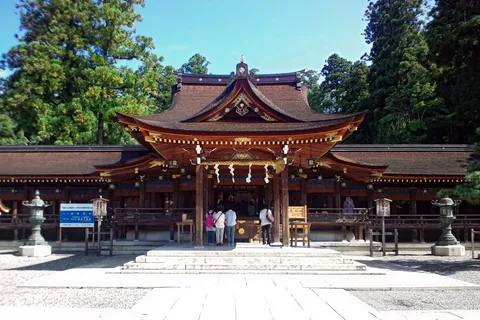
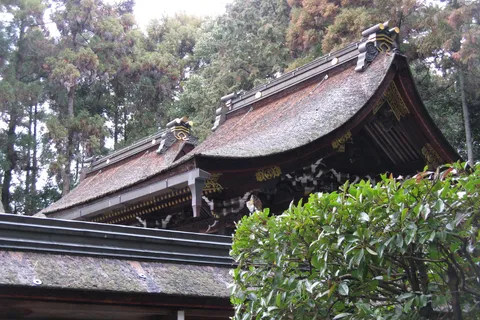
The shrine’s buildings were lost to fire during the wars of the Sengoku period, but were rebuilt at the direction of Toyotomi Hideyori, carrying out his father Hideyoshi’s dying wishes, with the project overseen by Katagiri Katsumoto. The present main hall, now a nationally designated Important Cultural Property, still reflects the Momoyama-era architecture of that reconstruction. As head shrine to roughly 300 Shirahige shrines found across Japan, its story has been woven deeply into local life for centuries, even appearing in the Noh play “Shirahige.”
Highlights
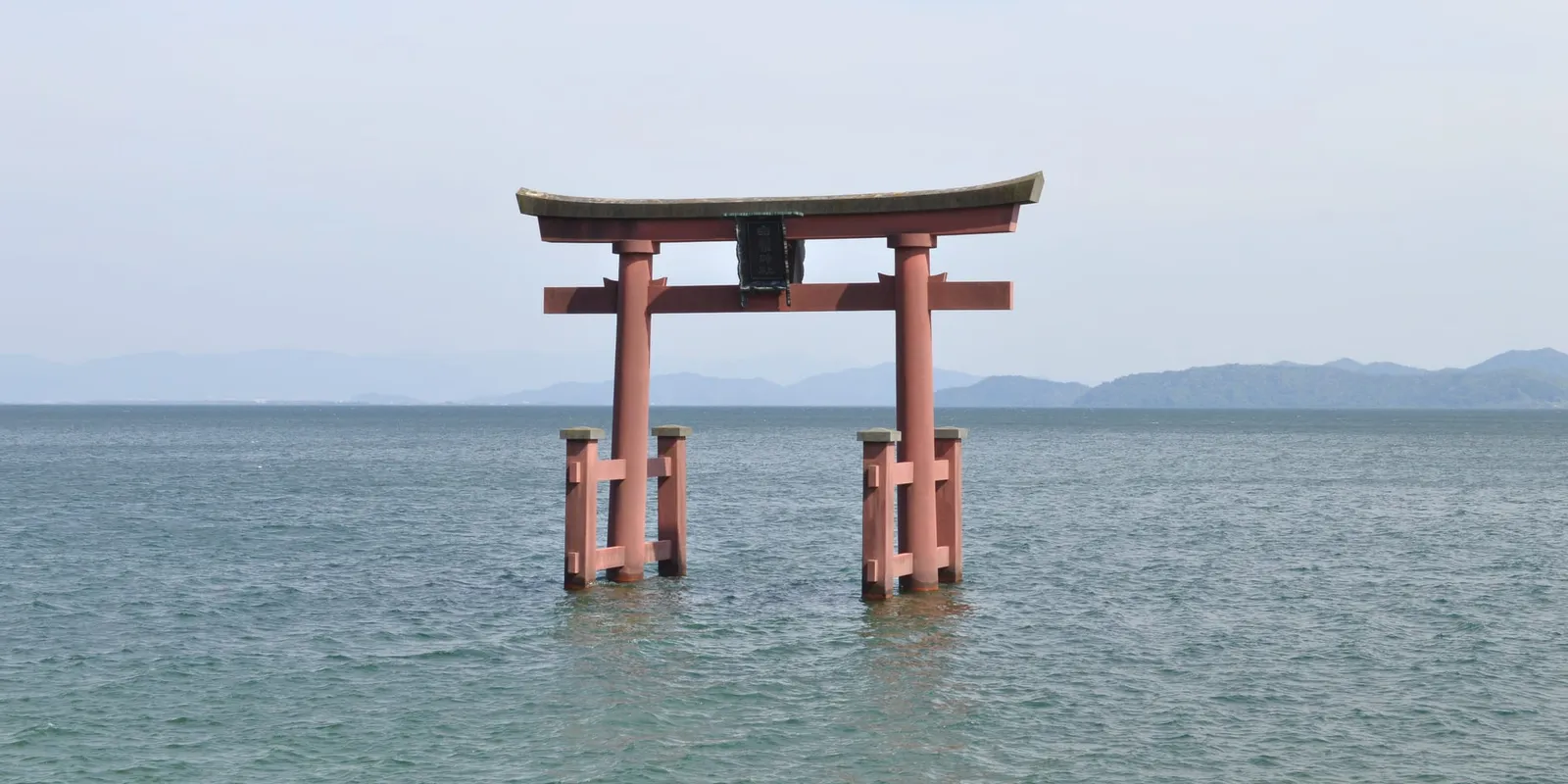
The single greatest highlight of Shirahige Jinja is its vermillion torii gate, standing in the waters of Lake Biwa on the far side of National Route 161 from the main shrine grounds. Rising serenely from the lake, it recalls the famous floating torii of Itsukushima Shrine in Hiroshima, earning Shirahige Jinja the nickname “Omi’s Itsukushima.” At sunrise, at sunset, or on days when the lake lies still, the torii’s reflection shimmers across the water in a truly breathtaking scene.
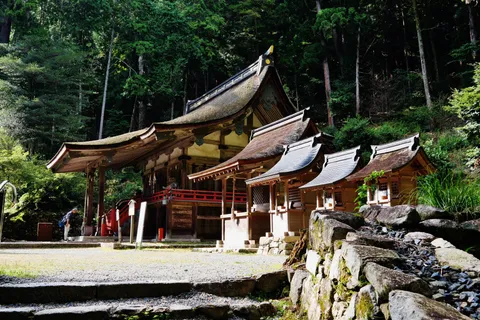
Beyond the main hall, a path leads up the mountainside behind the shrine to the “Kami-no-miya” (Upper Shrine), home to eleven smaller shrines, along with sacred rocks and subsidiary shrines connected to Sarutahiko no Okami. The setting itself, framed by Lake Biwa and the Hira mountain range, is a major draw, its ever-changing seasonal beauty attracting photographers and travelers alike.
Visiting Tips
Worship at the main shrine itself takes only 15–20 minutes, but allow 30 minutes to an hour if you want to properly view and photograph the lake torii from across the road. Traffic on National Route 161 passes very close to the torii, so take care when crossing or photographing near the gate. Goshuin stamps are available at the shrine office from 9:00 AM to 5:00 PM, and since free parking is available on-site, visiting by car is recommended.
Annual Festivals
- Grand Festival (September 5–6): The largest festival of the year at Shirahige Jinja, drawing worshippers from across the Lake Biwa region and beyond for rites held against the backdrop of the lake torii.
- Narukomairi: An age-old folk ritual praying for the healthy growth of two-year-old children, a fitting tradition for a shrine whose deity is revered for blessing children.
- Monthly Festival (every month): A monthly rite of thanksgiving for the deity’s blessings, offered for the safety and prosperity of parishioners and worshippers.
- New Year’s Festival (January 1): The shrine grounds, framed by the lake torii, fill with visitors making their first shrine visit of the year at sunrise.
Nearby Food & Sightseeing
- Shirahige Shokudo: A diner just south of the shrine, open since 1952, known for its unchanging pork miso soup and hearty noodle dishes made with it.
- Restaurant Kosairo: A casual eatery two to three minutes’ walk from the shrine with lake views, popular for its generously sized fried shrimp set meal.
- Shirahige Kissa: A small cafe two minutes’ walk from the shrine, whose second-floor seats offer a sweeping view of the lake torii, perfect for a rest after your visit.
Frequently Asked Questions
- Q. What are the visiting hours?
- A. The grounds are open to visitors at all times; the shrine office is open 9:00 AM–5:00 PM.
- Q. When is the goshuin office open?
- A. 9:00 AM–5:00 PM, for ¥300.
- Q. Is there parking?
- A. Yes, free parking is available (about 50 spaces; an overflow lot opens during busy periods).
- Q. Where can I see the torii in the lake?
- A. It stands in Lake Biwa just across Route 161 from the shrine — the best view is from the opposite side of the road. Watch for traffic when taking photos.
- Q. How do I get there?
- A. About a 40-minute walk from JR Omi-Takashima Station, or about 10 minutes by reservation shared taxi.