History
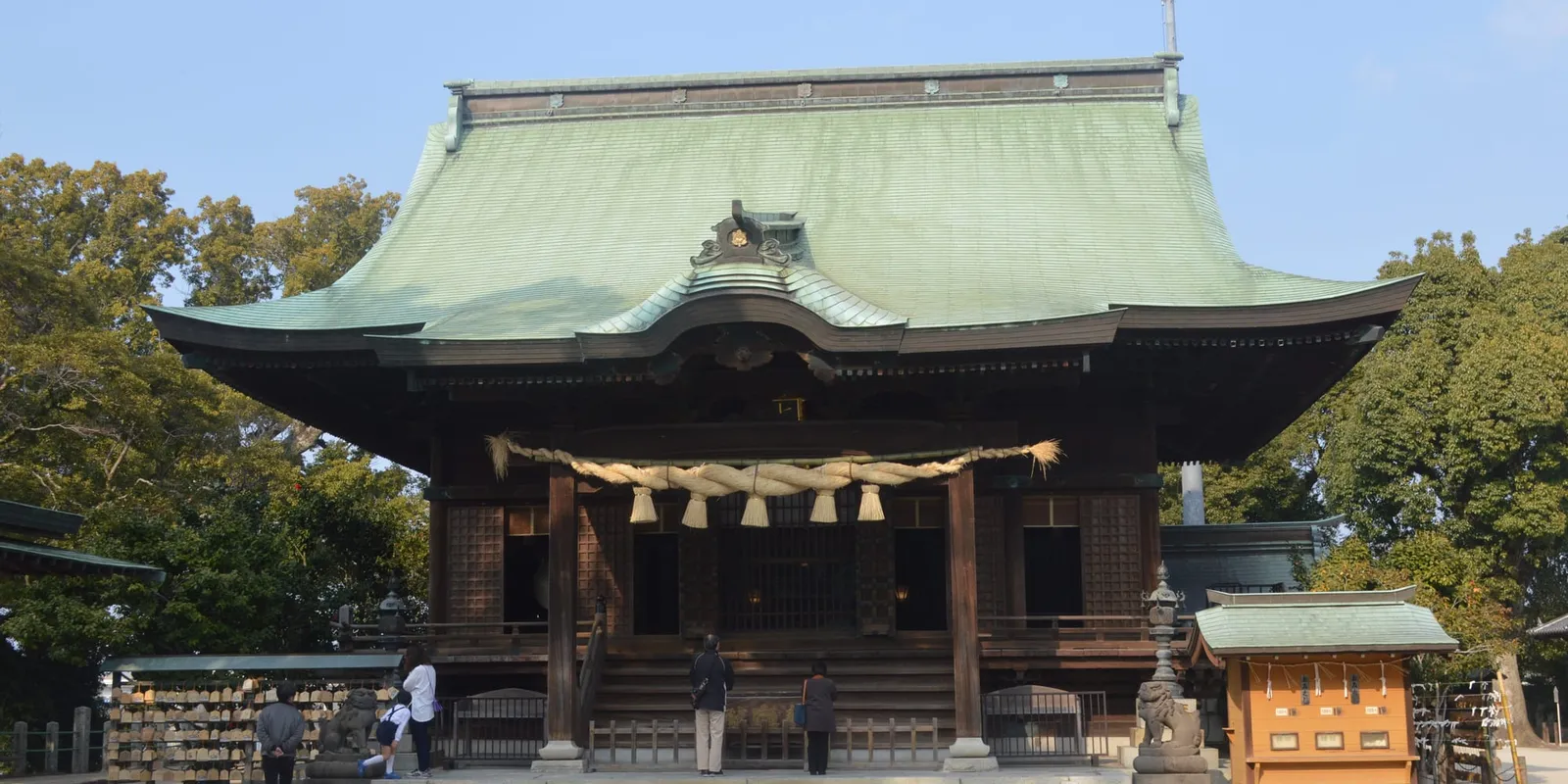
Suitengu Head Shrine (officially “Zenkoku Sohonggu Suitengu,” or “Nationwide Head Shrine Suitengu”) stands beside the Chikugo River in Seshimo-machi, Kurume, Fukuoka, and the official site describes it as the head shrine of the Suitengu shrines across Japan. The four enshrined deities are Ame-no-Minakanushi-no-Kami, Emperor Antoku (linked to the Heike clan), Takakura Heichugu and Nii no Ama. “Suitengu” is generally read “Suitengu,” and the Japanese Wikipedia gives that reading, but the shrine’s official site does not state it. This page follows the official spelling, and the shrine is also commonly called “Kurume Suitengu.”
According to the official history, Azechi no Tsubone Ise, a court lady who served Emperor Antoku’s mother Takakura Heichugu, is said to have fled to Saginogahara beside the Chitose River (today’s Chikugo River) after the Battle of Dan-no-ura in 1185, and to have first enshrined Suitengu there in about 1190. Ise later shaved her head and took the name Chiyo, and when local people asked her for prayers and blessings they proved so effective that she came to be revered as “Amagozen.” The shrine was at first called “Amagozen Shrine,” and the official site says her descendants have served as chief priests ever since. Because the Chikugo basin was often a battlefield, the shrine was moved several times, and in 1650 (Keian 3) Arima Tadayori, 2nd lord of the Kurume domain, donated the present grounds and buildings, to which it was moved.
The relation to the Tokyo Suitengu is also described on the official site. In 1818 (Bunsei 1) the 9th lord, Arima Yorinori, enshrined a branch spirit at the domain’s residence in Edo Mita, and this moved to what is now Nihonbashi in Chuo Ward in Meiji 4, becoming the Tokyo Suitengu. All other Suitengu shrines, in the Chikugo region, across Japan and in Hawaii, are described as branch shrines of this one. The Tokyo shrine’s own official site gives the year of its move as 1872 (Meiji 5), so the years differ.
Highlights
The grounds include Mizu Shrine, which enshrines Mizuhanome-no-Kami (a water deity) and Ugayafukiaezu-no-Mikoto (a deity of safe childbirth), as well as Chiyomatsu Shrine, Akiha Shrine and Maki Shrine. The Hizen komainu at Mizu Shrine are said to take away your pain if you stroke the spot on the statue that corresponds to your own aching part, and are also called “nade komainu” (“stroking guardian dogs”), according to the official site. Chiyomatsu Shrine enshrines Azechi no Tsubone Ise, regarded as the founder of Suitengu.
The grounds also hold a memorial hall displaying the belongings and calligraphy of Maki Izumi-no-Kami, the 22nd chief priest and a loyalist figure of the Bakumatsu period (visits by advance phone reservation), a memorial to the warship Chitose, and a verse monument by Takahama Kyoshi, composed while looking out over the Chikugo River. More than 20 kinds of camellias can be seen through early spring, and the camellia is the shrine’s crest. The official site tells a legend of love between Emperor Antoku and Lady Tamae as the origin of this crest; in it, Antoku did not die at Dan-no-ura but fled to Chikugo, a story presented as a tradition passed down at Suitengu.
Visiting Tips
Prayers are accepted at any time between 9:00 AM and 4:00 PM, with no reservation needed. The official site notes that purification may not be possible during festival hours, and that the main hall has no heating, so dress warmly in winter. Prayers for safe childbirth, blessing of children, a baby’s first shrine visit, Shichi-Go-San, protection from misfortune, water safety, maritime safety and traffic safety are all accepted.
For safe-childbirth prayers, many people visit on an Inu no Hi (Dog Day) in the fifth month of pregnancy, following the custom of tying the Iwata-obi belt, but the FAQ on the official site says prayers are accepted any time during reception hours if that day does not suit you. A belt you bring yourself can be purified along with you if you hold it on your lap (any type is fine). Amulets include the “Suitengu omamori,” made with ink ground using the sacred water of the February prayer, as well as childbirth, child-bearing, children’s and gourd amulets. For Shichi-Go-San, the official notice dated October 1, 2026 gives the offering as ¥5,000 for one child, ¥8,000 for two siblings and ¥10,000 for three.
It is about a 10-minute walk from the Suitengu exit of JR Kurume Station. The number of parking spaces and fees are not stated on the official site. An official notice dated October 25, 2026 also says that the lodging of Ajigawa stable is off-limits because the shrine office and nursery school buildings are there, and asks visitors with business to speak to the shrine office.
Annual Festivals
These are the main events listed on the official annual-events page. Dates may change from year to year, so check the latest notices.
- Saitan-sai (January 1): People gather from the midnight first drum.
- Hatsu-Suitengu-sai (January 5): The 5th is Suitengu’s day of affinity, and this is the first such festival of the new year.
- Tatsu no Mizu Shinji (first Day of the Dragon in January): At 3:00 AM, priests draw water from the Chikugo River and sprinkle it on each home in Seshimo-machi.
- Shinsui Kito (before Risshun): After a period of seclusion, the closing rite is held on February 3 and a further rite on the 4th; the rites are not open to the public. In 2026 there were times between January 28 and February 3 when prayers could not be received.
- Spring Grand Festival (May 3–7): Tea offering and outdoor tea gathering on the 3rd (the tea service is free), Goshinko-sai on the 4th, and the main festival on the 5th–7th, with a “Urayasu no Mai” dance by local elementary-school children on the 5th.
- Funa Daiko events (July 21–August 5) and Summer Grand Festival (August 5–7): Local children perform the “Suitengu boat drum,” and a boat-drum float is pulled through three neighborhoods. There are no stalls on the 6th and 7th.
- Chikugo River Fireworks Festival (August 5): Announced on the official site as cancelled in 2026.
- Shichi-Go-San Festival (November 15): Prayers are accepted at any time between 9:00 AM and 4:00 PM, daily.
- Shinkoku Kansha-sai (December 23): New rice offered by Suitengu shrines across Japan is presented in thanks for the harvest.
Nearby Food & Sightseeing
- Bairin-ji Temple: A Zen temple north of Suitengu. According to the official site, the tea-offering rite of the Spring Grand Festival is a Shinto-Buddhist ceremony conducted jointly by Bairin-ji monks and Suitengu priests.
- Chiyo’s grave (in front of the Asahi Shoes main gate): According to the official site, the grave of Chiyo (Amagozen), founder of Suitengu, stands in front of the main gate of Asahi Shoes Co., Ltd. in Arai-machi, Kurume, where the Chiyomatsu Myojin memorial rite is held each mid-April.
- Kuchinashi-no-ya: The building in Mizuta, Chikugo, where Maki Izumi-no-Kami was ordered into confinement. According to the official site it survives as a prefecturally designated cultural property, and a replica stands in the Suitengu grounds.
Frequently Asked Questions
- Q. What are the prayer hours, and do I need a reservation?
- A. The official site says prayers are accepted at any time between 9:00 AM and 4:00 PM, every day, and that reservations are not taken. A prayer generally takes about 15 to 20 minutes, though weekends, holidays and Inu no Hi days can be crowded and involve a wait. Purification may not be possible during festivals and other events, and the official notice dated October 2, 2026 lists the affected times for November and December.
- Q. Can I get a goshuin at Suitengu Head Shrine?
- A. The official site has no mention of the goshuin itself, its fee or its hours. Its amulet page does list a goshuin book in which dates are not entered. Since prayer reception is listed as 9:00 AM–4:00 PM, try to arrive before 4:00 PM, and check with the shrine (0942-32-3207) before you go about availability and the amount.
- Q. How do I get there, and is there parking?
- A. According to the official site, it is about a 10-minute walk from the Suitengu exit of JR Kurume Station, or about 10 minutes by taxi from Nishitetsu Kurume Station. There are several lots plus a car-purification area. Lot 2 is always open (closing at 6:00 PM on weekdays and 4:30 PM on weekends and holidays), and Lot 1 opens on weekends, holidays, the New Year period and event periods. The number of spaces and fees are not stated on the official site.
- Q. How is this shrine related to the Suitengu in Tokyo?
- A. The official history says that in 1818 Arima Yorinori enshrined a branch spirit at the Kurume domain's residence in Edo Mita, and that this later moved to what is now Nihonbashi in Chuo Ward, becoming the Tokyo Suitengu. It also says that the Suitengu shrines across Japan (including Hawaii) are all branch shrines of this one. Note that the Tokyo shrine's own official site gives the year of its move as 1872 (Meiji 5), while the Kurume site says Meiji 4, so the sources differ.
- Q. Is the Chikugo River Fireworks Festival held every year?
- A. The official annual-events page says the August 5 fireworks began as an offering of fireworks to Suitengu to celebrate the completion of the shrine grounds and buildings donated by Arima Tadayori. However, the 367th festival in 2026 was announced as cancelled in an official notice dated July 31, 2026, citing the 2026 Kumamoto earthquake. The events page still lists August 5, so check with the organizing committee (0942-32-3207) or similar sources each year.
Plan Your Visit
Before you go, you can book a stay and get your shrine-visit items ready.
Amazon links open Amazon.co.jp (Japan) in English; whether an item ships overseas depends on the product.
※ Contains ads (PR). Links open external sites such as Amazon, Rakuten, Trip.com and Booking.com.