History
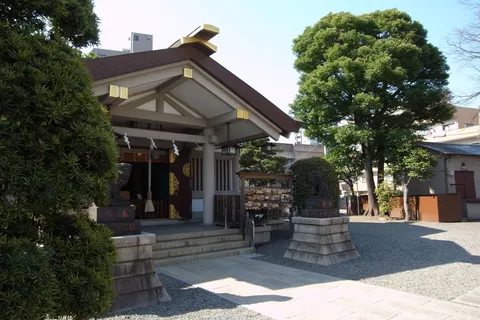
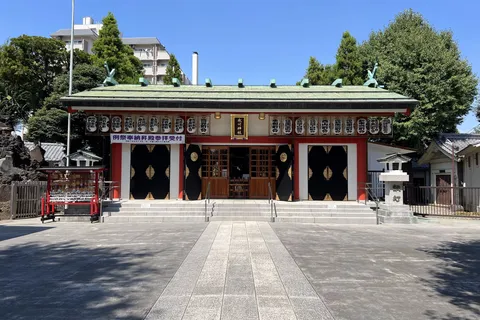
Akabane Hachiman Shrine stands on a small hill in Akabanedai in Tokyo’s Kita Ward. Its enshrined deities are Hondawake no Mikoto (Emperor Ojin) as the main deity, with Tarashinakatsuhiko no Mikoto (Emperor Chuai) and Okinagatarashihime no Mikoto (Empress Jingu). Akabanedai is the northeastern tip where the Musashino Plateau juts into the Kanto Plain. According to the official site, the shrine sits on a hill about 20 meters above sea level and, until the early Showa period, was known as “Akabane-yama Hachimangu.”
Tradition holds that in 784 (Enryaku 3), Sakanoue no Tamuramaro made camp here during his eastern campaign, enshrined the three Hachiman deities, and prayed for success in battle. The shrine itself notes that no documents survive and that this is an oral tradition. It is later said to have been restored by figures such as Minamoto no Yorimitsu, Minamoto no Yorimasa and members of the Ota clan, and a donation document of 1551 from Ota Yasusuke survives. In the Edo period it was the chief guardian shrine of five surrounding villages.
From the Meiji era on, its grounds were repeatedly reduced by railway construction, land given to military facilities, and a freight yard, and the official site looks back on it as “a shrine tossed about by the national policies of each era.” The present buildings were built in 1931 and partly rebuilt in 1988.
Highlights
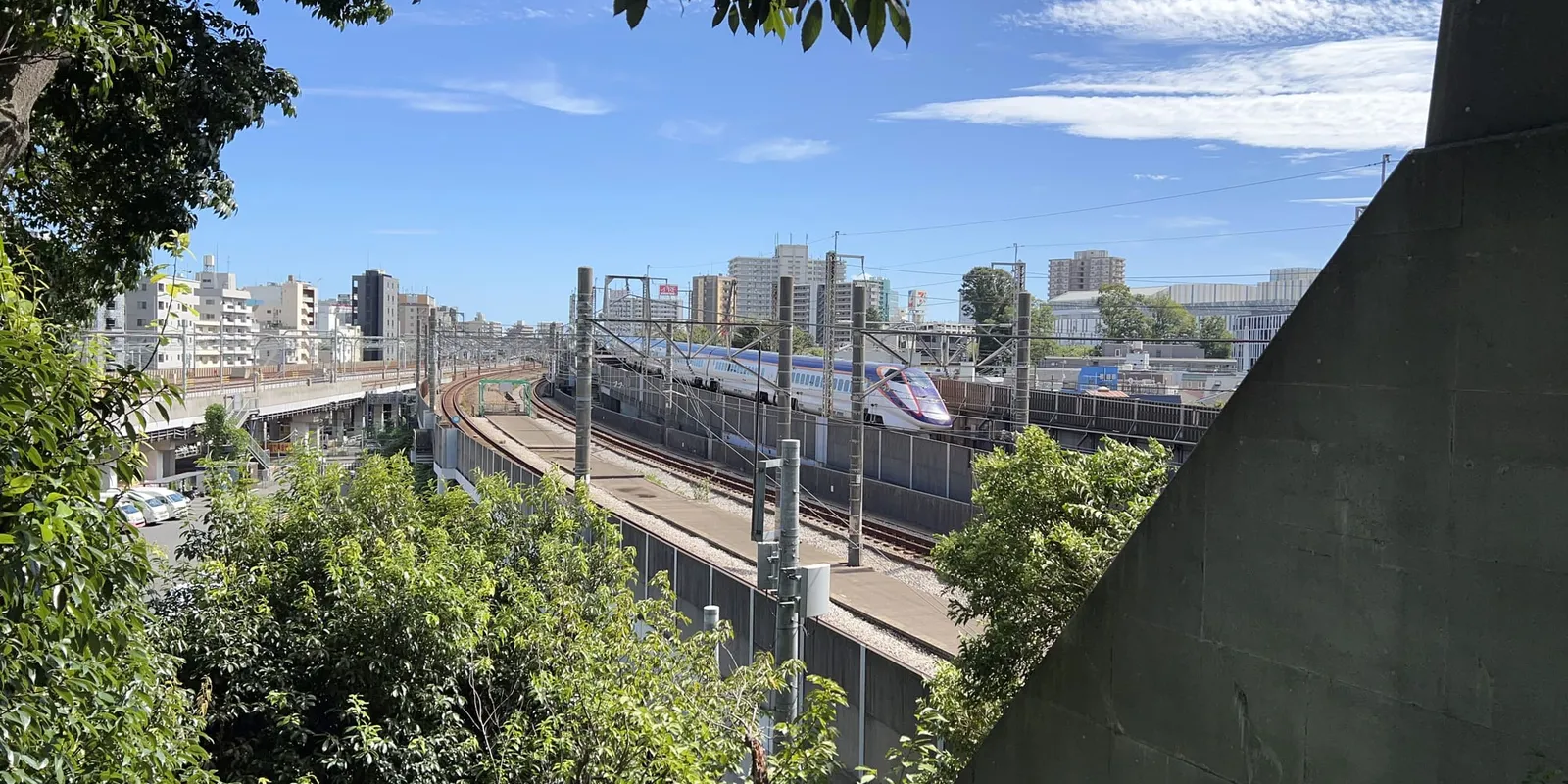
The shrine’s best-known feature is that trains run beneath its grounds. According to the official site, construction of the Tohoku and Joetsu Shinkansen was approved in 1971, and the route could not avoid the shrine’s hill, so the line was designed to pass through a tunnel under the grounds. The shrine and its parishioners strongly opposed the plan but finally accepted it as national policy. The Ueno–Omiya section opened on March 14, 1985, and the Saikyo Line opened on September 30 of the same year. The tunnel runs under the shrine office, not the main hall.
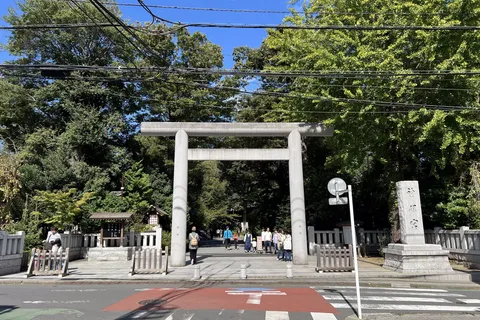
From the sloped road of the rear approach, the tunnel is clearly visible. Because of the layout, the Shinkansen can be seen passing between the large torii gates on this approach, a view the official site calls unique in Japan and notes is a favorite spot for railway photographers. From the southern edge of the grounds, you can watch Shinkansen and Saikyo Line trains enter the tunnel, along with the Keihin-Tohoku, Utsunomiya and Takasaki lines right beside the shrine and, at certain times, Tobu Railway limited expresses. Akabane Station’s platforms can also be seen from the grounds, and the official site notes how the lines heading for central Tokyo converge at Akabane from here.
The shrine was also featured on TV Tokyo’s program “Shutsubotsu! Ad-machic Tengoku” (Adomachi), in its broadcast of March 28, 2026 (Akabane episode), where the program’s official page lists Akabane Hachiman Shrine at No. 3 and describes it as a rare shrine directly above railway tunnels and a good train-viewing spot with many lines in sight.
The grounds also hold many subsidiary shrines, including Kitano Shrine, dedicated to Sugawara no Michizane, the god of learning, beside which stands a “nade-ushi” bull statue said to bring success in studies and exams when its head is stroked, and Hoso Shrine.
Visiting Tips
A shrine is a place of prayer, so please pay your respects at the main hall first, and take care not to get in other worshippers’ way if you watch the trains or take photos. The official site had no photography rules or etiquette notes that we could find at the time of writing. Visitor accounts mention that the rear approach and the stone steps are steep, so take care with small children, and that there is a sign forbidding entry onto the railway property. Trains can take a few minutes to come, and the shutter moment is brief.
Goshuin: Available at the shrine office. The official site asks for a ¥500 offering, and there is a monthly goshuin whose design changes each month. Commemorative stamps for birthdays, wedding anniversaries, 60th birthdays and safe-childbirth prayers are available on request (per the official site). Special goshuin are sometimes issued on auspicious days (the site has a page on its “strongest good-luck day” goshuin). The office is closed every Tuesday and hand-written goshuin are not available that day (it opens if the Tuesday is a holiday, the 1st or the 15th, or on certain auspicious or special-goshuin days).
Hours: April–October, 9:30 AM–4:30 PM on weekdays and 9:30 AM–5:00 PM on weekends and holidays; November–March, 9:30 AM–4:00 PM on weekdays and 9:30 AM–4:30 PM on weekends and holidays (official site, updated September 30, 2026). Details can change, so it is safest to call the office (03-3908-1764) before visiting. Shichi-go-san prayers are by reservation only, by telephone.
Access: It is about a 10-minute walk from the west exit of JR Akabane Station and about 7–8 minutes from Akabane-Iwabuchi Station (Tokyo Metro Namboku Line / Saitama Rapid Railway). The shrine stands on a hill, so you reach it by climbing stone steps or a slope. Information on parking is conflicting, so if you are driving, please check with the shrine office first.
Annual Festivals
The official site lists these annual rites:
- Kitansai New Year’s Day rite (January 1)
- Toshigoi-sai (February 15)
- Summer Great Purification, Nagoshi no Oharae (June 30)
- Annual Grand Festival, Reitaisai (September 15): The shrine’s main festival.
- Shichi-go-san festival (November 15): Prayers are by reservation only.
- Niiname-sai harvest festival (November 28)
- Year-end Great Purification (December 25)
Nearby Food & Sightseeing
- Akabane Ichibangai: The shopping street on the east side of Akabane Station, which TV Tokyo’s March 28, 2026 Akabane episode placed at No. 1 (per the program’s official page). A good place for a meal or shopping after your visit.
- Joshoji Temple (Inatsuke Castle site): A temple in Akabane-nishi associated with Ota Dokan, with the plateau south of its grounds said to be the site of Inatsuke Castle. A pleasant walk on the hills west of the station.
Frequently Asked Questions
- Q. Does the Shinkansen run directly under the main hall?
- A. No. According to the shrine's official site, the tunnel runs under the shrine office, not the main hall. Trains have run beneath the grounds since 1985, when the Tohoku and Joetsu Shinkansen opened between Ueno and Omiya.
- Q. Where can I see the trains from?
- A. The official site says the tunnel can be seen clearly from the sloped road of the rear approach, and that the way the grounds are laid out lets the Shinkansen be seen passing between the large torii gates there. From the southern edge of the grounds you can watch Shinkansen and Saikyo Line trains enter the tunnel, as well as the Keihin-Tohoku, Utsunomiya and Takasaki lines running right beside the shrine.
- Q. Can I get a goshuin?
- A. Yes, at the shrine office. The official site asks for a ¥500 offering, and there is a monthly goshuin whose design changes each month. The office is closed every Tuesday and hand-written goshuin are not available that day (it opens if the Tuesday is a holiday, the 1st or the 15th, or on certain auspicious or special-goshuin days). Hours are 9:30 AM–4:30 PM on weekdays and 9:30 AM–5:00 PM on weekends and holidays from April to October, and 9:30 AM–4:00 PM and 9:30 AM–4:30 PM respectively from November to March.
- Q. Which deities are enshrined here?
- A. The main deity is Hondawake no Mikoto (Emperor Ojin), together with his father Tarashinakatsuhiko no Mikoto (Emperor Chuai) and his mother Okinagatarashihime no Mikoto (Empress Jingu). The official site lists blessings including victory, protection from misfortune and bad directions, traffic safety and household safety.
- Q. Has the shrine been featured on TV?
- A. Yes. TV Tokyo's program "Shutsubotsu! Ad-machic Tengoku" (known as Adomachi) featured Akabane in its broadcast of Saturday, March 28, 2026, and the program's official page lists Akabane Hachiman Shrine at No. 3. The page describes it as a rare shrine standing directly above railway tunnels and a good train-viewing spot with many lines in sight.
Plan Your Visit
Before you go, you can book a stay and get your shrine-visit items ready.
Amazon links open Amazon.co.jp (Japan) in English; whether an item ships overseas depends on the product.
※ Contains ads (PR). Links open external sites such as Amazon, Rakuten, Trip.com and Booking.com.