History
Anamori Inari Shrine stands in Haneda 5-chome in Tokyo’s Ota Ward, right next to Haneda Airport. It is read “Anamori Inari Jinja,” and its enshrined deity is Toyouke-hime no Mikoto. The official site explains that “Inari” carries the sense of rice growing and ripening, and that the Inari deity is Toyouke-hime, enshrined at the Outer Shrine of Ise, who protects the three essentials of food, clothing and shelter. The shrine has long been called “Oana-sama” in Haneda, and the official site quotes a line from the old Haneda folk song: “Oana-sama is the fashion in Haneda; visit in the morning and by evening you will be blessed.”
Shrine tradition says that in the Bunka-Bunsei period (about 1804–1830), when the shore at Ogiura (now inside Haneda Airport) was being reclaimed, the coast was often damaged by heavy waves. One day a large hole opened in the seawall and seawater began to flow in. Villagers built a small shrine on top of the embankment and enshrined the Inari deity there, after which the damage from wind and waves is said to have stopped and the crops to have flourished. The official site explains the name “Anamori” as meaning “the Inari deity who protects the fields from the damage of holes made by wind and waves.” Other accounts of how the shrine began are also told.
Public worship was permitted in 1885 (Meiji 18), and when the name “Anamori Inari Jinja” was officially approved in November of the following year, the shrine flourished. According to the official site, the Anamori Line of the Keihin Electric Railway (now the Keikyu Airport Line), described as Japan’s first train for shrine pilgrims, opened, and mineral springs, a beach and a racecourse grew up around it, making the area famous as the best of eastern Japan. Torii were dedicated in great numbers in front of the shrine, 46,797 according to the records, the official site says.
After the war ended in 1945, the Allied Forces expanded Haneda Airport and ordered the shrine to leave its old site (near the south end of today’s Runway B) within 48 hours. The official site says the shrine buildings, stone lanterns and many fox statues were buried beneath the runways as the airport’s “foundation,” and that only a single large torii was left. In 1947, local worshippers donated land and a temporary shrine building was erected, and in February 1948 the shrine moved to its present site. The main hall, Kaguraden and shrine office were rebuilt over the years, and the official site says the Okunomiya and Inariyama were completed in the spring of 2020.
Highlights
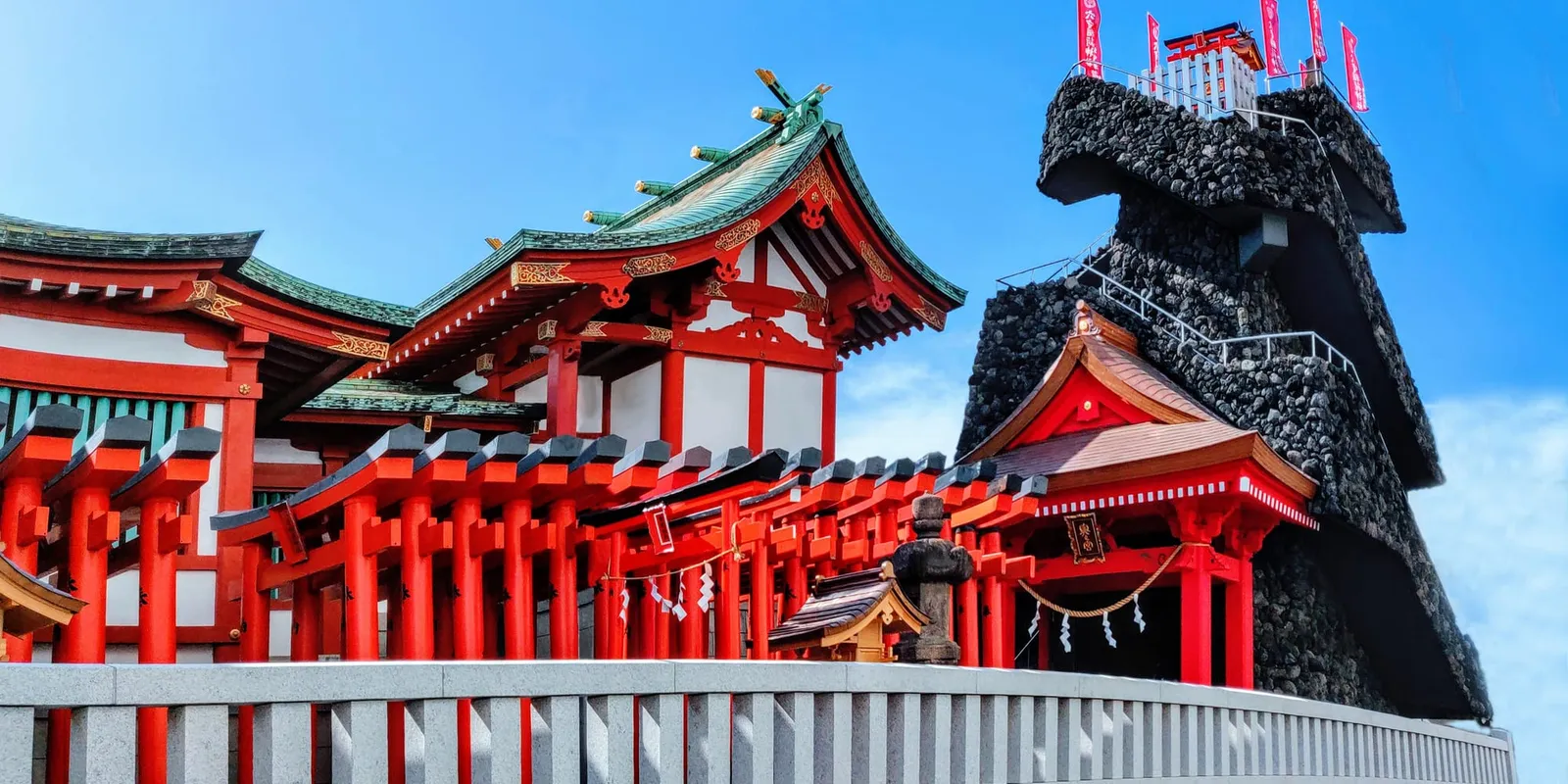
Okunomiya and the sacred sand (Anamori no Suna): The Okunomiya stands at the back of the grounds. The official site says it was completed in the spring of 2020, and an “Inariyama” mound has been built above it (a visitor account says it is modeled on Mount Inari at Fushimi Inari Taisha). The grounds have a row of small vermilion votive torii known as the “Senbon Torii” (thousand torii), and votive torii also line the approach beside the Okunomiya (per Wikipedia and visitor accounts; the official site’s news also mentions small votive torii on the approach beside the Okunomiya). The official site says torii in front of the shrine once numbered 46,797 according to records, and Wikipedia describes a project to restore the “thousand torii.”
The official site tells a legend about the shrine’s sand. An old fisherman on the island of Kaname off Haneda returned from fishing for several days to find only damp sand in his basket instead of fish. The villagers blamed a fox and surrounded the Inari shrine to catch it, but the fisherman forgave the fox and let it go. After that he caught plenty of fish every time he went out, and each basket held fish and a little damp sand; when his wife scattered the sand in their garden, customers flocked in and he grew rich. Ever since, people have come from all directions to receive blessings of good fortune with the sand, the official site says. It also gives instructions on scattering the sand: at the entrance of the home for prosperity in business and family safety, under the floor for recovery from illness, in the relevant direction for warding off disaster, and at the center of the site for new construction.
Connection with Haneda Airport: According to the official site, in 1917 (Taisho 6), with the support of the owner of a mineral-spring inn in front of the shrine, Seitaro Tamai and others founded the Nippon Flying School and Nippon Aircraft Works at Haneda Anamori, marking the beginning of aviation history at Haneda and of the shrine’s ties with the aviation world. It also recounts a story of a flying-school trainee who offered fried tofu on the eve of his first solo flight and returned to give thanks after it went well. In 1955 an “Anamori Inari Airport Branch Shrine” was enshrined on the roof of the old terminal building and was later merged into the main shrine. Visitors still come to pray for air safety, and the shrine holds a monthly Koku Inari festival on the 17th and an Aviation Safety Prayer Festival on September 20. The official site says that on southerly afternoons you can sometimes see planes take off toward the southwest from the grounds.
The great torii at Haneda Airport: The large torii left standing at the old site was moved to the mouth of the Tama and Ebitori rivers when new runways were built in 1999, according to a magazine article reproduced on the official site; Wikipedia says it was re-erected in February 1999 at the foot of Benten Bridge, south of Tenkubashi Station, and that it is now state property rather than the shrine’s. It lies outside the shrine grounds, so it is a separate stop from your visit to the shrine.
This history was also covered in TV Tokyo’s program “Shutsubotsu! Ad-machic Tengoku” (Adomachi), in its broadcast of May 6, 2023 (Haneda episode), where the program’s official page lists Anamori Inari Shrine at No. 2. The page describes it as a shrine that has walked alongside the town’s history, and says its goshuin book made in collaboration with JAL and ANA was a topic of conversation, with a cute design fitting for a shrine that prays for safety in the sky. The official site’s news also lists collaboration goshuin books with JAL and ANA, and an announcement dated September 1, 2026 of a special goshuin book made with six domestic airlines.
Visiting Tips
A shrine is a place of prayer, so please pay your respects at the main hall first, and take care not to get in other worshippers’ way if you take photos. We could not find photography rules on the official site at the time of writing.
Hours: According to the official site, you can worship from outside the main hall and the Okunomiya 24 hours a day. Inside the Okunomiya is open about 6:00 AM to 4:30 PM, formal worship and prayers are 9:00 AM to 4:00 PM, and amulets and goshuin are available 8:30 AM to 5:00 PM, all every day of the year (from midnight on New Year’s Day). Details can change, so please check the official site or call (03-3741-0809) before visiting.
Goshuin: The distribution office is said to be on the left as you face the main hall. Visitor accounts describe three kinds: the main shrine, the Okunomiya and the Inariyama-tohai stamp, priced at ¥500 for one, ¥800 for two and ¥1,000 for three, with the Okunomiya and Inariyama stamps given as a set with the main shrine stamp (the fee is not confirmed on the official site, and may change, so please check at the office). Limited Koku Inari goshuin are also reported to be given on days such as the 17th of each month; please check the official site for details.
Access: The official site says it is about a 3-minute walk from Anamori-inari Station on the Keikyu Airport Line and about 5 minutes on foot from Tenkubashi Station. Anamori-inari Station is about 15 minutes from Shinagawa Station on a Keikyu limited express bound for Haneda Airport, and two stops (about 4 minutes) from Haneda Airport Terminal 3 Station on the Keikyu Line. By car, the shrine is near the Haneda ramp of Metropolitan Expressway Route 1, and visitors normally park in front of the Kaguraden, but capacity and fees are not stated on the official site, so please contact the shrine office beforehand.
Annual Festivals
Major rites listed in the official annual calendar include:
- Saitansai New Year rite (January 1–3): Special New Year prayers held over the first three days.
- Setsubun-sai (the day before Risshun): Includes the Tsuina ceremony and bean-throwing.
- Hatsuuma-sai (first Horse day of February): Regarded as Inari’s birthday, when many worshippers visit, says the official site.
- Gogatsu-sai May Festival (festival days in May): Special prayers during May, the shrine’s month of visits.
- Hissho Inari Festival (May 7): Held on the birthday of the racehorse Inari One, linked to the shrine’s ties with the racing world (per the official site).
- Koku Inari Monthly Festival (17th of each month): Banners donated by airlines line the grounds.
- Kento-sai Lantern Festival (late August, Saturday and Sunday): Lanterns fill the grounds; in 2026 it was held on August 22 and 23 from 6:00 PM.
- Aviation Safety Prayer Festival (September 20): Held around Air Day to pray for aviation safety.
- Reisai Annual Grand Festival (November 3): The shrine’s most important festival, held on Culture Day.
- Niiname-sai harvest festival (November 23)
- Year-end Great Purification and Joya-sai (December 31)
On every Horse (Uma) day of the month the shrine also holds the Uma-no-hi festival, and the “Haneda Shichifuku Inari Meguri” pilgrimage is held over the first three days of January, with Anamori Inari as the seventh and final shrine.
Nearby Food & Sightseeing
- The Great Torii at Haneda Airport (the old Anamori Inari torii): The large torii left at the old shrine site, now moved to the foot of Benten Bridge, south of Tenkubashi Station. The article reproduced on the official site calls it the “farthest point of Haneda Airport reachable on foot.” It is outside the shrine grounds, so please check the location and route on a map.
- Haneda Airport Terminal 3: Two stops (about 4 minutes) from Anamori-inari Station on the Keikyu Line. The official site says the old shrine town had a racecourse, located near today’s Terminal 3. You can combine a visit with your trip to or from the airport.
Frequently Asked Questions
- Q. What does the name "Anamori" mean?
- A. According to the shrine tradition on its official site, in the Bunka-Bunsei period a large hole opened in the seawall of the reclaimed land at Ogiura (now inside Haneda Airport) and seawater began to flow in. Villagers enshrined the Inari deity on the embankment, the damage from wind and waves is said to have stopped, and the deity came to be called Anamori, meaning the Inari deity who protects the fields from the damage of holes made by wind and waves.
- Q. Which deity is enshrined here?
- A. The official site lists Toyouke-hime no Mikoto as the enshrined deity. It describes her as the deity enshrined at the Outer Shrine of Ise who protects the three essentials of life: food, clothing and shelter. Blessings named on the official site include business prosperity, family safety, fulfillment of wishes, recovery from illness and traffic safety.
- Q. Why is the shrine next to Haneda Airport?
- A. According to the official site, the shrine originally stood on land that is now part of Haneda Airport. After the war ended in 1945 it was ordered by the Allied Forces to leave within 48 hours so the airport could be expanded. In 1947 local worshippers donated about 2,300 square meters of land and a temporary shrine building was erected, and in February 1948 the shrine moved to its present site in Haneda 5-chome, Ota Ward. The shrine also notes a deep connection with aviation going back to the Taisho era.
- Q. Can I get a goshuin?
- A. Yes. According to the official site, amulets and goshuin are available from 8:30 AM to 5:00 PM every day of the year (from midnight on New Year's Day). The fee is not confirmed on the official site, but visitor accounts report ¥500 for the main shrine goshuin, ¥800 for two and ¥1,000 for three (main shrine, Okunomiya and Inariyama-tohai). Amounts can change, so please confirm at the distribution office.
- Q. Has the shrine been featured on TV?
- A. Yes. TV Tokyo's program "Shutsubotsu! Ad-machic Tengoku" (known as Adomachi) aired its "Haneda" episode on Saturday, May 6, 2023, and the program's official page lists Anamori Inari Shrine at No. 2. The page describes it as a shrine that has walked alongside the town's history and notes that its goshuin book made in collaboration with JAL and ANA had become a talking point.
Plan Your Visit
Before you go, you can book a stay and get your shrine-visit items ready.
Amazon links open Amazon.co.jp (Japan) in English; whether an item ships overseas depends on the product.
※ Contains ads (PR). Links open external sites such as Amazon, Rakuten, Trip.com and Booking.com.