History
Ogu Hachiman Shrine stands in Nishi-Ogu 3-chome, Arakawa Ward, Tokyo, and its name is read “Ogu Hachiman Jinja.” Arakawa Ward’s website introduces it simply as “Hachiman Jinja,” and the shrine’s own site calls it the guardian shrine of the whole Ogu area. The deity enshrined is Emperor Ojin (Hondawake no Mikoto), along with others.
The year of founding is unknown. The Arakawa Ward website says it likely goes back to around 1312, when the Ogu area was donated to Tsurugaoka Hachimangu in Kamakura, and that ridgepole tablets kept at the shrine confirm that a building was built in 1385. The shrine’s official site likewise notes that the oldest surviving tablet bears that date, which means Hachiman was enshrined here at least before the Nanbokucho period. The shrine has been loved locally as a god of farming, industry and commerce, and the ward lists blessings including academic success, traffic safety, business prosperity, protection from misfortune, recovery from illness and financial luck.
The shrine appeared on TV Tokyo’s “Shutsubotsu! Ad-machic Tengoku” (Adomachi) in its Saturday, May 21, 2022 broadcast on Arakawa Yuen, when the program’s official page listed Ogu Hachiman Shrine at No. 2 (this was in 2022). The page describes it as a neighborhood guardian shrine more than 600 years old, popular for goshuin that feature seasonal flowers and a Toden tram.
Highlights
The Arakawa Ward website lists the following cultural properties held by the shrine: the “Kamiogu-mura Murae-zu” (a village map) and the shrine’s ridgepole tablets (both ward-designated), and a stone water basin inscribed with a date in 1729 (ward-registered). According to an article in the ward’s former portal archive, the village map shows the old irrigation channel called “Hachimanbori” that once surrounded the area; it was designated a ward tangible cultural property in 1990 and is now kept at the Arakawa Furusato Bunkakan. Some items are not open to the public, so contact the owner or administrator in advance if you wish to see them.
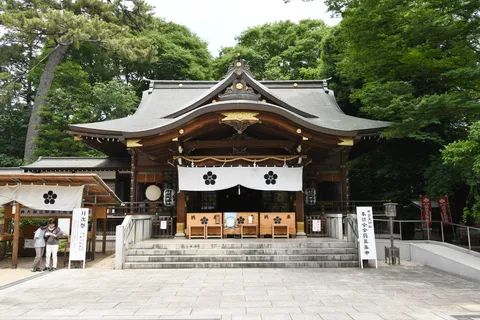
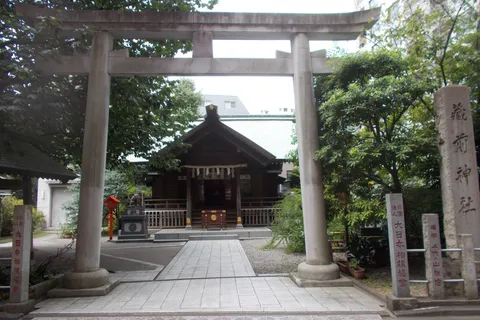
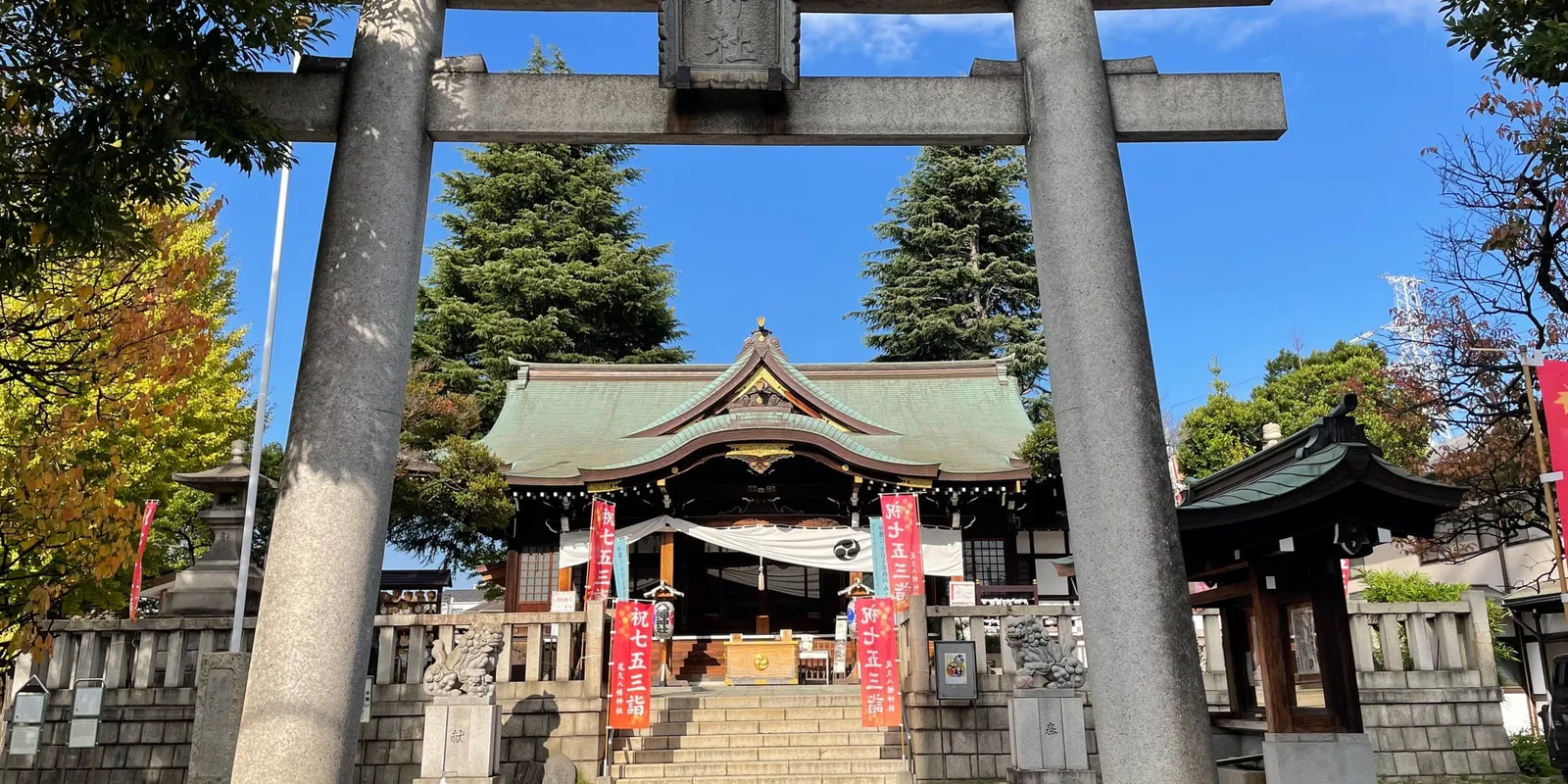
According to a visitor’s account, the present worship hall was rebuilt in 1955 after the original was lost in the 1945 air raids; past the stone torii, the hall stands at the top of a flight of stone steps. Beside the hall is a small subsidiary shrine, Itsukushima Shrine, which is said to enshrine Ichikishimahime no Mikoto. The shrine offers amulets for traffic safety, safe childbirth, recovery from illness, financial luck, victory, exam success, pets and more, including an “Ogu Benten” amulet (per the amulet list on the official site).
Visiting Tips
Access: It is right next to the Miyanomae stop on the Toden Arakawa Line (Tokyo Sakura Tram), about a 1-minute walk per Arakawa Ward. The official site also lists about 5 minutes on foot from Kumanomae Station (Nippori-Toneri Liner), about 15 minutes on foot from JR Tabata Station or Ogu Station, and about 5 minutes on foot from the “Kodai” stop of Toei Bus route Higashi 43.
Hours: The opening hours of the grounds are not stated on the official site. The shrine office gives out amulets and goshuin 10:00 AM–4:00 PM and accepts prayer requests 10:00 AM–3:00 PM; these may change at year-end and New Year. Prayers for Shichi-Go-San, first shrine visits for babies, protection from misfortune and the blessing of school bags are offered. Same-day requests are accepted, but they may not be possible when they overlap with festivals or events, so booking ahead is recommended (per the official site). The office’s phone number is 03-3893-1535.
Goshuin: Given out 10:00 AM–4:00 PM as pre-written sheets only; the shrine does not currently write into goshuin books or send them by mail. Some days have none, so check the calendar on the official site. At four shrines along the Toden Arakawa Line (Nanasha Shrine, Sugamo Tenso Shrine, Otori Shrine and Ogu Hachiman Shrine), a Toden stamp is added to the goshuin, and each shrine has a “Toden Jinja Meguri” pamphlet. The official site lists seasonal and special designs but does not state the offering; some visitor accounts report ¥500 (¥1,000 for the paper-cut design), so please confirm when you receive one.
Parking: The grounds have parking for up to 7 cars, for people visiting for prayer or worship only. It is not available at year-end, during the first three days of January, or on festival days. The lot right by the entrance is a monthly rental, and the official site asks visitors not to park there.
Annual Festivals
- Annual festival (first Saturday and Sunday of August; August 1–2 in 2026): According to the Arakawa Ward website, every four years the festival becomes the grand “Shinko-sai,” with a procession of horses, floats and mikoshi through the Ogu neighborhood. The shrine’s official site also carries notices about the 2026 festival, including road closures for the mikoshi procession and a call for mikoshi bearers.
- Kinensai (February) and Niiname-sai (December): Listed in the ward’s archive article as annual rites alongside the August festival.
- Summer purification rite (June): Announced on the official site’s 2026 notices. Please check the official site for the date.
Nearby Food & Sightseeing
- Arakawa Yuen: A ward-run amusement park in Nishi-Ogu 6-chome, which reopened after renovation in April 2022. It was also the theme of the Adomachi episode of May 21, 2022 mentioned above (per the program’s official page).
- Miyanomae stop (Toden Arakawa Line): The tram stop right by the shrine. Four shrines, including Ogu Hachiman Shrine, take part in the “Toden Jinja Meguri” shrine tour along the Toden Arakawa Line (per the shrine’s official site).
Frequently Asked Questions
- Q. Can I get a goshuin?
- A. Yes. Pre-written goshuin are given out at the shrine office from 10:00 AM to 4:00 PM. Some days have none because of rites or official duties, so it is worth checking the calendar on the official site. Writing into goshuin books and mail orders are not offered. The official site lists seasonal and special designs, and at four shrines along the Toden Arakawa Line a Toden stamp (a Toden 9000-series tram, designed by Hoshina Kawase) is added to the goshuin. The official site does not state the offering, so please confirm when you receive one.
- Q. Is there parking?
- A. Yes, there is parking for worshippers on the grounds, for up to 7 cars. It is for people visiting for prayer or worship only, and there is no parking at year-end, during the first three days of January, or on festival days. The lot right by the entrance is a monthly rental, and the official site asks visitors not to park there.
- Q. When is the annual festival?
- A. On the first Saturday and Sunday of August (per the Arakawa Ward website; in 2026 that falls on August 1 and 2). Every four years the festival becomes the grand "Shinko-sai," in which the shrine's main mikoshi and other processions parade through the neighborhood.
- Q. Are any items designated as cultural properties?
- A. According to the Arakawa Ward website, the "Kamiogu-mura Murae-zu" (a village map) and the shrine's ridgepole tablets are designated by the ward, and a stone water basin inscribed with a date in 1729 is registered by the ward. Some are not open to the public, so visiting them requires contacting the owner or administrator in advance.
- Q. Has the shrine been on TV?
- A. Yes. TV Tokyo's program "Shutsubotsu! Ad-machic Tengoku" (Adomachi) lists Ogu Hachiman Shrine at No. 2 on the program's official page for its Saturday, May 21, 2022 broadcast on Arakawa Yuen (an amusement park); note that this was in 2022. The page describes it as a neighborhood guardian shrine more than 600 years old, popular for goshuin that feature seasonal flowers and a Toden tram.
Plan Your Visit
Before you go, you can book a stay and get your shrine-visit items ready.
Amazon links open Amazon.co.jp (Japan) in English; whether an item ships overseas depends on the product.
※ Contains ads (PR). Links open external sites such as Amazon, Rakuten, Trip.com and Booking.com.