History
The origins of Kitaguchi Hongu Fuji Sengen Jinja stretch back to 110 CE, according to tradition, when the legendary prince Yamato Takeru stopped here on his return from a campaign in the east. He is said to have worshipped Mt. Fuji from afar at nearby Otsukayama to pacify the mountain’s spirit, and the site has served as a center of Mt. Fuji worship on the mountain’s northern foot ever since.
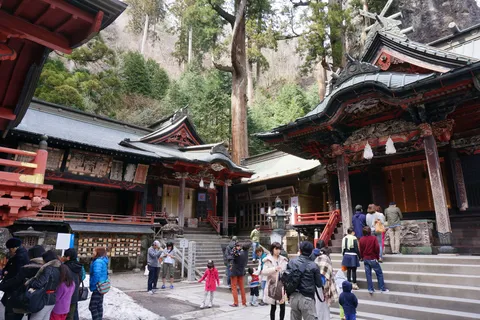
Shrine buildings were first erected on the present site in 788, when Ki no Toyoniwa, the governor of Kai Province, is said to have built them after receiving a divine revelation in a dream. During the Edo period, the shrine became a hub for the immensely popular Fuji-ko pilgrimage movement, as it stands at the starting point of the Yoshida trail up Mt. Fuji, drawing pilgrims and climbers from across Japan. The shrine’s current honden (main hall) and the honden of the Higashinomiya and Nishinomiya subsidiary shrines were built or restored in the early Edo period by figures including Takeda Shingen, Asano Ujishige, and Torii Narimasa, and are now designated Important Cultural Properties of Japan.
In 2013, the shrine was registered as a UNESCO World Heritage component of “Fujisan, Sacred Place and Source of Artistic Inspiration.” It remains a vital living record of the Fuji-ko pilgrimage tradition and continues to draw worshippers from Japan and abroad.
Highlights
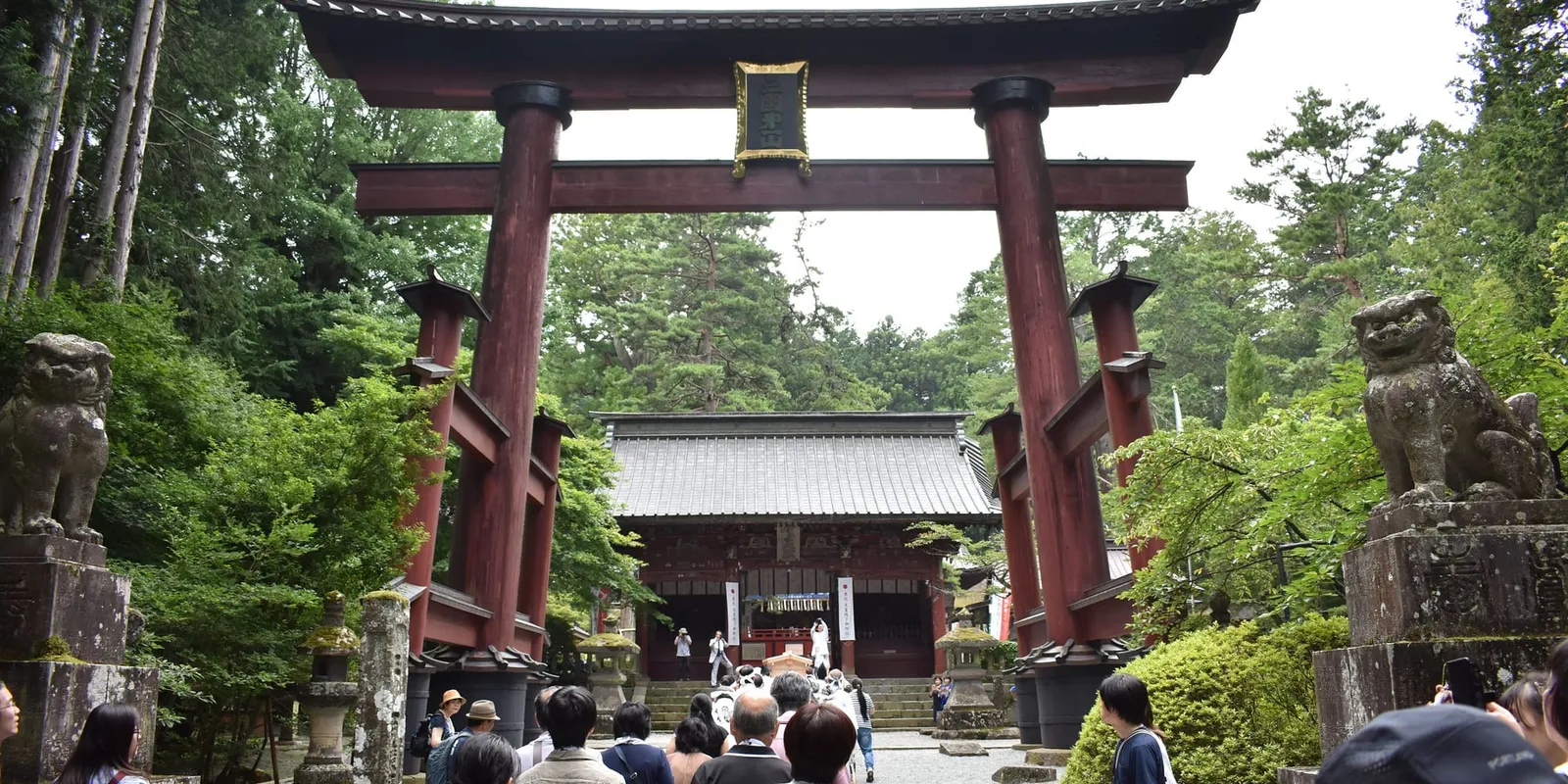
Standing at the start of the Yoshida climbing trail deep within the grounds, the great “Fujisan Otorii” is one of the largest wooden torii gates in Japan, standing roughly 18 meters tall and rebuilt once every 60 years. The approach is lined with centuries-old cedar and cypress trees alongside moss-covered stone lanterns, creating a solemn, otherworldly atmosphere.
Deep within the grounds stand the sacred trees “Fuji Taro Sugi” and the “Fuji Meoto Hinoki,” believed to be over a thousand years old and long venerated by worshippers. The early Edo-period honden, the guardian gate (zuijinmon), and the purification fountain are also well worth seeing, each carrying traces of the long history of Mt. Fuji worship.
Visiting Tips
In summer the shrine fills with climbers praying for safety before their ascent of Mt. Fuji, and the atmosphere is especially charged around the Kaisan-sai mountain-opening festival on July 1. The long approach, shaded by towering cedars, feels particularly clear and refreshing in the early morning. The grounds are extensive, and a full visit including the great torii and the inner shrine can take about an hour, so it’s best to allow plenty of time.
Annual Festivals
- Yoshida Fire Festival (August 26–27): One of Japan’s “three strange festivals,” this dramatic fire festival sees over 100 giant torches, each about three meters tall, along with household torches, all lit at once on the night of the 26th, bathing the town of Fujiyoshida in red firelight. Said to pacify Mt. Fuji’s volcanic spirit, it is designated a National Important Intangible Folk Cultural Property.
- Reitaisai / Hatsuzaru Festival (May 5): The shrine’s main annual festival, celebrating the start of the farming and silk-cultivation season, featuring performances of the Fuji Dai-dai Kagura sacred dances along with mochi-pounding and archery competitions.
- Kaisan-sai Mountain-Opening Festival (July 1): Held to mark the opening of the Mt. Fuji climbing season, gathering climbers and those connected to the mountain to pray for the safety of the many who will make the ascent.
Nearby Food & Sightseeing
- Musashi: A popular Yoshida udon shop just steps from the shrine, known for its robust broth and firm, chewy noodles.
- Menkyo Kaiden: A favorite Yoshida udon shop near the shrine, famous for topping its firm noodles with a tempura fritter about 20 centimeters across.
- Kane no Torii (Golden Torii): A large torii gate on the street connecting Fujisan Station and the shrine, cherished as a landmark gateway into Mt. Fuji’s world of faith.
Frequently Asked Questions
- Q. What are the visiting hours?
- A. The grounds are open year-round, free to enter; the shrine office is open roughly 9:00–16:00.
- Q. When is the goshuin office open?
- A. Around 9:00–16:00; ¥300 each for the three available types (the main shrine, Suwa Jinja, and Otsukayama).
- Q. Is there parking?
- A. Yes, there are seven to eight free parking areas around the grounds (about 140 car spaces).
- Q. How long should I plan for a visit?
- A. Taking in the great torii and the inner shrine as well takes about an hour.
- Q. How do I get there?
- A. About a 5-minute bus ride from Fujisan Station on the Fujikyu Railway to the "Sengen-jinja-mae" stop, then about a 1-minute walk.
Related Shrines
Yamanashi, Kofu
Takeda Jinja
Takeda-jinja
- Victory in Competition
- Academic Success
- Good Fortune
Shizuoka Prefecture, Fujinomiya
Fujisan Hongu Sengen Taisha
Fujisan Hongū Sengen Taisha
- Safe Childbirth
- Blessing of Children
- Fire Prevention
Gunma, Takasaki
Haruna Jinja
Haruna-jinja
- Fire Prevention
- Good Fortune
- Bountiful Harvest