History
Shiraha Jinja enshrines three deities: Amatsuhikohikohohodemi no Mikoto, better known as Yamasachihiko or Hoori, along with his wife Toyotamahime no Mikoto and her younger sister Tamayorihime no Mikoto. This stretch of coastline was once the site of the Shiraha Imperial Horse Pasture recorded in official Nara- and Heian-period documents, and the shrine has long been venerated as its guardian deity. Some scholars identify it with “Hatorita Jinja,” one of five shrines of Haibara district listed in the 10th-century Engishiki register, making it one of the oldest shrines in the area.
According to shrine tradition, Shiraha Jinja was first enshrined in 834 (Jowa 1) at the site now occupied by Komagata Jinja. Three years later, in 837 (Jowa 4), it was relocated by divine oracle to its present site in Shiraha. The former site is still honored today as Komagata Jinja, Shiraha Jinja’s “motomiya,” or original shrine.
From the medieval period onward, the shrine received deep devotion from the warrior class. Tradition holds that from the time of Minamoto no Yoritomo, the entire Shiraha district became shrine land. The Imagawa clan later made sealed donations of its own, but during the Genki era (1570–1573), Takeda Shingen’s invasion of Totomi Province brought fighting that burned the shrine’s buildings and old documents. The sacred object had been evacuated beforehand to Mt. Shiraha in Kawane and survived; once the fighting ended, the Takeda clan itself rebuilt the shrine out of reverence for the deity, and on October 14 of Genki 3 (1572) the sacred object was ceremonially returned to the rebuilt sanctuary. In the Edo period, the Tokugawa shogunate placed the shrine under its protection, granting a shuinchi (vermillion-seal) landholding of 105 koku in Keicho 8 (1603), and Shiraha Jinja ranked among the leading shrines of Totomi Province.
Highlights
The current main hall is built in an irimoya-zukuri style with a shingled kokerabuki roof, notable for an unusual design in which the area that would normally form an open kohai portico is instead folded into the main structure itself. Designated an Omaezaki City tangible cultural property in 1969, the hall rewards a close look at its carved kaerumata brackets and curved beams amid the quiet grove that surrounds the shrine.
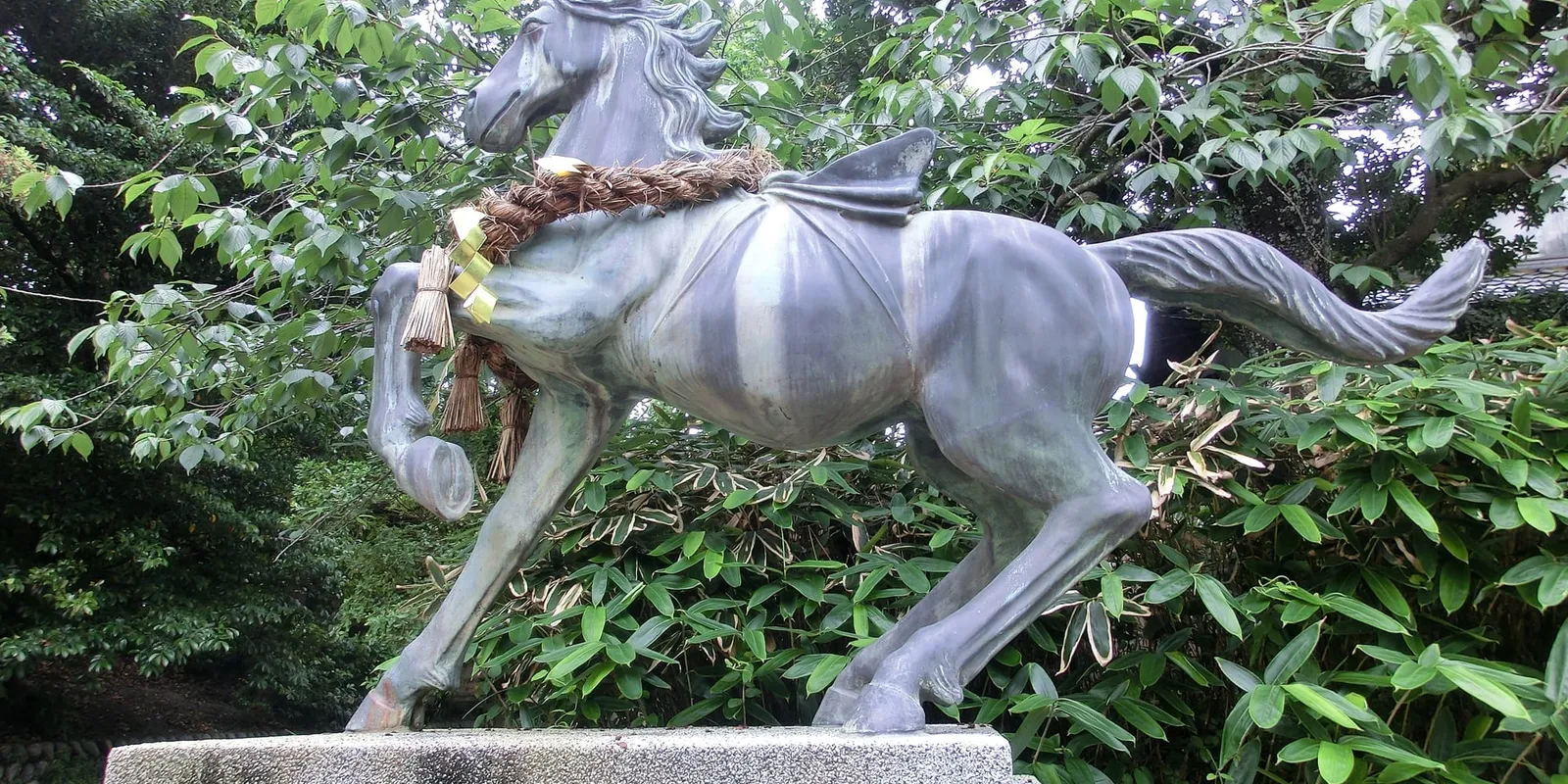
Within the grounds stand a sacred horse (shinme) statue, a reminder of the shrine’s origins as guardian of the Shiraha pasture, along with a pair of komainu lion-dogs known locally for their distinctively red-painted lips. The shrine sits along a prefectural road about 500 meters inland from the coast, so visitors can still catch the scent of the sea while enjoying a peaceful approach.
Visiting Tips
The compact grounds can be visited in about 15–20 minutes, but many visitors combine the trip with Komagata Jinja, the shrine’s ancestral site, and the nearby Omaezaki Lighthouse, so allowing about an hour for the area is a good idea. The shrine office is not always staffed, so calling ahead is recommended if a goshuin is wanted. Free parking is available directly in front of the shrine.
Annual Festivals
- Autumn Festival (mid-October): The largest festival of the year, when several decorated floats from the Shiraha district converge on the shrine to the sound of festival music, accompanied by sacred kagura dance and a mikoshi procession.
- Setsubun Festival (early February): A rite praying for good health throughout the coming year.
- New Year’s Visits (January 1–3): Local worshippers come to pray to the guardian of horses and the deities of maritime safety and good relationships as the year begins.
- Annual Festival: A rite of thanksgiving to the enshrined deities and prayers for the peace of the community.
Nearby Food & Sightseeing
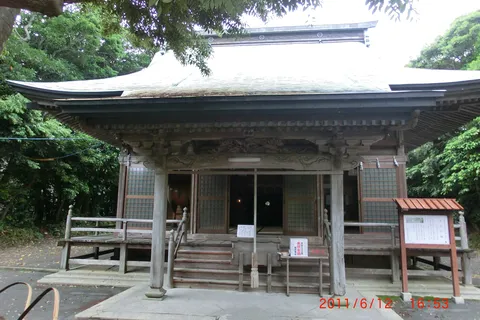
- Komagata Jinja: Regarded as the ancestral site of Shiraha Jinja, about 5 minutes away by car. It preserves the legend of ninety horses that drifted ashore here and the origin of the offshore Gozen-iwa rock.
- Omaezaki Lighthouse: Standing on the cape overlooking the Enshu Sea, this is one of Japan’s “50 Best Lighthouses.” Visitors can climb inside for a sweeping panorama of the Pacific.
- Isotei: A restaurant serving seafood landed straight from the port alongside local specialties, including “gawa,” a chilled miso soup with bonito sashimi that is a signature taste of Omaezaki.
Frequently Asked Questions
- Q. What are the visiting hours?
- A. The grounds are open to visitors at all times; the shrine office is generally staffed 8:00–17:00.
- Q. When is the goshuin office open?
- A. Around 8:00–17:00, though the office isn't always staffed — calling ahead is recommended. From ¥500 (¥1,400 for a combined goshuin with Komagata Jinja).
- Q. Is there parking?
- A. Yes, free parking is available in front of the shrine (about 20 spaces).
- Q. What's the connection to Komagata Jinja?
- A. Komagata Jinja is Shiraha Jinja's original site — the shrine relocated here in 837. It's about a 5-minute drive away.
- Q. How do I get there?
- A. About a 30-minute drive from the Sagara-Makinohara IC on the Shin-Tomei Expressway.
Related Shrines
Shizuoka, Omaezaki
Komagata Jinja
Komagata-jinja
- Maritime Safety
- Good Relationships
- Bountiful Harvest
Kagawa Prefecture, Kotohira, Nakatado District
Kotohiragu
Kotohira-gū
- Maritime Safety
- Bountiful Harvest
- Business Prosperity
Yamaguchi, Nagato
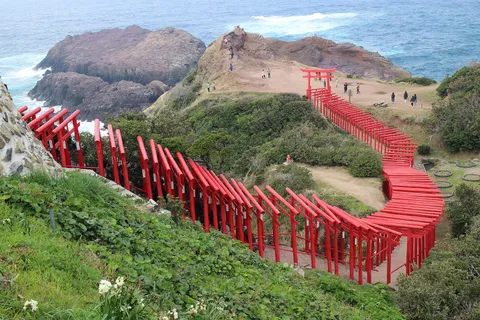
Motonosumi Jinja
Motonosumi-jinja
- Business Prosperity
- Maritime Safety
- Good Relationships