History
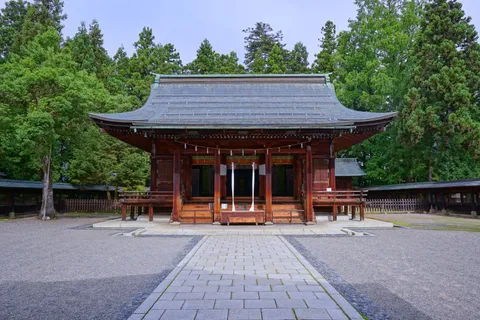
Dewa Sanzan Jinja is the collective name for the three shrines — Gassan Jinja, Dewa Jinja, and Yudonosan Jinja — enshrined respectively on Mt. Gassan, Mt. Haguro, and Mt. Yudono, the three sacred peaks together known as “Dewa Sanzan.” Tradition traces its founding to 593, when Prince Hachiko, a son of the 32nd emperor, Sushun, came to Mt. Haguro and, after undergoing severe ascetic practice, witnessed the manifestation of the great deity of Haguro, Ideha-no-kami, and enshrined Dewa Jinja at the mountain’s summit. The shrine reckons this as the “year the mountain was opened” and honors Prince Hachiko as its founder — an event that took place more than 1,400 years ago.
The path of practice that Prince Hachiko pioneered survives today as “Haguro Koshugendo,” and rigorous mountain training, including the autumn “Akinomineiri” retreat, continues unbroken to this day. Mt. Gassan is said to represent the past, Mt. Haguro the present, and Mt. Yudono the future, and pilgrimage across all three mountains has long been revered as a “journey of rebirth.” This tradition of faith was recognized in 2016 as a constituent property of a Japan Heritage designation.
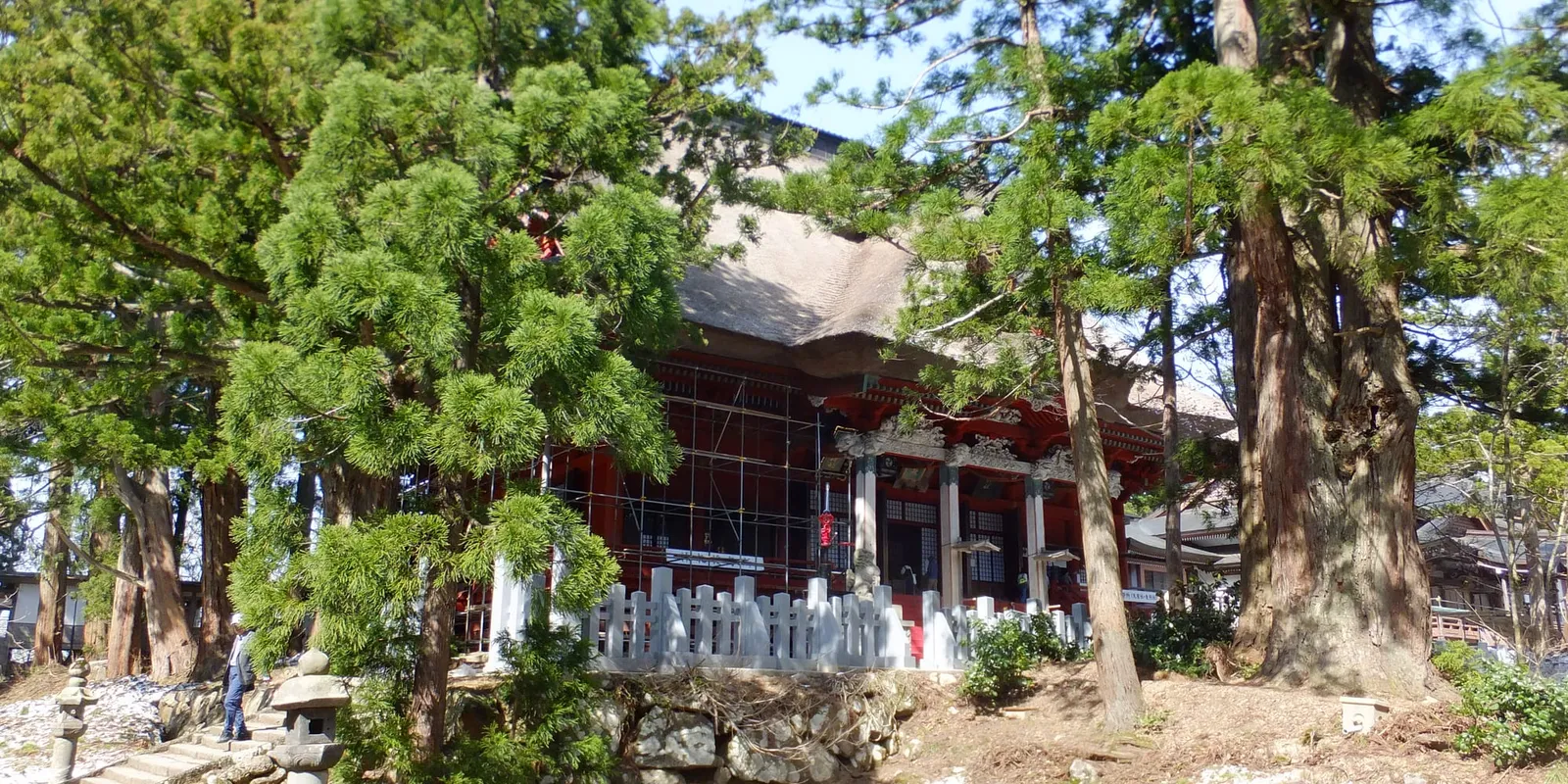
The Sanjin Gosaiden that now stands at the summit of Mt. Haguro was rebuilt in 1818 and, with its massive thatched roof, was designated a National Important Cultural Property in 2000. Because heavy winter snow makes visiting Mt. Gassan and Mt. Yudono difficult, the deities of all three mountains are enshrined together in this single hall, allowing pilgrims to worship all three mountains at any time of year.
Highlights
Passing through the vermillion Zuishinmon gate at the entrance to the approach, visitors climb 2,446 stone steps to the summit, flanked by a cedar avenue with trees over 300 years old. Partway up stands the Five-Storied Pagoda, said to have been founded by Taira no Masakado; the current structure was rebuilt roughly 600 years ago and, as the oldest pagoda in the Tohoku region, was designated a National Treasure in 1966. Standing quietly among the cedars, it is one of the defining sights of Dewa Sanzan.
At the summit, the Sanjin Gosaiden enshrines the deities of Mt. Gassan, Mt. Haguro, and Mt. Yudono together in a single hall — a rare arrangement — and its thatched roof, about 28 meters tall and 2.1 meters thick, is a sight not to be missed. The grounds also include Kagami-ike (the sacred pond), a bell tower, and the Ideha Culture Memorial Hall, offering visitors a chance to experience the solemn atmosphere where mountain worship and nature intertwine.
Visiting Tips
The climb from the Zuishinmon gate at the foot of the mountain to the summit takes about 50 minutes on foot up the stone steps, making for a proper pilgrimage route, though the Haguro-san toll road also allows visitors to drive close to the summit. For those with the time, walking the stone-step pilgrimage past the National Treasure pagoda and the smaller shrines along the way is highly recommended, taking in the changing character of the cedar forest through the seasons as you make your way to the summit. Winter brings heavy snow, so it is wise to check road conditions and the reception hall’s opening status before visiting.
Annual Festivals
- Hana Matsuri / Grand Festival (July 15): One of the most important festivals at Dewa Sanzan Jinja, held to pray for a bountiful harvest and household safety. Mikoshi (portable shrines) for all three mountains are paraded around Kagami-ike pond, joined by “hana-bonten” offerings decorated with artificial flowers representing rice blossoms.
- Shorei-sai Festival (December 31–January 1): Also known as the “Night Festival,” held through the night from New Year’s Eve into New Year’s Day. It marks the culmination of “Fuyu no Mine,” the winter retreat of Haguro Shugendo, performed by two ascetics chosen from the Toge district after 100 days of training beginning on September 24.
- Kinensai / Rice-Planting Festival (May 8): A spring festival praying for a bountiful harvest, featuring a Shinto rite that reenacts the motions of rice planting.
- Hassaku-sai Festival (August 31): An early-autumn festival of thanksgiving for the harvest, cherished locally as a celebration of the season’s bounty.
Nearby Food & Sightseeing
The Toge district at the foot of the mountain has grown up alongside Dewa Sanzan pilgrimage and is home to a row of shukubo pilgrim lodges where visitors can enjoy shojin ryori (Buddhist vegetarian cuisine) made with seasonal mountain vegetables and mushrooms. Before or after your visit, it’s also worth stopping at a local museum to learn more about the history and culture of Dewa Sanzan.
- Shukubo Daishinbo: A pilgrim lodge in the Toge district with over 300 years of history, known for its landlady’s home-cooked shojin ryori and morning prayer experiences.
- Haguro-san Saikan: A pilgrim’s retreat halfway up Mt. Haguro; reservation only, serving authentic shojin ryori made with seasonal mountain vegetables and mushrooms.
- Ideha Culture Memorial Hall: A museum introducing the 1,400-year history and culture of Dewa Sanzan, with a tourist information desk attached.
Frequently Asked Questions
- Q. How long does it take to reach the summit?
- A. About a 50-minute walk up 2,446 stone steps from the Zuishinmon gate, or about 10 minutes by car via the Haguro-san toll road.
- Q. When is the goshuin office open?
- A. Around 8:30–16:30 at the summit Sanshuden hall or the Zuishinmon gate office, for ¥500.
- Q. Is there parking?
- A. Yes — take the Haguro-san toll road (¥400 for standard cars) to reach parking near the summit; parking is also available near the Zuishinmon gate.
- Q. Can I visit in winter?
- A. Heavy snowfall is common, so it's a good idea to check road conditions and the reception hall's opening status before visiting.
- Q. How do I get there?
- A. About a 40-minute bus ride from JR Tsuruoka Station to the "Zuishinmon" stop.