History
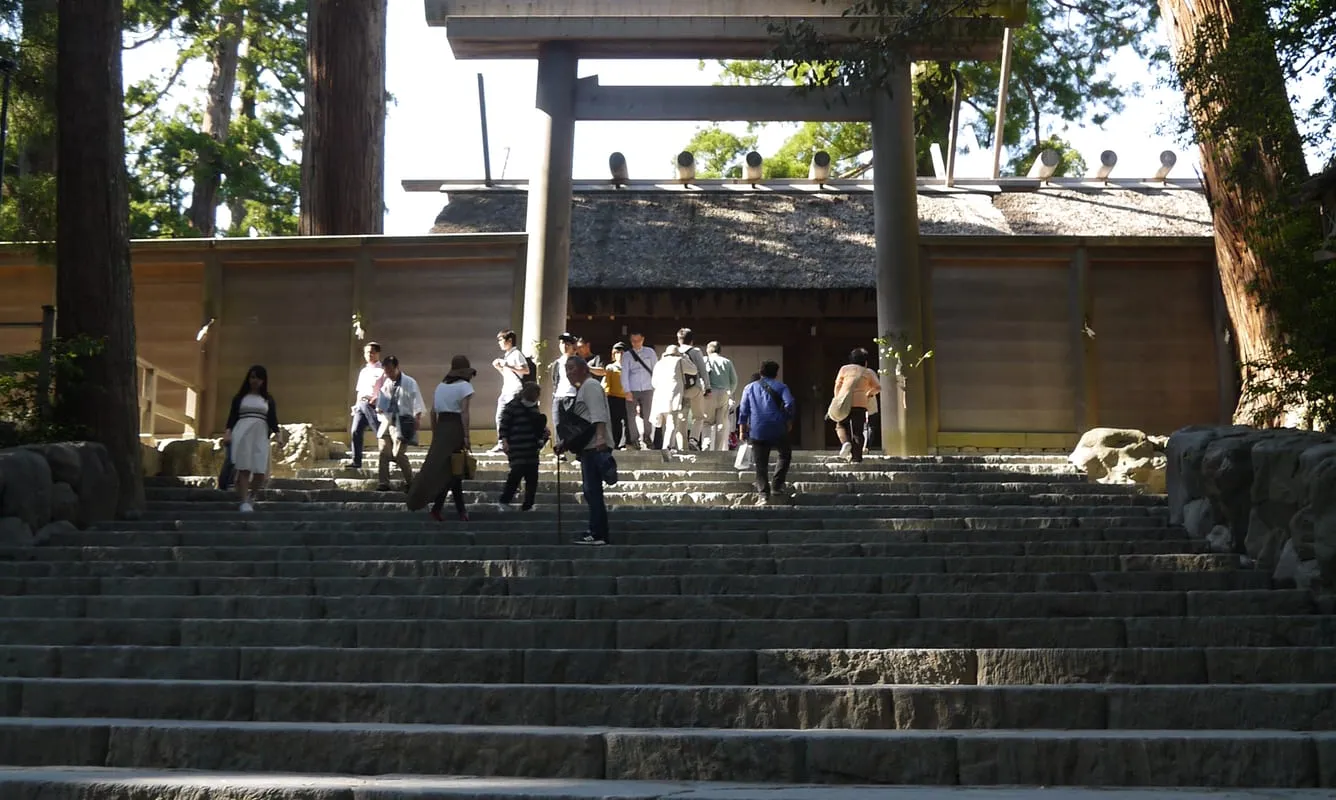
Ise Jingu is so central to Shinto that, unlike most of Japan’s roughly 80,000 shrines, it is formally known simply as “Jingu” — “the Shrine” — with no place name attached. It is built around two main sanctuaries: the Naiku (Inner Shrine), dedicated to Amaterasu Omikami, ancestral deity of the imperial family and goddess of the sun, and the Geku (Outer Shrine), dedicated to Toyouke Omikami, who oversees food, clothing, shelter, and industry. Together with dozens of subsidiary shrines, the complex comprises 125 individual shrines in all.
Tradition holds that Ise Jingu was founded around 2,000 years ago, and it has long been affectionately known as “Oise-san.” During the Edo period, the saying “everyone should visit Ise at least once in their life” captured just how much ordinary people longed to make the pilgrimage.
According to shrine tradition, Amaterasu Omikami was originally enshrined within the imperial palace. In the reign of the 10th emperor, Sujin, Princess Toyosukiirihime relocated the deity to Kasanui in Yamato. Later, Princess Yamatohime, daughter of the 11th emperor, Suinin, set out to find a permanent resting place worthy of the goddess, journeying through Iga, Omi, Mino, and other provinces before finally arriving in Ise, where she built a shrine on the banks of the Isuzu River. The various sites where Yamatohime is said to have enshrined the goddess along the way are known today as “Moto-Ise” (“former Ise”), and shrines connected to this journey still stand in several regions.
The Tradition of Shikinen Sengu
No account of Ise Jingu is complete without Shikinen Sengu, the tradition of rebuilding the shrine’s structures and sacred treasures anew every 20 years and moving the deity into the freshly built sanctuary. Carried out for roughly 1,300 years, this practice is often described as a uniquely Japanese way of passing construction techniques and traditional craftsmanship down to each new generation without ever letting them lapse. The buildings follow the shinmei-zukuri style — simple, powerful, and largely unadorned — preserving the look of Japan’s ancient raised-floor architecture to this day.
Visiting Tips
First-time visitors traditionally pay their respects at the Geku before the Naiku, a custom said to reflect the role of the Geku’s deity in offering food to Amaterasu Omikami at the Naiku. The grounds are extensive, so if you plan to visit both shrines, allow two to three hours.
Just past the Uji Bridge at the entrance to the Naiku, the Isuzu River has long served as a purification spot where visitors wash their hands — a peaceful spot where you can get close to the clear, flowing water.
Highlights
Photography is not permitted inside the sacred fence surrounding the main sanctuary of the Naiku, so visitors are asked to pay their respects quietly. The grounds are lined with towering trees said to be centuries old, and many visitors say that simply walking among them, amid the solemn atmosphere, is enough to calm the mind.
Beyond the main sanctuary, the approach path through the Naiku passes several smaller buildings and shrines worth pausing at, each adding a little more depth to a visit:
- Takimatsuri no Kami: A shrine to the guardian deity of the Isuzu River, distinctive for having no building at all — it’s enshrined directly on a stone platform behind a low fence and gate.
- Gojoden: A hall used for purification rites and remote-worship ceremonies on rainy days.
- Misakadono / Yuki no Mikura: Auxiliary shrines connected with the sacred sake and food offerings presented at the Naiku.
- Imibiyaden / Haraedo: Known as the “kami’s kitchen,” where food offerings are prepared using ritually pure fire.
- Minie-chosha: The building where the ritual preparation of food offerings (mike) takes place.
- Mishine no Mikura: A storehouse for the sacred rice offered during the “Three Great Festivals” (Sansetsu-sai), including Kanname-sai.
- Geheiden: A shinmei-zukuri style building where dedicated offerings are stored.
- Miya no Meguri no Kami: A shrine to the deity guarding the entire sacred precinct of the Naiku, often described as one of Ise Jingu’s hidden power spots.
- Miumaya: The stable housing the shinme, sacred horses said to serve the kami — two each are kept at the Naiku and the Geku, four in total.
- Sanshuden: A rest hall for visitors, which also includes a stage used for dedicated Noh and court dance performances.
- Oyamatsumi Jinja / Koyasu Jinja: Long revered by the local people of Ise as guardians of safe childbirth and the blessing of children.
Annual Festivals
- Kanname-sai (October 15–17): The most important festival at Ise Jingu, in which the year’s first-harvested rice is offered to Amaterasu Omikami.
- Tsukinami-sai (June and December 15–17): Together with Kanname-sai, these form the “Three Great Festivals” (Sansetsu-sai), among the shrine’s most venerable rites.
- Shikinen Sengu (once every 20 years): Ise Jingu’s largest event, in which the shrine buildings and sacred treasures are entirely rebuilt and the deity is moved into the new sanctuary — a tradition carried on for roughly 1,300 years.
Nearby Food & Sightseeing
- Okage Yokocho: A row of shops in front of the Naiku selling Ise specialties such as akafuku mochi, Ise udon, and tekone-zushi, along with souvenirs.
- Akafuku Honten: A long-established teahouse said to date back to 1707, famous for its akafuku mochi rice cakes.
- Fukusuke: A popular Ise udon restaurant inside Okage Yokocho.
- Sengukan: A museum next to the Geku dedicated to Shikinen Sengu, where you can learn more about the rebuilding techniques and sacred treasures.
Frequently Asked Questions
- Q. What are Ise Jingu's visiting hours?
- A. The Naiku (Inner Shrine) is generally open 5:00–18:00, though hours vary by season — check the official site for the current schedule.
- Q. Where can I get a goshuin (shrine stamp)?
- A. At the amulet office near the main hall, during visiting hours. It costs from ¥300.
- Q. Should I visit the Outer Shrine (Geku) or Inner Shrine (Naiku) first?
- A. Tradition holds that visitors should pray at Geku before Naiku. If you're visiting both, plan for about 2–3 hours.
- Q. Can I take photos at the main sanctuary?
- A. No — photography is prohibited inside the sacred fence (mikakiuchi) surrounding the main hall. Please pray quietly instead.
- Q. Is parking available?
- A. Yes, several paid parking lots are available nearby.
Related Shrines
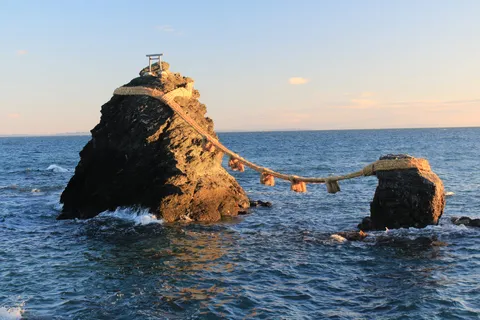
Mie Prefecture, Futami-cho, Ise
Futami Okitama Jinja
Futami Okitama Jinja
- Marital Harmony
- Good Relationships
- Good Fortune
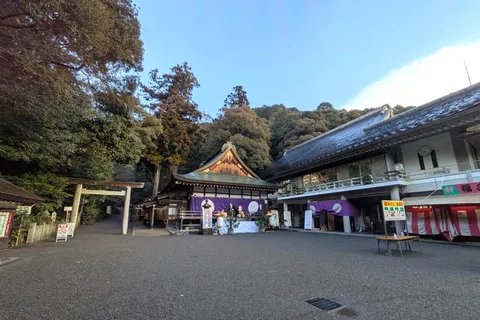
Mie Prefecture, Tado-cho, Kuwana
Tado Taisha
Tado Taisha
- Good Fortune
- Financial Luck
- Matchmaking
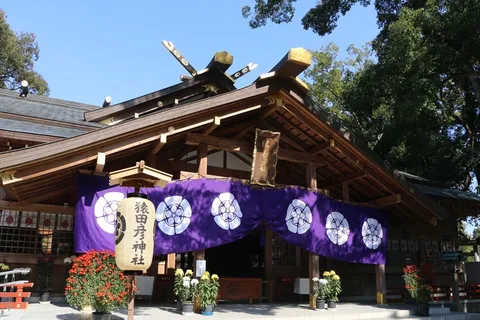
Mie Prefecture, Ise
Sarutahiko Jinja
Sarutahiko-jinja
- Directional Protection
- Good Fortune
- Good Relationships