History
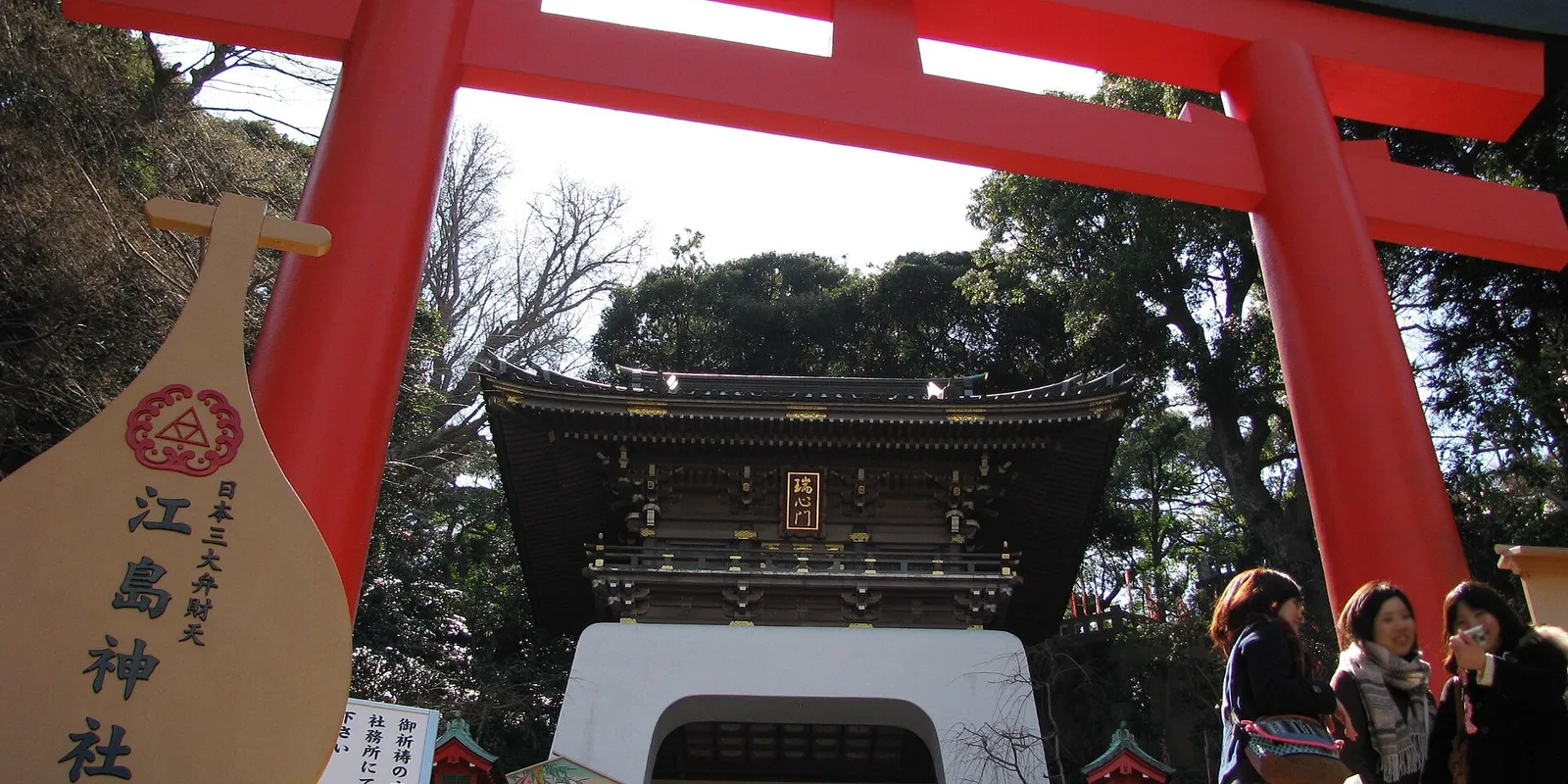
Enoshima Jinja treats the entire island of Enoshima as sacred ground, and consists of three shrines — Hetsunomiya, Nakatsunomiya, and Okutsunomiya — enshrining the three Munakata goddesses (Tagirihime no Mikoto, Ichikishimahime no Mikoto, and Tagitsuhime no Mikoto). Counted among Japan’s “Three Great Benzaiten Shrines,” it has long been worshipped as a home of the god of the sea and the arts.
According to shrine tradition, its origins date to 552, when a deity was enshrined in a cave (Iwaya) on the island’s south side. In 700, En no Ozunu, regarded as the founder of Shugendo mountain asceticism, is said to have secluded himself in this cave and attained spiritual power there. In the medieval period, in 1182, Minamoto no Yoritomo visited Enoshima to pray for victory in his campaign against the Oshu Fujiwara clan, and is said to have ordered the priest Mongaku to enshrine Benzaiten here. From then on, the shrine received deep reverence from warrior families, including the Kamakura shogunate and the Hojo clan. The cave is also said to have been visited by Kobo Daishi (Kukai) and Nichiren, and it has long been known as a sacred site of faith and ascetic practice.
Highlights
Enoshima Jinja’s distinctive style of worship involves crossing the Benten Bridge from the island’s entrance, climbing the stone steps of the approach past the shopping arcade, and visiting all three shrines on the way to the summit. The view over Sagami Bay from the grounds — and, on clear days, a glimpse of Mt. Fuji — is one of its great appeals.
Visiting Tips
Because the island has considerable elevation change, comfortable walking shoes are recommended. Visitors can also use the Esca, a paid outdoor escalator, to avoid the steepest climbs.
Annual Festivals
- Hatsumi Reitaisai (first Day of the Snake in April): A grand festival unique to Enoshima Jinja, held on the “Day of the Snake,” which is sacred to Benzaiten.
- Enoshima Tenno Festival (mid-July): Held as the Yasaka Shrine festival, this vigorous summer event features a portable shrine carried across the water and an “Ikiaisai” ritual in which it clashes at sea with a portable shrine from Koshigoe on the opposite shore — a highlight of Shonan’s summer.
- Hatsui Taisai (first Day of the Boar in October): An autumn festival connected to Benzaiten worship.
Nearby Food & Sightseeing
- Shirasu Donya Tobiccho: A popular restaurant famous for raw and boiled shirasu (whitebait) rice bowls, letting visitors fully enjoy Enoshima’s signature shirasu dishes.
- Enoshima Samuel Cocking Garden: A garden built on the grounds of a Meiji-era Western-style estate, featuring greenhouse ruins and seasonal flowers.
- Enoshima Sea Candle (Observation Lighthouse): An observation lighthouse within Samuel Cocking Garden, offering panoramic views of Mt. Fuji and Sagami Bay on clear days.
Frequently Asked Questions
- Q. What are the visiting hours?
- A. 8:30–17:00.
- Q. When is the goshuin office open?
- A. 8:30–17:00, ¥300 for each of the three shrines.
- Q. Is there parking?
- A. Yes, paid parking is available on Enoshima island.
- Q. Is it hard to get around the island?
- A. The terrain has some steep sections, so comfortable shoes are recommended. The paid outdoor "Escar" escalators let you skip the hills.
- Q. How do I get there?
- A. About a 15-minute walk from Katase-Enoshima Station (Odakyu Line), or about a 20-minute walk from Enoshima Station (Enoden Line).
Related Shrines
Kanagawa Prefecture, Kamakura
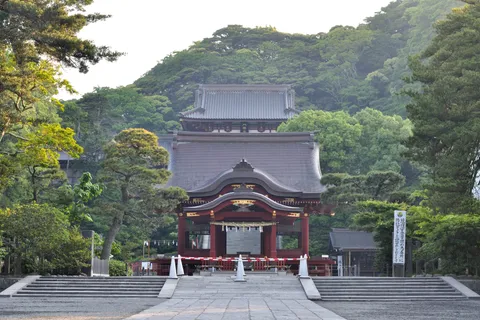
Tsurugaoka Hachimangu
Tsurugaoka Hachiman-gū
- Victory in Competition
- Good Relationships
- Protection from Misfortune
Kyoto, Ukyo Ward, Kyoto
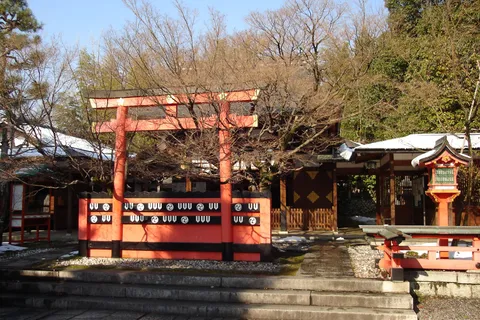
Kurumazaki Jinja
Kurumazaki-jinja
- Success in the Arts
- Financial Luck
- Good Relationships
Tokyo, Shinagawa
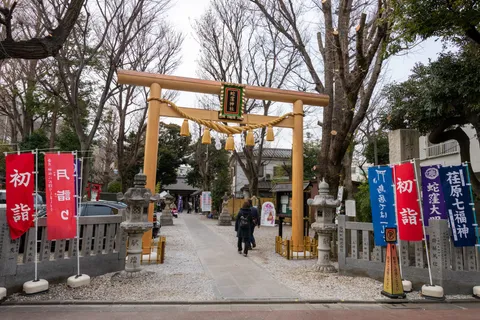
Hebikubo Jinja
Hebikubo-jinja
- Financial Luck
- Wealth
- Good Fortune