History
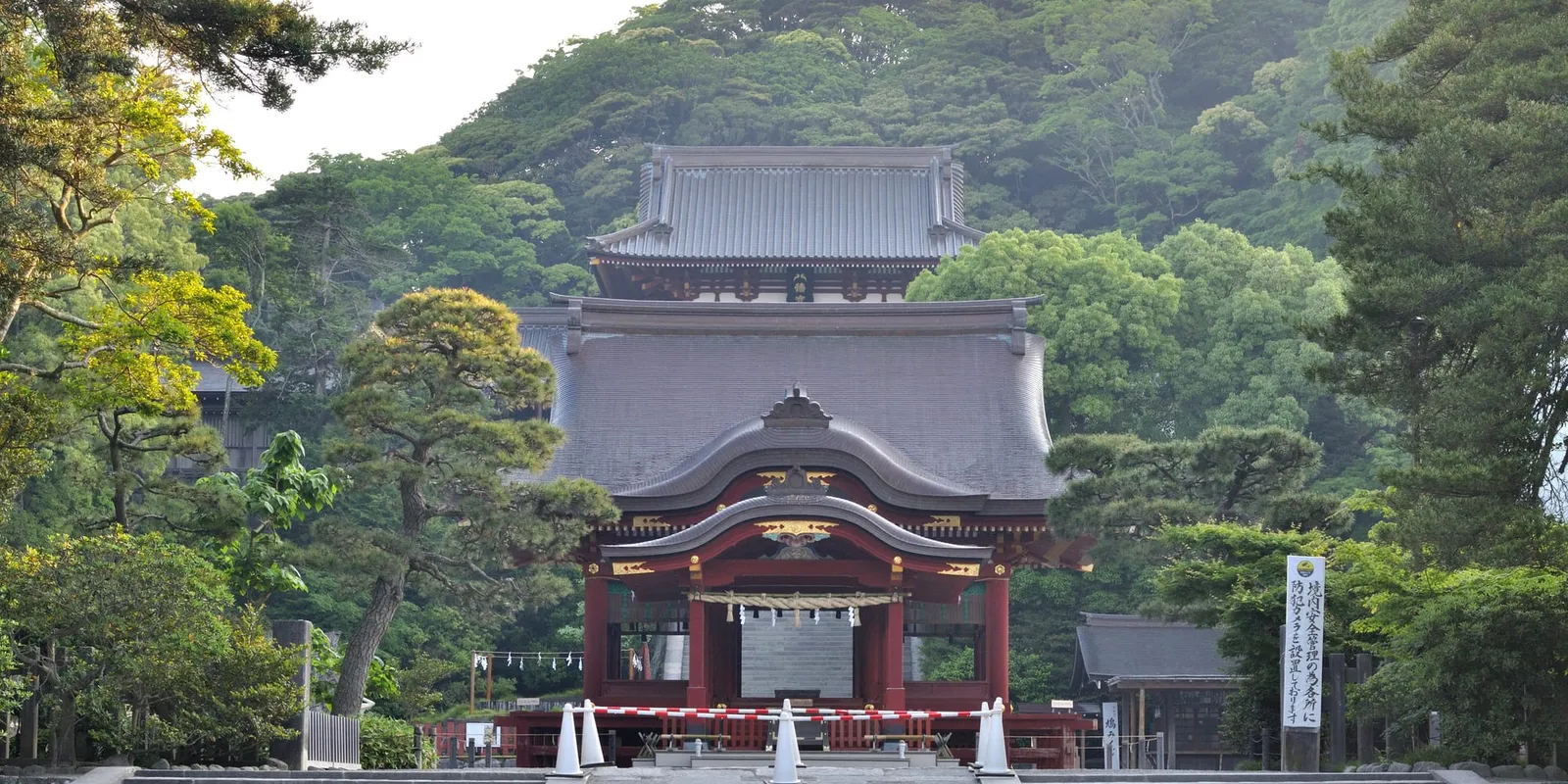
Tsurugaoka Hachimangu stands at the heart of Kamakura and has long been deeply revered as the guardian deity of the Kamakura samurai. Its origins trace to 1063, when Minamoto no Yoriyoshi invited the spirit of Iwashimizu Hachimangu — the tutelary shrine of the Minamoto clan — to Kamakura. Minamoto no Yoritomo later moved the shrine to its present site and developed it into the spiritual center of the Kamakura shogunate. It enshrines Emperor Ojin, Hime-gami, and Empress Jingu. The approach to the shrine, Wakamiya Oji, is said to have been built by Yoritomo himself in 1182 to pray for the safe childbirth of his wife, Hojo Masako, and it became the central axis around which the town of Kamakura was laid out.
Tsurugaoka Hachimangu was also the setting for pivotal events in the history of the Kamakura shogunate. In the New Year of 1219, the third shogun, Minamoto no Sanetomo, was assassinated by his nephew Kugyo while descending the shrine’s great stone steps after a ceremony marking his appointment to Minister of the Right — an event that brought the Minamoto shogunal line to an end after just three generations. The well-known legend that Kugyo lay in hiding behind the shrine’s great ginkgo tree first appears in the Edo-period text “Shinpen Kamakurashi” and is generally considered a later embellishment.
Highlights
Dankazura, the raised approach leading from Wakamiya Oji, is said to be the first horse-riding track ever built in Japan and is known today for its beautiful rows of cherry trees. The grounds hold many sites connected with the Kamakura shogunate, including the legendary “Great Ginkgo” associated with Minamoto no Yoritomo and the Maidono (Dance Hall), where the dancer Shizuka Gozen is said to have performed.
Visiting Tips
The shrine sits at the heart of sightseeing in Kamakura, and its grounds stay busy year-round with visitors combining a visit here with a stroll through the lively approach to the shrine, including Komachi-dori. The yabusame (mounted archery) performed as part of the Reitaisai in September is an especially popular ritual to see.
Annual Festivals
- Reitaisai (Grand Festival): Held every year from September 14 to 16, this is Tsurugaoka Hachimangu’s most important festival, tracing back to the hojoe (a rite for releasing captive animals) and yabusame that Minamoto no Yoritomo once held here.
- Yabusame Shinji: Held on September 16, the final day of the Reitaisai, this dramatic ritual of archery from horseback carries on the traditions of the Kamakura samurai.
- Bonbori Festival: A summer tradition in which the shrine grounds are decorated with several hundred paper lanterns (bonbori), marking the height of summer in Kamakura.
Nearby Food & Sightseeing
The area around Kamakura Station is lined with restaurants and souvenir shops, making it an ideal base for combining a visit to the shrine with sightseeing around Kamakura.
- Asahina: A shop on Komachi-dori specializing in Kamakura kamaboko and Kamakura-age (fried fish cake); its hearty “Kamakura-age Tako” (octopus) is especially popular.
- Raimugi House Bakery: Tucked in an alley between Komachi-dori and Wakamiya Oji, this rye-bread specialty shop is run by a Finnish baker.
- Eating and drinking while walking is prohibited within the city of Kamakura as a matter of etiquette, so it’s polite to enjoy anything you buy inside the shop or in a designated seating area.
Frequently Asked Questions
- Q. What are the visiting hours?
- A. Generally 6:00–20:00, varying by season.
- Q. When is the goshuin office open?
- A. Around 9:00–16:00, for ¥500.
- Q. Is there parking?
- A. Yes, paid parking is available nearby.
- Q. What is Dankazura?
- A. A cherry-tree-lined approach along Wakamiya Oji, said to be the first horse-racing track ever built in Japan.
- Q. How do I get there?
- A. About a 10-minute walk from JR/Enoden Kamakura Station.
Related Shrines
Kanagawa Prefecture, Fujisawa
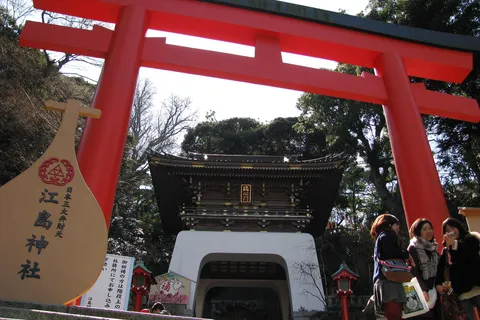
Enoshima Jinja
Enoshima-jinja
- Good Relationships
- Financial Luck
- Success in the Arts
Oita Prefecture, Usa
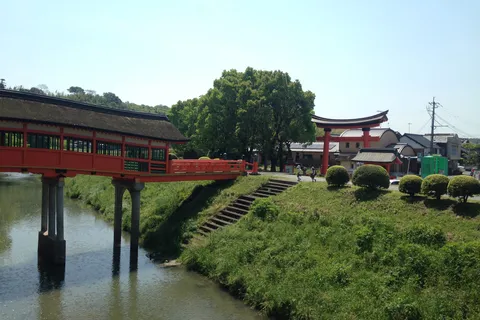
Usa Jingu
Usa-jingū
- Victory in Competition
- Protection from Misfortune
- Household Safety
Nara Prefecture, Nara
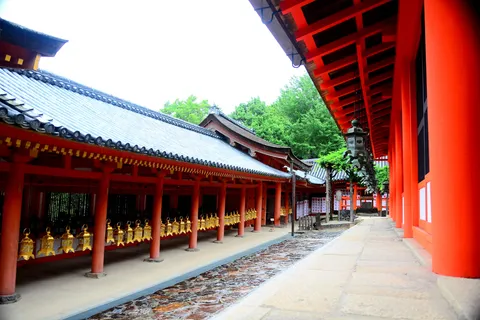
Kasuga Taisha
Kasuga-taisha
- Protection from Misfortune
- Good Fortune
- Good Relationships