History
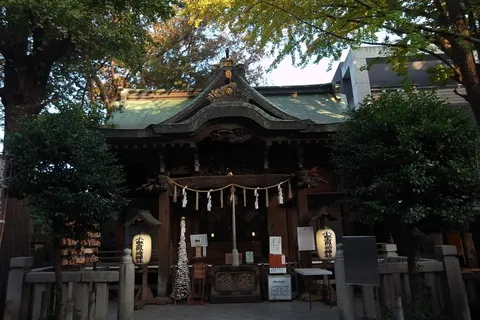
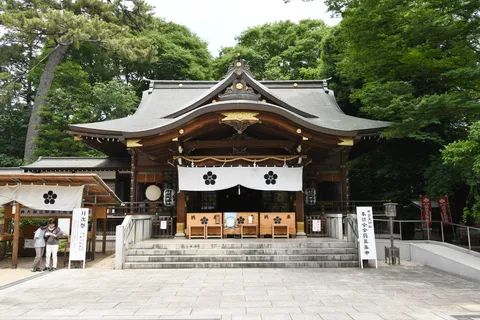
Hirakawa Tenmangu stands in Hirakawacho, Chiyoda Ward, Tokyo, right near Hanzomon Station. Its name is read “Hirakawa Tenmangu,” and it is also called “Hirakawa Tenjin.” It enshrines Sugawara no Michizane as the main deity, with Hachiman (Homudawake no Mikoto) and Tokugawa Ieyasu as the deities enshrined alongside him, according to guides such as the Chiyoda City tourism association.
According to the official history, Ota Dokan, lord of Edo’s Hirakawa Castle, dreamed of Michizane one day, and the next morning was presented with a portrait said to be in Michizane’s own hand. Taking the dream as a divine sign, he served as patron himself and built a Tenmangu in the north of the castle grounds in 1478 (Bunmei 10). The official site cites the “Baika Mujinzo” for this account. Dokan reportedly went on to plant many plum trees around it, so the area came to be called “Bairin-zaka” (Plum Grove Slope), a name that still survives inside the Hirakawa Gate of the Imperial Palace.
Soon after Tokugawa Ieyasu entered the castle, the shrine was moved outside the Hirakawa Gate to make way for construction. In 1607 (Keicho 12), the second shogun Hidetada had it moved to its present site, then called Kaizuka, and the official site says the district was named Hirakawacho after the shrine. In the Edo period it served as a prayer site for the Tokugawa shogunate, the Kishu and Owari Tokugawa houses, and the Ii family, and the official site says the head priest was treated with such standing that he could have a one-on-one audience with the shogun at New Year. Scholars such as the blind scholar Hanawa Hokiichi and the Dutch-learning scholar Takano Choei are said to have revered it. The official site adds that many people still pray here for learning (especially medicine), the arts, and business prosperity.
TV Tokyo’s “Shutsubotsu! Ad-machic Tengoku” featured the shrine at No. 4 in its Hanzomon episode broadcast on July 15, 2023 (according to the program’s official page). The page describes it as an old shrine founded in 1478 by Ota Dokan, the warlord who built Edo Castle, said to be the origin of the Hirakawacho district name.
Highlights
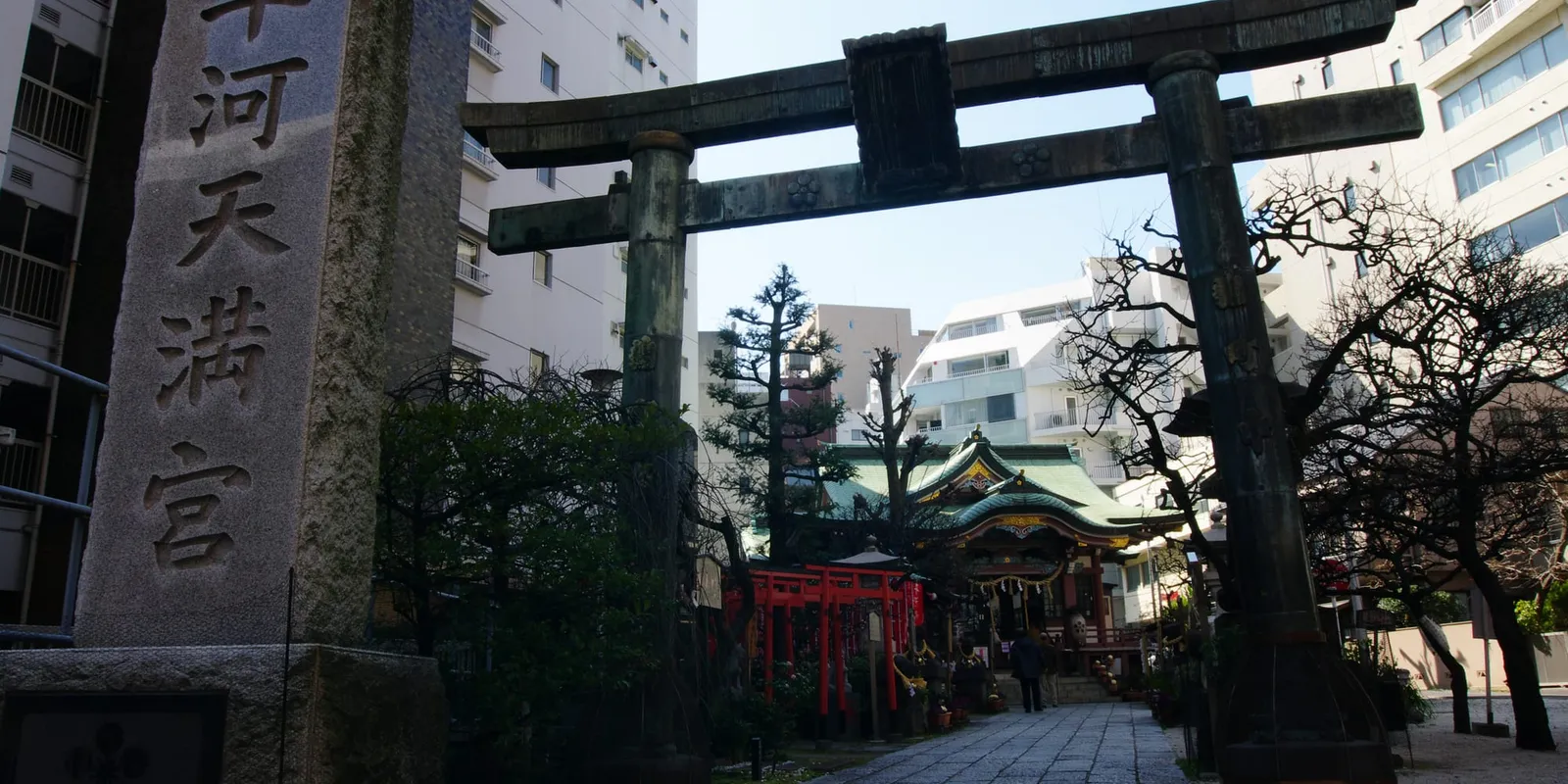
The bronze torii at the front is about 5 meters tall. According to the official site, its inscription indicates it was built and dedicated in December 1844 (Tenpo 15) by people of the Kojimachi area, and it is described as the oldest torii in Chiyoda Ward. The maker is given as the Edo founder Nishimura Izumi Fujiwara no Masatoki (thought to be the eighth head of the family), and it is a Chiyoda Ward designated tangible cultural property (designated April 1994).
The grounds include stone ox statues. The official site calls the one on the left just inside the torii, at the fork to the Hirakawa Inari Shrine approach, the “Nade-ushi” (rubbing ox), and says people believe that rubbing it improves one’s learning and arts. It was dedicated in 1852 (Kaei 5), for the 950th anniversary of Michizane’s death, as one of a pair, and the site notes wear on its head and back, apparently from visitors touching it. The TV Tokyo program page says there are five stone ox statues in the grounds.
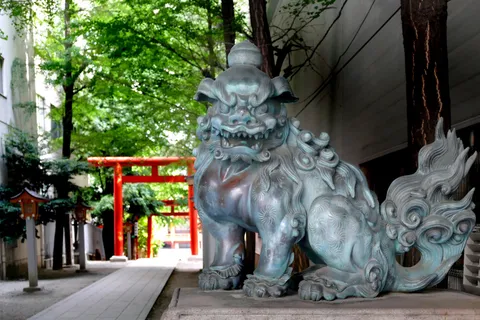
On either side of the worship hall stand guardian dogs (komainu) dedicated in 1801 and rebuilt in 1852, a Chiyoda Ward designated tangible folk cultural property (April 1995). According to the official site, the “Shinsen Tokyo Meisho Zue” records that they were made after screen paintings in the Shishinden hall, and that the one on the right is a “shishi” (lion) and the one on the left a “komainu,” forming a pair. Also in the grounds are a stone lantern dedicated in 1852 (over 3.45 meters tall, a ward-designated folk cultural property), a brush mound for the memorial of used writing brushes (also ward-designated), a hundred-visit stone, and a strength-testing stone. The “En-musubi no Ume” (matchmaking plum) stands to the left of the worship hall, and the auxiliary shrines include the Santengu (Otori, Shio, and Asama shrines) and the Hirakawa Inari Shrine.
Visiting Tips
The official site says you may visit at any time, and its pages carry the note “10:00 AM–4:00 PM.” Prayer services are by phone reservation only, accepted 9:00 AM–4:00 PM, and take about 20 minutes. Application forms for corporate New Year prayers can also be downloaded from the official site.
The official site lists the regular goshuin, one for the 1st and one for the 25th of each month, limited goshuin for special days such as the annual festival, and a Hirakawa Inari Shrine goshuin available only on Horse days. The monthly limited goshuin are distributed pre-written. The fee is not stated on the official site; a local news article (Akasaka Keizai Shimbun, July 2025) gives ¥500.
The shrine is about a 1-minute walk from Exit 1 of Hanzomon Station and about 3 minutes from Exit 1 of Kojimachi Station (official site). Since the official site does not mention parking, going by train is the convenient choice.
Annual Festivals
The official calendar of events lists the following.
- Saitan-sai (January 1): A New Year ceremony.
- Hatsu-Tenjin (January 25): The first Tenjin day of the year. According to the news notes, the uso bird charms are distributed from January 1 to 25 in a typical year.
- Baika-sai (March): A plum blossom festival.
- Annual festival (April 25): The official site says Kojimachi hayashi festival music is performed at the kagura hall.
- Oharae (June 30): A purification rite for the first half of the year.
- Tanabata Festival (July 7): According to the official news notes, it begins at 7:00 PM, and wishes written on strips are conveyed to the deity in a burning ritual (reported for 2024).
- Summer festival (August): Listed in the official calendar.
- Hirakawa Inari Shrine annual festival (October): A festival of the on-site Inari shrine, with a special goshuin distributed in October.
- Shichi-Go-San Festival (November 15)
- Oharae and New Year’s Eve Festival (December 31)
- Monthly service (1st and 25th of each month)
Dates can change from year to year, so check “Seasons and Festivals” and “News” on the official site for the latest.
Nearby Food & Sightseeing
- Hanzomon Gate: Featured at No. 1 in the Hanzomon episode of TV Tokyo’s program, the only gate on the west side of the Imperial Palace. The program page says its name is thought to come from Hattori Hanzo, who guarded it.
- Supreme Court of Japan: No. 2 in the same program. The page says the current building dates from 1974 (Showa 49), and the grand courtroom has a 41-meter-high atrium ceiling.
- National Theatre of Japan: No. 5 in the same program. Opened in 1966, it was temporarily closed from the end of October 2023 for rebuilding, with reopening planned for fiscal 2029 (information as of the 2023 broadcast). Check official sources for the current status.
- Hirakawa Gate, Imperial Palace: The shrine’s official site says the name “Bairin-zaka,” tied to the plum trees Ota Dokan planted, still survives inside this gate. A good landmark for tracing the shrine’s history on foot.
Frequently Asked Questions
- Q. What are the visiting hours?
- A. The official site says you may visit at any time, and its pages carry the note "10:00 AM–4:00 PM." Prayer services require a phone reservation; they are accepted 9:00 AM–4:00 PM and take about 20 minutes.
- Q. Can I get a goshuin at Hirakawa Tenmangu?
- A. Yes. According to the official site, there is the regular goshuin, one for the 1st and one for the 25th of each month, limited goshuin for special days such as the annual festival, and a goshuin for the on-site Hirakawa Inari Shrine (available only on Horse days). Monthly limited goshuin (pre-written) are also announced. The official site does not state the fee; a local news article (Akasaka Keizai Shimbun, July 2025) gives ¥500. Aim to arrive by about 4:00 PM.
- Q. How do I get there, and is there parking?
- A. It is about a 1-minute walk from Exit 1 of Hanzomon Station (Hanzomon Line), about 3 minutes from Exit 1 of Kojimachi Station (Yurakucho Line), and about 10 minutes from the Kojimachi exit of JR Yotsuya Station (official site). The official site does not mention parking, so going by public transport is convenient.
- Q. Has the shrine been featured on TV?
- A. Yes. TV Tokyo's "Shutsubotsu! Ad-machic Tengoku" (出没!アド街ック天国) featured Hirakawa Tenmangu at No. 4 in its Hanzomon episode broadcast on Saturday, July 15, 2023 (according to the program's official page). The page describes it as an old shrine founded in 1478 by Ota Dokan, the warlord who built Edo Castle, said to be the origin of the Hirakawacho district name, and notes that the grounds have five stone ox statues, one of which, the "Nade-ushi," is said to help whatever ails you if you rub it (information as of the 2023 broadcast).
- Q. When can I get the Uso-kae lucky bird charm?
- A. The official site's news notes say the uso bird charms (usodori) are distributed from January 1 to January 25 (an announcement for 2025 posted at the end of 2024). For 2026, a notice says distribution ended on January 25. Timing and details may change, so check the official site before you go.
Plan Your Visit
Before you go, you can book a stay and get your shrine-visit items ready.
Amazon links open Amazon.co.jp (Japan) in English; whether an item ships overseas depends on the product.
※ Contains ads (PR). Links open external sites such as Amazon, Rakuten, Trip.com and Booking.com.