
History
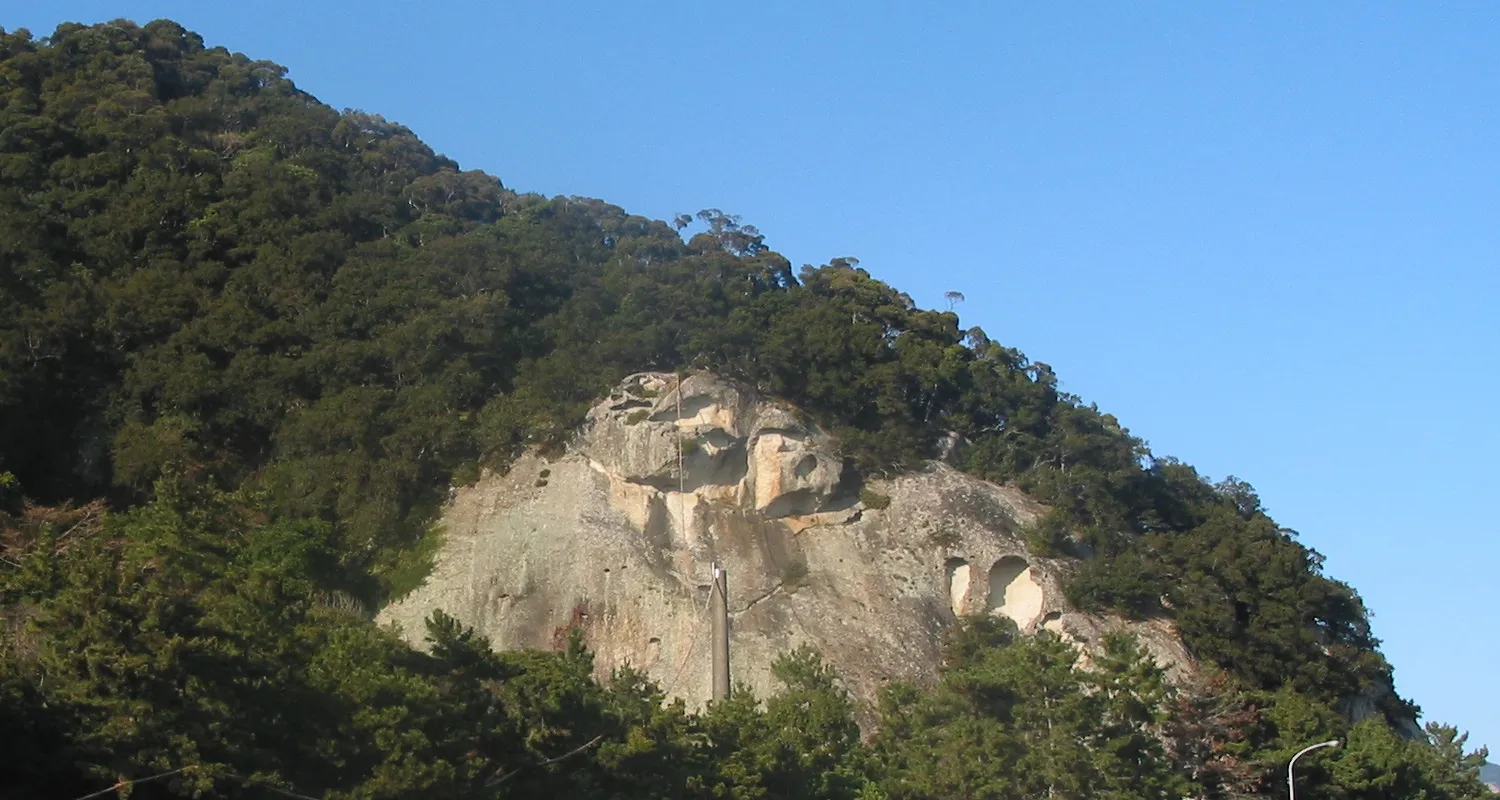
Hananoiwaya Jinja, in the Arima district of Kumano, Mie Prefecture, is one of the oldest shrines in Japan. It has no shrine buildings at all: its sacred object of worship is a sheer rock face roughly 45 meters high, rising directly above the Kumano Sea. An altar stands at the rock’s base, fronted by a worship area paved with white stones and enclosed by a low sacred fence — a form of iwakura (sacred rock) worship that predates the construction of shrine architecture.
One variant text within the Nihon Shoki, Japan’s official chronicle compiled in 720 CE, records that Izanami no Mikoto, the primordial goddess who created the Japanese islands together with her consort Izanagi, died from burns sustained while giving birth to the fire god Kagutsuchi, and was buried in “Arima village, Kumano, in the province of Kii.” The same passage adds that local people honored the site each year in the season of flowers, offering blossoms and music, dance, and banners — the tradition said to have given the shrine its name, “Hana no Iwaya,” the Cave of Flowers. It is one of the few locations named in Japan’s earliest chronicles that can still be identified on the ground today.
The shrine enshrines Izanami no Mikoto together with her child, the fire god Kagutsuchi no Mikoto. A short distance away stands Ubuta Jinja, believed to mark the spot where Izanami gave birth to Kagutsuchi and died — forming a paired set of sacred sites with Hananoiwaya: one marking the birth, the other the burial. In 2004, Hananoiwaya Jinja was inscribed as part of the UNESCO World Heritage Site “Sacred Sites and Pilgrimage Routes in the Kii Mountain Range,” as a stop on the Iseji route of the Kumano Kodo pilgrimage roads.
Highlights
The shrine’s overwhelming centerpiece is the roughly 45-meter cliff face rising at the rear of the grounds, a pine tree growing from its summit and an altar set at its base. Viewed from the white-stone-paved worship area, with no shrine buildings to interrupt the sightline, it offers a rare, direct encounter with the kind of nature worship that predates Japan’s shrine architecture entirely.
The grounds sit at one end of Shichirimihama, one of Japan’s longest beaches of sand and pebble, which the Kumano Kodo Iseji route follows along the coast — a short walk after visiting the shrine rewards you with open sea views and the sound of the waves. Also worth seeking out are the traces of the great rope stretched twice yearly between the rock and the ground during the Otsunakake Shinji festival, and the sanroden hall, which handles goshuin and amulets.
Visiting Tips
The grounds themselves can be visited at any time, but the sanroden hall — which doubles as the shrine office for goshuin — is open only 9:00–16:00. Hananoiwaya is sometimes described as an “unmanned” shrine, but that needs a caveat: it sits directly beside the roadside station Michi-no-Eki Kumano Hana no Iwaya, and both the sanroden hall and the station’s Otsuna-jaya tea house are staffed and serve a steady stream of visitors — this is a living UNESCO pilgrimage site, not an abandoned one.
The grounds are naturally busiest on festival days — during the Otsunakake Shinji rope ceremony on February 2 and October 2 — so an early weekday morning away from those dates is the best time for a quiet visit. Drivers can use the free parking at the adjoining roadside station, which also has restrooms and food options, making it a convenient rest stop along the Kumano Kodo.
Annual Festivals
- Otsunakake Shinji (February 2 and October 2): The shrine’s main festival, designated an Intangible Folk Cultural Property of Mie Prefecture. A rope roughly 170 meters long is stretched from the summit of the sacred rock to a pine tree on the south side of the grounds, with a sacred dance performed as part of the ritual.
- Spring Grand Festival (February 2): Held together with the Otsunakake Shinji, this rite prays for a bountiful harvest and the safety of the household for the year ahead.
- Autumn Grand Festival (October 2): A festival of thanksgiving for the year’s harvest, again accompanied by the Otsunakake Shinji rope ceremony.
Nearby Food & Sightseeing
- Ubuta Jinja: The shrine believed to mark the spot where Izanami gave birth to Kagutsuchi and died. Together with Hananoiwaya, the site of her burial, it forms a paired set of sacred places that many visitors pray at together.
- Shichirimihama Beach: The long sand-and-pebble beach that Hananoiwaya faces, one of the longest of its kind in Japan, traced by the Kumano Kodo Iseji pilgrimage route — a pleasant stroll after visiting the shrine.
- Onigajo: A 1.2-kilometer stretch of dramatic wave-carved rock formations, designated a National Site of Scenic Beauty and Natural Monument, and — like Hananoiwaya — part of the “Sacred Sites and Pilgrimage Routes in the Kii Mountain Range” World Heritage listing. Just a few minutes by car from Kumanoshi Station.
Frequently Asked Questions
- Q. Why does Hananoiwaya Jinja have no main hall (honden)?
- A. Hananoiwaya Jinja has no shrine buildings at all. Its sacred object of worship is the cliff face itself — a sheer rock roughly 45 meters high that rises directly above the Kumano Sea. Worshippers pray from an enclosure at the rock's base, paved with white stones, a form of iwakura (sacred rock) worship that predates the construction of shrine buildings.
- Q. What does the Nihon Shoki say about Hananoiwaya Jinja?
- A. One variant text within the Nihon Shoki, Japan's official chronicle compiled in 720 CE, records that Izanami no Mikoto died from burns sustained while giving birth to the fire god Kagutsuchi, and was buried in "Arima village, Kumano, in the province of Kii." The same passage says local villagers honored her there with seasonal flowers, music, and dance — the origin of the name "Hana no Iwaya," or Cave of Flowers. It is one of the few sites named in Japan's earliest chronicles whose location can still be identified today.
- Q. What is the Otsunakake Shinji rope festival?
- A. Held twice a year, on February 2 and October 2, as the shrine's main festival, this ritual is designated an Intangible Folk Cultural Property of Mie Prefecture. A rope roughly 170 meters long is stretched from the top of the sacred rock to a pine tree on the south side of the grounds, accompanied by a sacred dance.
- Q. Can I get a goshuin at Hananoiwaya Jinja?
- A. Yes. Goshuin are available at the sanroden hall, which also serves as the shrine office, from 9:00 to 16:00. The standard goshuin costs ¥300, and limited-edition designs are sometimes offered as well.
- Q. How do I get to Hananoiwaya Jinja, and is there parking?
- A. From JR Kumanoshi Station on the Kisei Main Line, take a bus bound for Shingu Station (about 5 minutes) and get off at the "Hana no Iwaya" stop; it's also about 5 minutes by car. Free parking (41 spaces for cars, 6 for buses) is available at the adjoining roadside station, Michi-no-Eki Kumano Hana no Iwaya.
Related Shrines
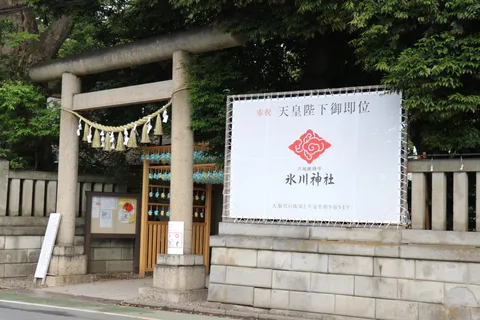
Saitama, Kawagoe
Kawagoe Hikawa Jinja
Kawagoe Hikawa-jinja
- Good Relationships
- Marital Harmony
- Household Safety
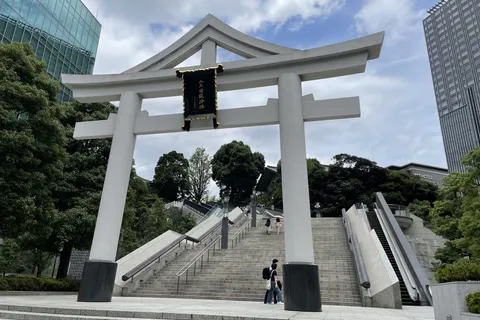
Tokyo, Chiyoda Ward
Hie Jinja
Hie-jinja
- Business Prosperity
- Good Relationships
- Marital Harmony
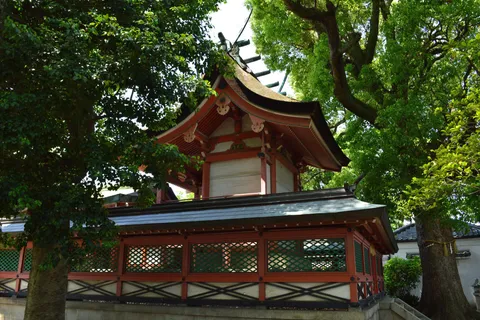
Osaka, Osaka (Sumiyoshi-ku)
Ikune Jinja
Ikune Jinja
- Financial Luck
- Business Prosperity
- Protection from Misfortune