History
Himure Hachimangu is a shrine in the old castle-town district of Omihachiman, Shiga. Locals call it “Hachiman-sama,” and the official site presents it as a guardian shrine of Omi. The official site names Homuda Wake no Mikoto (Emperor Ojin), Okinaga Tarashihime no Mikoto (Empress Jingu) and the Himegami (the three goddesses Tagorihime, Tagitsuhime and Ichikishimahime) as the enshrined deities. Behind the grounds stands a rock called Byobu-iwa, and the shrine sits at the foot of Mt. Hachiman.
According to the official history, the shrine began in 131, when Emperor Seimu, newly enthroned, ordered Takeuchi no Sukune to enshrine the local deity Oshima no Okami. It is also said that in the 6th year of Emperor Ojin (275), the emperor rested nearby on his way back from a visit to Omi and a sign appeared of two suns in the sky, so a small shrine named “Himure no Yashiro Hachimangu” was built. The name “Himure” is said either to come from “Himure-sha,” named after a poem that Fujiwara no Fuhito composed on a visit in 691 (Jito 5), or to be a changed form of “Hifure,” from Hifure no Omi of the Wani clan; the official site says these origins are also told in the Noh play “Himure Moude.”
In 991 (Shoryaku 2), by imperial order of Emperor Ichijo, a shrine was built on Hokkemine (Mt. Hachiman) and the Usa Hachimangu deity was invited there. In 1585 (Tensho 13), when Toyotomi Hidetsugu built Hachimanyama Castle, he planned to merge the mountaintop shrine into the shrine at the foot of the mountain, but after Hidetsugu’s suicide the planned relocation to a replacement site never happened, and the shrine took its present form as a single shrine. The castle was abandoned, but the town that grew up around the Hachimanbori moat-canal prospered as a merchant town and nurtured the Omi merchants, and the shrine came to be revered as their patron, the official site explains. In 1966 (Showa 41) it was added to the Association of Shinto Shrines’ list of Bekkaku Honsha shrines and took its present name, Himure Hachimangu (all per the official site).
Highlights
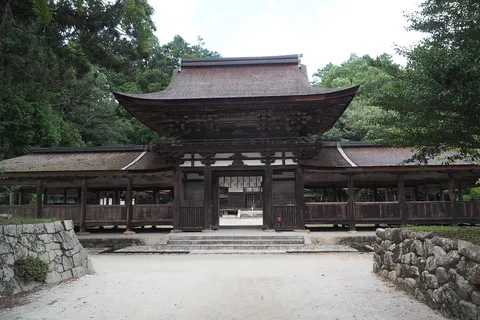
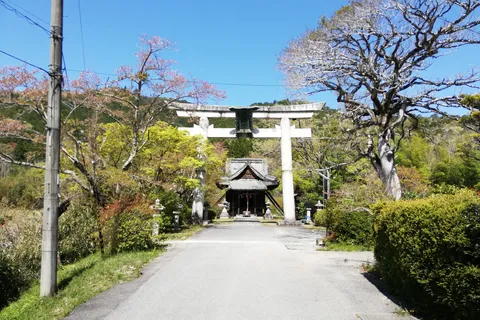
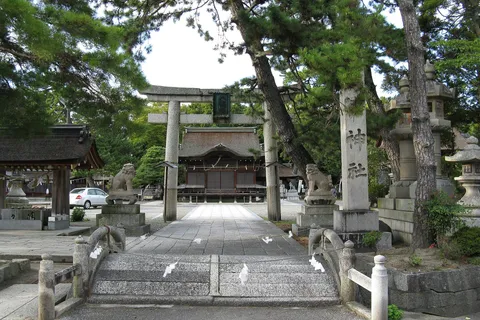
According to the official site, the main hall is a three-bay nagare-zukuri building and the worship hall is irimoya-zukuri; the worship hall is said to have been commissioned in 1188 (Bunji 3) by Minamoto no Yoritomo through the Sasaki (Rokkaku) clan. The two-story gate (Romon, or Zuijinmon) was built in 1359 (Enbun 4), burned in a fire in 1855, was rebuilt in 1858, and after its upper part burned in 1970 it was restored in 1971. The official site does not mention national or prefectural designation for these buildings. The wooden Myojin torii, said to date from 1616 (Genna 2), is a Shiga Prefecture-designated tangible cultural property (official site).
The history notes that in 1647 (Shoho 4) the Omi merchant Nishimura Tarouemon brought back wealth earned in Vietnam and dedicated an ema plaque picturing himself (the “Annan Tokai Sengaku” ship plaque); the official site states that it is designated an Important Cultural Property. The grounds hold many auxiliary shrines, including Oshima, Iwato, Tenmangu, Yasaka, Ebisu and Shigemoto Inari, and the official site says the Tenmangu has an ox painting by Tomioka Tessai. The demon-faced roof tile of the main hall and Kagami Pond are also worth a look.
Visiting Tips
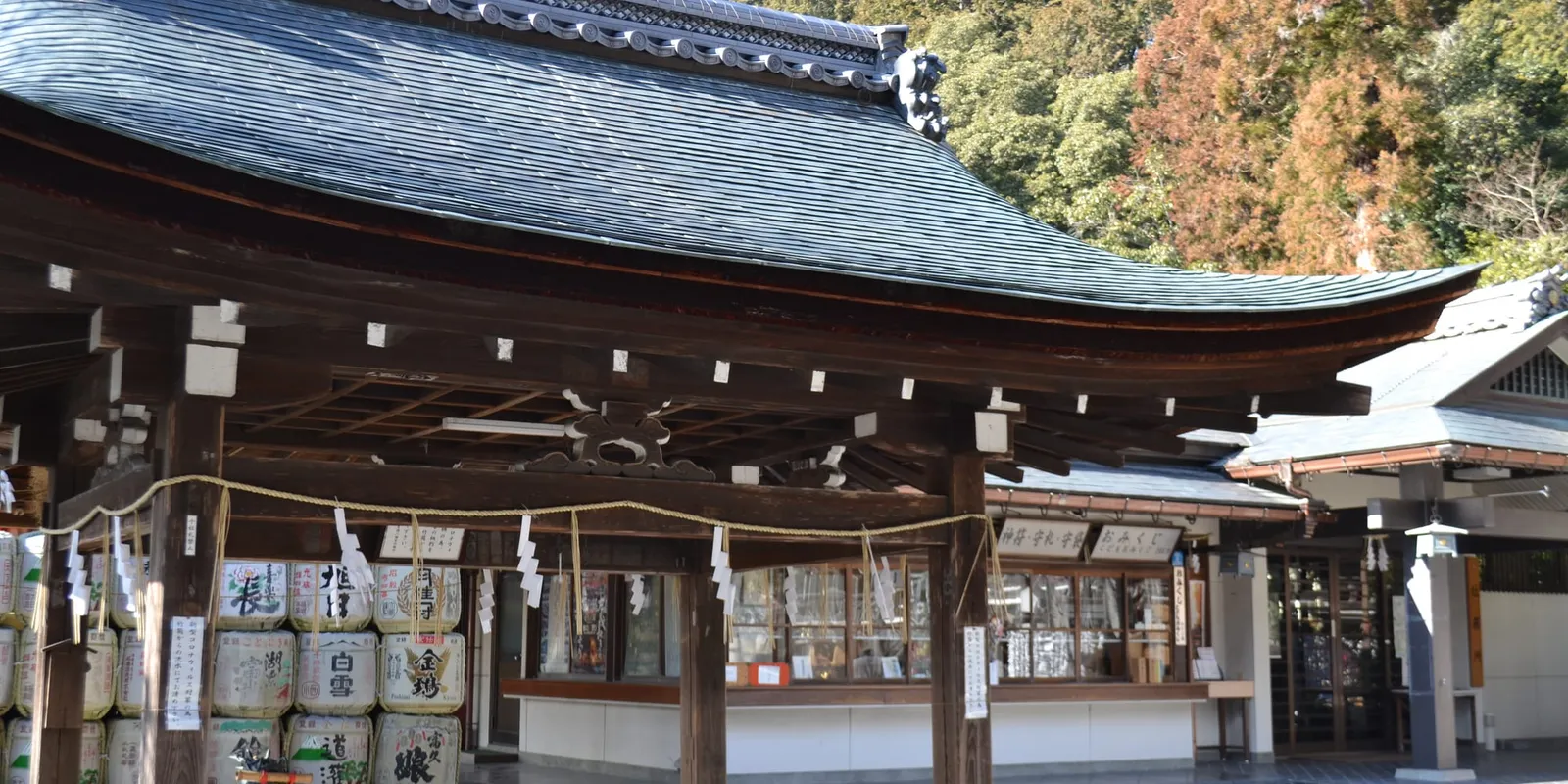
The grounds have no gate and the official site says you can visit 24 hours a day. However, the foot of the mountain gets very dark at night, so visiting before sunset is recommended. Prayer services run about 8:30 AM–4:00 PM; individuals do not need to book, and groups should contact the shrine office (0748-32-3151) beforehand. The amulet counter is open about 8:30 AM–5:00 PM (official FAQ; another page also gives 8:00 AM–5:00 PM).
Items on offer include various amulets, strap charms, a traffic-safety charm, white-feathered sacred arrows with prayer plaques, and dove whistles. The official site lists prayers for protection from misfortune, traffic safety, household safety, business prosperity, travel safety, construction safety, academic success, safe childbirth, fulfillment of wishes, and victory. The official site does not mention goshuin, and the fee could not be confirmed.
It is about a 30-minute walk from Omihachiman Station, or you can take the bus to “Hachimanbori,” with the great torii just before the stop. Park in the horse-riding ground in front of the shrine; during the Sagicho and Hachiman festivals traffic is restricted and public transport is advised.
Annual Festivals
- New Year events (January 1–3): Gentan-sai (1st), Hatsu-yudate Kagura (2nd) and Ganshi Mita-sai (3rd) (official site).
- Setsubun Festival (February 3): Listed among the regular festivals on the official site.
- Sagicho Festival (Saturday and Sunday closest to March 14–15): Held rain or shine; March 13–14 in 2027, per the official site. Sagicho floats topped with decorations called “dashi,” made by each neighborhood from grains, seafood and local products, are carried through the old town on Saturday and set alight in the shrine grounds on Sunday evening. According to Shiga Prefecture’s public relations page, the festival is said to trace back to a festival in the Azuchi castle town; after Nobunaga’s death, people who had moved to the Hachimanyama castle town were refused entry to the Hachiman festival, and offered a sagicho to the shrine instead. It is a nationally selected Intangible Folk Cultural Property (selected 1992, official site).
- Hachiman Festival (April 14–16): Per the official site, it traces to a legend that when Emperor Ojin crossed Lake Biwa by boat, seven households in Minami-Tsuda lit reed torches to guide him; twelve districts bind about 200 torches. The evening of the 14th is the Yoimiya torch festival, and the 15th is the main festival with large drums carried in procession. It is a nationally selected Intangible Folk Cultural Property (selected 1992, official site).
- Manto-sai (August 15–16): Listed among the regular festivals on the official site.
- Autumn Grand Festival (November 1) / Hachimanyama Fudo-son Festival and Niiname-sai (November 23): Listed in the official ceremonial calendar.
Dates and details change from year to year, so check the “Regular Festivals” page on the official site for the latest.
Nearby Food & Sightseeing
- Hachimanbori: According to the history on Himure Hachimangu’s official site, even after Hachimanyama Castle was abandoned, the town built around this moat-canal prospered as a merchant town and nurtured the Omi merchants. It is also the name of the bus stop, and makes an easy walk together with the shrine.
- Hachimanyama Castle Ruins: The ruins of the castle built by Toyotomi Hidetsugu on Mt. Hachiman, at the foot of which the shrine stands. A ropeway up the mountain is described in tourist guides, but operating hours and fares can change, so check ahead.
Frequently Asked Questions
- Q. What are the visiting hours?
- A. According to the official FAQ, the grounds have no gate, so you can visit 24 hours a day (visiting before sunset is recommended). Prayer services run about 8:30 AM–4:00 PM; individuals do not need to book, while groups should call ahead. The amulet counter is open about 8:30 AM–5:00 PM, and the shrine has no closing days.
- Q. Can I get a goshuin at Himure Hachimangu?
- A. A tourism directory says goshuin are available, but the shrine's official site does not mention goshuin, so the fee and hours could not be confirmed. The official site lists the amulet counter as about 8:30 AM–5:00 PM, so visiting in the afternoon is the safest bet. For details, contact the shrine office (0748-32-3151).
- Q. How do I get there, and is there parking?
- A. Per the official site, it is about 30 minutes on foot from Omihachiman Station, or take the Chomeiji-bound bus from the station's north exit to "Hachimanbori," with the great torii just before the stop on the left. Cars can park in the horse-riding ground in front of the shrine; if it is full, contact the office. Traffic is restricted during the Sagicho and Hachiman festivals, when public transport is advised.
- Q. Are the shrine's festivals national cultural properties?
- A. The official site says the March Sagicho festival and the April Hachiman festival were selected as Shiga Prefecture Intangible Folk Cultural Properties in 1958, designated by the prefecture in 1991, and selected as national Selected Intangible Folk Cultural Properties in 1992. The Agency for Cultural Affairs' Cultural Heritage Online lists "Omihachiman no Himatsuri" (Fire Festivals of Omihachiman) as an intangible folk cultural property for which measures such as recording are to be taken. Note that this is a different category from a nationally designated "Important Intangible Folk Cultural Property."
- Q. When are the Sagicho and Hachiman festivals?
- A. The official site says the Sagicho festival is held rain or shine on the Saturday and Sunday closest to March 14–15 (March 13–14 in 2027). The Hachiman festival runs April 14–16: the evening of the 14th is the Yoimiya torch festival, and the 15th is the main festival with drums carried in procession. Dates can change, so check the official site before you go.
Plan Your Visit
Before you go, you can book a stay and get your shrine-visit items ready.
Amazon links open Amazon.co.jp (Japan) in English; whether an item ships overseas depends on the product.
※ Contains ads (PR). Links open external sites such as Amazon, Rakuten, Trip.com and Booking.com.