History
Nagahama Hachimangu stands in Miyamae-cho, on the eastern side of the central district of Nagahama in Shiga. It is read “Nagahama Hachimangu,” and the official site spells it with the older character form (長濱八幡宮). Known as the tutelary shrine of Nagahama, it enshrines, according to the official history, Tarashinakatsuhiko no Mikoto (Emperor Chuai; protection from misfortune and good fortune) in the east hall, Homuda Wake no Mikoto (Emperor Ojin; protection from misfortune, health and longevity) in the central hall, and Okinaga Tarashihime no Mikoto (Empress Jingu; guardian of safe childbirth) in the west hall.
The shrine’s history says that in 1069 (Enkyu 1) Minamoto no Yoshiie, acting on an imperial vow of Emperor Gosanjo, brought a divided spirit from Iwashimizu Hachimangu in Kyoto and enshrined it here. The area came to be called the “Hachiman Estate,” and the shrine was revered as the guardian deity of the eleven villages of the estate. It is said to have once held 3,000 koku of land and 73 temple-lodgings on the mountain, rivaling Iwashimizu itself, but repeated warfare destroyed most of its buildings. Then in Tensho 2 (1574), when Hashiba Hideyoshi became lord of Nagahama Castle, he is said to have lamented its decay and repaired and rebuilt the halls, working to revive the shrine. The official site says this event is also called the origin of the Nagahama Hikiyama Festival (some sources give 1573 for Hideyoshi’s arrival). A tourism site also introduces the garden as a gift from Hideyoshi.
Highlights
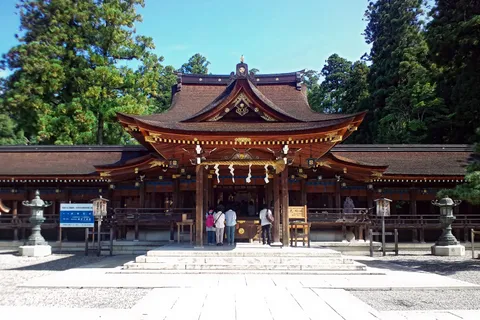
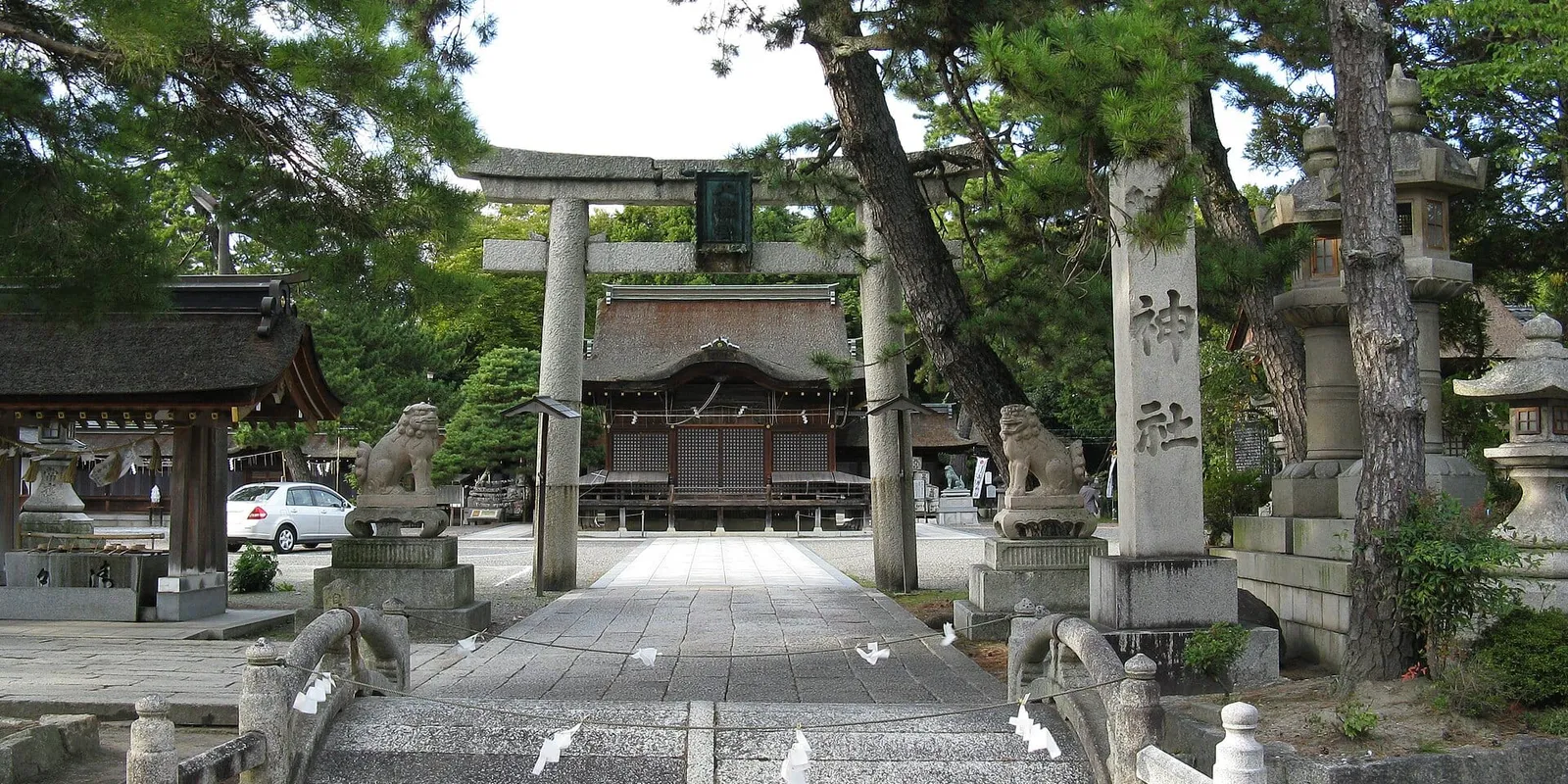
The main hall is built in the shinmei-zukuri style, which is rare for a Hachiman shrine, with a cypress-bark roof, chigi and katsuogi. The official site notes a tradition that it was taken over from the Mikeden (food-offering hall) of the Grand Shrine of Ise. A stone bridge and torii lead toward the worship hall, and pine trees line the approach, giving the grounds a calm feel.
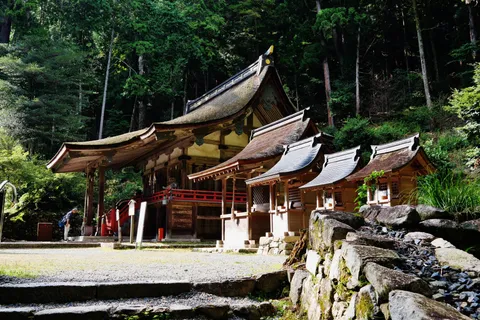
Sessha and massha (auxiliary shrines) dot the precincts. The official site introduces Tsukubusuma Shrine, honoring Ichikishimahime no Kami (Benzaiten), the water goddess; Tenmangu, honoring Sugawara no Michizane; Kora Shrine, honoring Takeuchi no Sukune; and Kotohira-gu and Kawasogi Shrine, honoring Omononushi no Mikoto and others. Kora Shrine is billed as a shrine for longevity and is called the “Boke-fuji no Miya” (shrine to ward off senility), where a special amulet is given out.
Among the treasures, the official site introduces a wooden kyogen mask (inscribed with the year 1561, Muromachi period), Edo-period Noh costumes, and the decorative metal fittings of a portable shrine said to have been built in 1676. According to a tourism site, a Muromachi-period donation record is a Shiga Prefecture designated cultural property, and the shrine also holds a register signed jointly by Hideyoshi and his adopted son Hidekatsu (single source). The grounds also have a Noh stage, used for dedicatory performances during the year.
Visiting Tips
Prayer services are accepted from 9:00 AM each morning with no reservation. The official site describes many kinds of prayers, including protection from misfortune and good fortune, household safety, safe childbirth, first shrine visits, Shichi-Go-San, Jusan-mairi and hoyoke. For people in an unlucky year there is the “Aratama no Yakunogare” special prayer, accepted only from January 18 to 29 (prayer fee ¥5,000).
The official site does not give visiting hours for the grounds, while a tourism site describes the shrine as open year-round with free entry. The goshuin fee and hours are also not stated on the official site, so they need to be confirmed. Visitor records mention hand-written goshuin, but the price is unverified. The shrine office (0749-62-0481) is the surest way to check.
The official site gives a walk of about 20 minutes from JR Nagahama Station, while a tourism site says about 15, so guides differ. It describes a route that passes Toyokuni Shrine and Kurokabe while going along Otemon-dori and Miyamachi-dori. There is a car park for about 50 regular cars on the grounds.
Annual Festivals
The dates below follow the “Annual Festivals” calendar on the official site and can change from year to year.
- Saitan-sai and New Year countdown (January 1): Chikuwa (fish-paste rolls) are thrown at midnight.
- Setsubun Festival (around February 3): The Oni-yarai rite and bean-throwing.
- Spring Grand Festival: portable-shrine procession (April 12) / Spring Grand Festival (Hikiyama festival) and the portable shrine’s return (April 15): The spring festival that coincides with the Nagahama Hikiyama Festival. A tourism site says the Hikiyama Festival is held April 9–16 in a typical year, with the floats appearing and child kabuki performed from April 13 to 16. It is a nationally designated Important Intangible Folk Cultural Property and was inscribed on the UNESCO Intangible Cultural Heritage list in 2016.
- Summer purification rite and chi-no-wa kuguri (June 30)
- Manto-sai and Hebi no Mai Shinji (August 14–16): The Hebi no Mai (serpent dance), offered on the evening of August 15 at the Hojo Pond, is listed on the official site as a Shiga Prefecture Intangible Folk Cultural Property. The site explains that no other offering is performed in water.
- Annual festival (October 15): The Yawata-kosha grand festival, with a lottery and dedicatory performances among the accompanying events.
- Niiname-sai (around November 23) and Joya-sai (December 31)
Nearby Food & Sightseeing
- Nagahama Hikiyama Museum: A museum presenting the floats of the Nagahama Hikiyama Festival. A tourism site lists it as the contact for the festival (check opening hours and fees in advance).
- Toyokuni Shrine (Nagahama): A shrine to Hideyoshi, introduced separately on this site. Nagahama Hachimangu’s official site lists it as a stop along the walking route from the station.
- Kurokabe Square: The shrine’s official site lists “Kurokabe” as a stop along the walk from Nagahama Station to the shrine.
Frequently Asked Questions
- Q. What are the visiting hours and when are prayers accepted?
- A. The official site gives no visiting hours for the grounds. Prayer services are accepted from 9:00 AM each morning, with no reservations; visitors are asked to come directly on the day and allow plenty of time. The official site lists the prayer fee for hoyoke (protection against ill-omened directions) at ¥5,000, with any additional amount left to the visitor's discretion.
- Q. Can I get a goshuin at Nagahama Hachimangu?
- A. Visitor records say goshuin are given out at the shrine office, but the fee and hours are not stated on the official site and could not be confirmed. The Chunichi Shimbun reported that during the Hikiyama Festival, a limited-time clear goshuin bearing the names of that year's floats was offered (April 2025). Please check with the shrine office (tel. 0749-62-0481) about availability and hours.
- Q. How do I get there, and is there parking?
- A. The official site gives about a 20-minute walk from JR Nagahama Station (a tourism site says about 15 minutes, so guides differ). Buses from the station's east exit stop at "Sazanami Town-mae" or "Nagahama Red Cross Hospital." By car it is about 15 minutes from Nagahama IC on the Hokuriku Expressway, and the grounds have parking for about 50 regular cars (no fee information given). It gets very crowded during the Hikiyama Festival.
- Q. How is the shrine connected to the Nagahama Hikiyama Festival?
- A. The Nagahama Hikiyama Festival is held in step with the shrine's spring festival (according to a tourism site). The official annual calendar lists the portable-shrine procession on April 12 and the spring grand festival (Hikiyama festival) on April 15, while a tourism site says the festival runs April 9–16 in a typical year, with the floats appearing and child kabuki performed from April 13 to 16. It is a nationally designated Important Intangible Folk Cultural Property and was inscribed on the UNESCO Intangible Cultural Heritage list in 2016.
- Q. Does the shrine have a connection to Toyotomi Hideyoshi?
- A. According to the official history, when Hashiba Hideyoshi became lord of Nagahama Castle in Tensho 2 (1574), he lamented the shrine's decay and repaired and rebuilt its buildings, working to revive it. The official site says this event is also said to be the origin of the Nagahama Hikiyama Festival. Another story says the floats began with money Hideyoshi handed out to celebrate the birth of a son, so the origin is told in more than one way.
Plan Your Visit
Before you go, you can book a stay and get your shrine-visit items ready.
Amazon links open Amazon.co.jp (Japan) in English; whether an item ships overseas depends on the product.
※ Contains ads (PR). Links open external sites such as Amazon, Rakuten, Trip.com and Booking.com.