History
Aburahi Shrine stands in the south of Koka, Shiga, at the foot of Mt. Aburahi, a sacred peak of the southern Suzuka range. Its name is read “Aburahi Jinja.” According to the official site, until the Meiji era it was called “Aburahi Daimyojin” and was known as the “Soja of Koka,” with a sphere of worship said to cover the whole district. The principal deity is Aburahi no Okami, who does not appear in the Kojiki or Nihon Shoki and is described as a god worshiped in this region for a very long time. The site describes the deity as the root god of all beginnings, presiding over prosperity in all things, and as an “ancestral god of oil” revered by the oil trade. The accompanying deities are Sarutahiko no Mikoto, the god of guidance and protection from bad directions, and Mizuhanome no Mikoto, a water deity.
In ancient times the shrine took Mt. Aburahi itself as its sacred mountain, and it is said to have later moved to its present site. The grant of a court rank in December 877 (Gangyo 1) appears in the Sandai Jitsuroku, making it an old shrine on record. The official site says the autumn festival on the night of September 13 each year, and the sacred-fire rite held on the summit two nights before on the 11th, preserve a form from a thousand years ago.
As for its founding, the Japan Tourism Agency’s multilingual explanation says that, according to tradition, Prince Shotoku founded the shrine. The official site gives no founding date or legend, but it says the exploits of Prince Shotoku told in the Muromachi-period “Aburahi Daimyojin Engi” are a distinctive feature, and that the shrine treasures, the “Shotoku Taishi Picture Scroll” and a hanging plaque (kakebotoke) showing Nyoirin Kannon, regarded as the prince’s original form, convey the faith that the samurai of Koka placed in the prince as a god of war. In the medieval period the samurai of Koka took part in building the shrine and in its major festivals, and according to the official site the present main hall was raised in 1493 (Meio 2).
Highlights
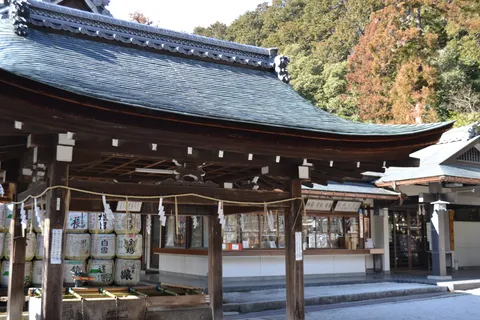
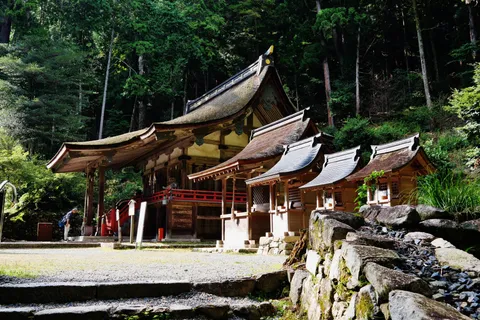
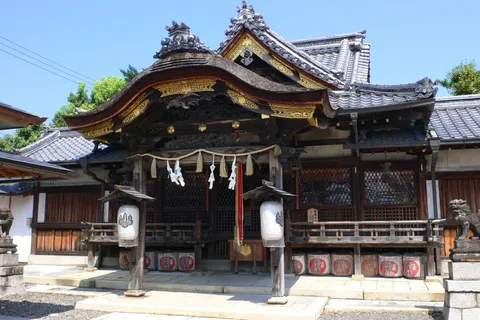
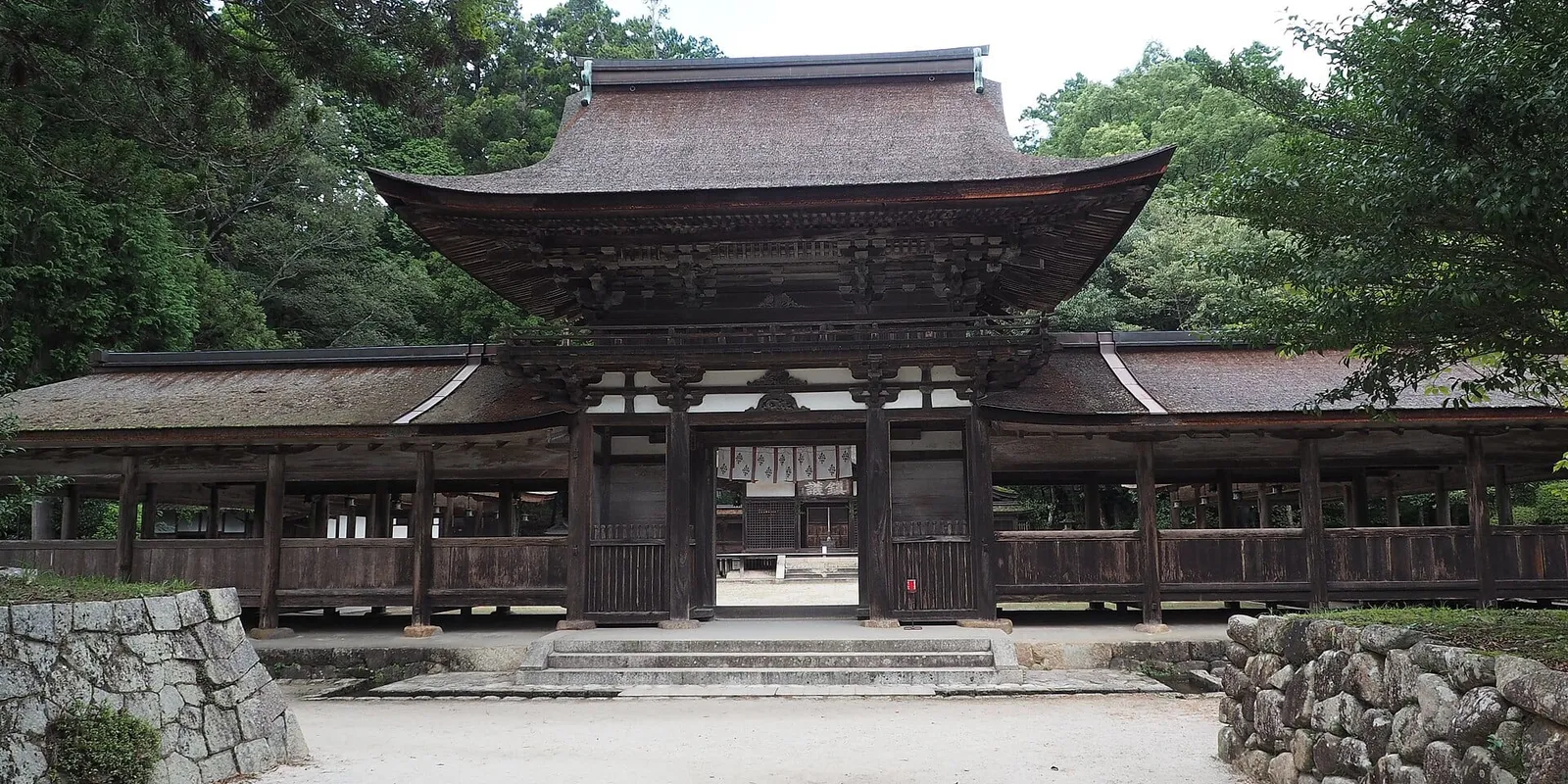
The grounds are laid out with the main hall, worship hall and tower gate in a straight north–south line, and corridors extending from either side of the gate. According to the official site, the tower gate (1566, Eiroku 9, master carpenter Kora Gozaemon-no-jo), the corridors, the main hall (raised in 1493, master carpenter Fujiwara no Munehiro) and the worship hall (raised in the Tensho era) are all national Important Cultural Properties, and it is the only medieval shrine in Shiga with corridors attached. The grounds as a whole are also designated a national historic site.
Behind the main hall, the shrine grove holds a koyamaki (Japanese umbrella pine) said to be over 750 years old, designated a city natural monument. The bronze bell (donated in 1620, Genna 6) is a city-designated tangible cultural property. The west torii and the cherry trees along the main approach also shape the scenery of the grounds.
On the tower gate’s carved bracket (kaerumata) there is an anecdote that the official site presents as a folk tale. About 460 years ago, when the gate was built, the carved dove is said to have slipped away and been found pecking at beans in a nearby field; when one of its wings was broken off, the bean thefts stopped. It is only a tale, but it adds to the fun of looking at the carving.
The Koka History and Folklore Museum on the grounds displays items such as the Fukudayu mask and zuzui-ko used in an old rice-related event (稲講会), old documents and armor (admission ¥200 for adults, ¥150 for students and ¥100 for children; the official site says it is run in the gaps of shrine duties, so advance reservation is required).
Visiting Tips
The official site lists no visiting hours, and the grounds are said to be open to visit freely (Koka tourism association guide). Prayer services must be booked in advance. The official site says a formal visit includes a purification rite followed by an explanation of the shrine buildings. The shrine office can be reached at 0748-88-2106.
According to the Japan Tourism Agency’s multilingual explanation, shoes must be removed when entering the buildings (including the corridors), and pets are not allowed except guide dogs and similar.
The official site has no goshuin information. The Koka tourism association’s stamp-location guide (dated April 2019) lists the shrine office on the grounds, 9:00 AM–5:00 PM, at ¥300 in the hand-written style, though some more recent articles say ¥500, so sources differ. Please call ahead to confirm.
It is about a 30-minute walk from Aburahi Station on the JR Kusatsu Line; by car, the nearest interchanges are Koka-Tsuchiyama IC and Konan IC on the Shin-Meishin Expressway and Kami-Tsuge IC on the Meihan Road. Parking is for 10 standard cars and 8 large vehicles. The official site notes there are no restaurants or shops nearby, so bring food and drink with you.
Annual Festivals
Main events from the official site’s festival list (dates as given there):
- Saitan-sai (January 1): A festival held at the start of the new year.
- Kinen-sai (February 18): Prayers for increased production, starting with the five grains, and for business prosperity.
- Aburahi Festival (May 1, spring grand festival): Said to have begun with the visit of Tachibana no Ason Toshiyasu on imperial orders in 978. Today two portable shrines make a round trip of about 10 km each year, and at the Retsuyui rest site a “Kaya Festival” is held in which a mosquito net is hung and people receive sacred sake and mirror rice cake.
- Todo Sanko and Yakko-furi (May 1, once every five years): Held every year before the Meiji era, but since the early Meiji period only the Ueno-do has carried it out, so it takes place once every five years. Nagamochi, keyari and hasamibako yakko perform dances. It was selected as a prefectural intangible folk cultural property in 1958 (Showa 33).
- Dake-gomori (September 11): A sacred fire is kept burning all night on the summit of Mt. Aburahi, with a night of seclusion.
- Omiya-gomori (September 13): The autumn festival. Lanterns are offered all night, and parishioners and believers hang mosquito nets at their assigned places in the east and west corridors to praise the deity’s virtue.
- Niiname-sai (November 23): A thanksgiving festival with offerings of the year’s new rice.
- Monthly festivals: The “Shogan Joju Tsukinami-sai” on the 1st of each month and the “Abura no Tsukinami-sai” on the 13th.
Dates may change, so check the “Notices” page of the official site or contact the shrine office for the latest.
Nearby Food & Sightseeing
The official site says there are no restaurants or shops near the shrine, so it is best to look up your stops in advance.
- Koka History and Folklore Museum: A museum on the grounds of Aburahi Shrine, displaying items such as the Fukudayu mask, zuzui-ko used in an old rice-related event (稲講会), and armor (reservation required, admission fee, per the official site).
- Rakuyaji Temple: An old temple the official site lists as a neighbor, said to be about 1.5 km from Aburahi Shrine.
Frequently Asked Questions
- Q. What are the visiting hours?
- A. The official site does not list visiting hours. The grounds are said to be open to visit freely (Koka tourism association guide). Prayer services must be booked in advance, and the official site says a formal visit includes a purification rite followed by an explanation of the shrine buildings. Contact the shrine office at 0748-88-2106.
- Q. Can I get a goshuin at Aburahi Jinja?
- A. The official site has no goshuin information. The Koka tourism association's Koka Ninja Goshuincho guide (dated April 2019) lists the shrine office on the grounds, 9:00 AM–5:00 PM, at ¥300 in the hand-written style. However, some more recent articles say ¥500, so sources differ. Goshuin may not be available if the head priest is away, so it is safest to call ahead.
- Q. How do I get there, and is there parking?
- A. According to the official site, it is about a 30-minute walk from Aburahi Station on the JR Kusatsu Line; the official site gives no bus information. By car it is about 20 minutes from Koka-Tsuchiyama IC or Konan IC on the Shin-Meishin Expressway, or about 15 minutes from Kami-Tsuge IC on the Meihan Road. Parking is for 10 standard cars and 8 large vehicles. The official site notes there are no restaurants or shops nearby, so plan your transport in advance.
- Q. Which buildings are Important Cultural Properties?
- A. According to the official site, the tower gate (rōmon, 1566), the corridors, the main hall (raised in 1493) and the worship hall (raised in the Tensho era) are all national Important Cultural Properties. The main hall, worship hall and tower gate stand in a straight north–south line with corridors extending from either side of the gate, and the official site says this is the only medieval shrine in Shiga with corridors attached. The grounds are also a national historic site. Visitors remove their shoes when entering the buildings, including the corridors.
- Q. What is Yakko-furi?
- A. Per the official site, it is the Todo ceremony held once every five years as part of the Aburahi Festival on May 1, in which "yakko" attendants (nagamochi, keyari and hasamibako yakko) follow the central figure, the Todo, and perform dances. It is said to trace back to a visit in 978 by Tachibana no Ason Toshiyasu on imperial orders, and it was selected as a Shiga Prefecture intangible folk cultural property in 1958 (Showa 33). Because it is held only every five years, check the "Notices" page of the official site or call the shrine for the next year.
Plan Your Visit
Before you go, you can book a stay and get your shrine-visit items ready.
Amazon links open Amazon.co.jp (Japan) in English; whether an item ships overseas depends on the product.
※ Contains ads (PR). Links open external sites such as Amazon, Rakuten, Trip.com and Booking.com.