History
Hiraoka Jinja’s founding is traditionally said to trace back three years before the enthronement of Japan’s first emperor, Jinmu. During Emperor Jinmu’s legendary eastern campaign, as his forces struggled against the local chieftain Nagasunehiko near Ikoma, Amenotaneko-no-Mikoto, acting on the emperor’s command, prayed for the pacification of the land and enshrined Amenokoyane-no-Mikoto and Himegami at a great sacred rock altar on Mt. Kamitsudake, a holy peak within the Ikoma mountains.
The shrine remained on Mt. Kamitsudake for centuries until, on September 16, 650, it was relocated to its present site at the foot of the mountain by the Hiraoka clan (Hiraoka-no-Muraji), descendants of Amenokoyane-no-Mikoto who would later become the Nakatomi clan. Then, in 768, Amenokoyane-no-Mikoto and Himegami were said to have manifested on the peak of Mt. Mikasa and were enshrined as the tutelary deities of the Fujiwara clan at Kasuga Shrine — now Kasuga Taisha — in Nara. Because these two deities were divided from Hiraoka Jinja to found Kasuga Taisha, Hiraoka Jinja came to be known as “Moto-Kasuga,” the original Kasuga. In a reciprocal gesture in 778, Takemikazuchi-no-Mikoto and Futsunushi-no-Mikoto were in turn invited from Kasuga Shrine to Hiraoka Jinja, giving the shrine its present four-hall main sanctuary.
Amenokoyane-no-Mikoto, ancestor of the Nakatomi and later Fujiwara clans, is revered as the deity of “the origin of ritual” (shinji-sogen) for having performed the first sacred rites and recited the first liturgical prayers in the myth of the heavenly rock cave. In 806, sixty households were assigned to support the shrine, and in 856 Amenokoyane-no-Mikoto was granted the highest court rank, Senior First Rank. Listed as a Myojin Taisha in the Engishiki shrine register, Hiraoka Jinja has been venerated since medieval times as the ichinomiya (first-ranked shrine) of Kawachi Province. On May 14, 1871, it was named a Kanpei Taisha (Imperially-endowed Grand Shrine) — a rank granted to only 29 shrines nationwide out of several hundred thousand at the time. Today it holds Beppyo Jinja status under the Association of Shinto Shrines.
Highlights
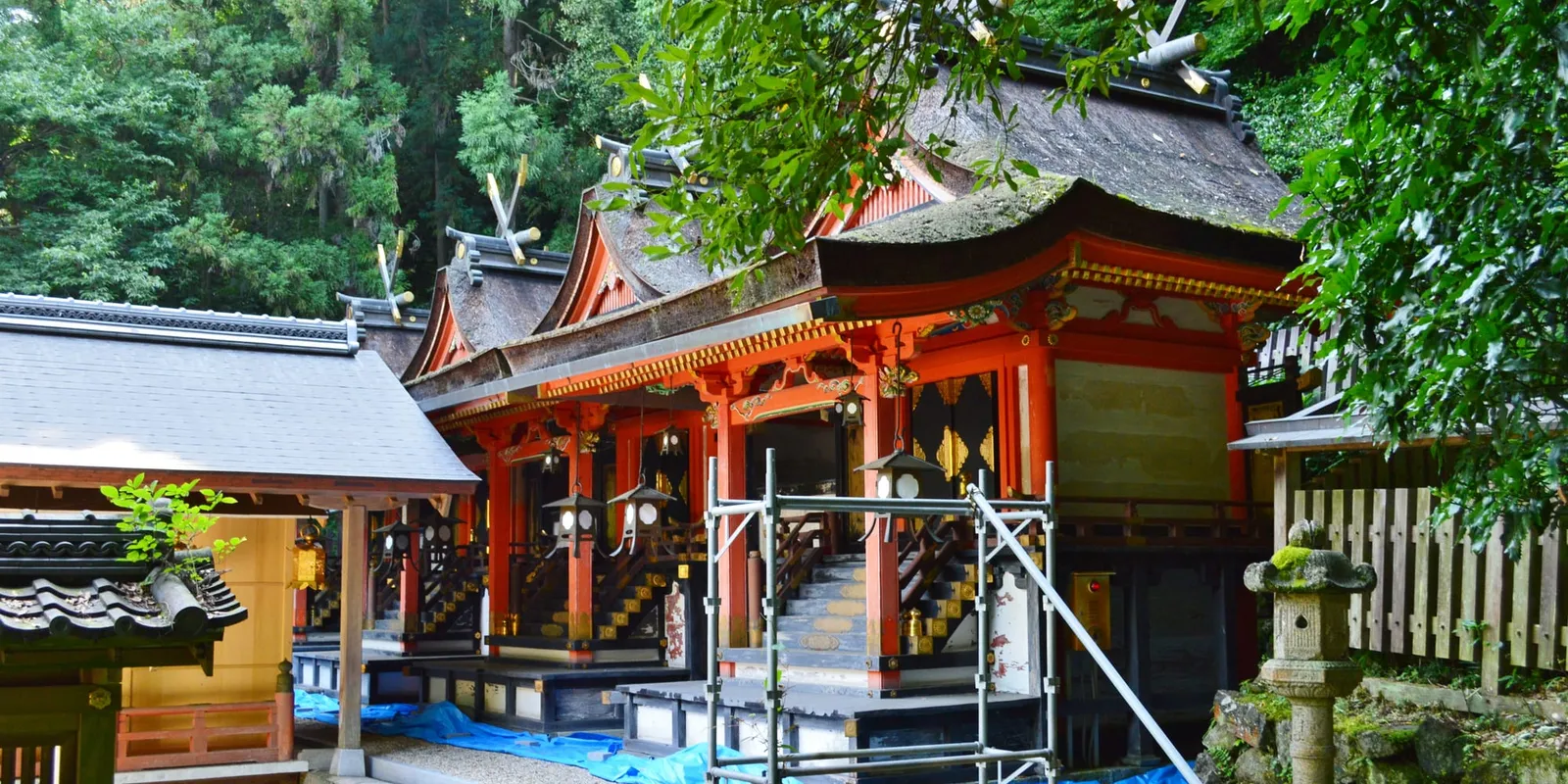
The main sanctuary consists of four halls arranged, from right to left as one faces them, in the order of the Second, First, Fourth, and Third Halls — with the First Hall, enshrining the principal deity Amenokoyane-no-Mikoto, at its heart, flanked by Himegami, Takemikazuchi-no-Mikoto, and Futsunushi-no-Mikoto. This dignified four-hall layout, fitting for an ancient shrine tied to the ancestral deities of the Nakatomi and Fujiwara clans, echoes the architecture of Kasuga Taisha itself.
“Kamitsudake Motomiya,” the shrine’s original sanctuary on the peak where it was first founded, is still enshrined today and can be reached via a hiking trail from the shrine grounds (the Kamitsudake Course, about 2.7 km, roughly 90 minutes each way). The lush forest of the Ikoma mountain range surrounding the shrine was designated one of the Ministry of the Environment’s “100 Best Scent Landscapes of Japan,” making it a rewarding walk through both nature and history in any season.
The old Kuragari-toge pass road nearby, part of the historic Kuragoe Nara Kaido, was once the shortest route linking Naniwa (Osaka) and Yamato (Nara) across the Ikoma mountains, carrying travelers, culture, and trade since ancient times; a stone monument here bears a haiku by the poet Matsuo Basho. Near the shrine once stood the “Hiraoka Bairin,” a plum grove of roughly 500 trees on the former grounds of the shrine’s Buddhist temple, but the trees were regrettably felled in 2016 after an outbreak of plum pox virus, and efforts to restore the grove continue today.
Visiting Tips
The shrine office — where goshuin, amulets, and prayer reception are handled — is open 9:00-16:00. One of Hiraoka Jinja’s great advantages is its access: it sits immediately outside the ticket gates of Kintetsu Nara Line Hiraoka Station, making it an easy stop even from central Osaka. The parking area in front of the shrine has limited spaces and is closed on certain days during the Shugo-sai’s preliminary festival in early October, so drivers should check the shrine’s official website in advance.
After paying respects at all four halls of the main sanctuary, visitors with time and energy to spare can continue on the hiking trail up to Kamitsudake Motomiya. The shrine is especially lively in late December, around the Shimenawa-kake Shinji (“Laughing Ritual”), and during the Shugo-sai, when more than 20 taiko drum floats parade through the grounds — so a weekday visit is recommended for those who prefer a quieter atmosphere.
Annual Festivals
- Reisai (February 1): The shrine’s principal annual festival, conducted with the most formal rites.
- Kayu-ura Shinji (January 15): A divination ritual said to date back to the Muromachi period. Fifty-three bundled bamboo tubes and twelve pieces of black oak charcoal are used alongside a pot of red bean porridge to divine the year’s harvest and the weather for each coming month. Known in poetry as a New Year’s seasonal term, it is a folk cultural asset selected by Osaka Prefecture.
- Shugo-sai (Hiraoka Matsuri) (preliminary festival: the two days before Sports Day; main festival: October 15): A harvest-thanksgiving festival for shrine parishioners, and one of the largest autumn festivals in Osaka Prefecture, featuring more than 20 taiko drum floats parading through the grounds to the beat of drums. The preliminary festival features a mikoshi procession and float parades, while the main festival on October 15 is conducted with the most formal rites.
- Shimenawa-kake Shinji, known as the “Laughing Ritual” (third Sunday of December): A ritual modeled on the myth of Amaterasu emerging from the heavenly rock cave. Led by the head priest’s call of “Ahh-ha-ha!,” all worshippers present laugh together for twenty minutes, laughing away the past year’s misfortunes and welcoming good luck for the year ahead. It is designated an Intangible Folk Cultural Property of Higashiosaka City. (Traditionally held on December 23, the festival’s date was changed to the third Sunday of December starting in the 2026 festival year.)
Nearby Food & Sightseeing
- Hiraoka Park: Adjacent to Hiraoka Jinja, this park serves as a gateway for hiking in the Ikoma mountains. Its Nukata-yama and Hiraoka-yama observation decks look out over the Osaka Plain and, on clear days, as far as Awaji Island. The park also has a cherry-blossom viewing area, “Sakura Hiroba,” and a long roller slide popular with children, “Forest Toy Box.”
- Kuragari-toge Pass: A mountain pass on the old Kuragoe Nara Kaido road linking Osaka and Nara across the Ikoma mountains. Its stone-paved lanes and old townscape have earned it a place among Japan’s “100 Best Roads,” and it is known for a haiku monument to the poet Matsuo Basho. It can be reached on foot from near Hiraoka Jinja’s grounds.
- Ishikiri Tsurugiya Jinja (“Ishikiri-san”): Known affectionately as the shrine of “the god who cuts away ailments,” this is another of Higashiosaka’s leading historic shrines. It’s about 20-30 minutes from Hiraoka Station by train and on foot via Shin-Ishikiri or Ishikiri Station, and many visitors combine it with a trip to Hiraoka Jinja.
Frequently Asked Questions
- Q. Why is Hiraoka Jinja called the "original Kasuga" (Moto-Kasuga)?
- A. In 768, Amenokoyane-no-Mikoto and Himegami, who had been enshrined at Hiraoka Jinja, were said to have manifested on the peak of Mt. Mikasa and were enshrined at Kasuga Shrine (now Kasuga Taisha) in Nara. Because Kasuga Taisha's principal deities were divided from Hiraoka Jinja in this way, Hiraoka Jinja is regarded as the source shrine of Kasuga Taisha's deities and is called "Moto-Kasuga." In a reciprocal exchange in 778, Takemikazuchi-no-Mikoto and Futsunushi-no-Mikoto were invited from Kasuga Shrine to Hiraoka Jinja, giving the shrine its present four-hall main sanctuary.
- Q. What are the visiting hours?
- A. The shrine office, where goshuin, amulets, and prayer reception are handled, is open 9:00-16:00. Gates may stay open later into the evening on festival days such as the Shugo-sai.
- Q. Can I get a goshuin here?
- A. Yes, it's available 9:00-16:00 for a fee of ¥500 (special goshuin ¥700). The seal features the characters for "Ichinomiya of Kawachi" and "Moto-Kasuga."
- Q. How do I get to Hiraoka Jinja?
- A. It's right outside Kintetsu Nara Line Hiraoka Station (served by local trains, and some semi-express trains at certain times). It's about 30 minutes from Osaka-Namba Station.
- Q. Is parking available?
- A. Yes, there's a paid, pay-by-time lot called "Times Hiraoka Jinja" in front of the shrine grounds with about 40 spaces. Visitors receiving a prayer service can mention this at reception. The lot is closed on some days during the Shugo-sai's preliminary festival in early October, so it's worth checking the official website in advance if driving.
Related Shrines
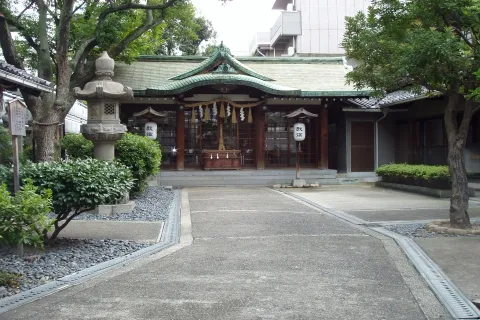
Osaka Prefecture, Nishi Ward, Osaka
Samuhara Shrine
Samuhara-jinja
- Protection from Misfortune
- Good Fortune
- Good Health
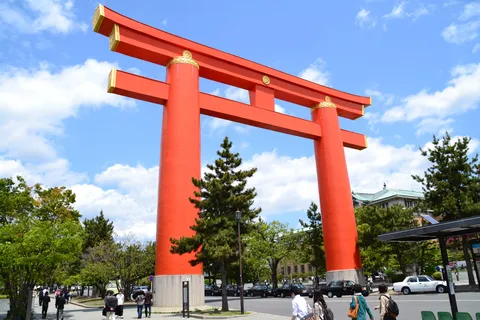
Kyoto Prefecture, Sakyo-ku, Kyoto
Heian Jingu
Heian-jingū
- Good Fortune
- Protection from Misfortune
- Household Safety
Nagasaki, Nagasaki
Suwa Jinja
Suwa-jinja
- Household Safety
- Good Fortune
- Protection from Misfortune