History
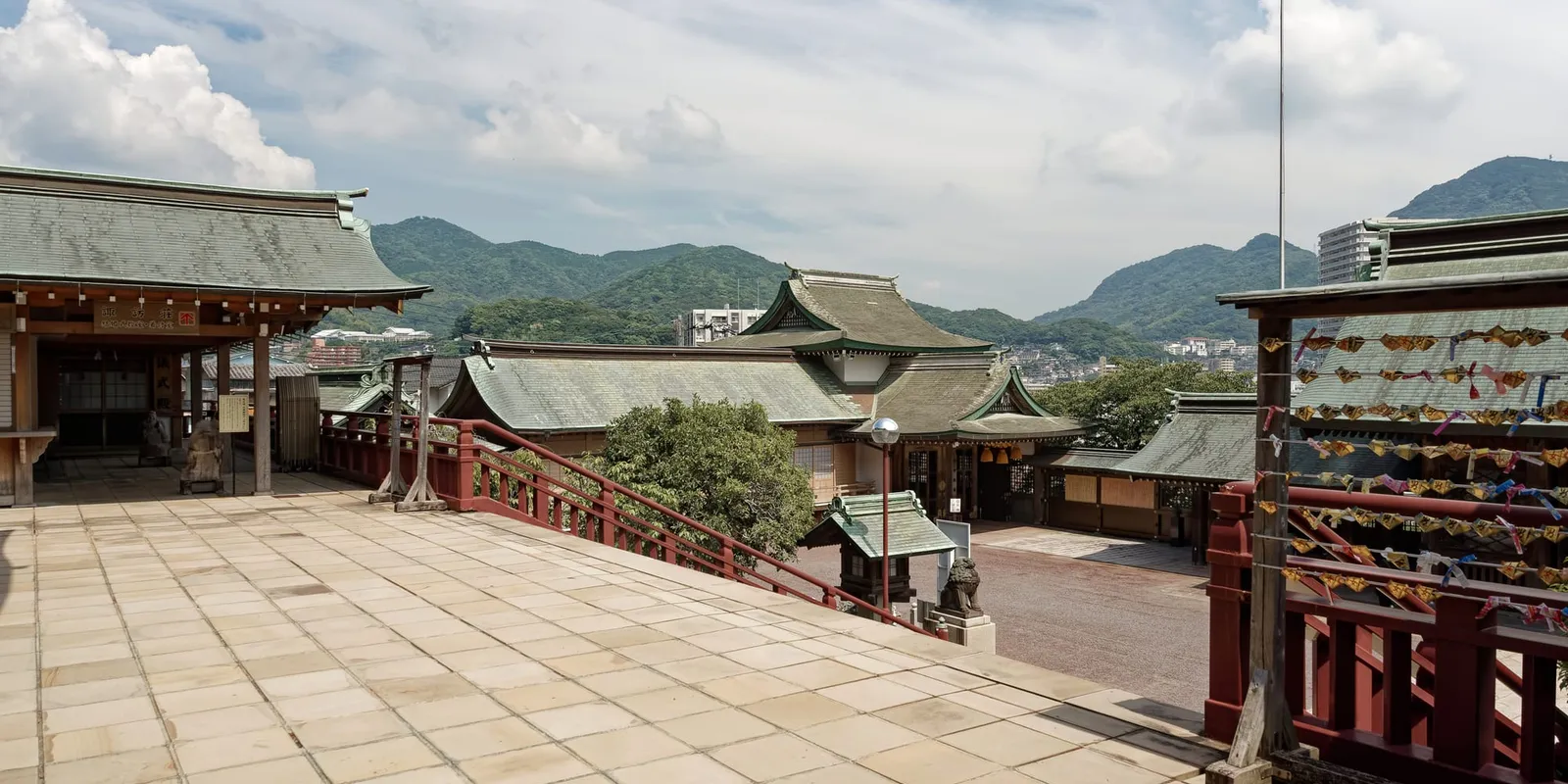
During the Sengoku period, Nagasaki lay under the rule of Christian daimyo, and many of its shrines and temples were destroyed or left scattered and in decline. As the Edo shogunate moved to re-establish Shinto and Buddhist institutions as part of its suppression of Christianity in the region, the first chief priest, Aoki Kensei, consolidated three shrines that had been dispersed around the city — Suwa, Morisaki, and Sumiyoshi — into a single shrine in 1625, enshrined as Nagasaki’s ubusuna-gami, the tutelary deity of the land. In 1648 the combined shrine moved to its present site in what is now Kaminishiyama-machi, and it has since been revered as the guardian shrine of all Nagasaki, also known by the honorific name “Chinzei Taisha.”
The shrine enshrines seven deities in all under one roof: Takeminakata no Kami and Yasakatome no Kami, carried over from the original Suwa shrine; Izanagi no Mikoto and Izanami no Mikoto, from Morisaki shrine; and the three Sumiyoshi deities — Uwatsutsunoo, Nakatsutsunoo, and Sokotsutsunoo no Mikoto — from Sumiyoshi shrine. This combination of three formerly separate shrines’ deities into a single sanctuary is unusual even by the standards of Japan’s shrines. Locals have long called it affectionately “Osuwa-san.”
Highlights
The shrine grounds sit atop a long stone stairway known as Nagasaka, and the view opening up beyond the great gate takes in the city and harbor of Nagasaki below. Reflecting the city’s history as a historic gateway for foreign trade, touches of Chinese and Western influence appear throughout the grounds and approach, giving the shrine a distinctly cosmopolitan character.
Above all, the shrine’s greatest highlight is its autumn grand festival, Nagasaki Kunchi, held every year from October 7 to 9. Performances such as the dragon dance (Ja-odori), Chinese-style boat processions, and Dutch-themed comic dances — all reflecting Nagasaki’s deep Chinese and Dutch influences — are dedicated by the city’s participating neighborhoods (odori-cho) in rotation, and the festival is designated a National Important Intangible Folk Cultural Property. It is celebrated locally for its lavish spectacle, and is sometimes described in Nagasaki as one of Japan’s three great festivals.
Visiting Tips
The Nagasaka stone stairway is fairly steep, so comfortable walking shoes are recommended. A visit to the grounds themselves takes about 20–30 minutes, but during Nagasaki Kunchi the shrine grounds and approach, which serve as a performance venue, become extremely crowded, so allow extra time if visiting during the festival. Goshuin stamps can be received at the shrine office from 8:00 to 17:00, and the grounds are also home to Tamazono Inari Jinja, known for blessings in relationships, which is well worth visiting on the same trip.
Annual Festivals
- Nagasaki Kunchi (Grand Festival, October 7–9): The shrine’s largest festival, featuring dragon dances, floats, and other performances dedicated in turn by the city’s participating neighborhoods.
- Setsubun Festival and Bean-Scattering (around February 3): Men and women born in the corresponding zodiac year scatter beans, drawing large crowds of worshippers.
- New Year’s Festival (January 1): The year’s first major rite, praying for peace and wellbeing in the year ahead.
- Shichi-Go-San Festival (mid-November): A popular family event praying for the healthy growth of children.
Nearby Food & Sightseeing
- Shikairo: A long-established Chinese restaurant credited as the birthplace of Nagasaki champon and sara udon noodles, with a dining room overlooking Nagasaki Harbor.
- Nagasaki Shinchi Chinatown: One of Japan’s three great Chinatowns alongside Yokohama and Kobe, packed with restaurants and shops serving champon, sara udon, and Chinese sweets.
- Glover Garden: A hillside cluster of Western-style residences from the late Edo and Meiji eras, with sweeping views over Nagasaki Harbor.
Frequently Asked Questions
- Q. What are the visiting hours at Suwa Jinja in Nagasaki?
- A. The grounds are open to visitors at all times. The shrine office and goshuin reception are open 8:00–17:00.
- Q. When can I get a goshuin, and how much does it cost?
- A. Goshuin are available at the shrine office from 8:00 to 17:00, for ¥500.
- Q. Is there parking at Suwa Jinja?
- A. Yes, parking is available on the grounds for about 100 cars and 5 large buses, though access is restricted during New Year and the Nagasaki Kunchi festival.
- Q. What is Nagasaki Kunchi?
- A. Suwa Jinja's autumn grand festival, held every year from October 7 to 9, featuring dragon dances and Chinese-style boat processions reflecting Nagasaki's Chinese and Dutch influences, dedicated in turn by the city's neighborhoods. It's a National Important Intangible Folk Cultural Property.
- Q. How do I get to Suwa Jinja?
- A. Right at the Suwa-jinja stop on the Nagasaki Electric Tramway, about 8 minutes by tram from JR Nagasaki Station.
Related Shrines
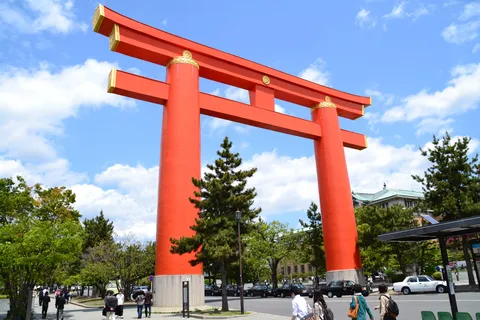
Kyoto Prefecture, Sakyo-ku, Kyoto
Heian Jingu
Heian-jingū
- Good Fortune
- Protection from Misfortune
- Household Safety
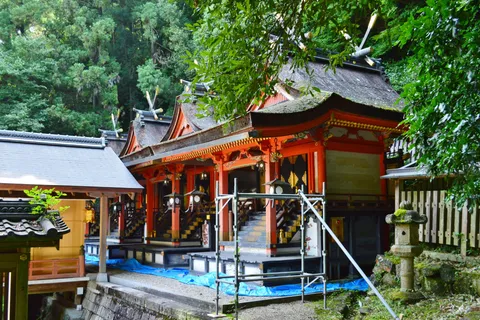
Osaka Prefecture, Higashiosaka
Hiraoka Jinja
Hiraoka-jinja
- Protection from Misfortune
- Good Fortune
- Victory and Success
Tokyo, Shibuya
Meiji Jingu
Meiji-jingū
- Good Fortune
- Good Relationships
- Household Safety