History
Inage Sengen Shrine stands in Inage, in Inage Ward of Chiba City, Chiba Prefecture. According to the official site, its main deity is Konohanasakuya-hime no Mikoto (safe childbirth and child-rearing), together with Ninigi no Mikoto (national peace, household safety, industrial development) and Sarutahiko no Mikoto (opening the way, traffic safety, protection from misfortune).
Its history says the shrine was founded in 808 (Daido 3) in the early Heian period by enshrining a branch spirit of Fujisan Hongu Sengen Taisha in Fujinomiya, Shizuoka. In 1180 (Jisho 4), Minamoto no Yoritomo is said to have sent an envoy to pray for success in battle, and the shrine records that the Chiba clan revered it for generations. In 1187 (Bunji 3) it is said to have been rebuilt with a mound and three approach paths modeled on Mt. Fuji, with the hall facing Mt. Fuji across Tokyo Bay.
In the Meiji era the grounds were reduced from about 22,500 tsubo to the present 6,400 tsubo. The main hall burned down in 1964 (Showa 39), and the present main hall was built in 1966 (Showa 41). The forecourt was enlarged and a retaining wall built in 1986 (Showa 61), and the shrine office was renovated in 2004 (Heisei 16). We have not described the origin of the place name “Inage” here, because we could not confirm one in the official site or Chiba City materials.
Highlights
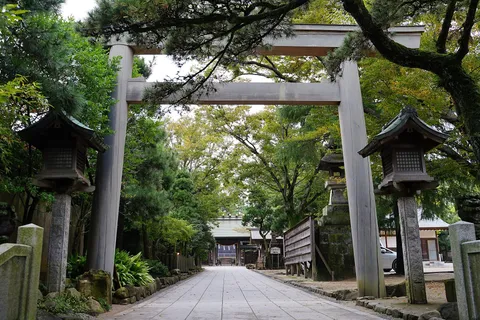
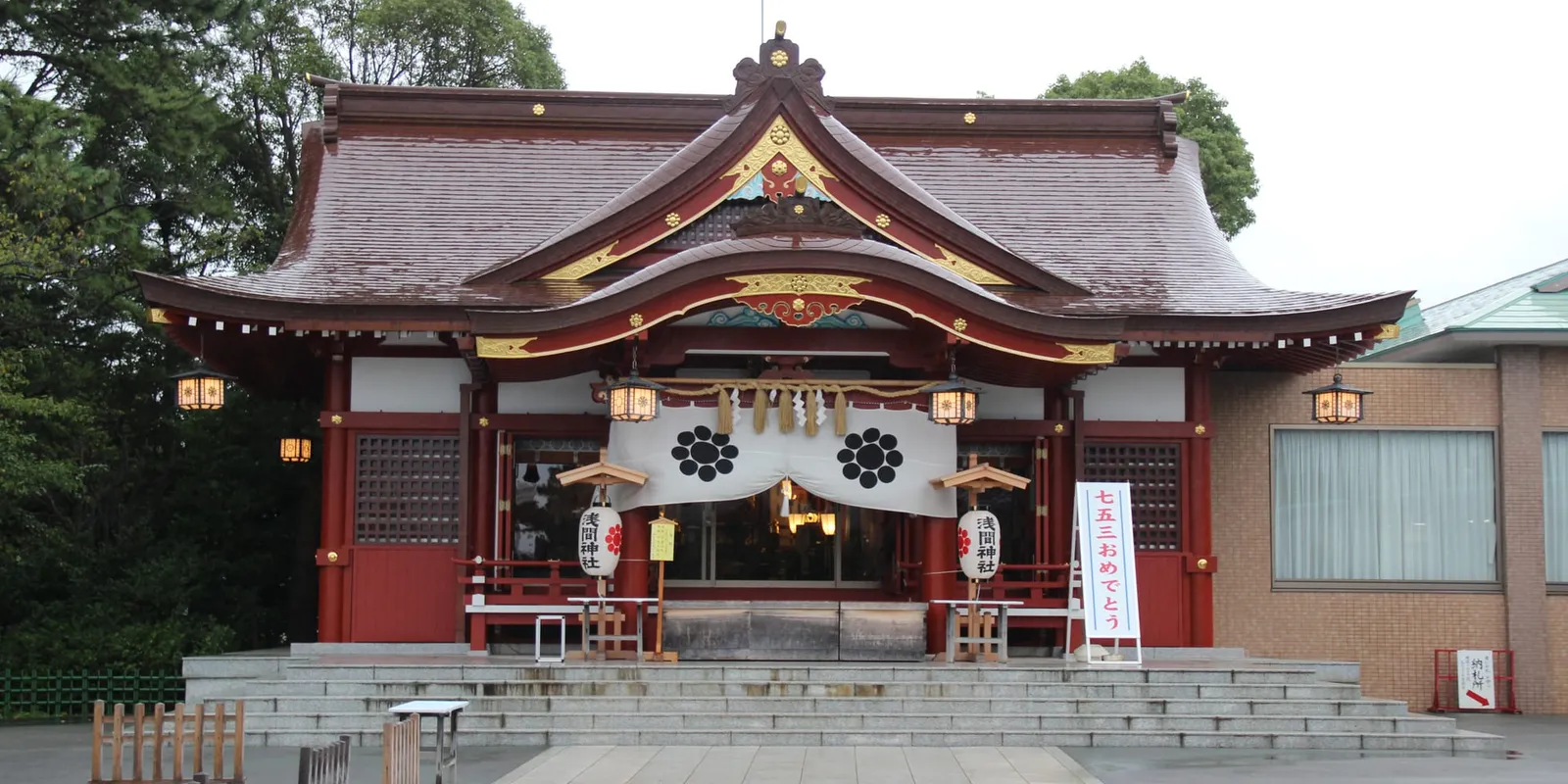
The shrine is known for its vermilion hall and the calm grounds of a guardian shrine close to the sea. The worship hall has vermilion pillars and gilded decoration, and the approach is lined with a vermilion torii and stone guardian lions. The photographs on this page were taken in October 2016.
Among its cultural properties, the “Sengen Shrine Kagura,” performed in the kagura hall in the grounds, is a Chiba Prefecture-designated Intangible Folk Cultural Property (designated 1962). According to Chiba City’s cultural-property page, it is said to have been taught in 1504 (Eisho 1) by a priest named 大越蔵之助 (the reading of the name is not confirmed) who came from Kyushu. It is a twelve-part kagura in which masked performers act out myths in pantomime. It opens with a shrine maiden’s dance and includes the Sarutahiko dance, the Okuninushi dance and the dance of slaying the Yamata no Orochi, closing with a dance that sends the gods off. Performances are open on specific dates only: Chiba City’s page lists January 15, July 15, September 15, November 15 and November 23, while the shrine’s own festival calendar lists a twelve-part kagura offering at the Toshigoi-sai on February 17. Because the sources differ, please check with the shrine if you want to see it.
Chiba City has also designated “Inage no Matsubayashi” (the Inage pine grove) a Place of Scenic Beauty (1960), with Chiba City and Sengen Shrine among its owners and managers. Chiba City’s introduction describes it as the black-pine woods of the former Inage coast, named for its “root-raised pines,” whose roots stand more than a meter above the ground.
The official site lists eight subsidiary shrines: Yasaka Shrine (protection from disease), Omiya Shrine (maritime safety), Inari Shrine (business and wealth), Komitake Shrine (longevity), Itsukushima Shrine (performing arts and commerce), Komuro Shrine (childbirth and child-rearing), Wakamiya Shrine (agriculture, industry and livestock) and Katori Shrine (industrial development and martial arts).
The shrine was also featured on TV Tokyo’s program “Shutsubotsu! Ad-machic Tengoku” (Adomachi), in its July 11, 2026 broadcast of “Chiba Inage-kaigan,” where the program’s official page lists Inage Sengen Shrine at No. 2 and describes it as the neighborhood’s guardian shrine, said to have been founded in the third year of Daido in the Heian period.
Visiting Tips
Main hall repairs: According to a notice on the official site dated September 10, 2026, repairs to the main hall’s exterior walls began on July 16, 2026. The front of the hall is scheduled to be finished by the end of December 2026 and all work by the end of March 2027. Prayer services and purification rites continue as usual, but you may hear machinery noise during work. The look of the grounds may change as the work proceeds, so check the official site beforehand if this matters to you.
Goshuin: Available at the shrine office. According to the official notice “Important Information” (revised December 1, 2018), amulets, charms and goshuin are handled from 9:00 AM to 4:30 PM. The official site does not state a fee; visitor accounts report ¥300. During the Summer Grand Festival on July 14–15, goshuin are available from 9:00 AM to 8:00 PM (2026 notice). Hours can change, so it is safest to check the official site or call 043-245-7777 before visiting.
Prayer services: No reservation is needed; you register at the desk. According to the official site, applications are accepted from 9:00 AM to 1:15 PM on weekdays and 9:00 AM to 2:15 PM on weekends and holidays, with ceremonies hourly on weekdays and every 30 minutes on weekends and holidays. Hours change on festival days, at New Year and in busy or quiet seasons, and prayer ceremonies are suspended in some months (notices for October to December 2026 also announce suspensions).
Access: The official access page gives about 4 minutes on foot from Keisei Inage Station (Keisei Chiba Line), about 15 minutes from JR Inage Station (Sobu Line) and about 20 minutes from JR Inage-kaigan Station (Keiyo Line). The nearest bus stop is “Asama Jinja.”
Parking: The visitors’ lot has been paid since September 16, 2022, and a special-date rate applies from December 26 to January 15. The official access page gives 41 spaces, which differs from older articles that mention free parking for 80 cars. To avoid congestion, the official site encourages visiting by train or bus.
Annual Festivals
The official calendar of annual festivals lists the following (it gives no times or other details):
- New Year’s Festival and first shrine visit (January 1)
- Dondo-sai, burning of old charms (January 14)
- Setsubun Festival (February 3)
- Toshigoi-sai with twelve-part kagura offering (February 17)
- Summer Purification, Nagoshi no Oharae (June 30)
- Summer Grand Festival (Eve on July 14, main festival on July 15): A festival for household safety and safe childbirth and child-rearing. A report-of-completion rite is held on July 22. Hours for amulets, charms and goshuin are extended during the festival (2026 notice).
- Shichi-go-san visits (November)
- Niiname-sai harvest festival (November 23)
- Year-end Purification (December 31)
A monthly festival is also held on the 1st and 15th of each month. For safe-childbirth prayers, the usual custom is to visit on a Dog day in the fifth month of pregnancy, as the official site explains.
Nearby Food & Sightseeing
- Inage Park: According to Chiba City’s introduction, the black-pine woods of the former Inage coast, “Inage no Matsubayashi,” now lie in Inage Park, where you can see the “root-raised pines.” A good walk to combine with your visit.
- Former Kamiya Denbei Inage Villa (Chiba City Citizens’ Gallery Inage): Built in 1918 (Taisho 7) as the villa of Denbei Kamiya, the first of that name, a businessman who helped popularize Western liquor in Asakusa. It is described as the oldest reinforced-concrete building in Chiba City and is a nationally registered tangible cultural property (per Chiba City’s cultural-property page). Please check the Gallery’s information for opening hours, closing days and admission before you go.
- Inage no Hama beach: Placed at No. 1 in the Adomachi broadcast of July 11, 2026 on Chiba Inage-kaigan mentioned above (per the program’s official page). The page says it became a “white beach” after white sand was spread there in 2019.
Frequently Asked Questions
- Q. Has the shrine been featured on TV?
- A. Yes. TV Tokyo's program "Shutsubotsu! Ad-machic Tengoku" (known as Adomachi) featured Chiba's Inage-kaigan area in its broadcast of Saturday, July 11, 2026, and the program's official page lists Inage Sengen Shrine at No. 2. The page describes it as the neighborhood's guardian shrine, said to have been founded in the third year of Daido in the Heian period.
- Q. Can I get a goshuin?
- A. Yes, at the shrine office. According to the official notice "Important Information" (revised December 1, 2018), amulets, charms and goshuin are handled from 9:00 AM to 4:30 PM. The official site does not state a fee; visitor accounts report ¥300. During the Summer Grand Festival on July 14–15, goshuin are available from 9:00 AM to 8:00 PM (2026 notice).
- Q. Is the main hall under repair?
- A. According to a notice on the official site dated September 10, 2026, repairs to the main hall's exterior walls began on July 16, 2026. The front of the hall is scheduled to be finished by the end of December 2026 and all work by the end of March 2027. Prayer services and purification rites continue as usual, but work goes on during ceremonies, so you may hear machinery and cutting noise.
- Q. Is there parking?
- A. There is a visitors' lot, but it has been paid since September 16, 2022 (official notice). The official access page places it about 150 m from the "Inage Sengen Jinja-mae" intersection on Route 14, toward Chiba, with 41 spaces, and a special-date rate applies from December 26 to January 15. The shrine also encourages visiting by train or bus.
- Q. What cultural properties are here?
- A. The "Sengen Shrine Kagura," performed in the kagura hall in the grounds, is a Chiba Prefecture-designated Intangible Folk Cultural Property (designated 1962). This twelve-part kagura is said to have been taught in 1504 (Eisho 1) by a priest who came from Kyushu. Separately, Chiba City has designated "Inage no Matsubayashi" (the Inage pine grove) a Place of Scenic Beauty (1960), with Chiba City and Sengen Shrine among its owners and managers.
Plan Your Visit
Before you go, you can book a stay and get your shrine-visit items ready.
Amazon links open Amazon.co.jp (Japan) in English; whether an item ships overseas depends on the product.
※ Contains ads (PR). Links open external sites such as Amazon, Rakuten, Trip.com and Booking.com.