History
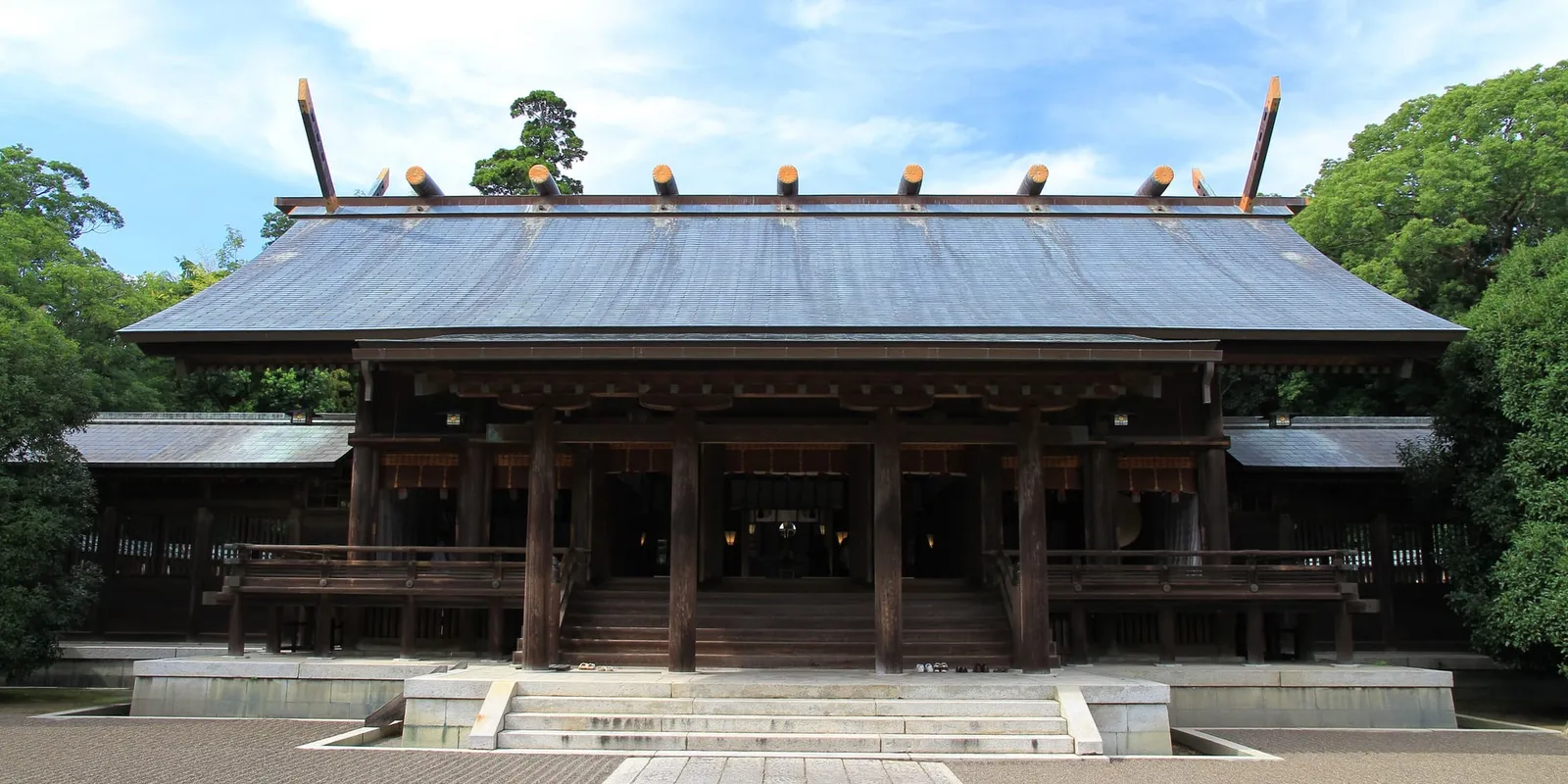
Miyazaki Jingu stands in Jingu, Miyazaki City, Miyazaki Prefecture. Locals affectionately call it “Jimmu-sama.” The official site mainly writes the name as 宮﨑神宮, using a variant form of the character 崎, though 宮崎神宮 is also seen. The main deity is Kamuyamato Iwarehiko no Sumeramikoto (Emperor Jimmu), with his father Ugayafukiaezu no Mikoto and his mother Tamayorihime no Mikoto enshrined alongside.
According to the official history, the shrine is said to have begun when Takeiwatatsu no Mikoto, a grandson of Emperor Jimmu, enshrined the main shrine in honor of his grandfather when he took up his post as Kyushu’s governor. Buildings were reportedly raised during the Kumaso campaigns of Emperors Sujin and Keiko, and old records say the Hyuga provincial governor repaired and re-enshrined it in the reign of Emperor Ojin. The official site also notes that classical texts such as the Shokugensho and the Hyuga Fudoki record that Jimmu set his capital at the palace of Miyazaki in Hyuga Province and explain the origin of the name “Miyazaki.”
In the medieval and early modern periods, buildings were raised and lands donated by successive lords, starting with the local steward Tsuchimochi Nobutsuna in the Kenkyu era (1190–1199), and later the Ito clan, Shimazu Yoshihisa and others. After the Meiji Restoration the shrine drew national veneration as an ancient shrine of Emperor Jimmu, was raised to Kanpei Taisha rank in 1885, and took its present name, Miyazaki Jingu, in 1913. The present buildings were completed in 1907, and the official site credits Ito Chuta with the design. According to the Ministry of Land, Infrastructure, Transport and Tourism’s multilingual guide, the grounds cover about 25 hectares and were enlarged again in 1940.
Highlights
The approach is canopied with trees and leads from the second torii gate through the third torii and the Shinmon gate to the worship hall. According to the official site, the shrine buildings use local Sano cedar more than a century old. Trees planted by imperial family members who have visited since the Meiji era also grow in the precincts, and a camphor tree planted by Emperor Taisho (then Crown Prince) is said to stand on the right side of the approach just inside the Shinmon gate.
The Oshirafuji (giant white wisteria) in the grounds is, according to the same ministry’s multilingual guide, a nationally designated natural monument whose branches stretch more than 12 meters southwest and about 6 meters northeast, described as the largest of its kind in Japan and estimated at over 400 years old. It usually blooms in mid-April. The Chokokan, a Meiji-era building in a Western-influenced style, is a nationally registered tangible cultural property with a distinctive namako (diamond-pattern plaster) wall (the guide’s 2020 entry says it is not currently open to visitors).
Beside the sacred pond in the precincts stands the auxiliary shrine Gosho Inari Shrine (the official site says it has long been venerated for protection of agriculture, industry and commerce). Separately, the branch shrine Kogu Shrine sits on a small hill about 600 meters northwest of the main shrine, the traditionally identified site of the imperial palace where Emperor Jimmu lived until he set out to the east (official site).
Visiting Tips
The Shinmon gate is open 5:30 AM–5:30 PM and the Heiden (main worship hall) 6:00 AM–5:30 PM, with no seasonal difference according to the official site. Prayers are accepted at the amulet office from 9:00 AM to 4:30 PM. The offering is ¥5,000 for individuals and from ¥20,000 for groups, and individuals do not need to book. There are time slots when prayers cannot be accepted because of ceremonies or weddings, and naming ceremonies require advance contact. Dress appropriate for the shrine is requested (avoid T-shirts, shorts and sandals).
There are two goshuin, “Miyazaki Jingu” and Kogu Shrine, at ¥300 each, issued at the amulet office just before the Shinmon gate, which is open 8:00 AM–5:00 PM. The official site also says a group called the Jimmu-kai, formed by Miyazaki Jingu, Sano Shrine and Tsuno Shrine (all linked to Emperor Jimmu), produced a goshuin book together with a pamphlet.
The official site says about 600,000 people visit in a year and that the first day of each month is busier than usual. It says about 250,000 people visit at New Year, the most in the prefecture. On the first of each month, a seasonal “sanpai-mochi” rice cake (two pieces, ¥400 per box) is sold at the approach-side rest area. It is about a 10-minute walk from Miyazaki-Jingu Station, and the official site directs drivers to the Miyazaki Jingu Nishi-Shinen Parking Lot.
Annual Festivals
- Gantan-sai (January 1): A New Year ceremony. The first of every month is a busy day for monthly visits.
- Kigen-sai (February 11) and Kinen-sai, the prayer-for-harvest rite (February 17): Spring ceremonies listed in the official festival calendar.
- Jimmu Tenno-sai and Shinji Yabusame (April 2–3): The Jimmu Tenno festival is held on April 3, along with sacred horseback archery on a course in the western part of the grounds. According to the official site it was revived in 1940, with riders shooting three targets beneath the cherry blossoms. A purification rite at the riverside is held on the 2nd.
- Nagoshi no Oharae (June 30): Passing through a ring of reeds to pray for good health.
- Annual festival (October 26): The official site says the date was set as the day before the day Emperor Jimmu is said to have departed Hyuga (October 27 in today’s calendar). In 2026 it was held at 10:00 AM on Monday, October 26 in the main hall.
- Gojinko-sai “Jimmu-sama” (the weekend after the annual festival): A major festival in which a portable shrine parades through the city, which the official site calls one of the largest in the prefecture. In 2026 it runs Saturday, October 31 and Sunday, November 1, 1:00–4:00 PM, and in 2027 it is announced for Saturday, October 30 and Sunday, October 31. The Otabisho (resting sites) alternate yearly between Nakamura and 瀬頭: the Oyodo Otabisho in 2026, and the 瀬頭 Otabisho in 2027. Check the official site for dates and whether bad weather affects it.
- Shichi-Go-San Mairi-sai (November 15) and Niiname-sai (November 23): Niiname-sai is a major festival giving thanks for the harvest. Prayer-acceptance hours for October and November are posted on the official site’s news page.
- Oharae and Joya-sai (December 31): Year-end ceremonies.
Festival dates can change, so check the “Festivals” and “News” pages on the official site for the latest.
Nearby Food & Sightseeing
- Kogu Shrine: A branch shrine of Miyazaki Jingu on the traditionally identified site of Emperor Jimmu’s palace. According to the official site, the present building was completed in 1976.
- Miyazaki Prefectural Museum of Nature and History: A museum that the Ministry of Land, Infrastructure, Transport and Tourism’s multilingual guide lists among the facilities within the shrine grounds.
- Hakko no Motoihashira (Heiwadai Park): According to the shrine’s official history, a tower about 2 km north of the shrine on a hill, built by Miyazaki Prefecture in 1940 to mark the 2,600th anniversary of the founding of the nation.
- Kasho Jokiya, Miyazaki Jingu Higashi Branch: A confectioner the official site lists as the contact for its sanpai-mochi. Check with the shop for opening hours.
Frequently Asked Questions
- Q. What are the visiting hours?
- A. According to the official site's list of opening and closing times, the Shinmon gate is open 5:30 AM–5:30 PM and the Heiden (main worship hall) 6:00 AM–5:30 PM, the same all year. Amulets are handed out at the amulet office 8:00 AM–5:00 PM, and prayer requests are accepted 9:00 AM–4:30 PM (hours change at New Year's and during Shichi-Go-San season). Some time slots are unavailable for prayers because of ceremonies and weddings, so check ahead on busy days.
- Q. Can I get a goshuin at Miyazaki Jingu?
- A. Yes. The official site lists two kinds of goshuin, "Miyazaki Jingu" and "Kogu Shrine" (described as the shrine's original shrine), at ¥300 each, issued at the amulet office. No separate goshuin hours are given on the official site; the amulet office is open 8:00 AM–5:00 PM.
- Q. How do I get there, and is there parking?
- A. It is about a 10-minute walk from Miyazaki-Jingu Station on the JR Nippo Line (official site). Buses from Miyazaki Station or Miyako City (宮交シティ) stop at "Miyazaki Jingu," about 5 minutes on foot. For drivers, the official site recommends the "Miyazaki Jingu Nishi-Shinen Parking Lot," but it does not give the number of spaces or fees.
- Q. When is the "Jimmu-sama" Gojinko-sai festival?
- A. The Gojinko-sai (Jimmu-sama) is a major festival held on the weekend after the October 26 annual festival. According to the official site's news page, in 2026 it runs Saturday, October 31 and Sunday, November 1, from about 1:00 PM to 4:00 PM, with the procession going from the shrine to the Oyodo Otabisho on day one and back on day two. The 2027 (Reiwa 9) festival is announced for Saturday, October 30 and Sunday, October 31. Whether it goes ahead in bad weather is announced on the official site and Instagram, so check before you go.
- Q. Which deities are enshrined, and what are the benefits?
- A. According to the official site, the main deity is Kamuyamato Iwarehiko no Sumeramikoto (Emperor Jimmu), with his father Ugayafukiaezu no Mikoto and his mother Tamayorihime no Mikoto enshrined alongside. The official site does not list specific benefits, but it does offer prayers for first shrine visits, Shichi-Go-San, protection from misfortune and safe childbirth, car purification (¥5,000), and company monthly-first-day visits.
Plan Your Visit
Before you go, you can book a stay and get your shrine-visit items ready.
Amazon links open Amazon.co.jp (Japan) in English; whether an item ships overseas depends on the product.
※ Contains ads (PR). Links open external sites such as Amazon, Rakuten, Trip.com and Booking.com.