History
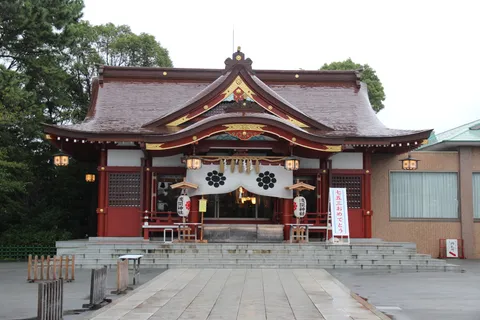
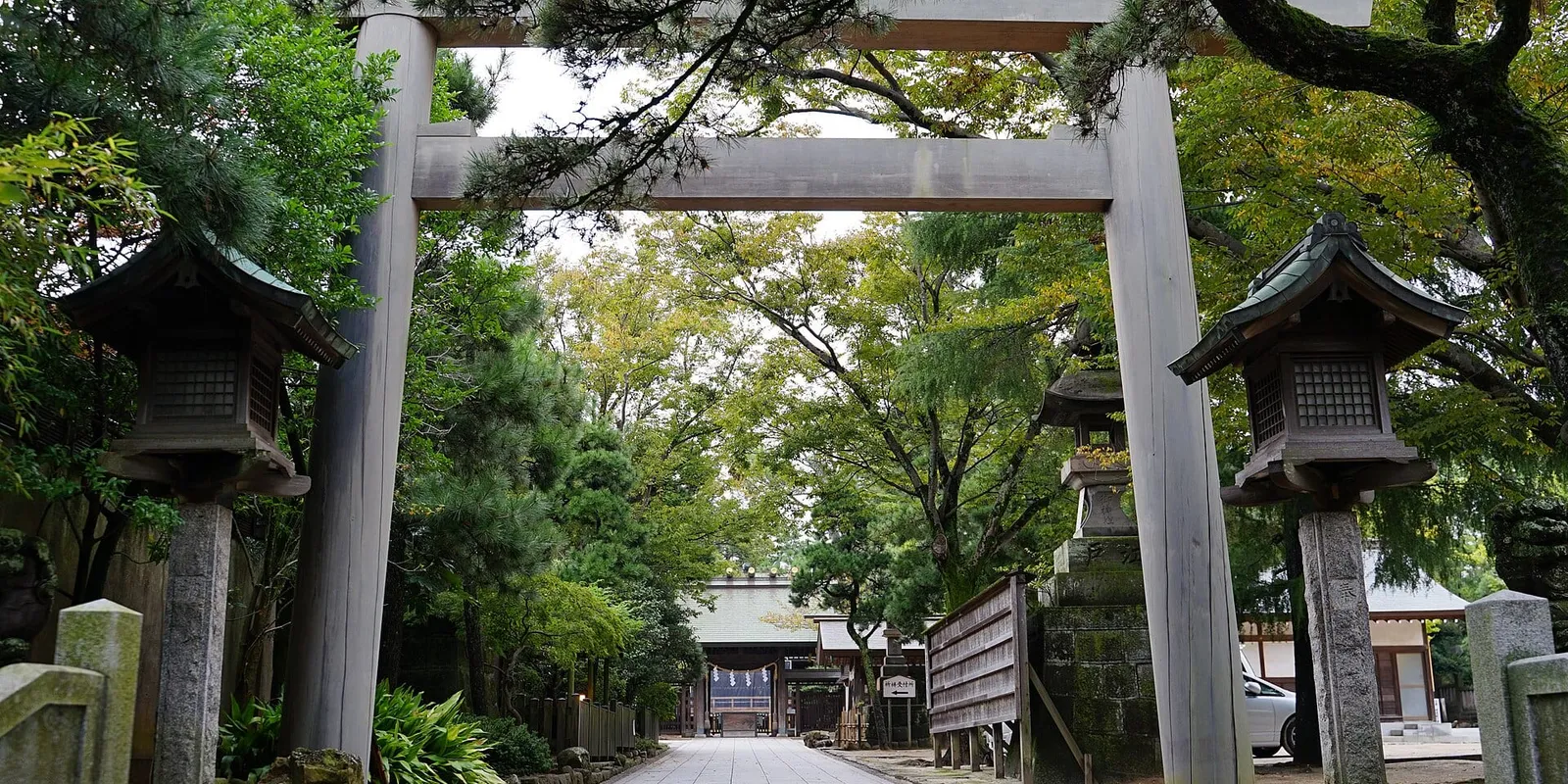
Oohi Jinja is a shrine in Miyamoto, Funabashi, Chiba, widely known as “Funabashi Daijingu.” The official site gives its formal name as Oohi Jinja, describes it as a shikinaisha shrine and former prefectural shrine, and lists the enshrined deity as Amaterasu-sume-omikami, with the annual festival on October 20.
According to the official history, in the 40th year of Emperor Keiko’s reign Prince Yamato Takeru, while pacifying the eastern provinces, enshrined Amaterasu-sume-omikami here and prayed for the success of the campaign and for local people suffering from drought, and divine favor was manifested; this is the origin of the shrine (the English page gives the date as A.D. 110). It is a shikinaisha shrine, listed in the Engishiki completed in 927 in the Heian period, and an earlier entry for “Shimosa-no-kuni Oohi-no-kami” in the Nihon Sandai Jitsuroku (863) is explained as the oldest written record relating to the area of present-day Funabashi.
Later generations are also recorded in the shrine’s history: repairs and rebuilding by Minamoto no Yoriyoshi, Yoshiie and Yoshitomo, a prayer by the priest Nichiren, and a donation of land (fifty koku) from Tokugawa Ieyasu around the start of the Edo shogunate. The main hall and other buildings were burned in the fighting of the Boshin War in 1868, but the main hall was rebuilt in 1873, and in 1872 the shrine was ranked a prefectural shrine, the only one in what is now Funabashi city. All of this is the shrine’s own account of its history.
The meaning of the name “Oohi” is debated. The official site lists a theory that it refers to a food deity and a theory that it was the tutelary kami of the ancient Oho clan, and calls the theory that the original meaning is “Great Sun kami” the most persuasive at present. It says that from the medieval period the shrine was also called “Funabashi Shinmei” and came in time to be known as Funabashi Daijingu.
Highlights
The Tomyodai (lamp tower) on the hill at the east of the grounds is a three-story, tile-roofed wooden building about 12 m tall, built in 1880 by local people in the fishing trade. Its top-floor lantern room is hexagonal and adopts the style of a Western lighthouse, and per the official site it is a Chiba Prefecture-designated Tangible Folk Cultural Property. Funabashi City describes it as among the largest surviving towers of its kind in Japan, Japanese in style on the first two floors and Western on the third. It is normally closed, and open only on the first three days of the New Year.
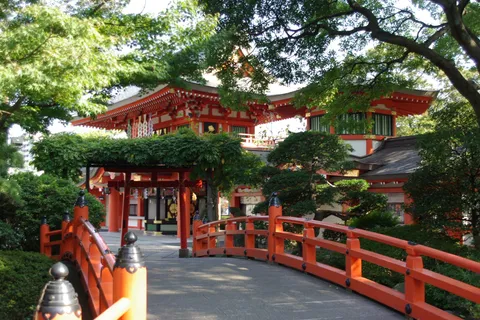
Among the subsidiary shrines are Toyoukehime Jinja (the “Outer Shrine”), dedicated to Toyouke-no-okami, who is enshrined at the Outer Shrine of Ise; Tokiwa Jinja (a sessha), dedicated to Yamato Takeru and to Tokugawa Ieyasu and Hidetada; and Otori Jinja, dedicated to Yamato Takeru, which on the Tori-no-hi days of December draws crowds as “Funabashi’s Otori-sama.” The “hagatame” stones used for the okuizome (baby’s first meal) ceremony are kept at Toyoukehime Jinja.
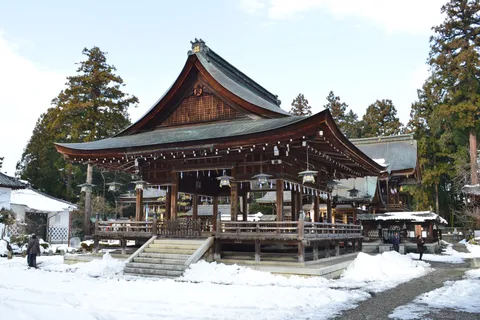
The grounds also hold the sumo ring (dohyo) used for the votive sumo. Tradition says it began when Ieyasu, staying in Funabashi, watched fishermen’s children wrestle, and in keeping with that story the sumo at the festival still opens with a token bout between children, according to the official site. The kagura is performed on New Year’s Day and the 3rd, at Setsubun, at the October 20 annual festival and on the second Tori-no-hi in December, and is designated an intangible folk cultural property of Funabashi City.
Visiting Tips
Prayer services start on the hour from 10:00 AM to 4:00 PM, seven times a day, with no reservation needed and registration up to 15 minutes before the start (official site). First-visit prayers for babies are advised from the 32nd day after birth for boys and the 33rd day for girls, and car purification is not available in rain. Reservations are taken by phone only for groups such as companies. The 2026 Shichi-Go-San prayers start on October 1, from 5,000 yen per celebrating child, no reservation needed.
Goshuin are issued from 9:00 AM to 4:00 PM. The fee is not stated on the official site. Hours may be shortened on festival days, so it is safer to avoid the late afternoon.
If you hire a professional photographer, the shrine requires a photography permit from the shrine office, and none is issued during the New Year period (all of January). Drones and similar devices are prohibited in the grounds.
It is a 3-minute walk from Daijingushita Station on the Keisei Main Line and a 15-minute walk from the south exit of Funabashi Station. There is free parking, but spaces are limited and parking is not possible at night, so public transport is recommended.
Annual Festivals
- Gantan-sai (January 1) and Shinnen Kito-sai (January 3): Kagura is also performed on New Year’s Day and the 3rd. Group New Year prayers for 2027 were announced as open for reservation from September 1, 2026 (reservations for groups only; individuals do not need to book).
- Tomyodai-sai (mid-January): Listed on the official Festivals and Events page.
- Setsubun-sai (February 3): In 2026 the ceremony began at 10:00 AM, with kagura from about 11:00 AM and the bean-throwing from about 11:30 AM.
- Kinen-sai (February 17): Listed in the official festival calendar.
- Suijin-sai (April 3): Held at Funabashi Fishing Port.
- Ame-no-Mihashira-no-miya Reisai (April 15) and Tokiwa Jinja Reisai (June 1): Listed in the official festival calendar.
- Yatsurugi Jinja Reisai (July 13) and Yasaka Jinja Reisai (late July): Summer festivals with the Minatomachi and Honmachi portable shrines.
- Annual festival (October 20): The largest festival, with a kagura dedication and votive sumo. In 2026 the ceremony is held from 10:30 AM inside the hall, the kagura begins at around noon, and prayer services are not available in the morning.
- Niiname-sai (November): The official festival calendar gives November 22, but the 2026 notice of days when prayers are unavailable gives the morning of Saturday, November 21, so dates differ within the official site.
- Ni-no-Tori (December): The festival of Otori Jinja, with kagura, and the grounds are said to bustle with a Tori-no-ichi market.
- Oharae and Chinka-sai (December 31): Listed in the official festival calendar.
Festival dates can change from year to year, so check “Festivals and Events” and “News” on the official site for the latest.
Nearby Food & Sightseeing
- Funabashi Goten Site and Toshogu: A small Toshogu shrine introduced as a stop after Daijingu and the Tomyodai in Funabashi City’s “Funabashi History Walk.” The page says it stands on the site of a lodge built around 1614 for Tokugawa Ieyasu’s hawking trips, where a small shrine and a stone monument remain.
- Hirose Naosendo (Honmachi Street): A Japanese confectionery shop on the same walking course. Funabashi City’s page describes it as a Meiji-era Japanese-style building that stands out among the taller buildings on Honmachi Street.
- Fudoin: A Shingon Buddhist temple on the same course. According to Funabashi City, the large Buddha at the entrance was built to honor tsunami victims, and a memorial service for the Buddha is held every year on February 28.
Frequently Asked Questions
- Q. What are the prayer service times, and do I need to book?
- A. According to the official site, prayer services begin on the hour from 10:00 AM to 4:00 PM, seven times a day including noon. No reservation is needed; you can apply on the day, registering up to 15 minutes before the start. Services are not available on some days, however, such as the morning of the October 20 annual festival, and on busy weekends and holidays in the Shichi-Go-San season, services other than first-visit and Shichi-Go-San prayers may be limited to 2:00 PM onward. I could not find the hours when the grounds themselves are open on the official site.
- Q. Can I get a goshuin at Oohi Jinja?
- A. Yes. The official site says goshuin are issued between 9:00 AM and 4:00 PM, and that the hours may be shortened because of festivals and other events. I could not find the fee on the official site, so please check at the issuing counter.
- Q. How do I get there, and is there parking?
- A. By train, it is a 3-minute walk from Daijingushita Station on the Keisei Main Line, or a 15-minute walk from the south exit of Funabashi Station on the JR Sobu Line (official site). By car, it is 7 minutes from Funabashi IC or Hanawa IC on the Keiyo Road. There is free parking, but spaces are limited and barriers go up at night so you cannot park then. The shrine recommends public transport or nearby paid parking.
- Q. What is the lamp tower (Tomyodai) in the grounds?
- A. According to the official site, it is a three-story, tile-roofed wooden tower about 12 m high on the hill at the east of the grounds. The top-floor lantern room is hexagonal and adopts the style of a Western lighthouse. It was built in 1880 (Meiji 13) by local people in the fishing trade, and it is a Chiba Prefecture-designated Tangible Folk Cultural Property. It is normally closed to the public, but is said to be open on the first three days of the New Year.
- Q. What happens at the October 20 annual festival?
- A. According to the official site, the annual festival is held every year on October 20, and has featured a kagura dedication and a votive sumo tournament said to trace back to a viewing by Tokugawa Ieyasu. The sumo was suspended from 2020, but the shrine announced that it would be revived on October 4 in 2026 as three bouts by wrestlers of the Onomatsu stable. In 2026 the festival ceremony is held at 10:30 AM inside the hall, and the kagura begins at around noon and can be watched freely in front of the kagura hall.
Plan Your Visit
Before you go, you can book a stay and get your shrine-visit items ready.
Amazon links open Amazon.co.jp (Japan) in English; whether an item ships overseas depends on the product.
※ Contains ads (PR). Links open external sites such as Amazon, Rakuten, Trip.com and Booking.com.