History
Iwakiyama Jinja venerates Mount Iwaki — the solitary, beautifully symmetrical volcano nicknamed “Tsugaru Fuji” — as its sacred mountain. According to shrine tradition, a shrine building was first erected at the summit in 780 (Hoki 11). The general Sakanoue no Tamuramaro rebuilt the summit shrine in 800, and in 1091 the lower shrine was relocated to its present site at Hyakuzawa, on the mountain’s southeastern foot, where it has served as the village shrine of Mount Iwaki worship ever since, working in tandem with the small shrine that still stands at the summit.
The shrine’s principal deity is Utsushikunitama no Kami, worshipped alongside four other kami: Tatsuhihime no Kami, Uganome no Kami, Oyamatsumi no Kami, and Sakanoue no Karitamaro no Mikoto. Long honored as the Ichinomiya (chief shrine) of the former Mutsu Tsugaru region and as guardian of “the northern gate,” the shrine is venerated as the protector of Tsugaru’s land development, its agriculture and marine industries, and the spirits of its ancestors. Known affectionately to locals as “O-Iwaki-sama,” it remains deeply woven into daily life across the Tsugaru Plain, from which Mount Iwaki’s silhouette is visible on a clear day.
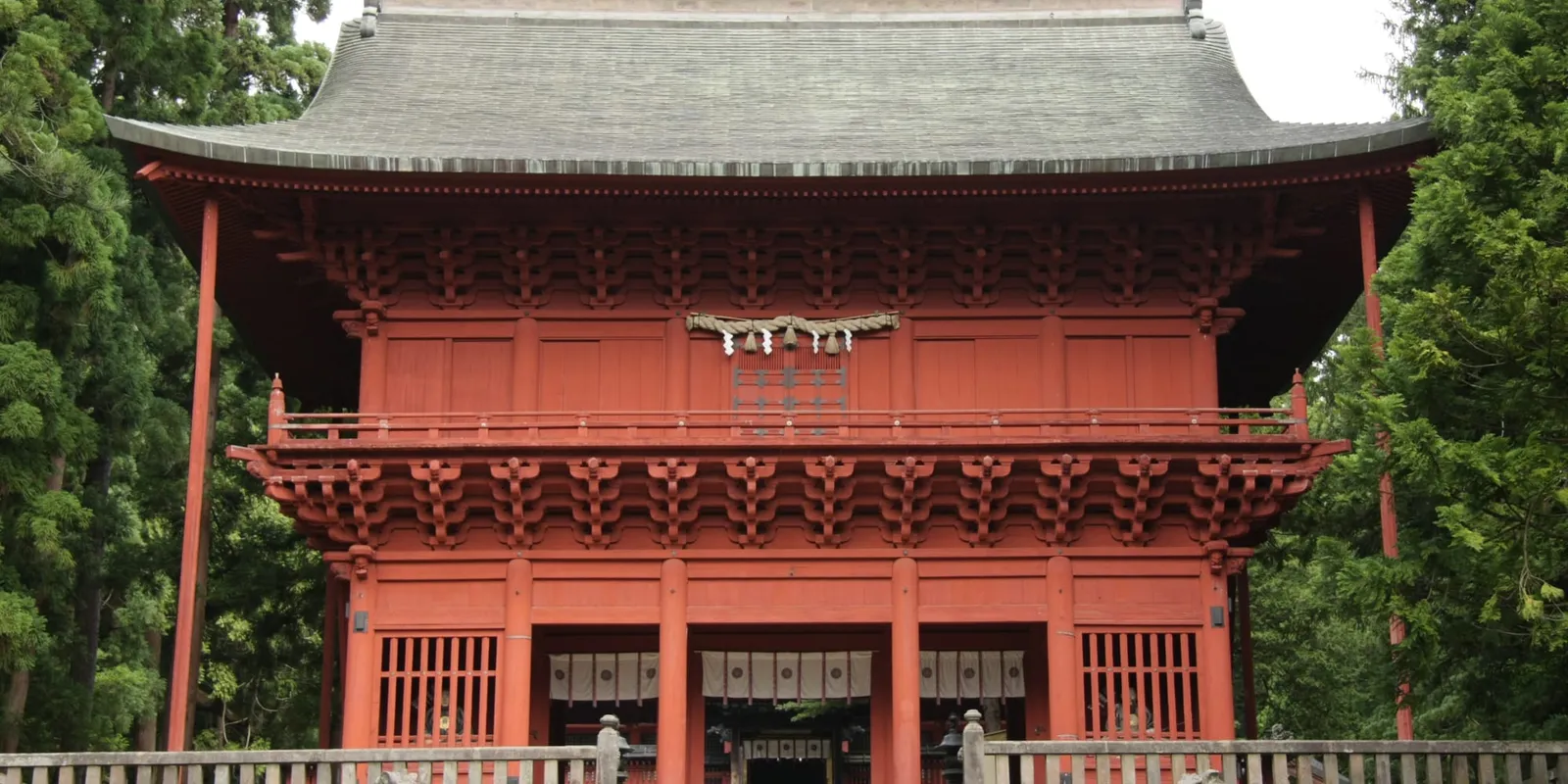
The shrine buildings seen today were constructed between the early Edo period and the Genroku era under the patronage of successive lords of the Hirosaki domain. Their vividly multicolored carved decoration has earned the complex the nickname “Oku Nikko” — a reference to Nikko Toshogu, whose famously ornate architecture the buildings are said to echo — and it remains one of the most striking examples of shrine architecture in the Tsugaru region.
Highlights
The first thing to greet visitors is the Romon gate, built in 1628 by Tsugaru Nobuhira, the domain’s second lord. Its imposing five-bay, three-door structure is covered in vividly multicolored carvings, and together with the Chumon gate, Haiden, Honden, rear gate, and sacred fence, it is designated a National Important Cultural Property. The decoration grows richer the deeper one proceeds, culminating in the vermillion, multicolored Honden — widely regarded as the finest piece of shrine architecture in the Tsugaru region.
The approach from the great torii to the Romon gate is itself a highlight, a stone-paved path running through a deep grove of cedars that, on a clear day, opens onto a striking view of Mount Iwaki itself. Strolling past the purification fountain and the subsidiary shrines along the way, visitors can sense the atmosphere of a mountain cult that has been practiced here for well over a thousand years.
Visiting Tips
A visit to the main precincts alone takes about 30 minutes, but allow around an hour if you also want to stroll the approach and visit the subsidiary shrines. Goshuin stamps can be received at the shrine office just past the Romon gate. The parking lot in front of the great torii becomes extremely crowded during the three days around the lunar 8th month (the Oyama-sankei festival), at New Year, and during the autumn foliage season, so plan accordingly. Comfortable footwear is recommended, as the approach includes stone paving and steps.
Annual Festivals
- Oyama-sankei (three days around the 1st day of the 8th lunar month): Tsugaru’s largest autumn festival, in which pilgrims in white robes climb Mount Iwaki to the accompaniment of mountain-climbing music. Designated a National Important Intangible Folk Cultural Property.
- Kinen-sai (May 15): An important spring rite praying for a bountiful harvest.
- Niiname-sai (November 3): An important autumn rite of thanksgiving for the year’s harvest.
- Saitan-sai (January 1) and Gensi-sai (January 3): New Year rites praying for national peace and a bountiful harvest in the year ahead.
Nearby Food & Sightseeing
- Hirosaki Castle & Hirosaki Park: About 30 minutes away by car, this park centers on one of Japan’s twelve surviving original castle keeps and is famous for its cherry blossoms and autumn foliage.
- Hyakuzawa Onsen: A hot spring area near the shrine’s approach, a welcome stop for soothing tired legs before or after a visit.
- Apple Park (Ringo Koen): A showcase for Hirosaki’s famous apple orchards, with local apple-based sweets and juices to sample, apple being one of Aomori’s signature products.
Frequently Asked Questions
- Q. What are the visiting hours?
- A. The grounds are open to visitors at all times; the shrine office is open 8:00–17:00 (April–October) or 8:30–16:00 (November–March).
- Q. When is the goshuin office open?
- A. Roughly 8:00–17:00, varying by season, for ¥300.
- Q. Is there parking?
- A. Yes, free parking is available in front of the great torii (very crowded during New Year and the Oyama-sankei festival).
- Q. Why is it called "Oku-Nikko"?
- A. Its brightly painted, richly carved buildings recall Nikko Toshogu, earning it this nickname.
- Q. How do I get there?
- A. About a 40-minute bus ride from JR Hirosaki Station to the Iwakiyama-jinja-mae stop.
Related Shrines
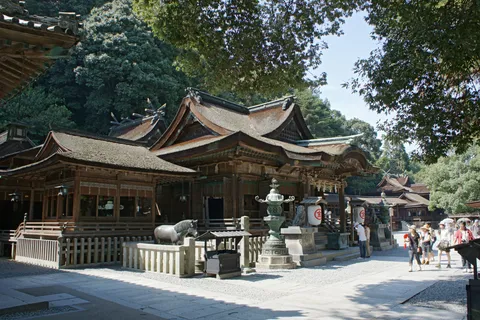
Kagawa Prefecture, Kotohira, Nakatado District
Kotohiragu
Kotohira-gū
- Maritime Safety
- Bountiful Harvest
- Business Prosperity
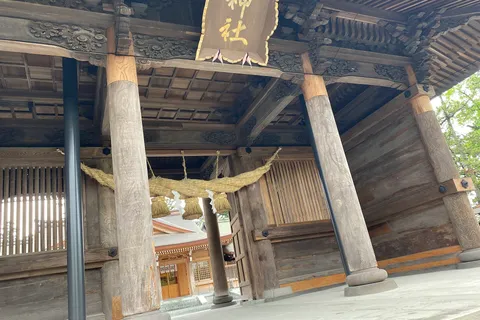
Kumamoto, Aso
Aso Jinja
Aso-jinja
- Good Relationships
- Bountiful Harvest
- Success in New Ventures
Shizuoka, Omaezaki
Shiraha Jinja
Shiraha-jinja
- Maritime Safety
- Good Relationships
- Bountiful Harvest