History
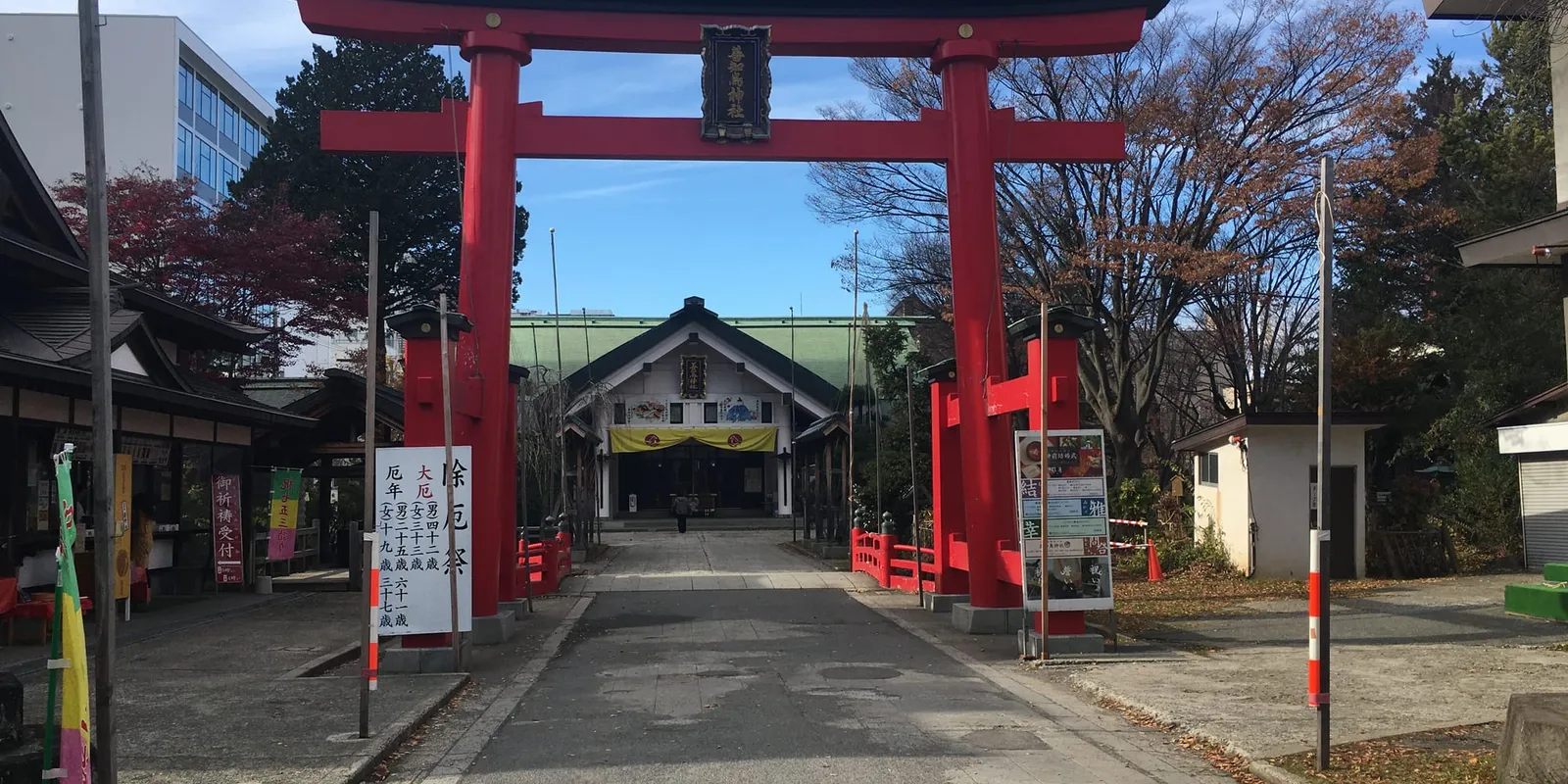
Utou Shrine (Utou-jinja) stands in Yasukata, Aomori City, Aomori Prefecture. The official site describes it as the birthplace of Aomori City (青森市発祥の地), and lists its ranks as the chief guardian shrine of Sotogahama in Mutsu Province, the chief guardian shrine of Aomori, and a former prefectural shrine (listed in September of Meiji 6). The enshrined deities are the three Munakata goddesses: Takiribime-no-Mikoto, Ichikishimahime-no-Mikoto and Takitsuhime-no-Mikoto. The official site explains that they were born of the oath (ukei) between Amaterasu Omikami and Susanoo, are also called “Michinushi-no-muchi,” and are worshipped as deities of safe travel and guidance through life.
According to the official history, in the time when present-day Aomori was called Utou Village, during the reign of the 19th emperor, Ingyo, Utou Chunagon Yasukata pacified the northern lands. The shrine is said to have begun when he enshrined the three goddesses, children of Amaterasu Omikami, as guardians of Sotogahama in Mutsu Province. It was later rebuilt in 807 (Daido 2) in connection with Sakanoue no Tamuramaro’s expedition to the northeast. The official site’s page on historic sites also mentions a monument commemorating the fire in Yasukata in Meiji 43, in which the shrine buildings burned and the main hall was rebuilt the same year. All of this is the shrine’s own account.
The grounds have a signboard for “Utou Swamp.” According to the official site, this area was once called Yasukata-gata, a lake fed by the Arakawa and Irauchi rivers. It was a safe harbor even in storms and was loved by fishermen, but after Tsutsumi, the lord of Yokouchi Castle, diverted the Arakawa into the Tsutsumi River, it gradually dried up and was reclaimed.
Highlights
The grounds hold a scattering of monuments and historic sites that the official site introduces as “historic sites and monuments.” They include a haiku monument to Sugae Masumi, a folklorist and poet of the late Edo period; a haiku monument to Matsuo Basho (erected in Meiji 11, with the verse “Meigetsu ya tsurubagi takaki toohigata”); a monument marking the end of the Oshu Kaido (erected in Heisei 3); and the Ryujin-sui water. The official site says Basho wanted to see the road north but is said to have been stopped by his companion Sora.
The shrine’s name is also known through the Noh play 『善知鳥』, attributed to Zeami (Hosho school). According to the official site, a traveling priest descending from Mount Tateyama meets the ghost of an old man, who asks him to offer a straw raincoat and hat to his family, a hunter’s household in Sotogahama. Having been prayed for, the ghost shows the torments of hell in which birds torment him for the sin of killing in life, and then vanishes. The official site’s page on historic sites also introduces it as 「謡曲旧蹟『善知鳥』」 (a site tied to the Noh play).
The official site says the first mikoshi was made in 1715 (Shotoku 5) by Funahashi Seizaemon of Kyoto, and the second was made in 1987 (Showa 62). The second commemorates the 1,180th anniversary of the shrine’s formal relocation and tours the neighborhood each September in the shrine procession of the grand festival. In addition, the official site says that to commemorate this 1,180th anniversary festival (held in Showa 62), the Jingu Gakubu created the dance 善知鳥舞, wishing for the lasting peace of Aomori and expressing the affection between parent and chick utou birds. The official site also introduces works that the Aomori-born artist Shiko Munakata left at the shrine.
Visiting Tips
The shrine is open for worship 24 hours a day, and prayer services are accepted from 9:00 AM to 4:00 PM (every day of the year; register 15 minutes before the ceremony; January is by reservation) (official site). Services such as yakuyoke, Shichi-Go-San, traffic-safety prayers, first shrine visits for babies and safe-childbirth prayers are listed starting at ¥6,000. The charm and goshuin office is listed as 8:30 AM–5:00 PM on some pages of the official site and 9:00 AM–5:00 PM on others, so the pages differ.
The goshuin costs ¥500 and a goshuin book ¥1,000. At busy times such as New Year, only pre-written goshuin are available (official site). Charms include the 善知鳥守 and 善知鳥水守 (¥900 each), and there is also a 善知鳥絵馬 (ema votive plaque).
It is about a 10-minute walk from JR Aomori Station along Shinmachi-dori. The paid lot next door, “Parking Utou,” is available, and large tour buses can park on the grounds with an advance reservation (official site).
Annual Festivals
The official site’s annual schedule gives the following dates (check the official site for details each year).
- New Year’s Day Festival and New Year prayers (January 1), special New Year prayer ceremony (from January 4): The New Year visit season.
- Yakuyoke-sai (February 1 to the end of the month), Setsubun-sai (February 3): Prayers for protection from misfortune are held.
- Doll memorial service (Vernal Equinox Day): The official top page gives March 1–20 as the reception period.
- Utou Shoko Taisai (June 9), Utou Chunagon-sai (June 10): The annual schedule also lists the Sanko Inari Shrine festival (June 9–10) and the Utou Ryujin-gu festival (June 16–17).
- Nagoshi no Oharae (June 30): The year-end Oharae is on December 28.
- Utou Jinja Taisai (September 14–15): The mikoshi procession is held.
- Shichi-Go-San (October 1 to November 30): The official top page gives the reception period as September 27 to November 30.
- Joya-sai (December 31): The Gohei-tate ritual is listed from December 15.
Nearby Food & Sightseeing
- Nebuta no Ie Wa Rasse: An exhibition facility for the Nebuta floats, close to JR Aomori Station. According to a guide site, it is at 1-1-1 Yasukata, Aomori, in the same Yasukata district. Hours and admission can change, so check an official source.
- Aomori Gyosai Center (Furukawa Market): A market known for “nokke-don,” where you build your own seafood rice bowl. A guide site says it is about a 5-minute walk from JR Aomori Station. Days and hours can change, so check in advance.
- Shinmachi-dori: The street the official site gives as the walking route from Aomori Station to the shrine. You can look at the streetscape as you walk from the station to the shrine.
Frequently Asked Questions
- Q. What are the visiting hours?
- A. The official site says the shrine can be visited 24 hours a day. Prayer services are accepted from 9:00 AM to 4:00 PM every day of the year; register 15 minutes before the ceremony, and January is by reservation. The charm and goshuin office is listed as 8:30 AM–5:00 PM on the official site's top and charms pages, but as 9:00 AM–5:00 PM on the access page, so the pages differ.
- Q. Can I get a goshuin at Utou Shrine?
- A. Yes. According to the official site, goshuin are issued at the shrine office for ¥500, and a goshuin book is ¥1,000. At busy times such as New Year, only pre-written goshuin are available. Because the site gives both 8:30 AM–5:00 PM and 9:00 AM–5:00 PM for the office, it is safest to avoid arriving late in the day.
- Q. How do I get there, and is there parking?
- A. The official site says it is about a 10-minute walk from JR Aomori Station along Shinmachi-dori. For parking, use the paid lot next door, "Parking Utou" (fees and number of spaces are not stated). Large tour buses can park on the grounds, but an advance reservation is required.
- Q. What does "utou" mean?
- A. According to the official site, scientifically the utou is a medium-sized seabird of the auk family, known for the deep affection between parent and chick. The site explains the characters as follows: 善 means being in accord with the will of the gods, 知 what the gods give through being enshrined, and 鳥 a messenger linking the heavenly gods and the earth. The origin of the name is given as several theories, and the official site introduces more than one.
- Q. Why is it called the birthplace of Aomori City?
- A. The official site presents Utou Shrine as the birthplace of Aomori City (青森市発祥の地). In its history, the shrine began in the time when the area of present-day Aomori was called Utou Village, when Utou Chunagon Yasukata pacified the northern lands and enshrined the three goddesses. The site's page on historic sites also says that, although there are several views on where the Oshu Kaido ended, it is taken to be the Yasukata area of Aomori on the basis of an early Edo-period map (the Bakufu-sen Keicho Nihon-zu), and there is a commemorative monument on the grounds.
Plan Your Visit
Before you go, you can book a stay and get your shrine-visit items ready.
Amazon links open Amazon.co.jp (Japan) in English; whether an item ships overseas depends on the product.
※ Contains ads (PR). Links open external sites such as Amazon, Rakuten, Trip.com and Booking.com.