History
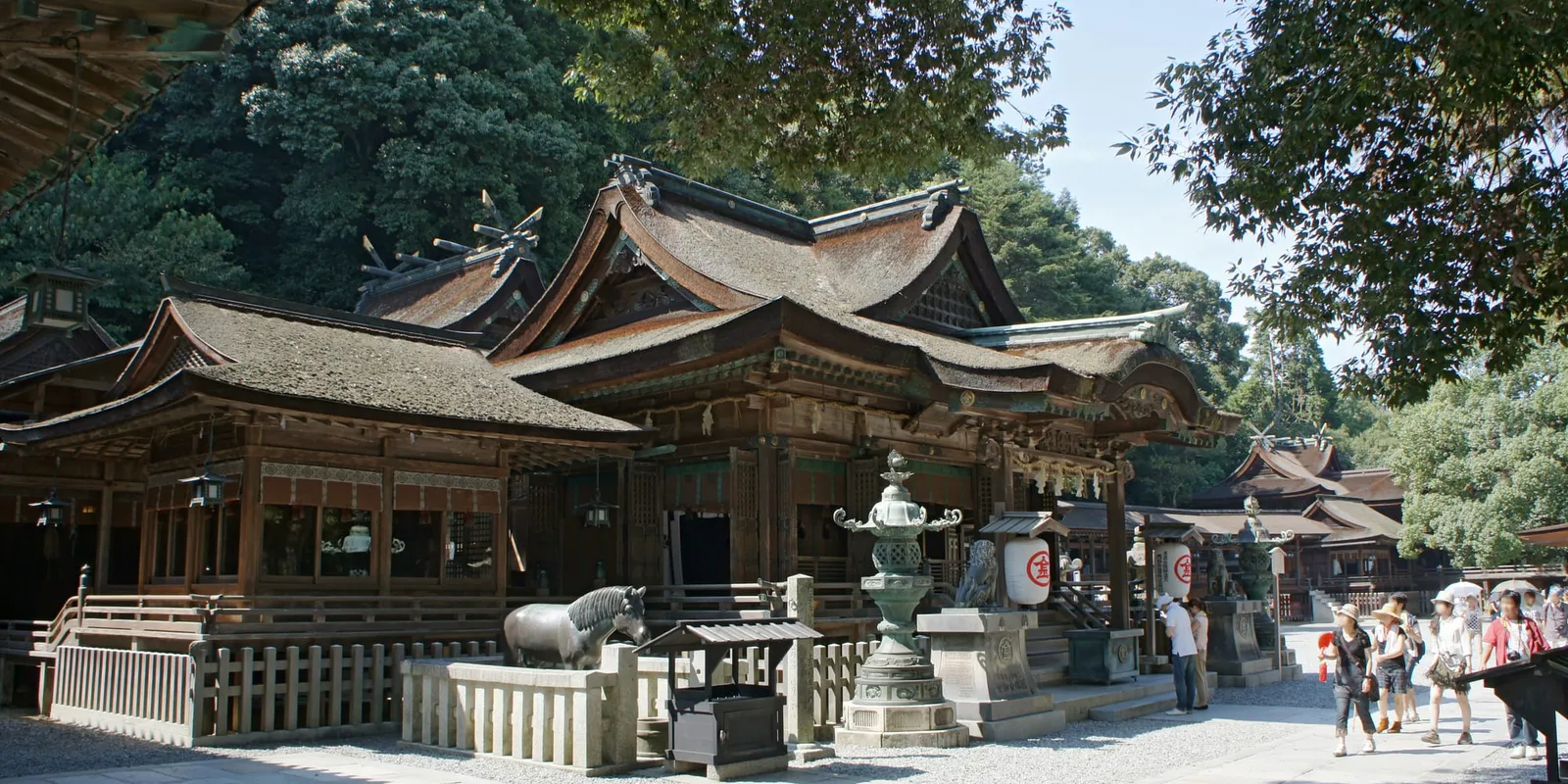
Kotohiragu, affectionately known nationwide as “Konpira-san,” stands partway up the slopes of Mt. Zozu. Its enshrined deity, Omononushi no Kami, has long been revered as a god of the sea, and during the Edo period, pilgrimages to Konpira became hugely popular, especially among those involved in shipping — so much so that ordinary people came to say “everyone should make the Konpira pilgrimage at least once in their life.”
Today it remains one of Japan’s foremost shrines of the sea, drawing deep devotion from fishermen, shipping workers, and anyone praying for safety at sea.
Emperor Sutoku, exiled to Sanuki Province after the Hogen Rebellion of 1156, is said to have paid deep and constant devotion to this shrine on the slopes of Mt. Zozu. In 1163, the year before his death, he is said to have secluded himself here to undergo austere religious practices, and in 1165, the year after his passing, he was enshrined alongside the main deity at Kotohiragu in remembrance of his unfortunate life and deep devotion.
Famous for Its Stone Steps
No description of Kotohiragu is complete without its famous stone steps — 785 of them leading to the main shrine, and 1,368 if you continue on to the Okusha (Inner Shrine). Souvenir shops and Sanuki udon restaurants line the approach, and the stairway itself has become a tourist attraction in its own right. Partway up, visitors can even hire a palanquin (kago) to be carried the rest of the way, making the climb accessible even for those without much stamina.
Visiting Tips
Reaching the main shrine involves a genuine climb — about 40 minutes even for a healthy adult — so wear comfortable walking shoes and bring water. The view of the Sanuki Plain from the main shrine is a spectacular reward for making it to the top.
Annual Festivals
- Reitaisai (October 9–11): One of Kotohiragu’s Three Great Festivals alongside the Kinensai and Niinamesai, and the centerpiece of a 46-day cycle of rites running from the Kuchiake Shinji on August 31 to the Yakiharai Shinji on October 15 — the shrine’s most important festival.
- Hatsu-Konpira Festival (early January): The year’s first monthly festival, drawing many worshippers who pray for a safe and happy year.
- Eve-of-Festival Offering Events (during the Reitaisai period): Performing arts and lantern-offering ceremonies are held as festive events, filling the approach with festival spirit.
Nearby Food & Sightseeing
Along the approach, you’ll find Sanuki udon restaurants and confectioners selling Konpira’s famous “kyuman” sweets. Partway up the steps stands “Kanamaru-za,” known as Japan’s oldest surviving kabuki theater.
- Konpira Udon Honten: An atmospheric udon restaurant on the main approach, serving Sanuki udon specialties such as shoyu udon.
- Tentekomai: A fully self-service udon shop near the entrance to the approach, popular for its quick service.
- Kyuman Honpo Ishidanya: A long-established confectionery that makes and sells Konpira’s famous “kyuman” sweets.
Frequently Asked Questions
- Q. How many steps are there to the main shrine?
- A. 785 steps to the main shrine, or 1,368 including the inner shrine — about a 40-minute climb for most adults.
- Q. What are the visiting hours?
- A. Generally 6:00–18:00, varying by season.
- Q. When is the goshuin office open?
- A. Around 8:30–17:00, for ¥500.
- Q. Is there parking?
- A. Yes, paid parking is available near the approach.
- Q. How do I get there?
- A. About a 20-minute walk from JR Kotohira Station or Kotoden Kotohira Station to the main shrine.
Related Shrines
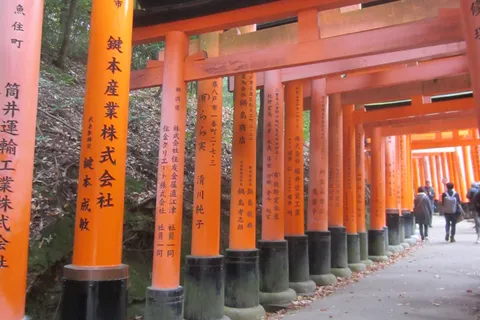
Kyoto Prefecture, Fushimi-ku, Kyoto
Fushimi Inari Taisha
Fushimi Inari Taisha
- Business Prosperity
- Bountiful Harvest
- Household Safety
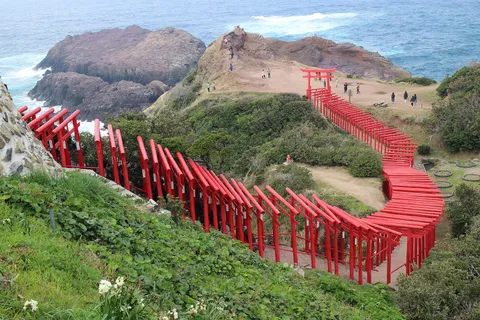
Yamaguchi, Nagato
Motonosumi Jinja
Motonosumi-jinja
- Business Prosperity
- Maritime Safety
- Good Relationships
Okinawa, Naha
Naminoue Shrine
Naminoue-gū
- Maritime Safety
- Household Safety
- Business Prosperity