
History
Yasaka Jinja is the head shrine of the roughly 2,300 shrines across Japan devoted to Gion worship. It enshrines Susanoo-no-mikoto, Kushinadahime-no-mikoto, and the Yahashira-no-Mikogami, and is affectionately known to the people of Kyoto as “Gion-san.” An ancient shrine that has stood on this site since before the capital moved to Heian-kyo in 794, it is also widely known for the Gion Festival, a religious observance that began as a prayer for deliverance from epidemics.
When an epidemic swept the region in 863, a goryoe ritual was held at Shinsen’en to appease the plague deities and the vengeful spirits of the dead, and from then on, whenever epidemics struck, prayers for good health were offered to Gozu Tenno, the deity then enshrined here. This practice is considered the origin of the Gion Festival. Gozu Tenno, a deity of Indian origin regarded as the guardian of the Jetavana Monastery, came to be identified with the native Japanese deity Susanoo-no-mikoto through the syncretic blending of Buddhism and Shinto, and the shrine was long known by names such as “Gion-sha” and “Gion Kanjin-in.” With the Meiji-era edict separating Buddhism and Shinto, the shrine’s name was changed from “Gion-sha” to its present name, Yasaka Jinja, and its enshrined deity was officially changed from Gozu Tenno to Susanoo-no-mikoto.
Highlights
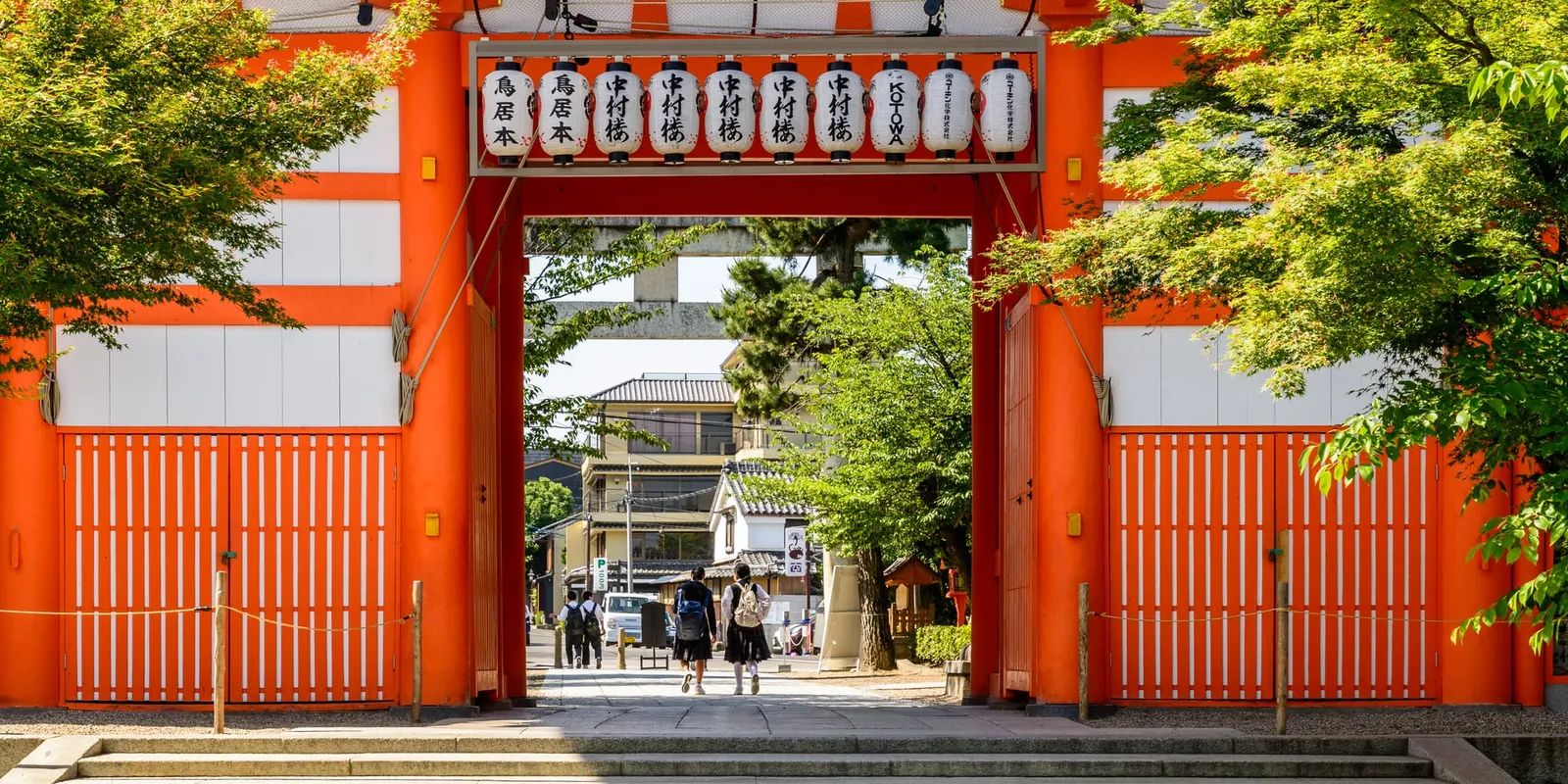
The shrine sits at the heart of the Gion and Higashiyama area, and its vividly colored buildings, including the vermillion Nishiromon (West Tower Gate), create a beautiful scene. The Gion Festival, held throughout the month of July, is one of Kyoto’s three great festivals, and its Yamahoko parade is known worldwide as one of Japan’s foremost religious processions.
Visiting Tips
The shrine can be visited around the clock, and at night its lanterns are lit, wrapping the grounds in a dreamlike atmosphere. It also offers easy access to Maruyama Park, Kodaiji Temple, and Kiyomizudera Temple, making it a convenient base for sightseeing in Kyoto.
Annual Festivals
- Gion Festival: Held throughout the month of July, this is Yasaka Jinja’s principal festival, with a history said to span more than 1,100 years since the Jogan era. On July 17, mikoshi are carried in procession through the shrine’s parish alongside the Yamahoko parade.
- Setsubun Festival: Held every year on February 2 and 3 at the Maidono (dance hall) within the grounds, this festival features a bean-throwing ceremony as well as dance offerings performed by geiko and maiko from Gion’s four hanamachi (geisha districts).
- Okera Mairi: A New Year tradition held late on New Year’s Eve, in which visitors light a length of rope from the shrine’s sacred okera flame and carry it home to celebrate the new year.
Nearby Food & Sightseeing
The shrine sits amid the quintessentially Kyoto streetscape of Gion, including Hanamikoji-dori, and stays busy with visitors combining their visit with snacking and strolling around the neighborhood.
- Junidanya Honten: A long-established Kyoto cuisine restaurant just off Hanamikoji-dori, housed in a renovated ochaya (teahouse) roughly 150 years old.
- Along Hanamikoji-dori are scattered noted yakitori and Japanese-cuisine restaurants, some featured on the review site Tabelog, where you can dine while soaking up the atmosphere of Gion.
- Around Gion-Shijo Station are several cafes that make for an easy stop between prayers.
Frequently Asked Questions
- Q. What are the visiting hours?
- A. The grounds are open around the clock, but the amulet office keeps hours of 9:00–17:00.
- Q. When is the goshuin office open?
- A. 9:00–17:00, for ¥500.
- Q. Is there parking?
- A. Yes, paid parking is available nearby.
- Q. What is the Gion Matsuri?
- A. A month-long festival held throughout July with over a thousand years of history — on July 17, portable shrines process through the parish alongside the float procession.
- Q. How do I get there?
- A. Get off at the "Gion" city bus stop, or about a 5-minute walk from Keihan Gion-Shijo Station.
Related Shrines
Kyoto Prefecture, Fushimi-ku, Kyoto
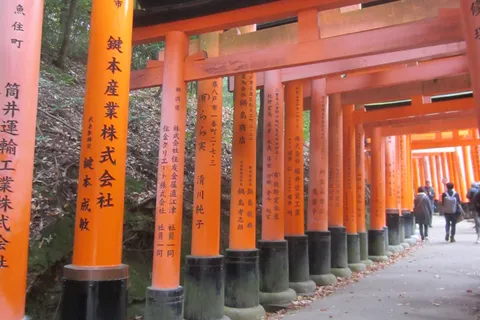
Fushimi Inari Taisha
Fushimi Inari Taisha
- Business Prosperity
- Bountiful Harvest
- Household Safety
Kyoto Prefecture, Kita Ward, Kyoto
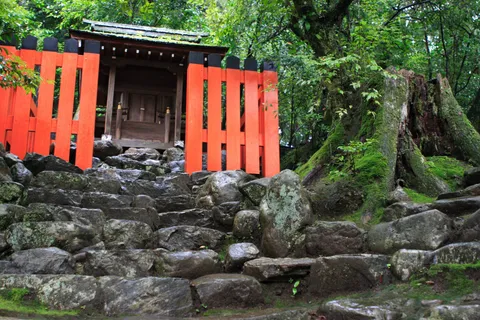
Kamigamo Jinja
Kamigamo-jinja
- Protection from Misfortune
- Protection from Lightning
- Protection from Bad Directions
Kyoto Prefecture, Sakyo Ward, Kyoto
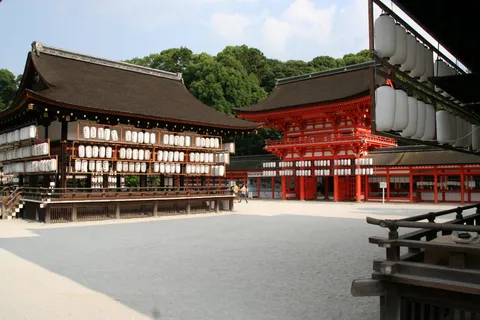
Shimogamo Jinja
Shimogamo-jinja
- Good Relationships
- Safe Childbirth
- Protection from Misfortune