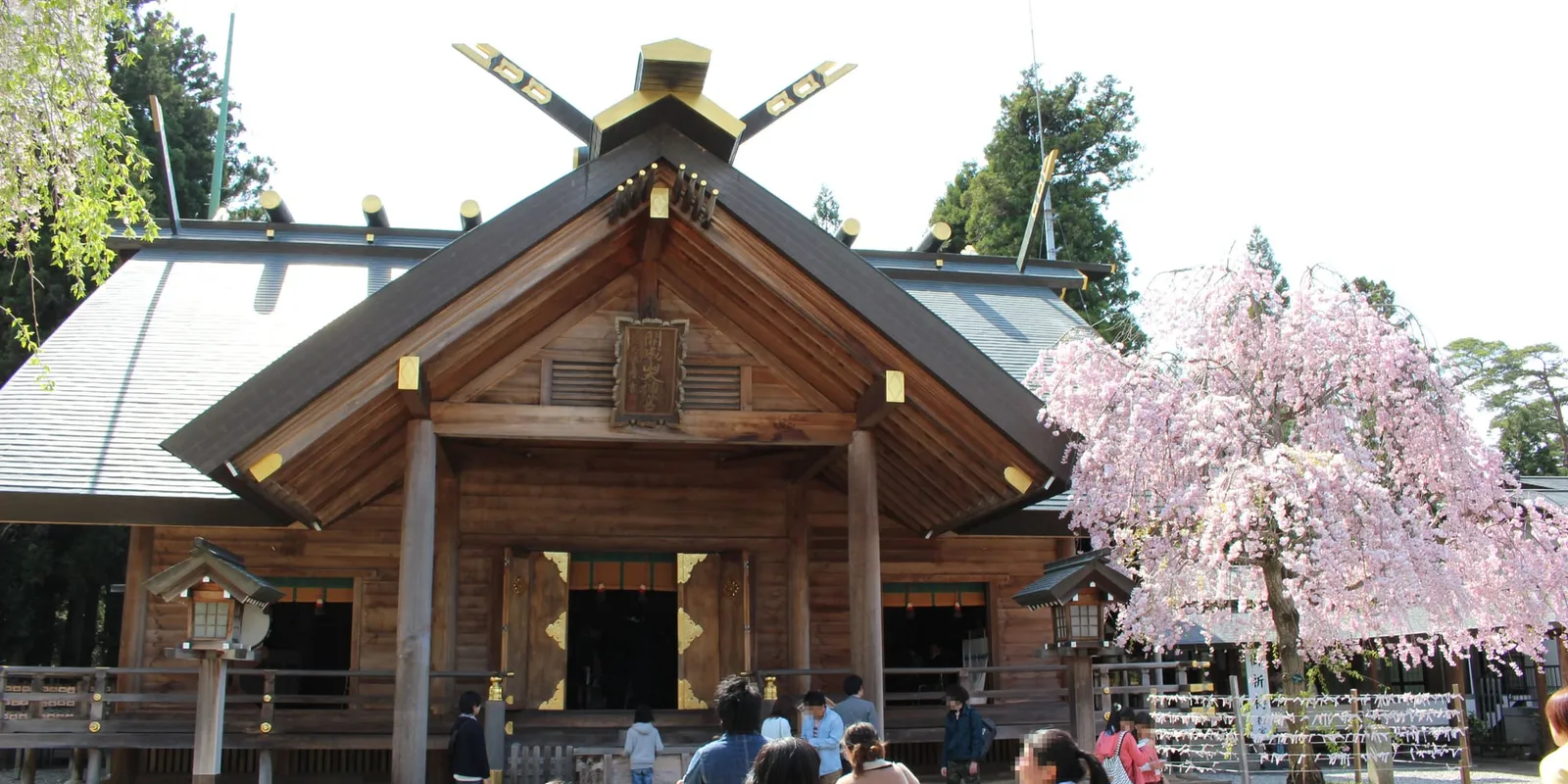
History
Kaiseizan Daijingu was founded in 1876 (Meiji 9) specifically to pray for the success of the Asaka land reclamation project and the Asaka Canal irrigation works that would go on to transform the once-barren Otsuki Plain around Koriyama into fertile farmland. The shrine was built as a spiritual anchor for the former samurai left without stipends after the abolition of the domains, and for the settlers who came from across Japan to develop the land, through the efforts of the Fukushima prefectural official Nakajo Masatsune and others.
That same year, a petition to invite a divided spirit of Ise Jingu was approved by the Daijokan (Council of State), and the divided spirit was formally enshrined under the authority of the Daijo-daijin, the Grand Minister of the day. Because it enshrines Amaterasu Omikami and Toyouke no Okami of Ise Jingu alongside Emperor Jinmu (Kamuyamato Iwarebiko no Mikoto) as guardian of the reclamation effort, the shrine has come to be affectionately known as “Tohoku no Oise-sama” — the Ise Shrine of the Northeast — and is counted among Fukushima Prefecture’s most visited shrines for hatsumode, the first shrine visit of the New Year.
Highlights
Together with the adjoining Kaiseizan Park across the street, the shrine grounds are lined with roughly 1,300 cherry trees, making it one of Tohoku’s premier cherry blossom destinations. Among them stand some of Japan’s oldest surviving Somei Yoshino cherry trees, said to have been planted by the settlers themselves around 1878. When the blossoms are at their peak, the grounds are illuminated at night and lined with food stalls, drawing crowds of visitors day and night.
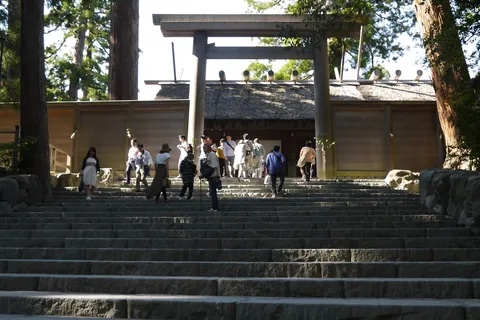
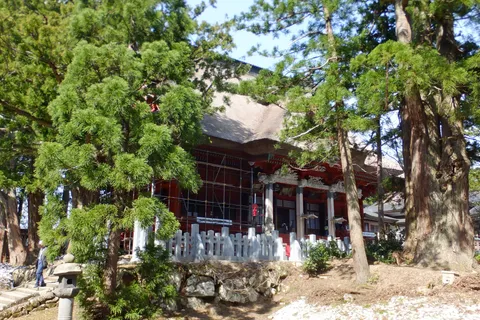
The grounds are also home to subsidiary shrines, including Kuwano-gu, dedicated to figures closely associated with the Asaka reclamation project. Walking through the shrine’s dignified grove, reminiscent of Ise Jingu itself, visitors can reflect on the history of the settlers who built this land.
Visiting Tips
The grounds are open to visitors at any time, but goshuin and prayer requests should be made at the shrine office during its opening hours of 8:30–17:00. The goshuin fee is ¥300, with limited-edition goshuin available for ¥500. The shrine’s own free parking lot holds about 50 cars, but the free lots at Kaiseizan Park across the street (448 spaces in total) are also available during the busy New Year and cherry blossom seasons.
Annual Festivals
- Sakura Matsuri (late March–April): The roughly 1,300 cherry trees on the shrine grounds and in adjoining Kaiseizan Park reach full bloom, with night illuminations and food stalls drawing large crowds of cherry blossom viewers.
- Spring Grand Festival (April 22): Held during cherry blossom season, this festival prays for the continued success of the reclamation effort and the prosperity of the local community.
- Summer Festival (last Saturday or Sunday of July): A beloved local summer tradition featuring food stalls and taiko drum performances.
- Autumn Grand Festival (October 16–17): A festival of thanks for the autumn harvest, followed the next weekend by a mikoshi portable-shrine procession.
- New Year’s Festival and Hatsumode (January 1–3): One of Fukushima Prefecture’s most visited hatsumode destinations, drawing huge crowds during the first three days of the year.
Nearby Food & Sightseeing
- Kaiseizan Park: A city park adjoining the shrine, famous for its cherry blossoms and also home to a boating pond and small zoo, ideal for a stroll before or after your visit.
- Romeo: Known as the original creator of “cream box,” the beloved Koriyama-born local pastry, first sold by this bakery in 1976.
- Koriyama Station: The station’s souvenir shops carry local specialties, including “mamadoru” pastries from the long-established confectioner Sanmangoku.
Frequently Asked Questions
- Q. What are the visiting hours at Kaiseizan Daijingu?
- A. The grounds are open to visitors at all times (the shrine office is open 8:30–17:00).
- Q. When can I get a goshuin, and how much does it cost?
- A. Goshuin are available at the shrine office from 8:30 to 17:00, for ¥300 (limited-edition goshuin are ¥500).
- Q. Is there parking at Kaiseizan Daijingu?
- A. Yes, about 50 free parking spaces are available on the grounds. During New Year and the cherry blossom season, the free lots at Kaiseizan Park across the street (448 spaces in total) are also available.
- Q. When is cherry blossom season at Kaiseizan Daijingu?
- A. Together with adjoining Kaiseizan Park, the shrine is lined with roughly 1,300 cherry trees, one of Tohoku's premier destinations, at their best from late March through April. Some of Japan's oldest surviving Somei Yoshino cherry trees, planted around 1878, still stand here.
- Q. How do I get to Kaiseizan Daijingu?
- A. About 15 minutes by bus from JR Koriyama Station, getting off at Koriyama Joshi Daigaku and walking about 2 minutes; about 15 minutes by car from the Koriyama IC on the Tohoku Expressway.