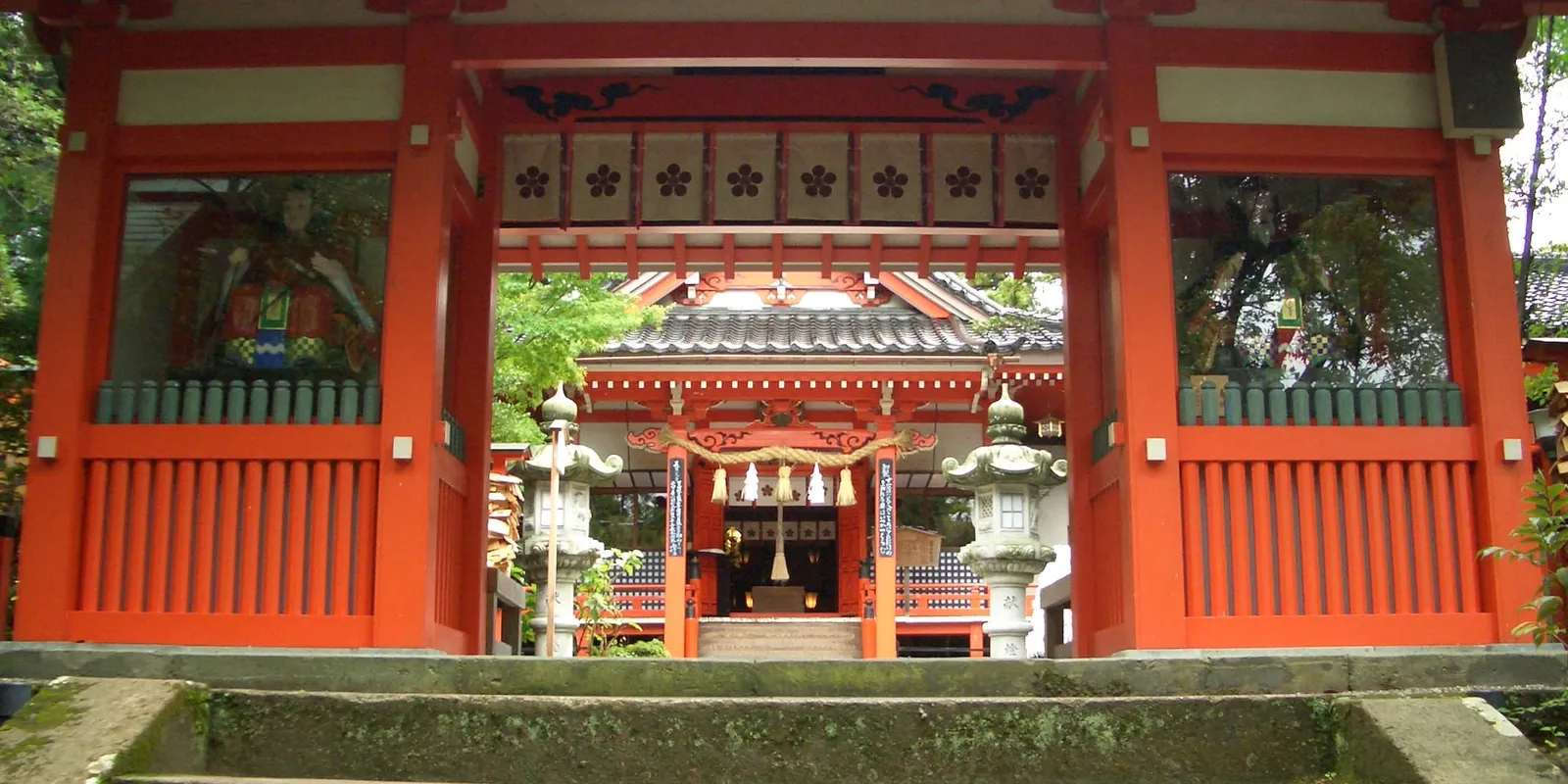
History
Kanazawa Jinja was founded in 1794 (Kansei 6) by Maeda Harunaga, the 11th lord of the Kaga domain, at the same time he established the domain school Meirindo. As the school’s tutelary shrine, he enshrined a divided spirit of Sugawara no Michizane — the deity of scholarship and a forebear of the Maeda family — beside Kinjo Reitaku, a sacred spring on the grounds. That spring is said to be the very origin of the name “Kanazawa” (“gold marsh”): according to legend, a poor young man named Imohori Togoro washed mountain yams he had dug up in its waters, only to find flecks of gold dust pouring out with them. The spring is still regarded today as a spot for financial luck and good fortune.
When Meirindo later relocated to make way for the development of Kenroku-en Garden, the shrine became the tutelary shrine of the Takezawa Palace, a retreat used by successive domain lords, and came to be known as “Takezawa Tenjin.” After the abolition of the domains, in 1874 (Meiji 7) — the same year Kenroku-en opened to the public — it was renamed to its present name, Kanazawa Jinja, and has since drawn students and scholars seeking its blessing on their studies. The shrine grounds also enshrine the Hakuja Ryujin (White Snake Dragon God) for financial luck and protection from misfortune, Inari Daimyojin for business prosperity, and Kotohira no Okami for traffic safety, making it a shrine known for a wide range of blessings.
Highlights
The single greatest highlight is Kinjo Reitaku, the sacred spring bubbling up right beside the main hall. Regarded as the birthplace of the name “Kanazawa” itself, this spring is said to still be home to a dragon deity who brings good fortune; its clear water and moss-covered rock face speak quietly to centuries of devotion. The goshuin stamps available at the shrine office are finished with a touch of real gold leaf, a distinctly Kanazawa-style souvenir that visitors love to collect.
Behind the main hall stands a smaller shrine dedicated to the Hakuja Ryujin, a rare pairing of white snake and dragon deity worship found in few other places in Japan. Located right outside Kenroku-en’s Zuishin-zaka exit, Kanazawa Jinja is a natural stop to round off a stroll through the garden, and its grounds — wrapped in greenery through every season — offer a pocket of calm just steps from one of Japan’s busiest tourist spots.
Visiting Tips
The grounds are compact, and a visit including Kinjo Reitaku takes only about 15–20 minutes. There is no dedicated shrine parking, so visitors should use one of the paid lots around Kenroku-en or come by public transit. Goshuin stamps are available at the shrine office from 9:00 to 17:00, and the gold-leaf-accented goshuin makes a memorable Kanazawa souvenir. Since the shrine sits just a minute’s walk from Kenroku-en’s Zuishin-zaka exit, most visitors combine their shrine visit with a walk through the garden.
Annual Festivals
- Grand Festivals (Spring: April 25, Autumn: September 25): The shrine’s principal annual observances, giving thanks for divine protection and praying for the peace of the community and the nation.
- Oyama Festival (mid-September): Commemorates the historic transport of stone for Kanazawa Castle’s construction, with rites recalling the era.
- White Snake Day (1st of every month): A monthly service for the Hakuja Ryujin, deity of financial luck and protection from misfortune.
- Inari Day (15th of every month): A monthly service for Inari Daimyojin, deity of business prosperity.
- Tenjin Day / Academic Success Prayer Service (25th of every month): A monthly service for Sugawara no Michizane, with special prayers for success in one’s studies.
Nearby Food & Sightseeing
- Kenroku-en Garden: One of Japan’s “Three Great Gardens,” right outside the shrine’s Zuishin-zaka exit, famous for its stroll-style landscaping and beauty in every season. Most visitors pair a shrine visit with a walk through the garden.
- Ishikawa Prefectural Museum of Art: A museum of art and crafts connected to Ishikawa Prefecture, adjoining Kenroku-en and just a few minutes’ walk from the shrine.
- Omicho Market: Known as “Kanazawa’s kitchen,” this historic market about a 10-minute drive from the shrine offers fresh seafood bowls and plenty of food stalls to snack your way through.
Frequently Asked Questions
- Q. What are the visiting hours?
- A. The grounds are open to visitors at all times; the shrine office and goshuin desk are open 9:00–17:00.
- Q. When is the goshuin office open?
- A. 9:00–17:00, for ¥500 (includes a gold leaf accent).
- Q. Is there parking?
- A. No dedicated shrine parking — use the paid lots around Kenroku-en Garden.
- Q. Is it close to Kenroku-en Garden?
- A. Yes — it's right outside the garden's Zuishin-zaka exit, about a 1-minute walk.
- Q. How do I get there?
- A. About a 3-minute walk from the "Hirosaka / 21st Century Museum" bus stop.