History
According to shrine tradition, Kanda Jinja was founded in 730 by Makanda no Omi of the Izumo clan in Shibazaki village, Toshima District, Musashi Province — an area now around Otemachi and the Masakado-zuka mound in Chiyoda Ward. It was originally established to protect sacred rice paddies dedicated to the Ise Grand Shrine, which is how it came to be known as “Kanda” (god-field) Myojin.
In 1309, the spirit of Taira no Masakado was enshrined here. Masakado, the famous rebel warrior of the mid-Heian period who rose up against the imperial court, continued to be revered by the people of Edo, and remains enshrined today in the third hall as a guardian against disaster and misfortune. In 1601, the shrine was relocated to Surugadai to make way for the expansion of Edo Castle, and in 1616 it was moved by order of the second shogun, Tokugawa Hidetada, to its present site in Sotokanda.
The shrine enshrines Onamuchi no Mikoto (Daikoku-sama), the god of good relationships, in the first hall; Sukunahikona no Mikoto (Ebisu-sama), the god of business prosperity, in the second hall; and Taira no Masakado no Mikoto in the third. Revered as “Edo Sochinju,” the guardian shrine of the entire city of Edo, it protected Edo Castle and served as the tutelary shrine of the 108 town associations of old Edo — including Kanda, Nihonbashi, Akihabara, Otemachi, and Marunouchi — receiving strong patronage from the Tokugawa shoguns throughout the Edo period.
Highlights
In recent decades, Kanda Myojin has become a major pilgrimage site for global subculture fandom, thanks to its location right beside Akihabara, the world-famous hub of anime, gaming, and electronics culture. The shrine has embraced this identity wholeheartedly, offering collaboration goshuincho and charms tied to popular franchises such as Love Live! and Is the Order a Rabbit?, alongside amulets specifically for IT and information security blessings — a striking, good-humored blend of Edo-era tradition and cutting-edge pop culture found nowhere else.
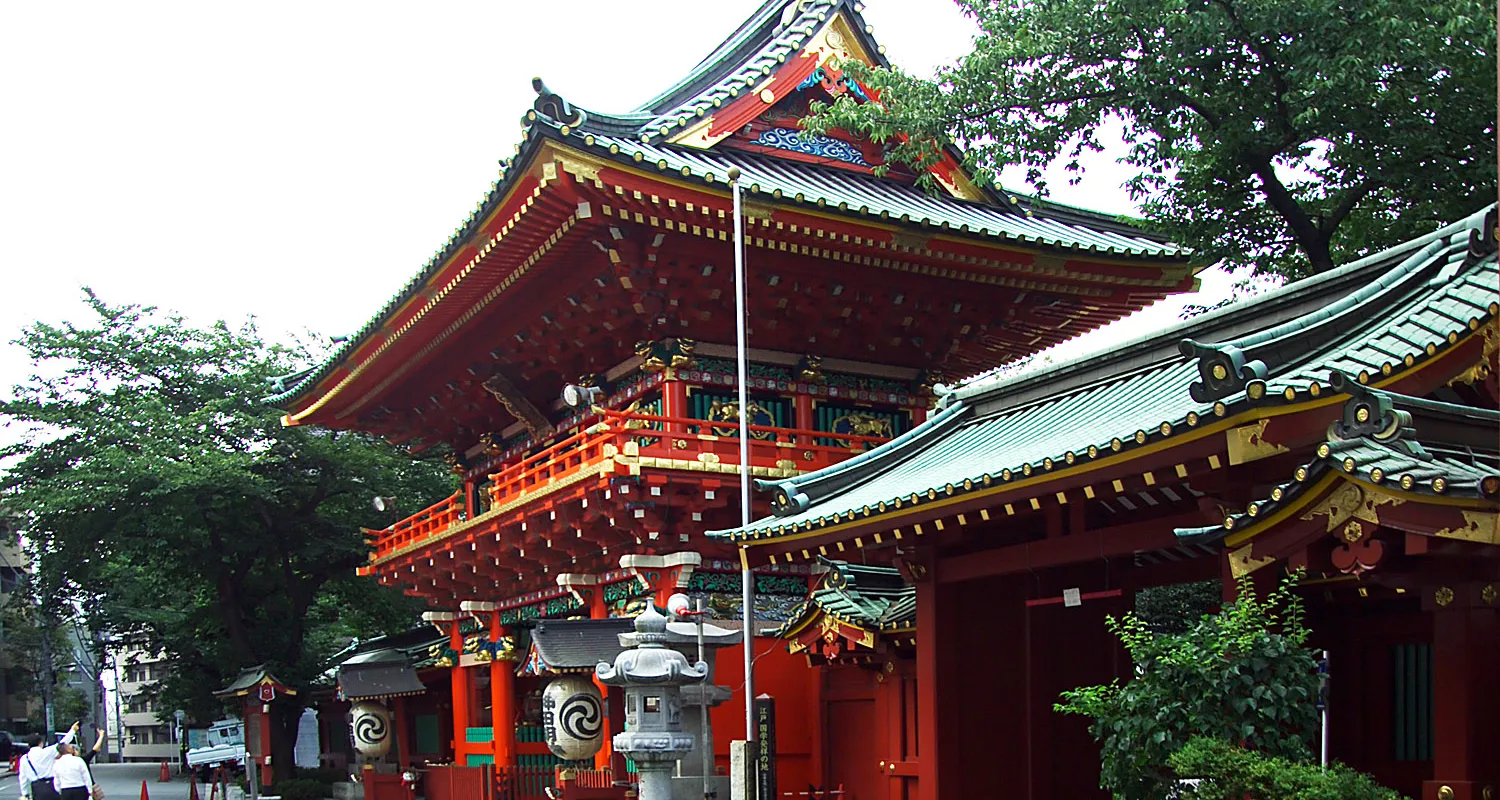
The current buildings are a lacquered vermillion, cypress-built gongen-zukuri complex rebuilt in 1934 and extensively restored since. The grounds include shrines connected to the Masakado-zuka mound in nearby Otemachi, and the on-site Edocco Culture Exchange Museum displays historic ukiyo-e prints and mikoshi floats from the Kanda Matsuri festival.
Visiting Tips
The shrine grounds are open around the clock, but goshuin and charm sales run roughly 9:00 AM to 5:00 PM, so plan your visit with that window in mind. With Ochanomizu and Akihabara Stations both a short walk away, many visitors combine a shrine visit with sightseeing in Akihabara. Collaboration goshuincho and charms sell out quickly, so it’s worth checking the shrine’s official site in advance for current availability.
Annual Festivals
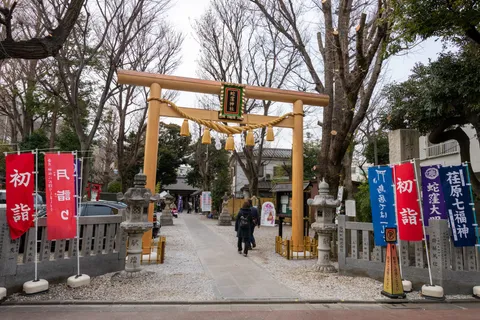
- Kanda Matsuri (mid-May, main festival held in odd-numbered years): One of Edo’s “Three Great Festivals” and one of Japan’s “Tenka Matsuri,” held in alternating years with the Sanno Matsuri of Hie Shrine. The Shinko-sai procession carries mikoshi and floats through the 108 town associations, culminating in the Mikoshi Miyairi, when as many as 200 portable shrines converge on the grounds.
- Setsubun Festival (February 3): A ritual to invite good fortune and drive out misfortune, drawing crowds for the ceremonial scattering of lucky beans.
- Reitaisai Grand Festival (May 15): The central religious rite of the Kanda Matsuri cycle, conducted solemnly by the shrine’s priests.
- New Year’s Festivities (December 31–January 1): Large crowds gather for the countdown to the new year and the first shrine visit of the year.
Nearby Food & Sightseeing
- Amanoya: A venerable amazake shop founded in 1846, right beside the shrine’s great torii. Famous for additive-free amazake made only from rice and rice malt, and for its miso oden.
- Akihabara Electric Town: A few minutes’ walk from the shrine, this world-famous district for electronics and otaku culture is packed with everything from major electronics retailers to specialty anime and gaming shops.
- Kanda Yabu Soba: A storied Edo-style soba restaurant founded in 1880, one of Kanda’s most celebrated. Its fragrant, faintly green-hued soba served on bamboo trays remains a favorite among soba connoisseurs.
Frequently Asked Questions
- Q. What are the visiting hours?
- A. The grounds are open 24 hours a day. The shrine office and shop are open roughly 9:00 AM to 5:00 PM.
- Q. When is the goshuin office open?
- A. 9:00 AM–5:00 PM, for ¥500.
- Q. Is there parking?
- A. Yes, on-site parking is available (about 10 spaces, free, entrance to the right of the Zuishin-mon gate). Nearby coin parking is recommended when full.
- Q. Does Kanda Myojin have anime or game collaboration goshuincho and charms?
- A. Yes, the shrine offers collaboration goshuincho and charms tied to popular franchises such as Love Live! and Is the Order a Rabbit?, along with a popular amulet for IT and information security blessings.
- Q. How do I get there?
- A. 5 minutes on foot from Ochanomizu Station (JR Chuo Line/Tokyo Metro Marunouchi Line), Shin-Ochanomizu Station (Tokyo Metro Chiyoda Line), or Suehirocho Station (Tokyo Metro Ginza Line); 7 minutes on foot from Akihabara Station (JR/Tokyo Metro Hibiya Line).