History
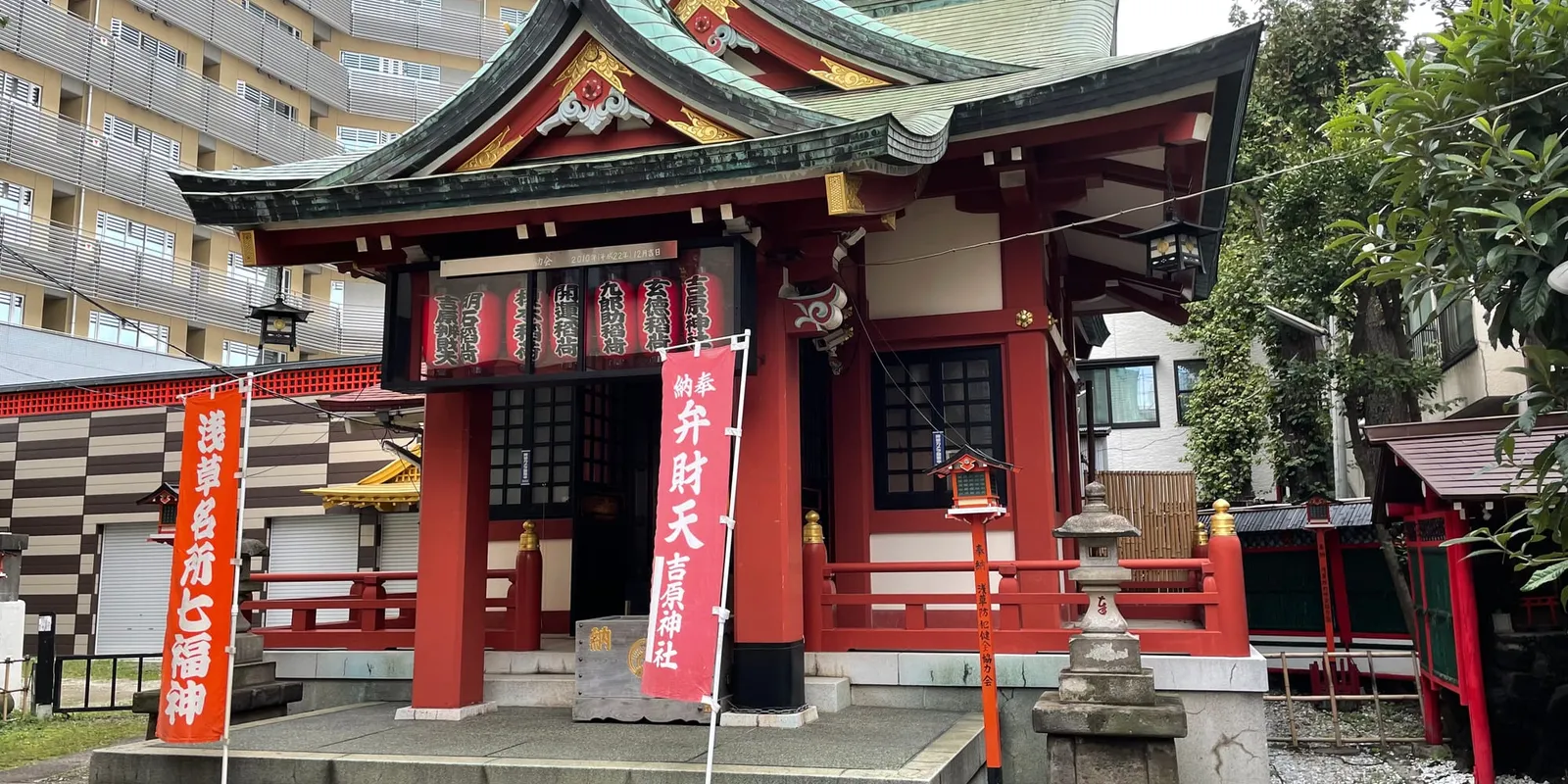
Yoshiwara Shrine stands in Senzoku 3-chome, Taito Ward, Tokyo. It enshrines the five Inari shrines that guarded the former Shin-Yoshiwara (the shogunate-licensed pleasure quarter of Edo) together with the neighboring Yoshiwara Benzaiten. According to the official site, the Yoshiwara quarter began in 1617 (Genna 3) in an area just east of Fukiyacho in Nihonbashi (around today’s Ningyocho), and moved in Meireki 3 to what was then Ryusenji Village, the present site. The earlier district is called Moto-Yoshiwara and the later one Shin-Yoshiwara.
The official site says Shin-Yoshiwara had five Inari shrines as guardians of the quarter: Yoshitoku Inari in front of the Great Gate (Daimon) at the entrance, and Enomoto Inari, Akashi Inari, Kaiun Inari and Kurosuke Inari at the four corners inside. In 1881 (Meiji 14) these were enshrined together and given the collective name Yoshiwara Shrine. At first it stood on the old site of Yoshitoku Inari, but it burned down in the Great Kanto Earthquake. After the quake it was kept in a temporary building near Suidojiri, and in 1934 (Showa 9) a new shrine building was built on the present site. At that time Yoshiwara Benzaiten, enshrined at Hanazono Pond next to Shin-Yoshiwara, was also enshrined. The shrine burned again in the 1945 Tokyo air raids, and the present building was built in 1968.
Some sources record the dates differently. An encyclopedia entry (Wikipedia) gives 1935 (Showa 10) for the enshrinement of Benzaiten, and the official site’s pages are not consistent in the Western years they print for the quarter’s move (Meireki 3 corresponds to 1657). The founding year also differs between TV Tokyo’s 2008 Adomachi page, which says 1872, and the 2025 Adomachi page and the current official site, which say 1881.
On the deities, the official site does not give names but says that six shrines (deities) are enshrined. The Tokyo Jinjacho lists Ukanomitama no Mikoto, and an encyclopedia entry and shrine guide sites give Ukanomitama no Mikoto for the Inari shrines and Ichikishimahime no Mikoto for Yoshiwara Benzaiten.
Highlights
The five Inari shrines that guarded the quarter: The official site describes Kurosuke Inari as a deity of matchmaking, abundant harvests and fulfilled wishes; Yoshitoku Inari of matchmaking, household safety, business prosperity and abundant harvests; Enomoto Inari of household safety, business prosperity and abundant harvests; Akashi Inari of fire prevention and neighborhood safety; and Kaiun Inari of good fortune and happiness. For Kurosuke Inari, the site quotes the Edo-period “Yoshiwara Taizen” (1768), which says that when famine continued, people prayed here and the harvest was good, that wishes were never left unanswered, and that the shrine was now prayed to as a god of matchmaking.
Aizome-zakura: The official site says “aizome” means meeting for the first time the person you long for. The cherry tree was planted beside Yoshitoku Inari at the entrance of Shin-Yoshiwara from the Edo period, and together with the “Komadome Pine” next to that shrine and the “Mikaeri Yanagi” (Looking-Back Willow) at the entrance, was known as the three elegant trees of the quarter. The present weeping cherry was planted in 2012 and blooms in spring.
Sub-shrine and monuments in the grounds: The official site mentions the sub-shrine “Ana-sama,” a deity of the ground who protects the shrine’s land, and a haiku monument by Kubota Mantaro, a haiku poet and writer from Asakusa.
Yoshiwara Benzaiten Honmiya (detached precincts): About a one-minute walk from Yoshiwara Shrine, this is the main sanctuary of Yoshiwara Benzaiten. The official site lists blessings of good fortune, wealth, skill in music, dance and the performing arts, and eloquence, and it is the Benzaiten of the Asakusa Meisho Seven Lucky Gods. In 2012 volunteers renovated it, and students of the Tokyo University of the Arts painted murals across the walls.
Yoshiwara Kannon and the Hana-Yoshiwara Nagori monument: The Honmiya grounds hold a Kannon statue for the victims of the Great Kanto Earthquake. According to the official site, many people who fled into the grounds were caught in the fire, and others who jumped into Benten Pond drowned, with about 500 deaths. The Yoshiwara Kannon (Memorial to the Victims of the Earthquake and Fire) was erected in June 1926 to console them, and a memorial service is held every September 1. The number of victims differs between sources. The same grounds hold the “Hana-Yoshiwara Nagori” monument, built in 1960 by local volunteers to preserve the history of the Yoshiwara quarter.
No. 5 on TV Tokyo’s “Shutsubotsu! Ad-machic Tengoku”: In the January 18, 2025 (Saturday, 9 PM) broadcast on Asakusa Senzoku of TV Tokyo’s “Shutsubotsu! Ad-machic Tengoku” (Adomachi), Yoshiwara Shrine was introduced at No. 5 (per the program’s official page). That page describes it as a shrine founded in 1881 by enshrining the five shrines that stood in the Yoshiwara quarter. The program also featured the shrine at No. 10 in its November 15, 2008 episode on Senzoku.
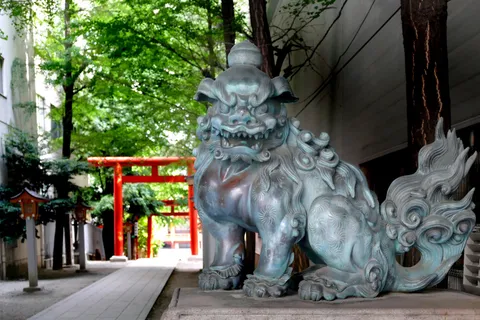
Link to the NHK taiga drama “Berabou”: Taito Ward’s tourism site, “Taito Kanko Navi,” says Yoshiwara Shrine appeared in the NHK taiga drama “Berabou” (べらぼう), with Kurosuke Inari and fox statues. To commemorate this, local volunteers dedicated two fox statues, named “Ai” (逢, on the right) and “Some” (初, on the left).
Visiting Tips
Know a little of the history first: The official site’s “About Shin-Yoshiwara” page says the quarter ended its long history when the Anti-Prostitution Law took effect in 1958. The same page describes Yoshiwara not only as a place of entertainment but also as a social venue for daimyo and rich merchants, a place of cultural exchange such as haiku gatherings, and a source of Edo popular culture, appearing in kabuki, literature and ukiyo-e. The shrine calls itself one that has “walked together with the Yoshiwara quarter.” The Honmiya also holds a memorial to earthquake victims, so please visit quietly.
Office hours and contact: According to the official site, the shrine office is open 10:00 AM–4:00 PM (until 6:00 PM from January 1 to 7). The contact number is 03-3872-5966, which the site identifies as Senzoku Inari Shrine. A 2008 Adomachi page noted that no priest was resident; the current situation is not stated on the official site. If you want an amulet, it is safest to contact the shrine first.
Prayers: The official site says prayers are by reservation, with offerings starting at ¥5,000. They include first shrine visits for infants, Shichi-Go-San, protection from misfortune, removal of calamity, household safety and business prosperity, and the shrine can be consulted about Shinto weddings and off-site ceremonies such as ground-breaking rites.
Goshuin: The official site says it issues talismans and amulets and goshuin for “Yoshiwara Jinja” and “Yoshiwara Benzaiten,” and, because Benzaiten is the Asakusa Meisho Seven Lucky Gods’ Benzaiten, offers Seven Lucky Gods items throughout the year. It gives no fee. Guide sites say the regular goshuin are ¥500 each (previously ¥300), and mention others such as Kurosuke Inari, goshuin for the five Inari shrines (begun in 2025) and limited pre-written sheets, some priced separately, but this is unconfirmed. Availability and content can change, so please check with the shrine.
Access and parking: The official site gives about 15 minutes on foot from Minowa Station on the Hibiya Line. Taito Ward’s tourism site also says about 15 minutes from Minowa Station, or about 4 minutes from the Senzoku 3-chome stop of the “Meguri-n” Kita loop bus. For Iriya Station, an encyclopedia entry says about 12 minutes and a guide site about 15. The Tokyo Jinjacho gives about 5 minutes from the “Senzoku” or “Yoshiwara Daimon” Toei bus stops. The official site does not mention visitor parking, so public transport is recommended.
Annual Festivals
- Annual festival (third Friday, Saturday and Sunday of May): According to the official site, the festival rite is held on Saturday morning and the main shrine’s portable shrine tours the neighborhood in the evening. In the Edo period there was no mikoshi; instead a festival called “niwaka” was held for Kurosuke Inari (now Yoshiwara Shrine) for 30 fair-weather days from August 1, in which geisha in costume danced and performed plays in the quarter, the site says.
- Yoshiwara Kannon memorial service (September 1 each year): The official site says a memorial service is held every September 1 for the victims of the Great Kanto Earthquake at the Yoshiwara Kannon statue, in the Honmiya grounds.
- Asakusa Meisho Seven Lucky Gods (New Year): Yoshiwara Benzaiten takes part as Benzaiten. The shrine office stays open until 6:00 PM from January 1 to 7 only.
We could not confirm other annual events from the official site.
Nearby Food & Sightseeing
- Yoshiwara Benzaiten Honmiya: The detached precincts, a one-minute walk from the shrine per the official site (about 2 minutes on Taito Ward’s model course). It stands on the site of the former Benten Pond and holds the Yoshiwara Kannon and the Hana-Yoshiwara Nagori monument.
- Site of the Yoshiwara Daimon (Great Gate) and Mikaeri Yanagi: Taito Ward’s tourism site lists the Mikaeri Yanagi, the Yoshiwara Daimon site, an information board, Yoshiwara Shrine and the Yoshiwara Benzaiten Honmiya in that order on its “Oku-Asakusa” walking course, each about 2 minutes apart. The willow is said to be named because customers leaving the quarter turned back to look at it.
- Otori Shrine: A shrine also in Senzoku 3-chome, known for its November Tori-no-Ichi. It was introduced at No. 1 in the same January 18, 2025 Adomachi episode on Asakusa Senzoku (per the program’s official page).
- Senzoku Inari Shrine: In Ryusen 2-chome, Taito Ward. The official site says it was the tutelary shrine of the Yoshiwara quarter, together with the five Inari shrines, until Yoshiwara Shrine was founded in 1881. A literary monument to Higuchi Ichiyo stands in its grounds, and it is the contact point for Yoshiwara Shrine.
Frequently Asked Questions
- Q. Are Yoshiwara Shrine and Yoshiwara Benzaiten the same shrine?
- A. According to the official site, Yoshiwara Benzaiten is a deity enshrined within Yoshiwara Shrine and is worshipped at two places: Yoshiwara Shrine and the Yoshiwara Benzaiten Honmiya. The Honmiya is a detached part of the shrine's precincts, about a one-minute walk from the main shrine. Yoshiwara Benzaiten also serves as the Benzaiten of the Asakusa Meisho Seven Lucky Gods.
- Q. Which deities are enshrined here?
- A. The official site says six: the five Inari shrines of the former Shin-Yoshiwara (Kurosuke Inari, Yoshitoku Inari, Enomoto Inari, Akashi Inari and Kaiun Inari) and the neighboring Yoshiwara Benzaiten. It describes their blessings, for example matchmaking for Kurosuke Inari, fire prevention and neighborhood safety for Akashi Inari, and good fortune, wealth and skill in the performing arts for Benzaiten. As for deity names, the Tokyo Jinjacho lists Ukanomitama no Mikoto, and encyclopedia entries add Ichikishimahime no Mikoto.
- Q. Can I get a goshuin?
- A. The official site says goshuin for "Yoshiwara Jinja" and "Yoshiwara Benzaiten" are available. It gives no fee; guide sites report ¥500 each, but this is unconfirmed, and limited editions are said to appear at times. The official shrine-office hours are 10:00 AM–4:00 PM (until 6:00 PM from January 1 to 7), so please check with the shrine beforehand.
- Q. When is the annual festival?
- A. According to the official site, the annual festival (reisai) runs for three days from the third Friday of May. The festival rite is held on Saturday morning, and the main shrine's portable shrine (mikoshi) is carried through the neighborhood on Saturday evening. The official site also says a memorial service for victims of the Great Kanto Earthquake is held every September 1 at the Yoshiwara Kannon statue in the Honmiya grounds.
- Q. Has the shrine been on TV?
- A. Yes. On TV Tokyo's "Shutsubotsu! Ad-machic Tengoku" (Adomachi), in the January 18, 2025 (Saturday) broadcast on Asakusa Senzoku, Yoshiwara Shrine was introduced at No. 5 (per the program's official page). The page says it was founded in 1881 by enshrining together five shrines that stood in the Yoshiwara pleasure quarter. The shrine was also No. 10 in the show's November 15, 2008 episode on Senzoku, but that page gives the founding year as 1872, which differs from the 1881 on the current official site.
Plan Your Visit
Before you go, you can book a stay and get your shrine-visit items ready.
Amazon links open Amazon.co.jp (Japan) in English; whether an item ships overseas depends on the product.
※ Contains ads (PR). Links open external sites such as Amazon, Rakuten, Trip.com and Booking.com.