History
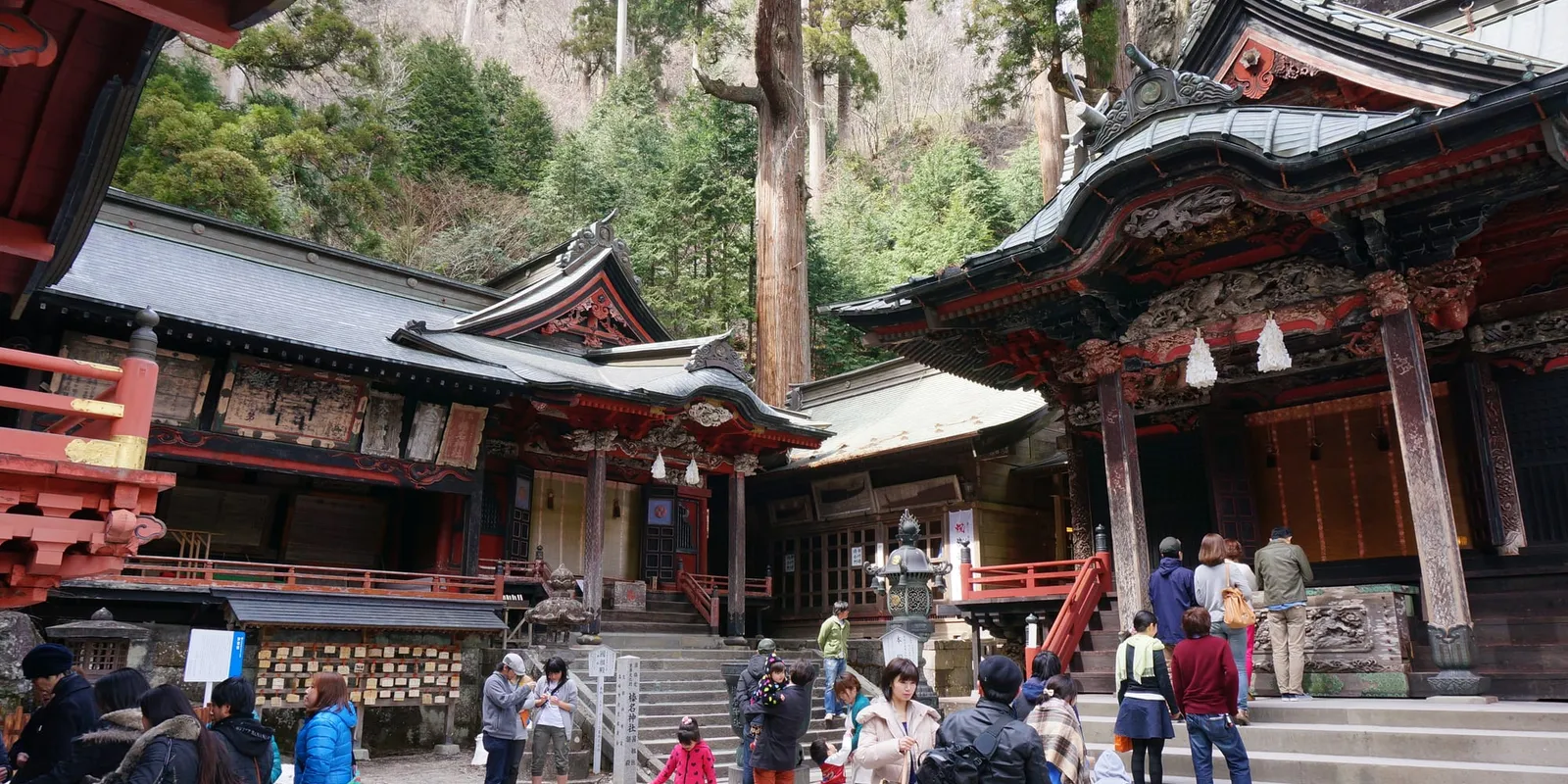
Haruna Jinja stands partway up the slopes of Mt. Haruna, and shrine tradition dates its founding to the reign of the 31st emperor, Yomei, around 585–587 CE. It appears in the Engishiki shrine register compiled in 927, confirming its long history. The principal deities are Homusubi no Kami, god of fire, and Haniyamahime no Kami, goddess of earth, worshipped together with Mizuwakeno-Kami, Takaokami-no-Kami, Kuraokami-no-Kami, Oyamatsumi-no-Kami, Omononushi-no-Kami, and Konohanasakuyahime-no-Kami. For centuries the shrine has been venerated across the Kanto region as a guardian against fire, a bringer of good fortune and bountiful harvests, a rain-making shrine, and a sacred training ground for mountain ascetics.
Until the Meiji era, the shrine was a syncretic site of Shinto and Buddhist worship known as “Mangyo Gongen,” and functioned as Haruna-san Ganden-ji, a major center of Tendai mountain asceticism. The three-story pagoda still standing along the approach (now called the Shimpo-den treasure hall) and the Zuishin-mon gate, originally a Nio guardian gate, are surviving traces of this once-blended Buddhist-Shinto tradition, preserved even after the Meiji-era separation of Shinto and Buddhism.
Highlights
The single greatest highlight at Haruna Jinja is the overwhelming setting of its buildings, built as if embraced by the mountain’s bare rock. Partway along the approach, the Minoko-no-taki waterfall tumbles between two rock formations said to resemble a pair of sake vessels standing side by side, making it one of the approach’s finest sights. Further on, the massive rock spire known as Hokoiwa comes into view, and beyond it the main hall, offering hall, and worship hall stand built directly against and around the sacred rock formation called Misugata-iwa — rock and shrine architecture fused into one striking, almost otherworldly scene.
The approach is also lined with towering cedars said to be centuries old; among them, the “Yatate Sugi” — where the warlord Takeda Shingen is said to have shot an arrow into the trunk to pray for victory before his assault on Minowa Castle — is a nationally designated natural monument. The elaborate dragon carvings on the Soryumon gate are another highlight not to be missed.
Visiting Tips
The approach runs about 700 meters from the entrance to the main hall along a gentle uphill slope, so plan for roughly one to one-and-a-half hours round trip, and wear comfortable walking shoes. Goshuin stamps are available at the shrine office on the grounds, though only paper-seal versions may be offered during especially busy periods. The approach gets particularly crowded during the autumn foliage season, so it’s worth allowing extra time if visiting then.
Annual Festivals
- Tsutsugayu Festival (January 15): An ancient rite that divines the year’s harvest by reading the state of reeds steeped in a pot of rice porridge.
- Kinen Festival (February 17): A spring festival praying for a bountiful harvest.
- Fire Festival (May 15): One of the shrine’s most important rites, offering thanks to the fire deity and praying for protection from fire.
- Chimaki Festival (June 5): An early-summer tradition in which chimaki rice dumplings are offered to ward off misfortune.
- Tengu Festival (December 31): A year-end rite marking the close of the year.
Nearby Food & Sightseeing
- Soba-jaya Haruna-san Hombo: A long-established teahouse right along the shrine approach, serving soba noodles made with spring water from Mt. Haruna.
- Dairyubo: A former pilgrims’ lodge along the approach that now serves shojin-style vegetarian fare and soba made with local mountain vegetables and mushrooms.
- Lake Haruna: A caldera lake about a 10-minute drive away, where sightseeing boats and highland hiking trails make for a scenic follow-up to the shrine visit.
Frequently Asked Questions
- Q. What are the visiting hours at Haruna Jinja?
- A. The grounds are open 7:00–18:00 (until 17:00 in winter).
- Q. When can I get a goshuin, and how much does it cost?
- A. Goshuin are available at the shrine office on the grounds roughly 8:45–16:00, for ¥500.
- Q. Is there parking at Haruna Jinja?
- A. Yes, paid town-operated parking is available near the approach entrance, though it can get congested during the autumn foliage season.
- Q. What is the Yatate Sugi tree at Haruna Jinja?
- A. One of the towering cedars along the approach, where the warlord Takeda Shingen is said to have shot an arrow into the trunk to pray for victory before his assault on Minowa Castle. It is a nationally designated natural monument.
- Q. How do I get to Haruna Jinja?
- A. From JR Takasaki Station west exit, take the Gunma Bus bound for Lake Haruna via Hongo and get off at the Haruna-jinja bus stop, then walk about 15 minutes; about 40 minutes by car from the Shibukawa-Ikaho IC on the Kan-etsu Expressway.
Related Shrines
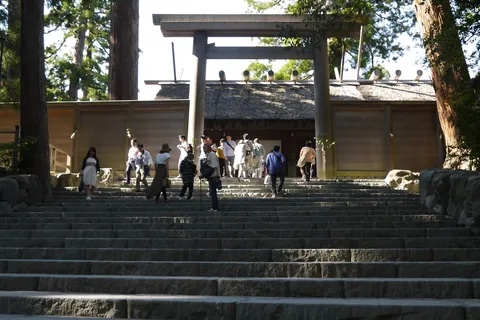
Mie Prefecture, Ise
Ise Jingu
Ise-jingū
- Good Fortune
- Peace of the Nation
- Bountiful Harvest
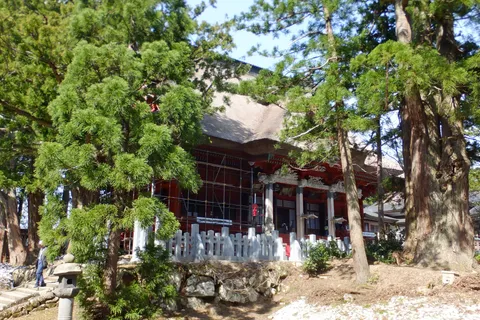
Yamagata, Tsuruoka
Dewa Sanzan Jinja
Dewa-sanzan-jinja
- Bountiful Harvest
- Longevity
- Good Fortune
Yamanashi, Fujiyoshida
Kitaguchi Hongu Fuji Sengen Jinja
Kitaguchi Hongū Fuji Sengen Jinja
- Safe Childbirth
- Fire Prevention
- Good Fortune