History
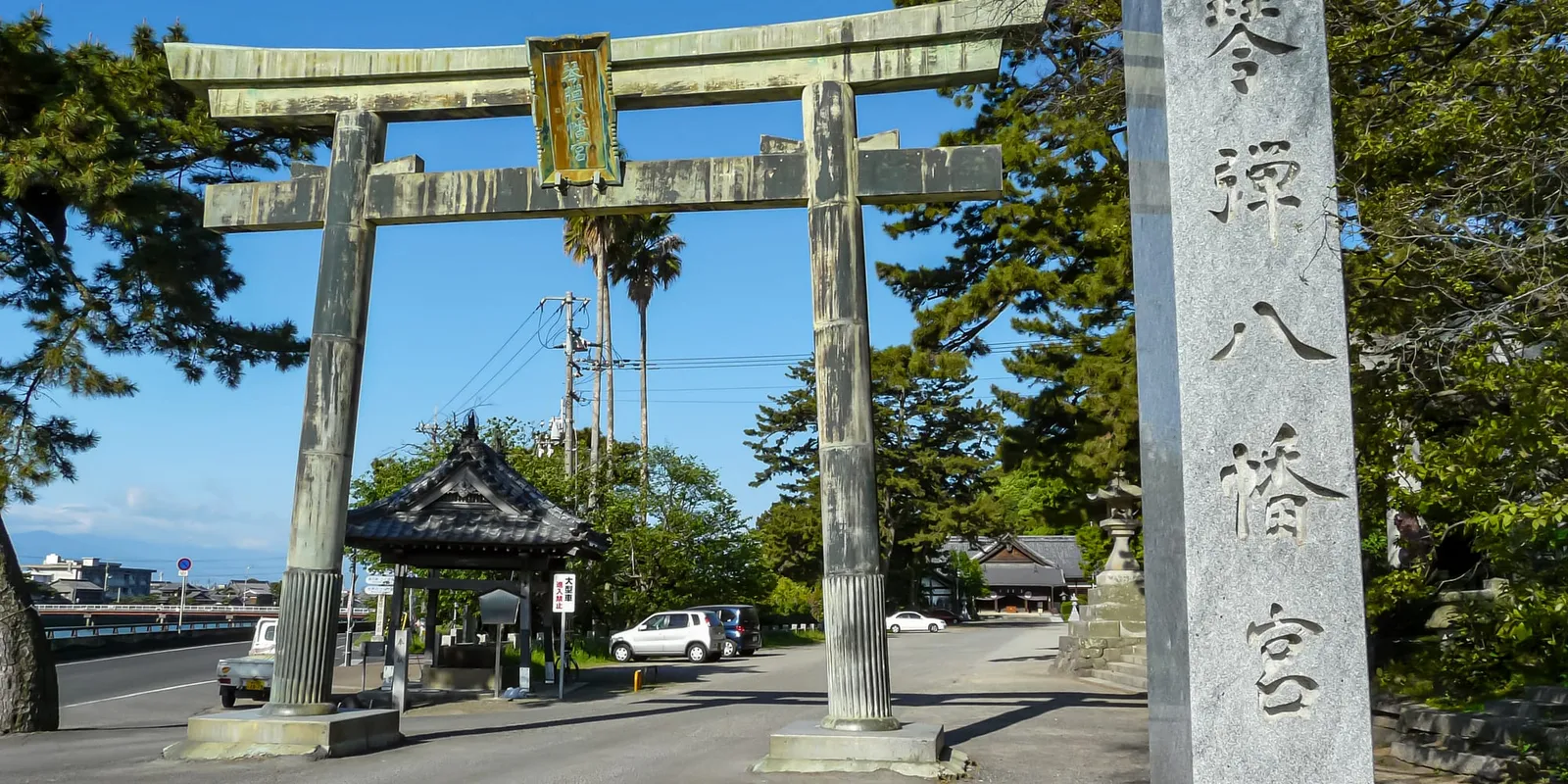
Kotohiki Hachimangu stands on the summit of Mt. Kotohiki in Kanonji, Kagawa. Its name is read “Kotohiki Hachimangu” (as written by Kanonji City and the Tourism Association), and it is sometimes written 琴彈八幡宮. According to Kanonji City, you climb 381 steps from the large torii at the entrance to Kotohiki Park to reach the main hall.
According to Japanese Wikipedia and similar sources, the enshrined deities are Emperor Ojin, Empress Jingu and Tamayorihime-no-mikoto (the City and Tourism Association pages do not name the deities). Kanonji City introduces it as a god of victory in contests, visited by many people including students facing exams.
According to the city and the Tourism Association, the shrine’s founding is traditionally dated to 703 (Taiho 3). In the story, a boat appeared on the shore one night after a storm; people drawn by the beautiful sound of a koto hauled the player and the boat up to the mountain top, built a shrine and enshrined him as Kotohiki Hachimangu. The Tourism Association says the player was Hachiman Daimyojin, whom the monk Nissho met while training on Mt. Kotohiki. These are traditions and not confirmed history.
The Tourism Association also says the shrine has ties with the Minamoto clan: Minamoto no Yoriyoshi is said to have offered a votive prayer before the Former Nine Years’ War, Minamoto no Yoshiie to have built the shrine buildings and offered a sacred horse, Minamoto no Yoshitsune to have offered a torii and a horse after the Battle of Yashima, and Minamoto no Yoritomo to have donated land.
The Tourism Association also notes that the mountain was once Temple 68 of the 88-temple Shikoku pilgrimage, but the Meiji-era separation of Shinto and Buddhism split the shrine from Kannon-ji temple; the shrine was briefly renamed “Kotohiki Hachiman Jinja” and regained its present name after the war. It is introduced today as Site 23 of the New Shikoku Mandala pilgrimage and No. 14 of the Sanuki Jugosha.
Highlights
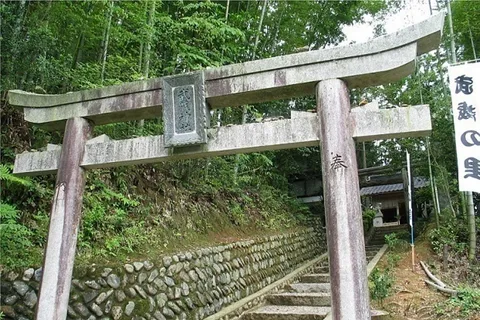
The stairway from the large torii at the park entrance to the main hall has 381 steps, according to Kanonji City and the Tourism Association. The approach has a wooden torii said to have been offered by Minamoto no Yoshitsune in prayer for victory at the Battle of Yashima. The Tourism Association says this torii and signposts on the pilgrim route remain. Please take the torii’s link to Yoshitsune as tradition.
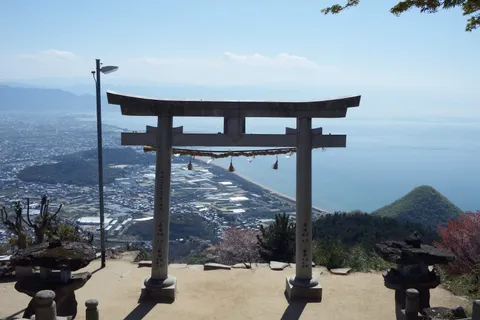
According to the Tourism Association, the grounds command a view of the Seto Inland Sea and the town of Kanonji.
You do not have to climb the steps: a one-way driveway leads up to the main hall (Tourism Association). If the climb worries you, driving is an option, though restrictions may apply at busy times.
Visiting Tips
Visiting hours and shrine-office hours are not stated on the Kanonji City or Tourism Association pages. Since the main hall is up 381 steps, go in daylight and wear comfortable shoes.
For goshuin, one personal blog (2021) says there are two counters, at the summit and beside the Shinko-den hall, at ¥300 each. It adds that the summit counter is sometimes unstaffed, and reception hours are unknown. This is not information from the city or Tourism Association, so check on site or by phone (0875-25-3828, the number listed on the city page) for the latest.
It is about 5 minutes (2 km) by taxi from JR Kanonji Station. The Kanonji community bus (Gogo-Takamuro line) runs 4 times a day, has no fixed stops, and you tell the driver “Kotohiki Koen (Mori Naika).” By car it is about 12 minutes from Onohara IC and 15 minutes from Sanuki-Toyonaka IC on the Takamatsu Expressway. The city’s Kotohiki Park guide says there is free parking (large buses accepted).
Annual Festivals
- Kotohiki Hachimangu Taisai (October): According to Kanonji City, it is held every October, with 9 chosa (festival floats) dedicated. The Kanonji Tourism Association’s traffic notice says that in 2026 the “Kotohiki Hachimangu autumn grand festival” fell on Saturday, October 17 and Sunday, October 18; on both days it is very crowded from 12:00 to 3:00 PM because of the floats, and cars cannot enter from the Kotohiki Park entrance on the Sanka Bridge side.
Other annual events could not be confirmed on the Kanonji City or Tourism Association pages. Dates change from year to year, so check the Tourism Association’s pages before you go.
Nearby Food & Sightseeing
- Kotohiki Park: The scenic place of Setonaikai National Park where the shrine stands. Kanonji City says it was chosen as one of “Japan’s 100 Historic Parks,” and has about 50,000 black pines and about 200 Yoshino cherry trees.
- Zenigata Sunae (sand coin picture): A sand figure in Kotohiki Park measuring 122 m east-west and 90 m north-south, according to Kanonji City. The Tourism Association says the coin (Kan’ei Tsuho) is said to bring health, long life and good fortune with money.
- Ariake Beach: A beach described in the city’s Kotohiki Park guide as about 2 km of white sand and shallow water.
- Michi-no-Eki Kotohiki: The Kanonji Tourism Association lists it as a roadside station inside the scenic Kotohiki Park. A place to rest during a stroll.
Frequently Asked Questions
- Q. What are the visiting hours?
- A. The Kanonji City and Kanonji Tourism Association pages do not give visiting hours or amulet-counter hours, and no official shrine website could be found. Both pages list 0875-25-3828 as the contact number, so call if you need to be sure. With 381 steps to climb, it is best to visit in daylight.
- Q. Can I get a goshuin at Kotohiki Hachimangu?
- A. According to one personal pilgrimage blog (2021), yes: there are two counters, one at the summit (sometimes unstaffed) and one beside the Shinko-den hall, and the fee is given as ¥300 each. This is not information from the shrine, the city or the tourism association, and reception hours are unknown, so please check on site or by phone for the latest.
- Q. How do I get there, and is there parking?
- A. It is about 5 minutes (2 km) by taxi from JR Kanonji Station. The Kanonji community bus (Gogo-Takamuro line) runs 4 times a day; tell the driver "Kotohiki Koen (Mori Naika)" (there are no fixed stops). By car it is about 12 minutes from Onohara IC and 15 minutes from Sanuki-Toyonaka IC on the Takamatsu Expressway. Kotohiki Park is said to have free parking (large buses accepted). From the large torii at the park entrance you climb 381 stone steps to the main hall.
- Q. What about the 381 steps and the torii said to have been donated by Minamoto no Yoshitsune?
- A. According to Kanonji City and the Tourism Association, 381 stone steps lead from the large torii at the entrance to Kotohiki Park up to the main hall. The approach has a wooden torii said to have been offered by Minamoto no Yoshitsune in prayer for victory at the Battle of Yashima, and the Tourism Association says it still stands. Yoshitsune's votive prayer and offering of a sacred horse are also said to survive.
- Q. When is the grand festival (Kotohiki Hachimangu Taisai)?
- A. According to Kanonji City, the Kotohiki Hachimangu Taisai is held every October, with 9 chosa (festival floats) dedicated. The Tourism Association's traffic notice says that in 2026 the "Kotohiki Hachimangu autumn grand festival" fell on Saturday, October 17 and Sunday, October 18, and that the floats make the area very crowded from 12:00 to 3:00 PM on both days. Dates vary by year, so check before you go.
Plan Your Visit
Before you go, you can book a stay and get your shrine-visit items ready.
Amazon links open Amazon.co.jp (Japan) in English; whether an item ships overseas depends on the product.
※ Contains ads (PR). Links open external sites such as Amazon, Rakuten, Trip.com and Booking.com.