History
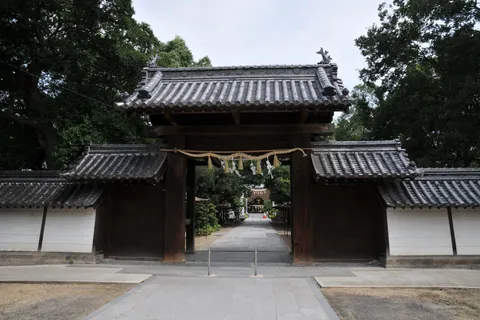
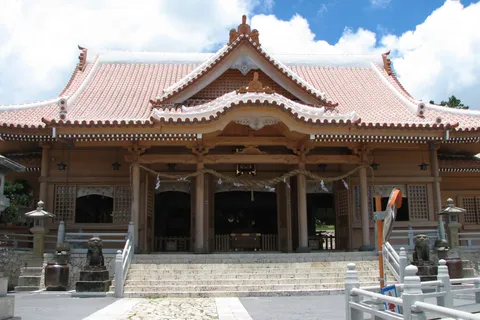
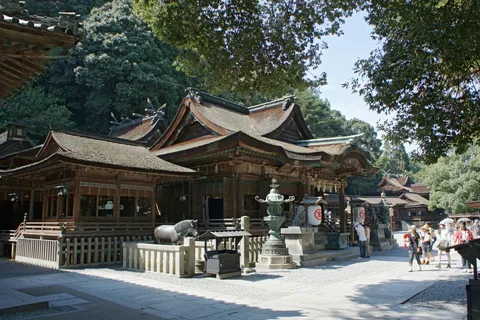
Takaya Shrine in Takaya-cho, Kanonji, Kagawa Prefecture, has its Honmiya (main shrine) on the summit of Mt. Inazumi (404 m) and its Shimomiya (lower shrine) at the foot of the mountain. Because the Honmiya sits on the summit, the shrine is also called “Inazumi Jinja” or “Inazumi-san,” and it is affectionately known locally as a shrine of the rice deity. The enshrined deities are said to be Ninigi no Mikoto, Konohanasakuyahime no Mikoto, and Ukemochi no Mikoto (spellings vary by source).
The date of founding is unknown, but the shrine is an Engishiki-listed shrine, recorded as “Takaya Jinja, Karita District, Sanuki Province” in the Heian-period Engishiki shrine register, and it is counted among the 24 such shrines in Sanuki (per the Kanonji City Tourism Association). The main building originally stood on the summit of Mt. Inazumi and was later moved down the mountain, but a shrine building was built on the summit again. Other sources say it was moved to the mid-slope during the Keicho era and to the foot of the mountain during the Hoei era, then returned to the summit in the Tenpo era; the mid-slope shrine remains as the Nakamiya, and the shrine at the foot as the Shimomiya (a village shrine and place of distant worship).
Highlights
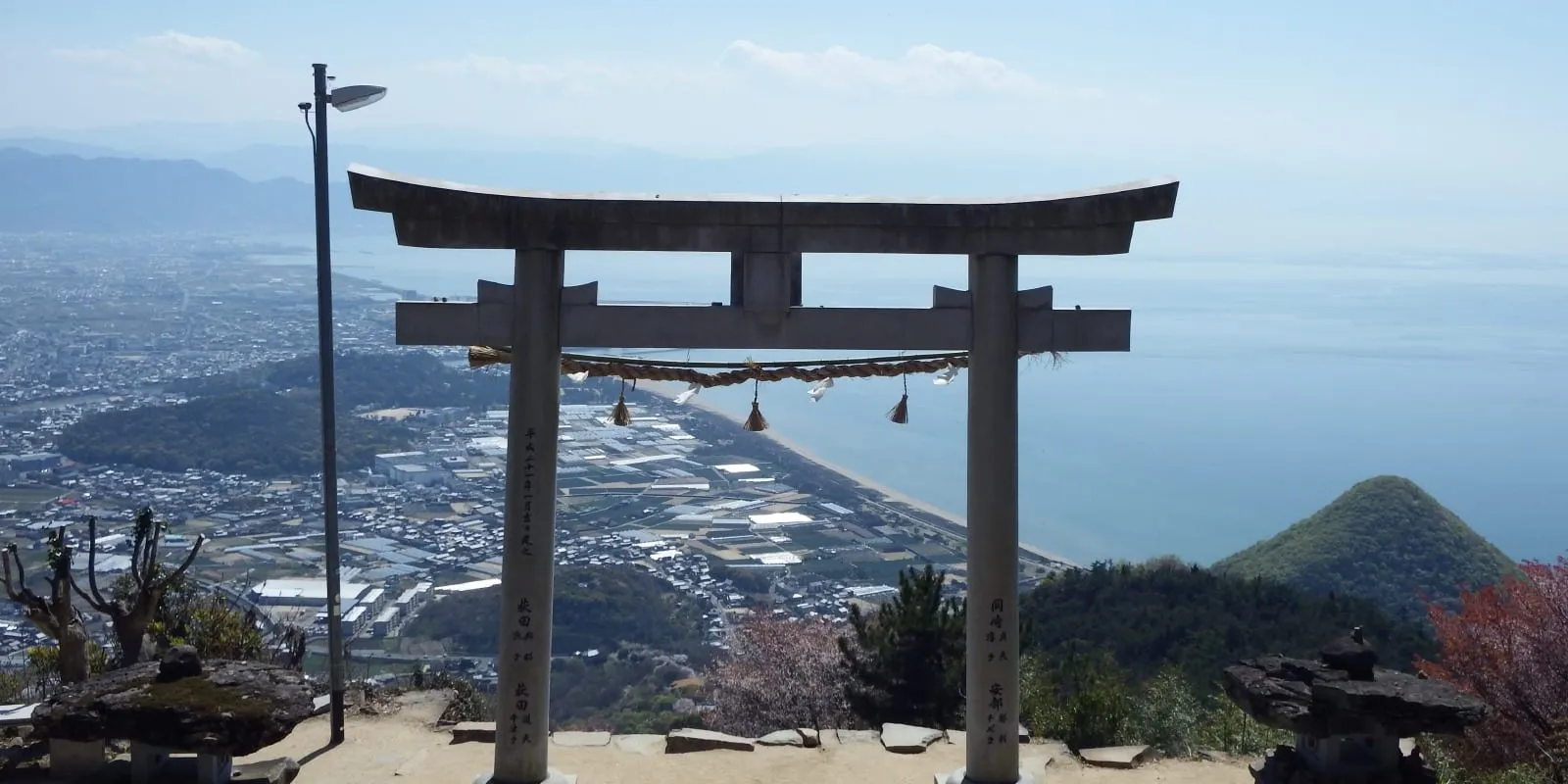
The torii at the Honmiya is known as the “Sky Torii” (Tenku no Torii), and through it you can see the whole of Kanonji, the Seto Inland Sea (Hiuchi-nada), and Ariake Beach. Kanonji City says it was selected as one of the Shikoku 88 View Spots in 2018, and the Shikoku Regional Development Bureau of the Ministry of Land, Infrastructure, Transport and Tourism also introduces it as a place where, from the foot of the 404 m-high torii, you can see Ariake Beach, the Ishizuchi Mountains, and the city of Kanonji. On a clear day, the Kanonji City Tourism Association says you can even see Mt. Ishizuchi.
The present large stone torii was built in 2009, replacing an older wooden torii on the same spot (per the MLIT multilingual tourism-resource database, supplied by the Kagawa Tourism Association).
There is no official recommendation for a best time to photograph it. Kagawa’s tourism website promotes the contrast between the sky-swallowing blue and the torii, so clear days with blue sky and sea are the most striking. Evening light is softer, but you will need enough time to get back down. Fog or rain can block the view.
Along the way up from the Shimomiya, the “Yurugi-ishi,” a rock that moves when pushed with a finger but does not fall, sits partway up the stone steps, and autumn leaves and the cherry blossoms of the spring Takaya Matsuri are also enjoyable (per the Kanonji City Tourism Association).
The TV Tokyo program “Deguchi Tetsuro’s Can I Charge Your Phone?” (Deguchi Tetsuro no Juden Sasete Moraemasenka?), in its episode broadcast on May 16, 2026, is introduced on the broadcaster’s official program page as a trip from Takamatsu, Kagawa, aiming for the Sky Torii of Takaya Shrine in Kanonji.
Visiting Tips
Important: current road closure. According to Kanonji City, the forest road to the Honmiya is fully closed for slope construction from Monday, Sept. 28, 2026 (8:30 AM) through Friday, Dec. 25, 2026. During this period you cannot reach the Honmiya by car, motorcycle, or shuttle bus, and must walk up from the Shimomiya. The schedule may change, so please check the latest information from Kanonji City or the Kanonji City Tourism Association (tel. 0875-24-2150) before you go.
On foot (from the Shimomiya): It is about 1.5 km from the Shimomiya to the Honmiya. The Kanonji City Tourism Association says about 40 minutes, and Kanonji City says about 50. Along the way is the site of the Nakamiya, many steep and unpaved sections, and, at the end, a steep, wide flight of about 270 stone steps. Wear comfortable walking shoes and allow plenty of time. The Shimomiya has parking for about 40 cars in the grounds, plus a second lot with about 40 spaces roughly 250 m before it.
By car or shuttle bus (outside the closure period): The road to the Honmiya is a forest road, narrow and hard for two cars to pass in many places, and you should watch for falling rocks, wild animals, and icy surfaces. On weekends, holidays, and other designated days, general vehicles are not allowed on it from 10:00 to 18:30, and a shuttle bus runs from the free Ariake Ground parking lot (in Kotohiki Park). The round-trip fare is ¥1,500 for adults (junior high school age and up) and ¥700 for children and holders of a disability certificate. Tickets cannot be reserved; they go on sale at 9:00 AM on operating days from a ticket machine at the Kanonji City Tourism Association, and may sell out early on fine days. On weekdays, cars can reportedly drive to the parking lot on the forest road, from which it is about a 150 m uphill walk to the Honmiya. Car navigation may not get you there, so follow the signs.
Goshuin: According to the Kanonji City Tourism Association, goshuin are given at the shrine office of Kamara Shrine (820-1 Nagaoka-cho, Kanonji; tel. 0875-25-0034). The office may be unattended or not ready, so calling ahead is recommended. The fee could not be confirmed from official information, although one visitor blog mentions 400 yen, so please confirm for yourself.
Annual Festivals
- Takaya Matsuri (annual grand festival, spring): Kanonji City introduces it as the only annual grand festival in the city at which chosa (festival floats) are offered in spring. It is said to take place in the cherry blossom season, and the dates vary from year to year, so please check with the Kanonji City Tourism Association or the shrine.
Nearby Food & Sightseeing
- Zenigata Sunae Sand Painting (Kotohiki Park): A large sand painting in the shape of a “Kan’ei Tsuho” coin, introduced as a sight by the Kanonji City Tourism Association. The shuttle bus boarding point (Ariake Ground parking lot) is also in Kotohiki Park.
- Kotohiki Hachimangu: A shrine on top of Mt. Kotohiki in Kotohiki Park, introduced by the Kanonji City Tourism Association.
- Jin’ne-in and Kanon-ji Temple: Temples No. 68 and No. 69 on the Shikoku 88-Temple Pilgrimage, sharing one precinct as one temple with two pilgrimage stops. Kanon-ji Temple gave the city its name.
Frequently Asked Questions
- Q. Where is the "Sky Torii" (Tenku no Torii)?
- A. It is the torii at the Honmiya (main shrine) of Takaya Shrine, which stands on the summit of Mt. Inazumi at an elevation of 404 m. Because Kanonji's townscape and the Seto Inland Sea (Hiuchi-nada) spread out beyond it, it is called the "Sky Torii." Kanonji City says it was selected as one of the Shikoku 88 View Spots in 2018.
- Q. How do I get to the Honmiya?
- A. You can walk up from the Shimomiya at the foot of the mountain (about 1.5 km; the Kanonji City Tourism Association says about 40 minutes and Kanonji City says about 50), or drive up the forest road. The road is narrow, so general vehicles are not allowed from 10:00 to 18:30 on weekends and holidays, and a shuttle bus runs from the Ariake Ground parking lot instead. However, from Sept. 28 to Dec. 25, 2026 the forest road is fully closed for construction, so the only way is on foot.
- Q. Can I get a goshuin?
- A. According to the Kanonji City Tourism Association, goshuin are given at the shrine office of Kamara Shrine (820-1 Nagaoka-cho, Kanonji; tel. 0875-25-0034). The office may be unattended or not ready, so calling ahead is recommended. The fee could not be confirmed from official information; one visitor blog mentions 400 yen.
- Q. What should I know before walking to the summit?
- A. The path has many steep and unpaved sections, and it ends with a steep, wide flight of about 270 stone steps, so comfortable walking shoes and plenty of time are recommended. The ground can be slippery after rain, and a visitor report says there are no toilets between the Shimomiya and the summit, so it is wise to use the one at the Shimomiya first. If you visit in the evening, plan to be back down before dark.
- Q. Which deities are enshrined?
- A. Ninigi no Mikoto, Konohanasakuyahime no Mikoto, and Ukemochi no Mikoto are said to be enshrined (according to tourist and visitor information; spellings vary by source). Because the Honmiya sits on the summit of Mt. Inazumi, the shrine is also called "Inazumi Jinja" or "Inazumi-san," and it is affectionately known as a shrine of the rice deity.
Plan Your Visit
Before you go, you can book a stay and get your shrine-visit items ready.
Amazon links open Amazon.co.jp (Japan) in English; whether an item ships overseas depends on the product.
※ Contains ads (PR). Links open external sites such as Amazon, Rakuten, Trip.com and Booking.com.