History
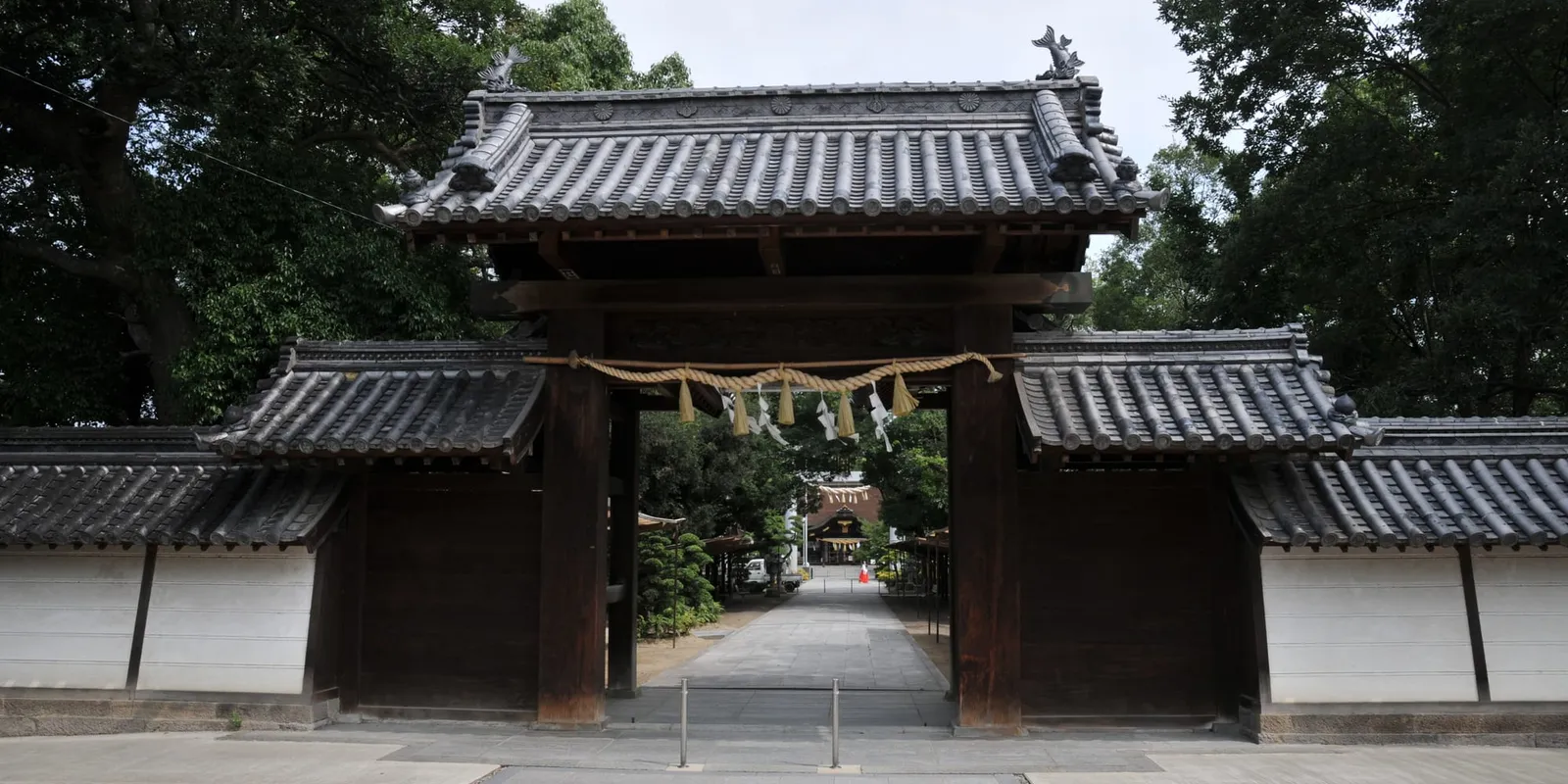
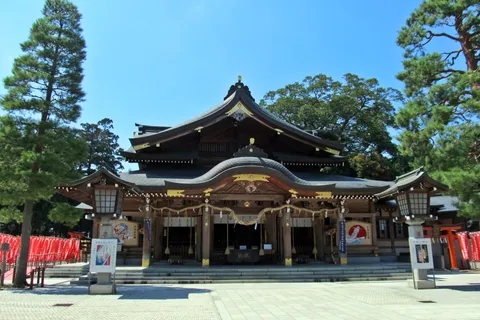
Tamura Jinja stands in the Ichinomiya district of Takamatsu, Kagawa Prefecture, and holds the rank of Ichinomiya (chief shrine) of former Sanuki Province. According to shrine tradition, long before any building stood on the site, a raft was floated on a deep well known as “Sadamizu-i” (the Well of Still Water), and the kami was worshipped directly atop the raft. The shrine’s formal hall is said to have been built in 709 by the monk Gyoki — constructed directly over this well, or deep pool, rather than on ordinary solid ground, giving the shrine a foundation unlike almost any other in Japan.
In 849 the shrine was granted the junior fifth court rank, and by 927, when the Engishiki Register of Deities was compiled, it was already listed as “Tamura Jinja, Kagawa District, Sanuki Province” and ranked as a Myojin Taisha, a shrine of the highest class. From then on it was revered as the Ichinomiya of Sanuki Province, and in 1201 it was elevated to Shoichii, the highest court rank a shrine could hold. Its halls were lost to war more than once during the medieval period, but were rebuilt and restored again and again by successive local rulers and feudal lords. Under the modern shrine ranking system it held the rank of Kokuhei Chusha (a nationally funded shrine of middle rank), and today it is one of the Bepyo Jinja, a special category of shrines recognized by the Association of Shinto Shrines. The shrine’s collection of ancient ritual treasures is a nationally designated Important Cultural Property, and a 1460 wooden plaque recording the shrine’s history as Ichinomiya of Sanuki is a Takamatsu City Designated Cultural Property.
Deities
Tamura Jinja enshrines five kami, collectively known as “Tamura no Okami”:
- Yamato-totohimomoso-hime no Mikoto — a legendary shaman-princess, daughter of the 7th emperor, Korei, famed in the Nihon Shoki for her mystical marriage to the deity Omononushi.
- Isaserihiko no Mikoto — also known as Kibitsuhiko no Mikoto, the younger brother of Yamato-totohimomoso-hime and the celebrated hero credited with pacifying the ancient Kibi region.
- Sarutahiko no Okami — the guide deity said to have led the heavenly grandson down from the heavens to earth.
- Ame no Kaguyama no Mikoto — also known as Takakuraji no Mikoto, said to have presented a sacred sword to Emperor Jinmu.
- Ame no Itane no Mikoto — also known as Amenomurakumo no Mikoto, the son of Takakuraji and a deity closely associated with rain clouds and agriculture.
All five are tied in one way or another to water, agriculture, or the opening of new land, reflecting the shrine’s deep roots in water-deity worship.
Highlights
The single most distinctive feature of Tamura Jinja lies beneath the floor of its oku-den (inner sanctuary): a deep pool, sealed beneath thick wooden boards, said to stay eerily cold even in the height of summer. Tradition holds that a dragon deity dwells within its depths, and that anyone who dares to look inside will die — so it has never once been opened. Rather than resting on ordinary solid ground, the shrine’s innermost sanctuary is built directly over this bottomless-seeming abyss, a construction almost unheard of at any other shrine in Japan, and the clearest possible expression of the reverence for water and dragon deities that lies at this shrine’s core.
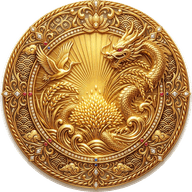
The grounds are also home to a golden dragon statue, said to bring wealth and prosperity to those who offer a coin before it — a well-known “power spot” for good fortune in money matters. Elsewhere on the grounds, visitors can pay respects at the subsidiary Ryujin-sha (Dragon God Shrine) or follow a circuit of the Seven Lucky Gods around the sacred pond. Every Sunday morning, a small market sets up on the grounds, where visitors can try Kagawa’s famous Sanuki udon.
Visiting Tips
Allow around 10 to 15 minutes if walking from Ichinomiya Station, and plan your visit with enough time to spare — while the grounds themselves are open at all hours, the shrine office where goshuin and amulets are available closes at 5:00 PM. With free parking for about 70 cars, the shrine is also an easy stop by car.
The sacred pool beneath the inner sanctuary can’t be seen by visitors, but keeping its presence in mind while paying respects at the main hall adds a distinct sense of solemnity that’s unique to this shrine.
Annual Festivals
- Spring Grand Festival / Mikaya-tare Shinji (May 7–8): A rite unique to this shrine, in which a mosquito net is hung before the kami ahead of the coming summer.
- Autumn Grand Festival / Mikaya-teki Shinji (October 7–8): The autumn counterpart to the spring rite, in which the mosquito net hung in spring is ceremonially taken down.
- Setsubun Festival (early February): A bean-throwing ritual to drive away misfortune and invite good luck.
- Summer Visit / Natsumoude (July 1 – August 31): A summer visiting season during which a limited-edition goshuin is also available.
Nearby Food & Sightseeing
- Takamatsu Airport: About 15 minutes by car from Tamura Jinja. Shikoku’s main air gateway, and a convenient stop on the way to or from the shrine.
- Kotoden Ichinomiya Station: The nearest station to Tamura Jinja, with good connections via the Kotoden Kotohira Line to central Takamatsu and on toward Kotohira.
- Takamatsu Castle Ruins (Tamamo Park): A short drive from Tamura Jinja toward central Takamatsu. A historic site known as one of Japan’s rare “water castles,” with moats once filled directly from the waters of the Seto Inland Sea.
Frequently Asked Questions
- Q. What are the visiting hours?
- A. The shrine grounds can be visited at any time, but the shrine office, where you can receive goshuin and amulets, is open 9:00 AM–5:00 PM.
- Q. Can I get a goshuin here?
- A. Yes, a hand-written goshuin is available for ¥500. Special versions are also offered, including a "dragon manifestation" goshuin (¥500, or ¥1,000 for a large size) and a cut-paper goshuin (¥1,500); a goshuinbook costs ¥1,500. The office is open 9:00 AM–5:00 PM.
- Q. Is there parking?
- A. Yes, free parking is available on the grounds for about 70 vehicles.
- Q. How do I get to Tamura Jinja?
- A. It's about a 10–15 minute walk from Ichinomiya Station on the Kotoden Kotohira Line, or about 1 minute on foot from the Kotoden Bus "Ichinomiya" stop. By car, it's about 10 minutes from the Takamatsu-Nishi interchange.
- Q. What is the legend of the well said to lie beneath the main hall?
- A. Beneath the floor of the oku-den (inner sanctuary) lies a deep pool called Sadamizu-i, sealed beneath thick boards and never opened. Shrine tradition holds that before any building stood here, a raft was floated on this well and the kami was worshipped directly atop it; a dragon deity is said to dwell in its depths, and anyone who looks inside is said to die. This is also why the shrine has long been known by the alternate name "Sadamizu Daimyojin" (Great Deity of the Still Water).
Related Shrines
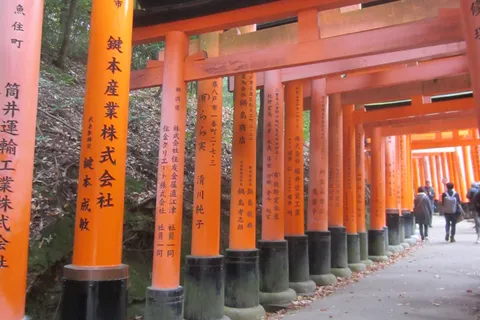
Kyoto Prefecture, Fushimi-ku, Kyoto
Fushimi Inari Taisha
Fushimi Inari Taisha
- Business Prosperity
- Bountiful Harvest
- Household Safety
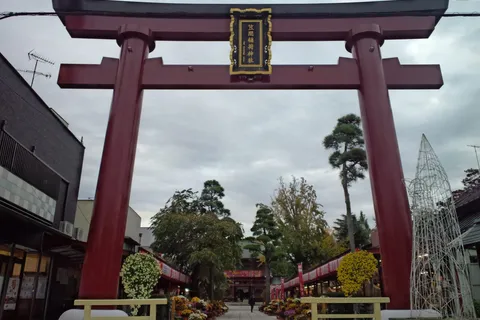
Ibaraki, Kasama
Kasama Inari Jinja
Kasama Inari-jinja
- Business Prosperity
- Bountiful Harvest
- Household Safety
Miyagi, Iwanuma
Takekoma Jinja
Takekoma-jinja
- Business Prosperity
- Bountiful Harvest
- Household Safety