History
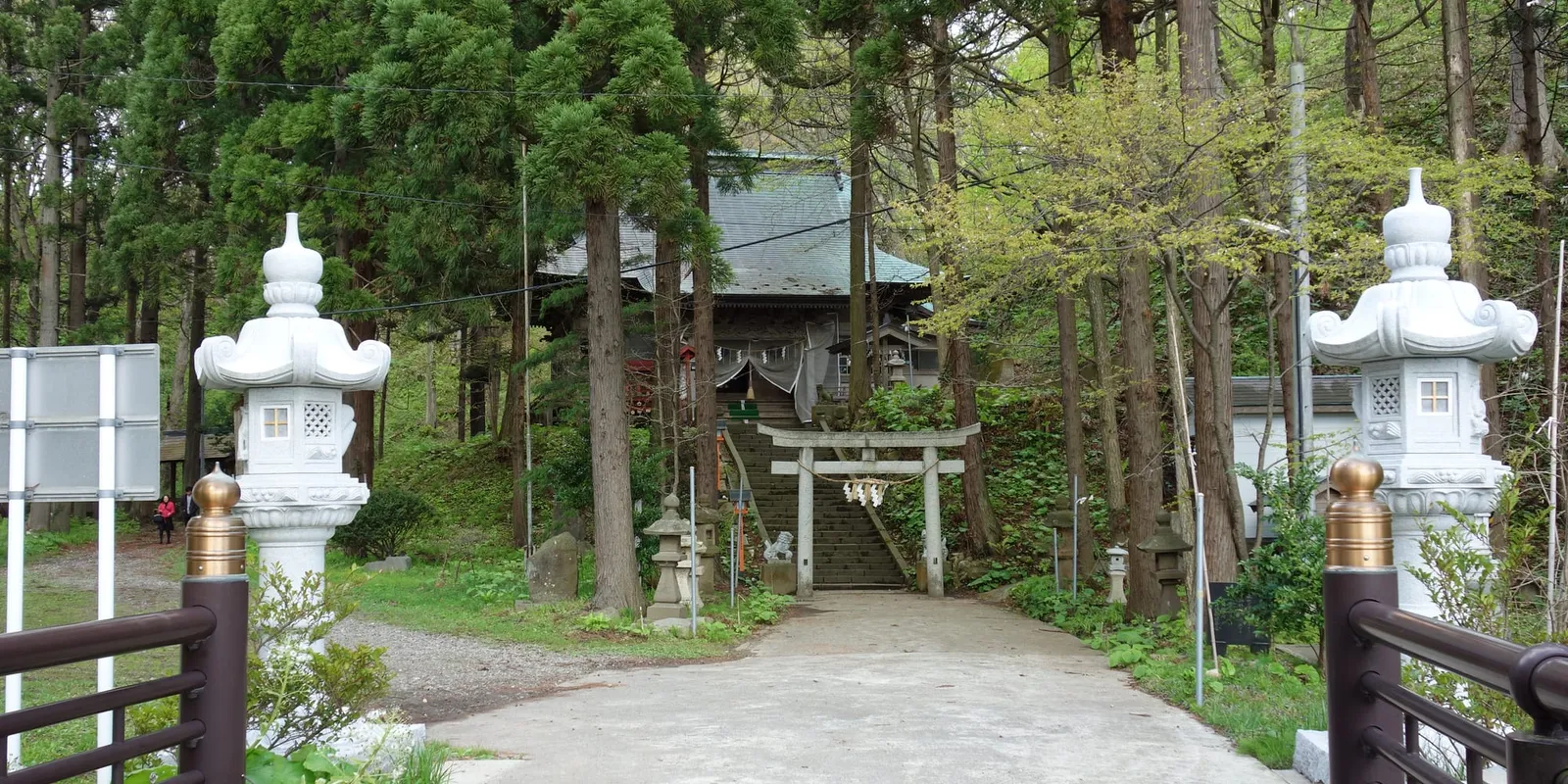
Shirataki Shrine stands at the foot of the Shirakami Mountains in Happo, Yamamoto District, Akita Prefecture. In the Akita Shrine Agency’s shrine search it is read “Shirataki-jinja” and has the popular name 不動山, and its address is 10 Hachimoritate, Happo (the name is written with the character 瀑, not 滝). Its greatest feature is the waterfall “Shirataki,” described as 17 meters high, behind the grounds. The Akita Prefecture community site “Akita Genki Mura” (posted April 2010) says it is rare in Japan for a shrine precinct to have such a powerful waterfall.
According to the Shrine Agency’s history, more than 1,100 years ago, in Ninju 3 during the reign of Emperor Montoku, the priest Jikaku Daishi Ennin visited this place on his travels. Struck by how pure the area below the waterfall on Mt. Hachimori was and how cold and clear the mountain air felt, he stayed in seclusion here. Judging the cascade to be a sacred place without equal in the world, he carved an image of Fudo (Acala) and placed it on the rock north of the waterfall, praying for the safety of the land; this is regarded as the founding. Later, the Akita Jonosuke is said to have held the shrine in deep reverence and to have donated shrine lands. It was first called “Fudo-sha” because of the Shinto-Buddhist syncretism of the time, was renamed Shirataki Shrine in the Meiji era, and was ranked as a village shrine (gosha) in Meiji 5. Nippon Tabi Magazine gives Ninju 3 as 853.
According to the Shrine Agency, the enshrined deities are five: Homusubi no Kami, Haniyama-hime no Kami, Amaterasu Sumeo-kami, Oyamatsumi-hiruko no Kami, and Takehaya-susanoo no Mikoto. Within the grounds are the auxiliary shrines Hachiman Shrine, Sugawara Shrine and Karamatsu Shrine. The Japanese Wikipedia adds that in the Edo period the shrine was designated the 28th temple of the Akita Six-District Thirty-Three Kannon Pilgrimage, and that in Meiji 43 thirty shrines of the former Hachimori town were merged into it (for the merger it cites the Akita Jinja Meikan).
Highlights
The main sight is the “Shirataki” waterfall falling behind the shrine hall. According to “Akita Genki Mura,” the mist from the male and female falls creates a cool, refreshing atmosphere, and the place has even been introduced in the American magazine LIFE. The Edo-period travel writer Sugae Masumi is also said to have visited and looked down on the falls from atop the rocks. In the same article the shrine’s priest recommends viewing the falls through the window of the shrine hall, saying it looks like a painting.
Akita Shirakami Tourism’s page says the summer mist is refreshing and that in winter the waterfall often freezes into dramatic icicles. The pool in front of the falls is also where the mikoshi is carried in at the annual festival.
On the order of worship, Nippon Tabi Magazine quotes the chief priest as saying visitors should first pay respects to the enshrined deities in the shrine hall and then go to the waterfall, and that going to the waterfall alone, without greeting the deities, is discourteous. It adds that the shrine hall doors are kept unlocked at all times.
Visiting Tips
No official site could be found, so set visiting hours and the number of parking spaces could not be confirmed. Akita Shirakami Tourism’s page says it is open year-round and that free parking is available. The same page says resident priests are present only at special festivals. The contact number is 0185-77-2337 in the Shrine Agency’s shrine search and 0185-77-3056 on the Tohoku Tourism Promotion Organization’s page; the sources differ, so use both as a guide if you check before going.
Goshuin posts appear on a site where visitors post their own records, but no notice from the shrine itself was found, and the hours and fee are unconfirmed. If you want one, it is safest to call ahead.
It is about a 10–20 minute walk from Higashi-Hachimori Station on the JR Gono Line (sources differ). By car, turn right at the “Shirataki Jinja Iriguchi” sign about 30 minutes from Noshiro-Minami IC on the Akita Expressway along Route 101 toward Aomori (Tohoku Tourism Promotion Organization).
“Akita Genki Mura” (2010) says some people come to stand under the falls even in winter. Whether general visitors are accepted for this, and what the rules are, cannot be told from the sources checked, so ask the shrine beforehand.
Annual Festivals
- Annual festival “Mikoshi no Takiabi” (August 1): A rite the Akita Shrine Agency also lists as a special ritual. According to the Tohoku Tourism Promotion Organization, the mikoshi is carried around town and then into the waterfall pool, and hundreds of spectators gather around the falls to photograph this event, which is unusual even nationwide. According to the Akita Shirakami Tourism page and the Japanese Wikipedia, men in white robes carry the mikoshi around town from 7 a.m.; Akita Shirakami Tourism says it enters the pool around 1:30 p.m., while the Japanese Wikipedia says just after noon (the sources differ on the time). According to the Ministry of Land, Infrastructure, Transport and Tourism’s multilingual explanation database, the custom began when, in one very hot summer, the bearers cooled off in the waterfall behind the shrine while carrying the mikoshi; only men may take part, and white robes are required. Food and game stalls are cleared the day before, so that only the procession and the waterfall entry take place. The Akita Shirakami Tourism page says prayers are offered for a bountiful harvest, safe voyages, business prosperity and more. The Tohoku Tourism Promotion Organization’s page also reports a shortage of bearers in recent years because of aging and population decline.
This festival is the only annual event whose date could be confirmed in this research. Times and details can change from year to year, so check with the town’s tourist information or the shrine before going to watch.
Nearby Food & Sightseeing
- Yamamoto Brewery (Yamamoto Shuzoten): Listed on the Happo town website’s specialty-products page as the maker of the sake “Shirataki”. According to that page it was founded in Meiji 34 and is located at 269 Hachimori, Hachimori, Happo; a photo caption there says the brand name comes from the Shirataki falls.
- Byū-shī Line (ビューシーライン): According to “Akita Genki Mura,” this is the popular name of the town road that runs from the Nakahama district of Happo through the Motodate district, passes by Shirataki Shrine and continues to Higashi-Hachimori. It runs on high ground overlooking Route 101, with wide views of the Sea of Japan and the sky.
- 留山 (Happo): A place for which the Happo town website carries a notice for a “Tomeyama nature observation event” (part of the Mountain Opening event marking the 30th anniversary of Shirakami-Sanchi’s World Natural Heritage listing). A JR East article presents a day-two model itinerary combining a visit to Shirataki Shrine with Tomeyama trekking.
Frequently Asked Questions
- Q. What are the visiting hours of Shirataki Shrine?
- A. No official site could be found, and no set visiting hours could be confirmed. Akita Shirakami Tourism's page says visitors can come year-round, not only on the festival day (August 1). The chief priest, quoted by Nippon Tabi Magazine, says the shrine doors are kept unlocked at all times. Conditions after dark or in the snow season are not covered by the sources, so a daytime visit is recommended.
- Q. Can I get a goshuin at Shirataki Shrine?
- A. No notice from the shrine itself was found. Goshuin posts appear on Hotokami, a site where visitors post their own records, but the hours and fee could not be confirmed. Akita Shirakami Tourism's page says resident priests are present only at special festivals, while the Akita Shrine Agency's shrine search lists a chief priest's contact number. To be sure, call ahead (the Shrine Agency lists 0185-77-2337 and the Tohoku Tourism Promotion Organization lists 0185-77-3056; the sources differ).
- Q. How do I get there, and is there parking?
- A. By train, it is about a 10–20 minute walk from Higashi-Hachimori Station on the JR Gono Line (sources differ). According to Nippon Tabi Magazine, it is far from the stops of the "Resort Shirakami" sightseeing train. By car, the Tohoku Tourism Promotion Organization says it is about 30 minutes from Noshiro-Minami IC on the Akita Expressway along Route 101 toward Aomori, turning right at the "Shirataki Jinja Iriguchi" sign. Akita Shirakami Tourism's page says free parking is available, but the number of spaces is not stated.
- Q. When is the "Mikoshi no Takiabi" festival, and what is it?
- A. It is a rite held at the annual festival on August 1 each year (Akita Shrine Agency; Tohoku Tourism Promotion Organization). In the morning, men in white robes carry the mikoshi (portable shrine) around town, then carry it into the pool at the foot of the waterfall behind the shrine. According to the Ministry of Land, Infrastructure, Transport and Tourism's multilingual explanation database, only men may take part, and a distinctive feature is that food and game stalls are cleared the day before, so that only the mikoshi procession and the waterfall entry take place. A shortage of bearers has also been reported in recent years because of aging and population decline.
- Q. Can I stand under the waterfall (takigyo) here?
- A. A page on the Akita Prefecture community site "Akita Genki Mura" (posted April 2010) says, quoting the shrine's priest, that some people come to stand under the waterfall even in the cold winter months. However, none of the sources checked say whether the shrine currently accepts visitors for this, or what rules or safety conditions apply. If you want to try it, be sure to ask the shrine beforehand. Nippon Tabi Magazine also reports that the chief priest asks visitors to pay respects to the enshrined deities at the shrine hall first, and only then go to the waterfall.
Plan Your Visit
Before you go, you can book a stay and get your shrine-visit items ready.
Amazon links open Amazon.co.jp (Japan) in English; whether an item ships overseas depends on the product.
※ Contains ads (PR). Links open external sites such as Amazon, Rakuten, Trip.com and Booking.com.