History
Kunozan Toshogu stands on top of Mt. Kunozan in Suruga Ward, Shizuoka, and enshrines Tokugawa Ieyasu. Its name is read “Kunozan Toshogu” (the Japanese reading is as given by Bunka Isan Online). The official site describes it as the first of the Toshogu shrines across Japan to enshrine Ieyasu.
According to the official history of Kunozan, the mountain’s story begins when 久能忠仁 (Kuno Tadahito) of the Hata clan opened the mountain in the reign of Empress Suiko, enshrined an image of Kannon, and named it Fudarakusan Kunoji temple (補陀落山久能寺), as recorded in the temple chronicle 久能寺縁起. In 1568 Takeda Shingen built Kuno Castle on the summit, and Kunoji was moved to Shimizu Ward. When Ieyasu died on April 17, 1616 (Genna 2), he was buried on Kunozan according to his will, Kuno Castle was abolished, and the Toshogu (at first called Tosho-sha) was founded. The site says the divine title “Tosho Daigongen” was bestowed in 1617, the buildings were completed in December of that year, and the shrine title “Toshogu” was proclaimed in 1645 (Shoho 2).
In 1959 (Showa 34) the entire mountain was designated a national historic site, and in 2015 (Heisei 27) the 400th anniversary festival of the enshrinement was held (official site). The official English spelling is “Kunozan Toshogu.”
Highlights
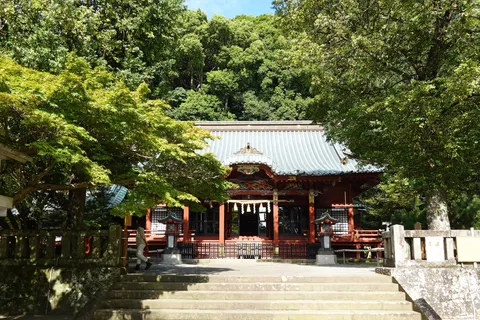
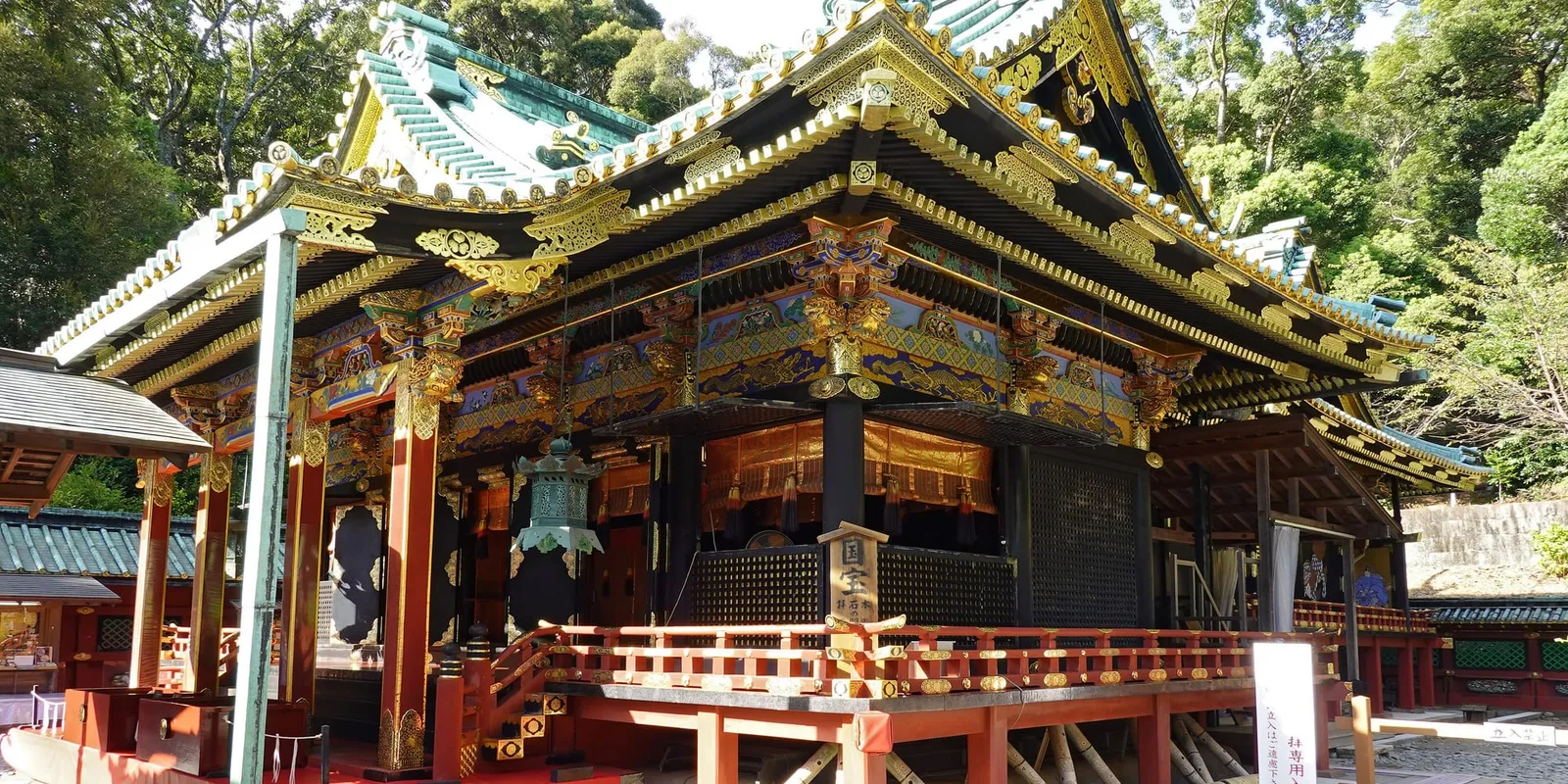
The main attraction is the National Treasure main shrine complex (honden, ishi-no-ma and haiden). According to Bunka Isan Online, it was built in 1617 in the gongen-zukuri style, with the main hall, ishi-no-ma and worship hall linked in a straight line. It was designated a National Treasure on December 24, 2010 (Heisei 22 on the official site), having been an Important Cultural Property since August 1, 1908. The official site calls it a gongen-zukuri complex with all-over lacquer and brilliant coloring, built 19 years before Nikko Toshogu and regarded as the prototype for Toshogu shrines nationwide. The master carpenter was Nakai Yamato-no-kami Masakiyo. The framework and eaves are black lacquer and the verandas red lacquer, all adorned with carvings and metal fittings.
The grounds also hold buildings that the official site lists as Important Cultural Properties, including the red-lacquered Romon gate bearing a plaque by Emperor Go-Mizunoo, the Shinkyu stable housing a wooden sacred horse attributed to Hidari Jingoro, the Karamon gate in front of the worship hall, and the Shinbyo, where Ieyasu’s remains are buried (rebuilt in 1640 as a stone treasure pagoda). Comparing the colorful main shrine complex with the quiet mausoleum is worthwhile.
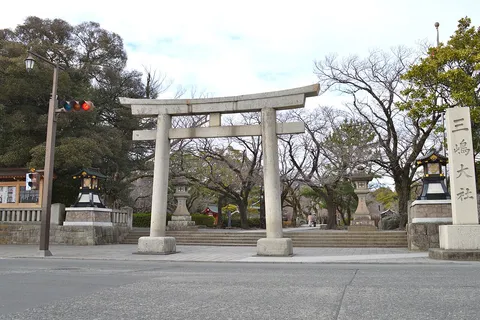
The main approach runs 1,159 stone steps in 17 turns from the stone torii at the foot of the mountain to the front of the main hall, and until the ropeway opened in 1957 (Showa 32) it was the only way to worship. According to the official site, the Kuno plum grove has about 130 trees of about 10 varieties. The Kunozan Toshogu Museum holds more than 2,000 items, including the clock given to Ieyasu by the King of Spain (official museum page; it announces a planned closure for facility work from December 1 to 21, 2026).
Visiting Tips
The shrine is open 9:00 AM–5:00 PM every day of the year (reception closes 10 minutes before closing). Admission is collected on entry to protect the National Treasure and Important Cultural Properties. As a guide, the official FAQ gives about 30 minutes from the stone torii to the front of the shrine office, about 10 minutes from there to the main shrine, about 5 minutes from the main shrine to the Shinbyo, and 30–40 minutes for the museum, with the main shrine, Shinbyo and museum as the suggested order. The access page says the steps take about 20 minutes from the foot of the mountain, a different figure from the FAQ, so allow extra time.
The ropeway takes about 5 minutes from the Nihondaira side. The official access page gives ¥1,250 round trip and ¥700 one way for adults, but check the official site for fares and last-departure times. Only steps lead up to the main shrine, with no ramps, so wheelchairs and strollers cannot be used. Pets on a leash may visit the shrine, but not the museum. The prayer etiquette is two bows, two claps, and one bow.
Goshuin are available at the shrine office’s worship reception from 9:00 AM to 5:00 PM. The regular goshuin is ¥500, and the “金の成る木” (money tree) goshuin made with cedar wood is ¥1,000 (paper only). You leave your goshuin book before worshipping, so it helps to register at the office first. The official site does not list any benefits (go-riyaku); the benefits shown on this page reflect the general understanding associated with Ieyasu.
Annual Festivals
- Saitan-sai (January 1): The start of the shrine’s year, with the Ichi-no-mon gate opened at midnight on New Year’s Day (official site). The summit is known as a spot for the first sunrise of the year.
- Spring Grand Ritual (February 16–17): Listed on the official English page as one of the major annual rituals (Grand Spring Ritual).
- Goreisai (April 17): The most important ritual, held on the anniversary of Ieyasu’s death, with the head of the Tokugawa main family as the presiding priest (official site).
- Nagoshi no Harai (June 30): The summer purification rite, listed on the official English page.
- Autumn Grand Ritual (October 17): Listed on the official English page as a major annual ritual (Grand Autumn Ritual). The 2026 night viewing is suspended on this day.
- Night special viewing “光彩-IRODORI-” (September 19–November 29 in 2026): Held 6:00–9:00 PM (last entry 8:00 PM), on Fridays through Sundays and public holidays in November, and suspended on November 22–23 (official announcement).
- Festivals of the sub-shrines: Hie Shrine on June 15, Kuno Inari Shrine on April 9, Itsukushima Shrine on June 17, and Kamado Shrine on December 17 (official site).
- Autumn leaves (late November to early December): The official site describes the foliage of the valley called 屏風谷 as visible from the ropeway.
Festival dates can change, so check the official news page for the latest.
Nearby Food & Sightseeing
- Nihondaira: About 5 minutes by ropeway, a hilly area 307 meters above sea level known for views of Mt. Fuji. The official English page says that in 2016 the view from Nihondaira toward Mt. Fuji was certified as a Japanese Heritage Night View.
- Kuno Ishigaki strawberries: The official English page says strawberries have been grown on the slopes of Kunozan for over a hundred years. The picking season runs from mid-December to May, with February to April as the prime season (¥1,200 to ¥2,000 on that page, depending on conditions).
- Miho no Matsubara: A pine grove on the east coast of the Miho peninsula, introduced on the official English page as a scenic spot that became part of the Mt. Fuji World Heritage Site in 2013.
Frequently Asked Questions
- Q. What are the visiting hours and admission fees?
- A. According to the official admission page, the shrine is open every day of the year from 9:00 AM to 5:00 PM, with reception closing 10 minutes before closing (the FAQ says the reception cutoff varies by season). Admission to the shrine buildings is ¥700 for adults (high school age and up) and ¥300 for children (elementary and junior high); the museum is ¥600 and ¥300; and a combined shrine-and-museum ticket is ¥1,200 for adults and ¥500 for children.
- Q. Can I get a goshuin at Kunozan Toshogu?
- A. Yes. According to the official site, goshuin are available at the shrine office's worship reception from 9:00 AM to 5:00 PM. The regular goshuin is ¥500, and the "金の成る木" (money tree) goshuin is ¥1,000 on paper only. To avoid waiting, you leave your goshuin book before worshipping and collect it afterward. The original goshuin books are ¥2,000 with a goshuin or ¥1,500 for the book alone (Kunozan Toshogu goshuin book), and ¥2,500 with a goshuin or ¥2,000 for the book alone (the 歯朶具足前立 goshuin book, designed after the crest ornament of Ieyasu's armor).
- Q. How do I get there: ropeway or stone steps?
- A. The official site says there is no road up to the shrine. You can take the Nihondaira Ropeway (about 5 minutes) or climb the 1,159 stone steps of the main approach from "Kunozan-shita" (about 20 minutes). The ropeway is ¥1,250 round trip for adults and ¥630 for children (ages 4–12), or ¥700 and ¥350 one way. The access page lists departures from Nihondaira Station from 9:10 AM to 4:45 PM, but the FAQ gives 5:00 PM as the last one, so the pages differ. There are only steps up to the shrine buildings, with no ramp, so wheelchairs and strollers cannot be used.
- Q. Which buildings are National Treasures?
- A. The main shrine buildings (honden, ishi-no-ma and haiden) are National Treasures. The official site says they were designated in 2010 (Heisei 22), and Bunka Isan Online gives the National Treasure designation as December 24, 2010 and an earlier Important Cultural Property designation of August 1, 1908. Built in 1617 in the gongen-zukuri style, the buildings are described by the official site as having been built 19 years before Nikko Toshogu and as the prototype for Toshogu shrines across Japan.
- Q. Can I visit at night?
- A. According to the official announcement, in 2026 the night special viewing "光彩-IRODORI-" runs from September 19 to November 29 (29 sessions). It is held on Saturdays, Sundays and public holidays in September and October, and on Fridays through Sundays and public holidays in November, but is suspended on October 17 and November 22–23 for shrine rituals. Hours are 6:00–9:00 PM (last entry 8:00 PM), entry is from the Nihondaira side only, and tickets are a combined ropeway-and-shrine ticket (advance ¥2,400 for adults, ¥2,700 on the day). The museum is not open at that time. Check the official site for the latest details.
Plan Your Visit
Before you go, you can book a stay and get your shrine-visit items ready.
Amazon links open Amazon.co.jp (Japan) in English; whether an item ships overseas depends on the product.
※ Contains ads (PR). Links open external sites such as Amazon, Rakuten, Trip.com and Booking.com.