History
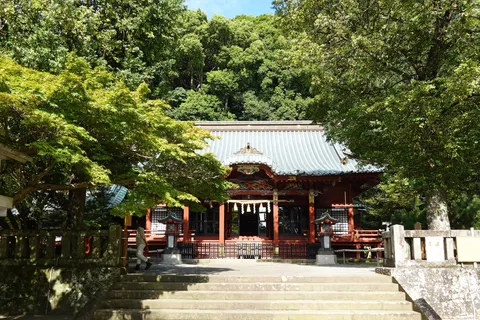
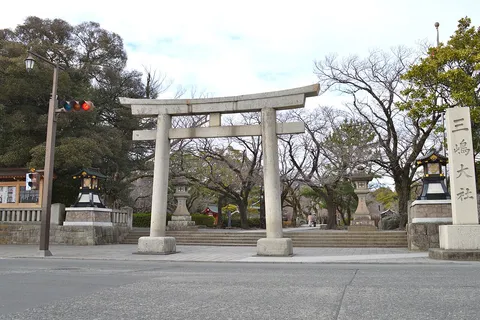
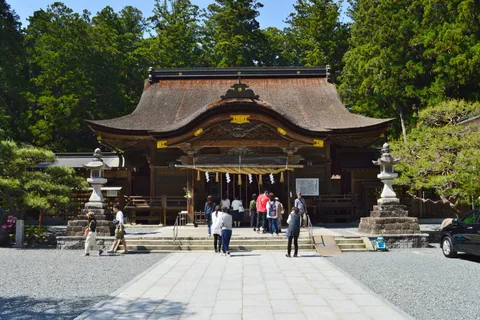
Kinomiya Shrine stands in Nishiyama-cho, Atami. It has long been called “Kinomiya Daimyojin,” revered as the guardian of the land of Atami and a deity of good fortune and welcome blessings. According to the shrine’s website, it is today regarded as the head shrine of 44 “Kinomiya” shrines across Japan, and the early-Heian general Sakanoue no Tamuramaro is said to have prayed for victory here and enshrined branch spirits in various regions.
Shrine tradition says that on the 15th day of the 6th month of 710 (Wado 3), a fisherman in Atami Bay found a wooden figure in his net. A child appeared and said, “I am Itakeru no Mikoto. Enshrine me in the hollow among seven camphor trees where the sound of the waves cannot be heard, and I will protect the villagers and all who come here.” The villagers searched and found the present site in Nishiyama. The three enshrined deities are Yamato Takeru no Mikoto (deity of martial valor and decisiveness), Itakeru no Mikoto (deity of trees and nature conservation), and Onamochi no Mikoto (deity of business prosperity and physical well-being). Because Itakeru no Mikoto promised to protect local people and travelers coming to the area, many visitors to Izu stop here to pray.
Highlights
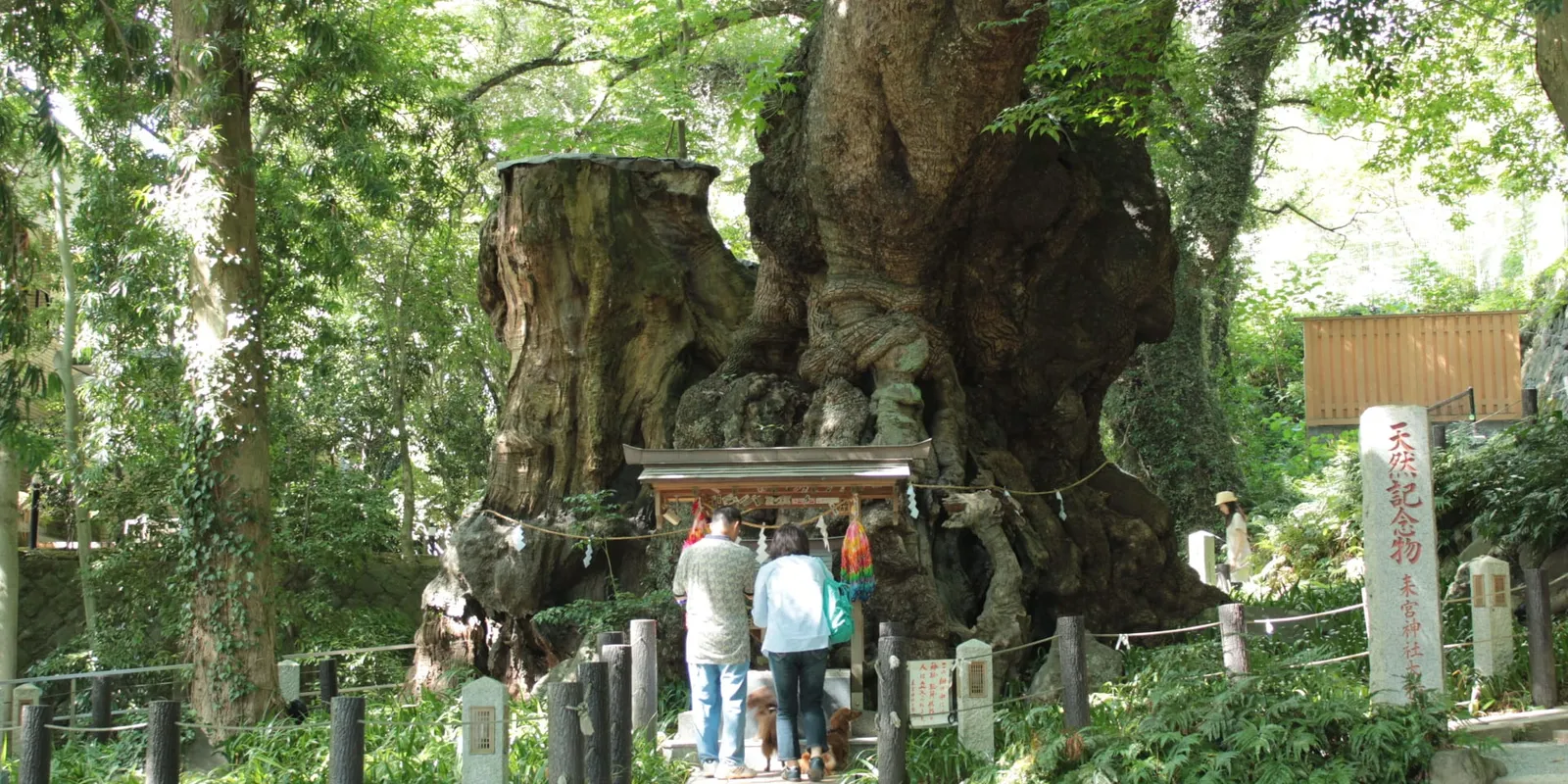
The main attraction is the sacred great camphor tree (Okusu), standing at the back left of the main hall. It is a nationally designated Natural Monument; the shrine’s website describes it as more than 2,000 years old (and elsewhere as 2,100 years or more), with a trunk about 24 meters around, and a 1992 Ministry of the Environment survey ranked it the second-largest tree in Japan. In ancient times the tree is said to have been a “himorogi” onto which the deity’s spirit was invited. It is said that walking once around the trunk extends your life by a year, and that walking around it while keeping a wish to yourself makes it come true. Its leaves stay green all year and it is still growing, so it is regarded as a symbol of eternal youth, longevity and good health. A local tradition from the Kaei era (late Edo period) says that when five of the grounds’ seven camphor trees had been cut down and woodcutters tried to saw the remaining great tree, a white-haired old man appeared, the saw snapped in two, and the old man vanished, so the felling was called off.
Along the approach stands the “Second Great Camphor,” whose trunk has been mostly hollowed out by lightning yet still bears lush green leaves. The grounds are surrounded by greenery and water. The auxiliary shrines include Kinomiya Inari Shrine (invited from Fushimi Inari Taisha in Kyoto), Kinomiya Benzaiten (with a statue by Takamura Koun, opened to view once a year on November 23 for the Benten Festival), and Mitsumine Shrine, along with seven small shrines rebuilt in 2022.
At night, the “Kodama Project” illuminates the grounds with about 160 lights representing the spirits (kodama) dwelling in the forest’s plants, normally from 5:00 to 11:00 PM.
Visiting Tips
The shrine is open 9:00 AM–5:00 PM, with prayer services accepted until 4:30 PM. The great camphor tree is behind the main hall on the left, so it is easiest to pray at the worship hall first and then go to see the tree. The amulet and goshuin desk is inside the Sanshuden hall, where goshuin are issued (from ¥500; this is not stated on the official site, so please confirm the amount and types on site). According to visitor guides, three goshuin are offered: Kinomiya Shrine, Kinomiya Benzaiten, and Yumae Shrine. The Matchmaking Amulet (¥1,000) is based on the shrine’s explanation that Onamochi no Mikoto is revered as a deity of relationships, and it is said to attract good connections when attached to a phone or similar item. There is also a camphor-wood ema, the “Okusu Ema” (¥1,000).
It is only about a 5-minute walk (about 400 m) from Kinomiya Station on the JR Ito Line. From JR Atami Station it is about 18 minutes on foot or about 20 minutes by bus (take the Jukkoku Pass or Nishiyama Junkan bus and get off at “Kinomiya Jinja”). Parking became paid on December 1, 2022 and spaces are limited, so when it is crowded the shrine asks visitors to use municipal parking at Kinomiya Station or public transport. We could not confirm the parking rates, so please check beforehand.
Annual Festivals
- Reitaisai / Kogashi Festival (July 14–16): The shrine’s largest festival. It begins with the eve festival on the 14th, followed by the main festival and the main mikoshi procession on the 15th and the deities’ procession and return on the 16th. Named for the roasted barley (mugi-kogashi) offered to the deity, it sees more than 30 floats and more than 30 mikoshi parade through Atami. The Kashima dance, designated an Intangible Folk Cultural Property of Shizuoka Prefecture, as well as the Miko Kagura and Urayasu no Mai are also dedicated. On the 16th, the ornate portable shrine carrying the deities is carried by men aged 42.
- New Year’s visit (January): About 100,000 visitors come on New Year’s Day each year.
- Setsubun Festival (February 3): More than 5,000 lucky prizes are prepared, and people born in the year’s zodiac sign scatter the beans.
- Okusu Festival (May 5): Held when the great camphor sprouts new leaves, with a shrine maiden dance, “Okusu no Mai,” and taiko drumming.
- Mid-Autumn Gagaku and Moon-Viewing Festival (late September or early October): After the ritual, court music and dance are offered (free to watch).
- Harvest Thanksgiving Festival (November 23): Features a vegetable sale and free wild boar stew. The same day is the Benten Festival, when Kinomiya Benzaiten is opened to view.
- Year-End Great Purification and Burning of Old Talismans (December 31): The burning of old talismans and amulets starts at 11:00 PM.
Nearby Food & Sightseeing
- Saryo “Hoko” and the other tea lounges in the grounds: Besides “Hoko,” attached to the Sanshuden hall, there are “Saryo Goshiki no Mori” beside the great camphor, “Torii no Musubiba” by the torii gate, and “Kuriya Kusu no Ka” on the Sanshuden rooftop. Roasted-barley soft serve, roasted-barley sweet red bean soup, and matcha with Japanese sweets are among the offerings (check the official site for menus and hours).
- Raifuku Sweets: Souvenir sweets sold by the shrine, including roasted-barley items such as “Kogashi-maru” and “Mugi-kogashi Rakugan” and the “Okusu Roll” (listed on the shrine’s website; items and prices may change).
- Atami Plum Garden: A garden said to be about a 12-minute walk from Kinomiya Station, known for its plum festival, usually held from January to March, and its autumn maple festival (scheduled for November 14 to December 6 in 2026).
Frequently Asked Questions
- Q. What are the visiting hours and is there an admission fee?
- A. The shrine is open 9:00 AM–5:00 PM, with prayer services accepted until 4:30 PM. The illumination around the great camphor tree normally runs 5:00–11:00 PM. We could not confirm an admission fee on the official site, so please check on site or on the official website.
- Q. What is the great camphor tree at Kinomiya Shrine?
- A. The sacred great camphor (Okusu) is a nationally designated Natural Monument. According to the shrine's website, it is more than 2,000 years old with a trunk about 24 meters around, and a 1992 Ministry of the Environment survey ranked it the second-largest tree in Japan. Walking once around the trunk is said to extend your life by a year, and walking around it while silently holding a wish is said to make it come true.
- Q. Can I get a goshuin at Kinomiya Shrine?
- A. Yes, at the reception desk in the Sanshuden hall, 9:00 AM–5:00 PM. The fee is given as from ¥500, but this is not stated on the official site and comes from visitor guides, and limited editions may cost more, so please confirm on site.
- Q. Is there parking?
- A. There is parking, but it became paid on December 1, 2022, and spaces are limited. When it is crowded, visitors are asked to use municipal parking at Kinomiya Station or public transport.
- Q. When is the Kogashi Festival (Reitaisai)?
- A. Every year on July 14–16. The 14th is the eve festival, the 15th is the main festival with the main mikoshi procession, and the 16th includes the deities' procession, and more than 30 floats and more than 30 mikoshi parade through Atami. It is also called the Kogashi Festival after the roasted barley (mugi-kogashi) offered to the deity.
Plan Your Visit
Before you go, you can book a stay and get your shrine-visit items ready.
Amazon links open Amazon.co.jp (Japan) in English; whether an item ships overseas depends on the product.
※ Contains ads (PR). Links open external sites such as Amazon, Rakuten, Trip.com and Booking.com.