History
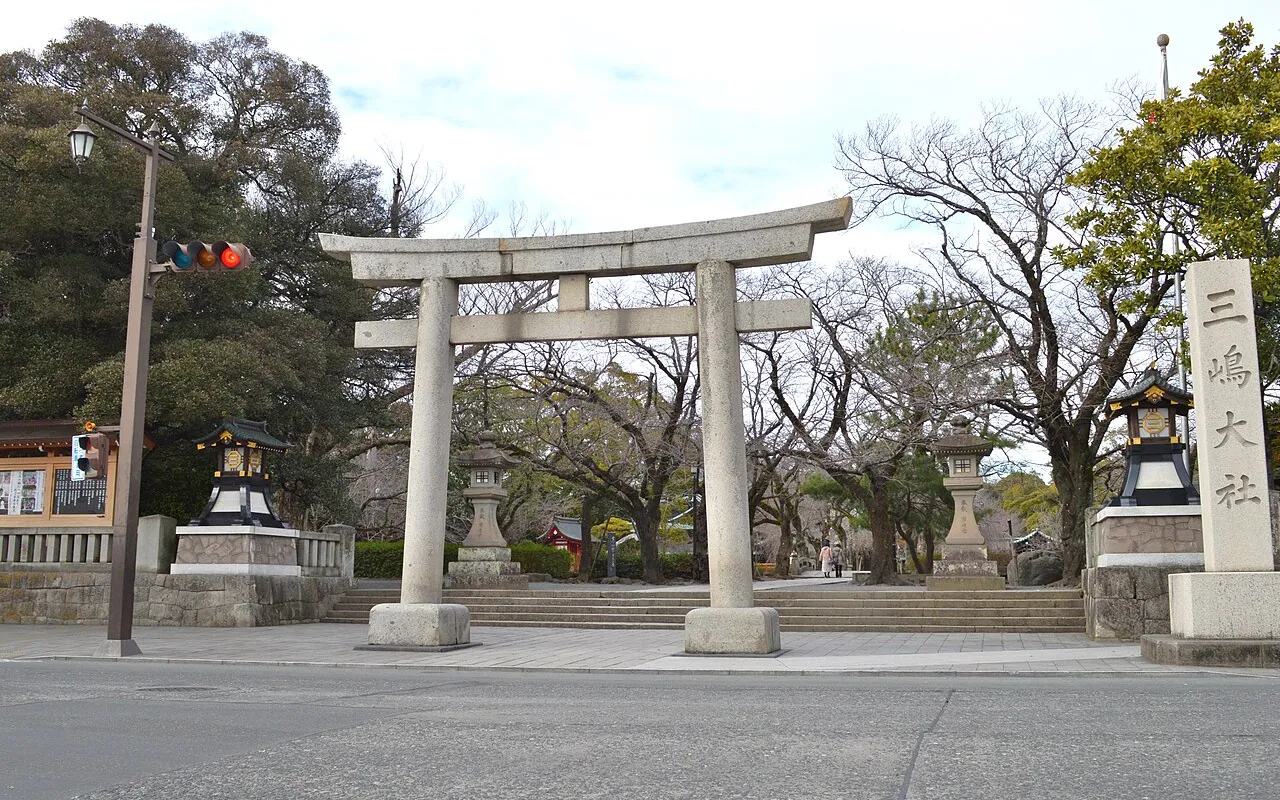
Mishima Taisha stands within easy walking distance of JR Mishima Station and holds the prestigious rank of ichinomiya (chief shrine) and soja (parish shrine) of the former province of Izu. Its exact founding date is unknown, but its worship is rooted in ancient beliefs tied to the volcanic formation of the Izu Islands and to maritime travel along the coast, and by the Nara and Heian periods it already appears in records as a Myojin Taisha — a shrine of the highest rank recognized by the imperial court. Renowned as the foremost shrine along the Tokaido highway, it is said to have been visited without fail by travelers heading down from the capital and by warriors marching east, cementing its place as a landmark of the old road.
The shrine enshrines two deities: Oyamatsumi no Mikoto, who presides over mountains and agriculture, and Kotoshironushi no Kami — better known as Ebisu, the god of business prosperity and good fortune — together revered as “Mishima Daimyojin.” What cemented the shrine’s place in history above all was its bond with Minamoto no Yoritomo. Exiled to Izu after his clan’s defeat in the Heiji Rebellion, Yoritomo prayed continually at Mishima Taisha for the revival of the Minamoto clan, and when he finally raised his banner in 1180, he is said to have visited the shrine first before taking up arms. After founding the Kamakura shogunate, Yoritomo and his wife Hojo Masako donated numerous treasures to the shrine, including the “Plum Blossom Maki-e Toilet Box,” now designated a National Treasure.
Highlights
The shrine’s grounds are dominated by its imposing halls, rebuilt around 1867. The main hall, offering hall, and worship hall — all built of solid zelkova wood — are adorned with the intricate carvings of master Izu craftsmen and are designated Important Cultural Properties of Japan. The worship hall standing beyond the gate, and the great torii that has watched over travelers on the Tokaido for generations, form the iconic silhouette most associated with Mishima Taisha today.
On the eastern side of the grounds stands the shrine’s sacred kinmokusei (fragrant olive) tree, a National Natural Monument said to be over 1,200 years old; it blooms twice, in September and October, its sweet fragrance said to carry for several kilometers. Visitors can also see the stone where Yoritomo and Masako are said to have sat, as well as a treasure hall displaying items connected to the shrine’s long history, making the grounds a rewarding stop for anyone interested in Japanese history.
Visiting Tips
Since the grounds are open around the clock, a basic visit can be done in as little as 30 minutes, but allow about an hour if you want to take in the carved halls, the sacred pond, and the treasure hall. Goshuin stamps are available at the shrine office from 8:30 to 16:30 (until 17:00 on weekends and holidays); the grounds get especially crowded over the New Year holidays and during the August festival, so it’s worth allowing extra time during those periods. Thanks to its location within walking distance of Mishima Station, many travelers stop here as a starting point on trips toward Izu or Hakone.
Annual Festivals
- Reisai / Mishima Grand Festival (August 15–17): Mishima’s largest festival, featuring the “Lord Yoritomo Flag-Raising Procession” commemorating his historic call to arms, dynamic hand-held fireworks, and shagiri musical processions through the streets, drawing around 500,000 visitors over three days.
- Otauchi Shinji (January 7): A ritual of pantomimed rice planting performed to pray in advance for a bountiful harvest in the coming year.
- Otsuzumi no Mai (October): A medieval ritual dance associated with rain-summoning prayers, dedicated at the shrine.
- Joya-sai and New Year’s Festival (December 31–January 1): One of Shizuoka Prefecture’s most popular hatsumode destinations, drawing large crowds for the first three days of the year.
Nearby Food & Sightseeing
- Unagi Suminobo: A long-established eel restaurant founded in 1958, just steps from Mishima Taisha, serving unagi raised in the clear, spring-fed waters that flow down from Mt. Fuji, finished with a fragrant, slightly sweet grilling sauce — a fitting meal after your visit.
- Rakuju-en: A city park close to Mishima Station, developed from a former imperial family villa, centered on the spring-fed pond Obama-ike, a National Natural Monument and Place of Scenic Beauty offering greenery in every season.
- Genbei-gawa River: A roughly 1.5-kilometer spring-fed stream running through the city, lined with stepping stones and walking paths; its water is so clear that fireflies dance above it in early summer, making it one of Mishima’s best-loved waterside strolls.
Frequently Asked Questions
- Q. What are the visiting hours?
- A. The grounds are open around the clock, but the shrine office and goshuin desk are open 8:30–16:30 (until 17:00 on weekends and holidays).
- Q. When is the goshuin office open?
- A. 8:30–16:30 (until 17:00 on weekends/holidays), for ¥500.
- Q. Is there parking?
- A. Yes, on-site parking is available (from ¥200/hour for cars), though it closes during New Year (Jan 1–3) and the annual festival (Aug 15–17).
- Q. When does the sacred fragrant olive tree bloom?
- A. The tree, said to be over 1,200 years old, blooms twice — in September and October.
- Q. How do I get there?
- A. About a 15-minute walk from the south exit of JR Mishima Station.
Related Shrines
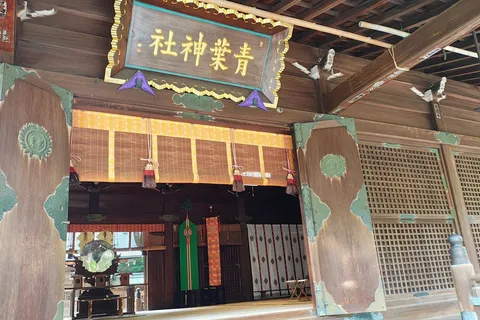
Miyagi Prefecture, Aoba Ward, Sendai
Aoba Jinja
Aoba Jinja
- Good Fortune
- Victory in Competition
- Business Prosperity
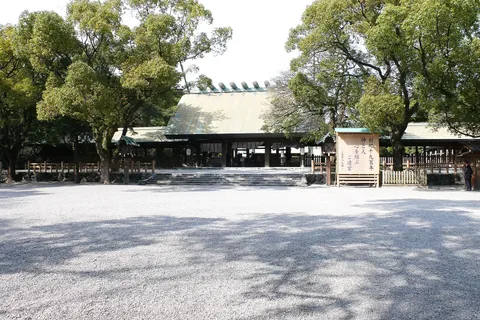
Aichi Prefecture, Nagoya
Atsuta Jingu
Atsuta-jingū
- Good Fortune
- Household Safety
- Victory in Competition
Okayama, Okayama (Kita-ku)
Kibitsu Jinja
Kibitsu-jinja
- Household Safety
- Business Prosperity
- Victory in Competition