History
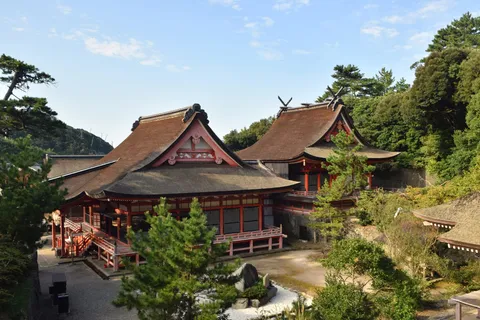
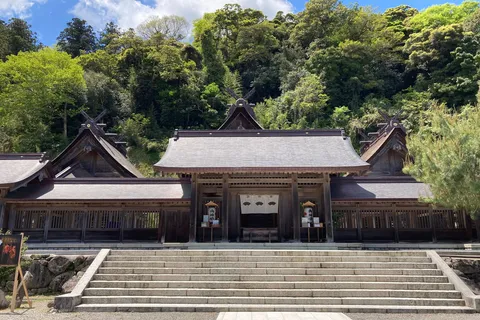
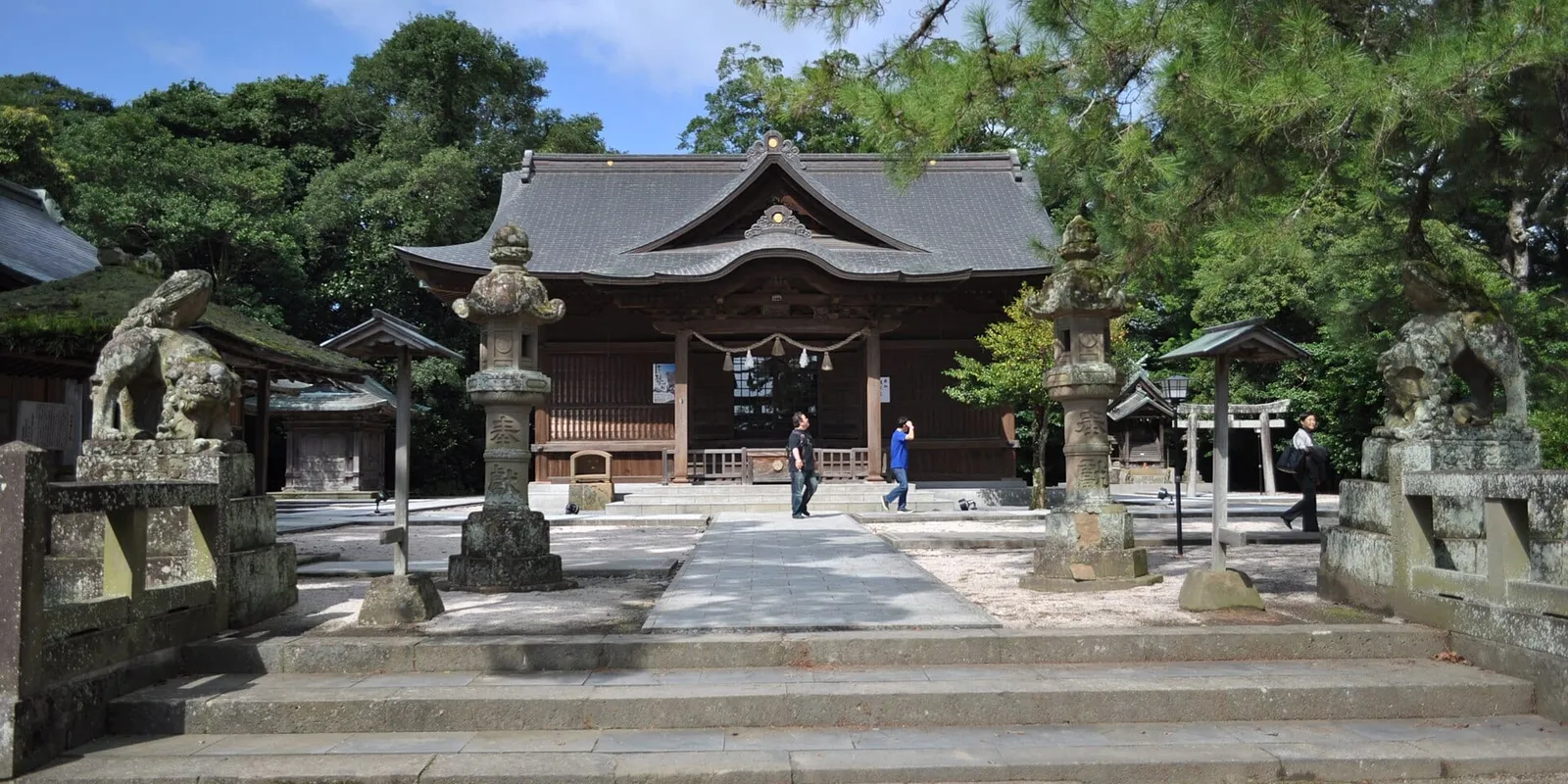
Matsue Shrine stands in the Ninomaru (second enclosure) of Matsue Castle, in Joyama Park, Matsue, Shimane. Its name is read “Matsue-jinja” (according to the Matsue Tourist Association’s sightseeing-spot page). No official website for the shrine could be found, so this page is based on materials from Matsue City and the Matsue Tourist Association.
According to Matsue City’s “Historic Landscape Maintenance and Improvement Plan (2nd edition),” in 1628 (Kan’ei 5) Horio Tadaharu founded a Toshogu enshrining Tokugawa Ieyasu at Nishio in Asakumi village, and in 1877 (Meiji 10) people of the former Matsue domain founded Rakuzan Shrine at Rakuzan in Kawatsu village, enshrining the first domain lord, Matsudaira Naomasa. In 1898 (Meiji 31) the Toshogu was merged into Rakuzan Shrine, and in 1899 (Meiji 32) Rakuzan Shrine moved to its present site and was renamed “Matsue Shrine.” The Toshogu’s buildings were relocated to become Matsue Shrine at that time. In 1931 (Showa 6), Horio Yoshiharu, the founder of Matsue, and Matsudaira Harusato (Lord Fumai), described as a restorer of the domain, were added as secondary deities, and that is how it remains today.
How the founding year is counted differs between sources. The City’s 2024 Tourism White Paper (Reference Volume) says “founded 1628,” while a City history-compilation column says Matsue Shrine was founded in Meiji 32 and the Matsue Toshogu merged into it was founded in Kan’ei 5. The White Paper lists the deities as Matsudaira Naomasa, Tokugawa Ieyasu, Horio Yoshiharu and Matsudaira Harusato.
Highlights
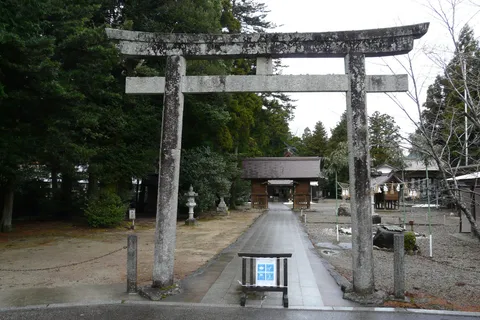
For the buildings, the City’s plan explains the following. According to the ridge tablets (munafuda), the main hall was built in 1628 (Kan’ei 5) and the worship hall in 1661 (Kanbun 1), and the roof became copper-plated in a repair of 1842 (Tenpo 13). The front torii bears an inscription saying it was donated by Matsudaira Naomasa in 1649 (Keian 2), and it is said to have come from the Toshogu. The Tourism White Paper also says that in 1661 Matsudaira Naomasa added a connecting hall and worship hall to make a gongen-zukuri structure, and that the shrine was moved to its present site in 1899, and it describes the assembly hall as the worship hall of Rakuzan Shrine (built 1877) relocated in 1899.
The shrine is also known as the place where the prayer tablets that decided Matsue Castle’s National Treasure status were found (Matsue Tourist Association). According to a City column, on May 21, 2012, City history-compilation staff surveying ridge tablets and other items at Matsue Shrine came across two prayer tablets inscribed with the year Keicho 16, and were present at their rediscovery. They had been seen when the architectural historian Kido Hisashi surveyed the castle keep in 1937, and their whereabouts had been unknown ever since. The City confirmed from nail-hole traces that the two tablets had been nailed up in the keep’s basement; the Matsue Castle keep was designated a National Treasure in 2015 (Heisei 27), with the tablets as an attached designation.
The Matsue Tourist Association presents Matsue as a “land of matchmaking” and notes that the shrine’s ema (votive plaques) are heart-shaped. The explanation is that the boar’s-eye crest of the Matsudaira clan of Matsue Castle looks like a heart when turned upside down, and the ema is listed at ¥630. The association says they are sold at Kounkaku and the Buratto Matsue tourist information center, among other places, and one goshuin guide article also warns that the shrine itself does not sell ema.
Visiting Tips
Because no official website could be found, the shrine’s visiting hours are unknown. Matsue City’s Tourism White Paper and the Matsue Tourist Association page do not state any. The Tourist Association page gives the phone number as 0852-22-2324.
According to one goshuin guide article (by Nippoh Sogo Seihon), there are two goshuin, “Matsue Shrine” and “Fukutoku Inari Shrine,” at ¥300 each, received at the goshuin reception office to the left of the worship hall. Direct hand-writing is said to be available from 9:00 AM to 5:00 PM, but because the priest may be away for rites and the like, the article recommends confirming by phone beforehand. The same article says the Fukutoku Inari Shrine goshuin is pre-written only. This is not information from the shrine itself, so check availability before you go.
Matsue City’s Tourism White Paper gives access as “about 10 minutes by bus from JR Matsue Station, then about 5 minutes on foot.” A travel information site (tabi-mag) says it is about a 5-minute walk from the “Matsue-jo (Otemae)” bus stop. No dedicated parking lot was found, and one guide says to use the Matsue Castle parking lot. For the municipal Otemae parking lot, a travel information site gives 66 spaces, paid, while the goshuin guide article gives ¥300 per hour and about a 5-minute walk to the shrine; fees can change, so check the signs on site.
Annual Festivals
- Annual festival (Reisai): The Tourism White Paper lists the festival as May 5 and November 5. The City’s Historic Landscape Plan, on the other hand, describes the autumn annual festival as one that celebrates the founding of Matsue, so the dates and positioning differ between sources.
- Matsue Festival and Dogyoretsu drum procession (third Sunday of October): According to the same plan, the Dogyoretsu procession is now held every year on the third Sunday of October as a festival of Matsue Shrine celebrating the founding of Matsue. It came to be held as part of Matsue Shrine’s “Matsue Festival,” and on the day a ceremony and a safety-prayer rite are held at Matsue Castle Otemae before departure, with participants facing in the direction of Matsue Shrine.
- Drum procession preservation society’s visit (a Sunday in July): The plan says that on a Sunday in July, about 100 days before the procession, representatives of the 31 neighborhoods and groups belonging to the society gather at Matsue Shrine, worship, and report the coming Matsue Festival and pray for its safety.
Event dates can change from year to year, so check the latest information from Matsue City or the Matsue Tourist Association before you go.
Nearby Food & Sightseeing
- Matsue Castle: According to the Shimane Prefecture page, the keep was completed in 1611 (Keicho 16), is one of the 12 keeps surviving nationwide, and was designated a National Treasure in 2015 (Heisei 27). Matsue Shrine is in the Ninomaru of the same castle park.
- Kounkaku: A Meiji-period pseudo-Western-style building in the Matsue Castle Ninomaru, next to Matsue Shrine. Matsue City’s Tourism White Paper says it was built under the name “Craft Exhibition Hall” to serve as lodging for the Emperor Meiji (a Shimane Prefecture designated cultural property).
- Matsue History Museum: A facility in Tonomachi; according to the City’s column, the prayer tablets given attached designation along with the National Treasure keep are stored there (whether they are on display was not checked).
- Former Residence of Koizumi Yakumo (Lafcadio Hearn): A samurai residence in Kitahori-cho where, according to the Tourism White Paper, Koizumi Yakumo lived with his wife Setsu for about five months from June to November 1891 (Meiji 24). It was designated a national historic site in 1940 (Showa 15).
Frequently Asked Questions
- Q. What are the visiting hours?
- A. Visiting hours are unknown: they are not stated on Matsue City's Tourism White Paper or the Matsue Tourist Association page, and no official shrine website could be found. One goshuin guide article gives 9:00 AM–5:00 PM for hand-written goshuin, but notes the priest may be away for rites and recommends confirming by phone beforehand. The Tourist Association page gives the phone number as 0852-22-2324.
- Q. Can I get a goshuin at Matsue Shrine?
- A. According to one goshuin guide article (by Nippoh Sogo Seihon), there are two goshuin, "Matsue Shrine" and "Fukutoku Inari Shrine," at ¥300 each, received at the goshuin reception office to the left of the worship hall. The Fukutoku Inari Shrine one is said to be pre-written only. This is not official shrine information, so check availability and hours by phone before you go.
- Q. How do I get there, and is there parking?
- A. Matsue City's Tourism White Paper gives about 10 minutes by bus from JR Matsue Station, then about 5 minutes on foot. A travel information site says it is about a 5-minute walk from the "Matsue-jo (Otemae)" bus stop. No dedicated parking lot was found, and one guide says to use the Matsue Castle parking lot. Fees and capacity for the municipal Otemae lot differ between guides, so check the signs on site.
- Q. Is the shrine connected to Matsue Castle becoming a National Treasure?
- A. The Matsue Tourist Association describes it as the shrine where the prayer tablets that decided Matsue Castle's National Treasure status were found. According to a City column, on May 21, 2012, City history-compilation staff surveying the shrine came across two prayer tablets inscribed with the year Keicho 16 and were present at their rediscovery. The City confirmed that the tablets had been nailed up in the keep's basement; the keep was designated a National Treasure in 2015 (Heisei 27), with the tablets as an attached designation.
- Q. When is the Matsue Festival (Dogyoretsu drum procession)?
- A. According to Matsue City's Historic Landscape Plan, the Dogyoretsu procession is now held every year on the third Sunday of October as part of Matsue Shrine's Matsue Festival, which celebrates the founding of Matsue. A ceremony and a safety-prayer rite are held at Matsue Castle Otemae before departure. The Tourism White Paper lists the annual festival as May 5 and November 5, so sources differ; check before you go.
Plan Your Visit
Before you go, you can book a stay and get your shrine-visit items ready.
Amazon links open Amazon.co.jp (Japan) in English; whether an item ships overseas depends on the product.
※ Contains ads (PR). Links open external sites such as Amazon, Rakuten, Trip.com and Booking.com.