History
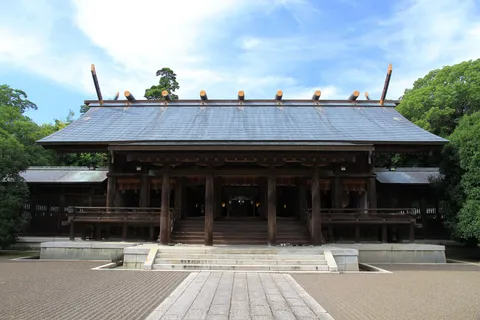
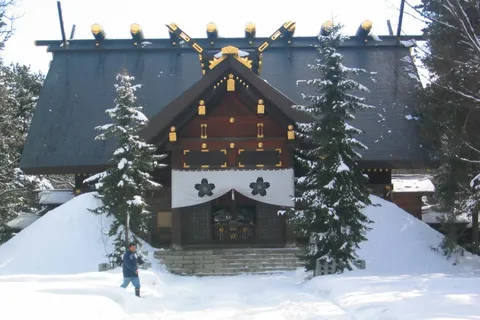
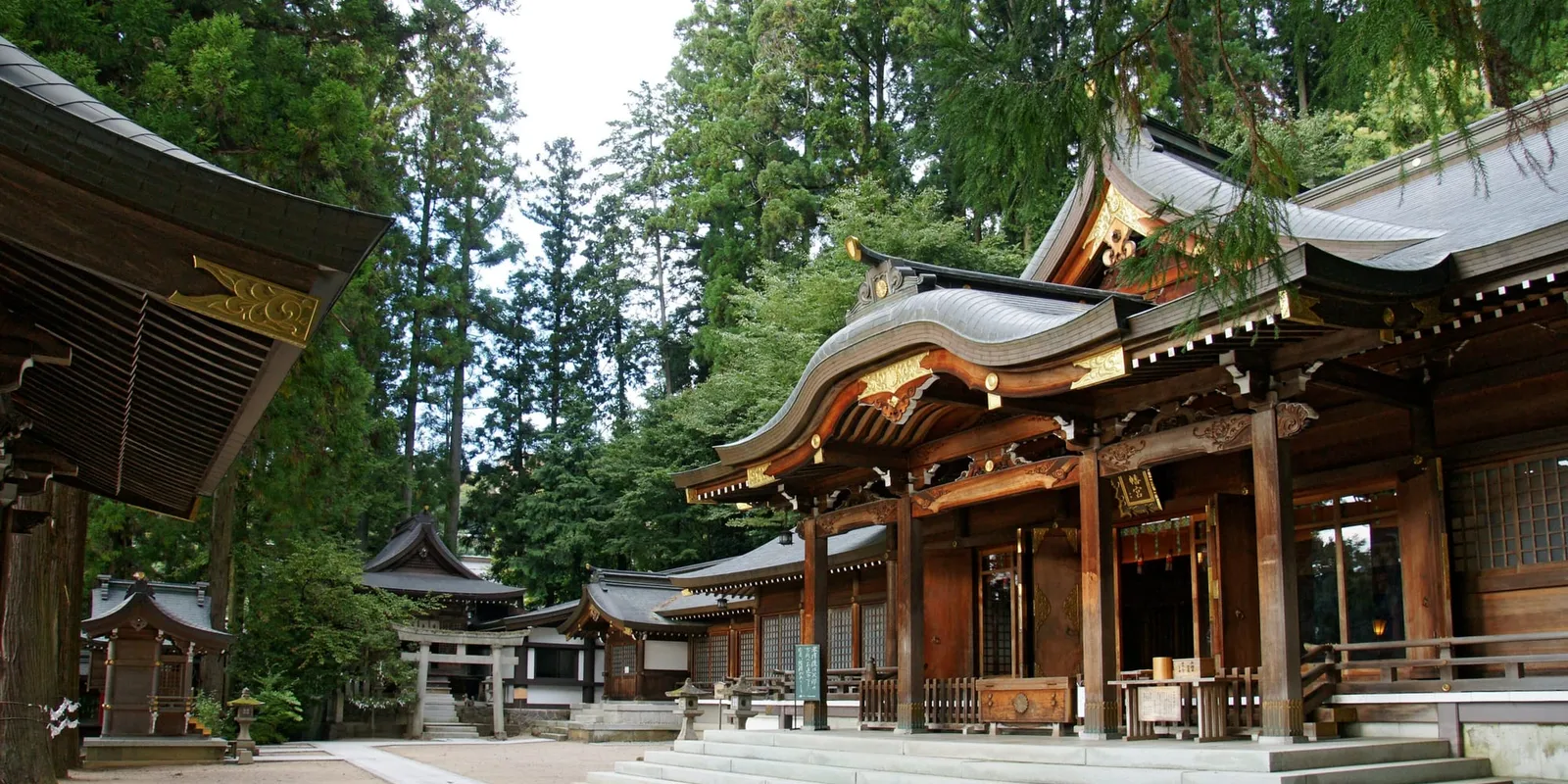
Sakurayama Hachimangu stands in the northern part of Takayama, Gifu Prefecture. Its name is read “Sakurayama Hachimangu” and is sometimes written 桜山八幡宮 (the official site uses the older character 櫻山; the Japanese reading comes from Japanese Wikipedia). The official site lists Emperor Ojin as the principal deity, with Atsuta no Okami and Kashii no Okami enshrined alongside. Before the war it held the rank of prefectural shrine, and it is now listed as a Beppyo Shrine of the Association of Shinto Shrines, according to the official site.
According to the official history, in the reign of Emperor Nintoku (around 377), a rebel called Ryomen Sukuna rose against the emperor in the mountains of Hida. Naniwa no Nekotakefurukuma no Mikoto, commissioned to subdue him, entered Hida, enshrined the spirit of Emperor Ojin, the previous emperor, and prayed for victory in the sacred grounds of Sakurayama. This is said to be the founding of the shrine. The official English page, however, gives Nintoku’s reign as 413–439, so the dates differ between sources.
The official site says that in the Daiei era (16th century) the deity was invited from Iwashimizu Hachimangu in Kyoto, but a long period of warfare left the grounds in ruins for a time. In 1623, the lord of Takayama, Kanamori Shigeyori, enshrined a divine statue found in the Enako River as the Hachiman deity, rebuilt the shrine and donated land. He then set the northern part of Takayama as the parishioner area and sent a magistrate to the annual festival, which is why it was once called the “magistrate’s festival.” In the great fire of Takayama in Meiji 8 nearly everything except the sub-shrine Akiba Shrine burned, and the grounds were restored by Meiji 33. All of this is the shrine’s own account.
Highlights
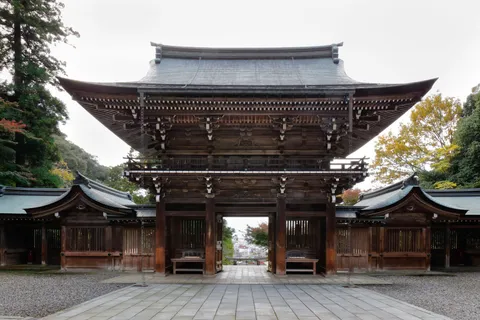
The first torii is a wooden cypress gate completed in Showa 48, 10 m high and 12.2 m wide, according to the official site. The great stone staircase leading to the shrine gate has 19 steps, each cut from a single slab 330 cm long. The second torii is a stone gate donated in 1730 (Kyoho 15) by the Hida magistrate Hasegawa Tadataka.
The grounds hold the Takayama Festival Float Exhibition Hall (opened in Showa 43, a museum-equivalent facility), which permanently displays four of the Autumn Festival’s floats and the great mikoshi. The official site says this is the only place where real Takayama Festival floats are on permanent display. The octagonal mikoshi weighs 2.5 tons in total; the original, made in 1817 (Bunka 14), was destroyed in the great fire of Meiji 8 and later rebuilt in the old style, per the official site. The attached Sakurayama Nikko Hall (桜山日光館) displays detailed models of Nikko Toshogu Shrine.
There are five sub-shrines in the grounds: Akiba Shrine, which enshrines a fire-protection deity (said to have been founded in 1623 to guard Takayama Castle); Tenman Shrine, dedicated to Sugawara no Michizane, with a brush mound where memorial rites for brushes are said to improve calligraphy; Inari Shrine; Kotohira Shrine; and Terusaki Shrine, which enshrines Takefurukuma no Mikoto, the shrine’s founder. At Kotohira Shrine, tradition holds that if you throw a chewed ball of paper at the tengu painting on the ceiling and it sticks, an illness will be fully cured, and at Terusaki Shrine it is said that offering as many roasted beans as your age cures toothache (both per the official site).
Visiting Tips
Visiting hours for the grounds are not given on the official site. The Float Exhibition Hall is open every day of the year, 9:00 AM–5:00 PM from March to November and 9:00 AM–4:30 PM from December to February. Admission is ¥1,000 for adults, ¥600 for high school students and ¥500 for elementary and junior high students (tax included), per the official site. The exhibited floats are rotated several times a year, but the official site differs on the timing: its building page says March, May and November, while the exhibition hall page says late March, late July and mid-November. The hall may close temporarily during changeovers, so check the news section of the official site.
The shrine’s official site does not mention goshuin. The official page of the Sakurayama Furin Matsuri (run by an organizing committee, not the shrine) says limited-edition goshuin cost ¥500 at the reception office in the Sanshuden hall, 9:00 AM–5:00 PM, but since that is not a shrine notice, it is best to confirm.
The shrine is about 1.3 km, or around 20 minutes on foot, from JR Takayama Station. The shrine’s website (Jimdo version) says parking for worshippers is free in principle, and that anyone who books a prayer service or a Shinto wedding can park free in the Float Exhibition Hall’s paid lot (50 standard cars, ¥300 per hour) by handing in a parking card. General visitors are asked to use the free worshippers’ lot.
Annual Festivals
- Annual festival “Autumn Takayama Festival” (October 9–10): The order of the floats is decided at a pre-festival rite and drawing ceremony on October 7. On the 9th the festival is held at the main hall and 11 floats line up in the grounds and along the main approach. On the 10th a procession of about 400 people, with lion dance and gagaku court music, tours the parishioner area. Karakuri puppet performances by the Hotei float are offered in the grounds (official site).
- New Year’s visit (January 1): The official site says zodiac-animal charms are given to the first 2,000 visitors.
- Sagicho Festival (January 15): Old talismans, amulets and New Year decorations are burned in prayer for good health.
- Setsubun Festival (February): The official site mentions a lucky draw and sweet sake.
- Inari Shrine Festival (Ni-no-Uma Festival) (March): Rice dumplings are scattered.
- Great Purification and Chinowa ring-passing (June 30): Visitors pass through a large grass ring in the grounds for the midsummer purification.
- Hojoe (August 16): A rite revived in 2002; a ceremony takes place from 7:00 PM on the riverbank below Miyamae Bridge, and carp are released. The official site lists the release ticket at ¥1,000.
- Sacred Fire Rite, 御神火祭 (Autumn Equinox Day): Prayer sticks offered by worshippers are burned.
- Shichi-Go-San visits (October–November): Chitose-ame candy and amulets are given.
- Shikinen Taisai (once every 30 years): The most recent was in Heisei 23, with over 300 shrines across Hida invited.
- Sakurayama Furin Matsuri (July 18 to August 29 on Saturdays in 2026): According to the festival’s official page, the shrine is the venue and a sponsor, and the organizer is the organizing committee.
Dates change from year to year, so check the “Festivals” page and news on the official site for the latest.
Nearby Food & Sightseeing
- Takayama Festival Float Exhibition Hall: The float exhibition facility on the grounds. According to the official site, you can see four of the Autumn Festival’s floats and the great mikoshi.
- Hie Shrine: The shrine whose festival is the spring Takayama Festival (April 14–15), according to Sakurayama Hachimangu’s official site. The shrine, district and floats all differ from the autumn festival.
- JR Takayama Station: About 1.3 km from the shrine, around 20 minutes on foot (official site). A starting point when arriving by train or bus.
Frequently Asked Questions
- Q. What are the visiting hours?
- A. Visiting hours for the grounds could not be found on the shrine's official site. The Takayama Festival Float Exhibition Hall on the grounds is open every day of the year, 9:00 AM–5:00 PM from March to November and 9:00 AM–4:30 PM from December to February (official site). Hours for prayer services and the amulet counter are also not given, so it is safest to check by phone before you go.
- Q. Can I get a goshuin at Sakurayama Hachimangu?
- A. The shrine's official site does not mention goshuin. The official page of the Sakurayama Furin Matsuri (run by an organizing committee, not the shrine) says limited-edition goshuin cost ¥500 at the reception office in the Sanshuden hall, with hours of 9:00 AM–5:00 PM, and that the shrine can also write one directly in your own book. Please confirm current arrangements with the shrine.
- Q. How do I get there, and is there parking?
- A. It is about 1.3 km from JR Takayama Station, around a 20-minute walk (official site). The shrine's website (Jimdo version) says parking for worshippers is free in principle. The paid lot at the Float Exhibition Hall on the grounds has 50 standard-car spaces at ¥300 per hour, and it says that those who book a prayer service or a Shinto wedding can park free by handing in a parking card.
- Q. What is the Autumn Takayama Festival?
- A. The Autumn Takayama Festival is the annual festival of Sakurayama Hachimangu, held every year on October 9 and 10 (official site). According to the official site, the 11 festival floats are a nationally designated Tangible Folk Cultural Property, and the Takayama Festival including the floats is a nationally designated Intangible Folk Cultural Property. The spring Takayama Festival (April 14–15) is the festival of Hie Shrine, and the official site explains that the shrine, district and floats are all different.
- Q. What can I see at the Takayama Festival Float Exhibition Hall?
- A. According to the official site, four of the 11 floats of the Autumn Takayama Festival are on permanent display as real floats, along with the great portable shrine (mikoshi). The displayed floats are rotated several times a year. Admission is ¥1,000 for adults, ¥600 for high school students and ¥500 for elementary and junior high students (tax included), and the hall is open every day of the year (official site). The attached Sakurayama Nikko Hall (桜山日光館) displays detailed models of Nikko Toshogu Shrine.
Plan Your Visit
Before you go, you can book a stay and get your shrine-visit items ready.
Amazon links open Amazon.co.jp (Japan) in English; whether an item ships overseas depends on the product.
※ Contains ads (PR). Links open external sites such as Amazon, Rakuten, Trip.com and Booking.com.