History
The founding date of Ikune Jinja is unknown, but the shrine already appears in the Engishiki Jinmyocho of 927 as a kanpei-taisha, an official grand shrine receiving regular imperial offerings — clear evidence that it was an important sanctuary from very early times. According to shrine tradition, Ikune Jinja stood on this site even before neighboring Sumiyoshi Taisha was established, making it one of the oldest shrines in the old Sumiyoshi district. The enshrined deity, Sukunahikona no Mikoto, is revered as the ancestral god of sake brewing, and an old tradition holds that Empress Jingu brewed sake here to offer to the three Sumiyoshi deities. (A minority of historical sources, including the Shinmeishou Koushou, propose instead that the enshrined kami is Katsuhayahi Ame no Oshihomimi’s brother deity Ikutsuhikone no Mikoto, though Sukunahikona no Mikoto is the deity recognized today.)
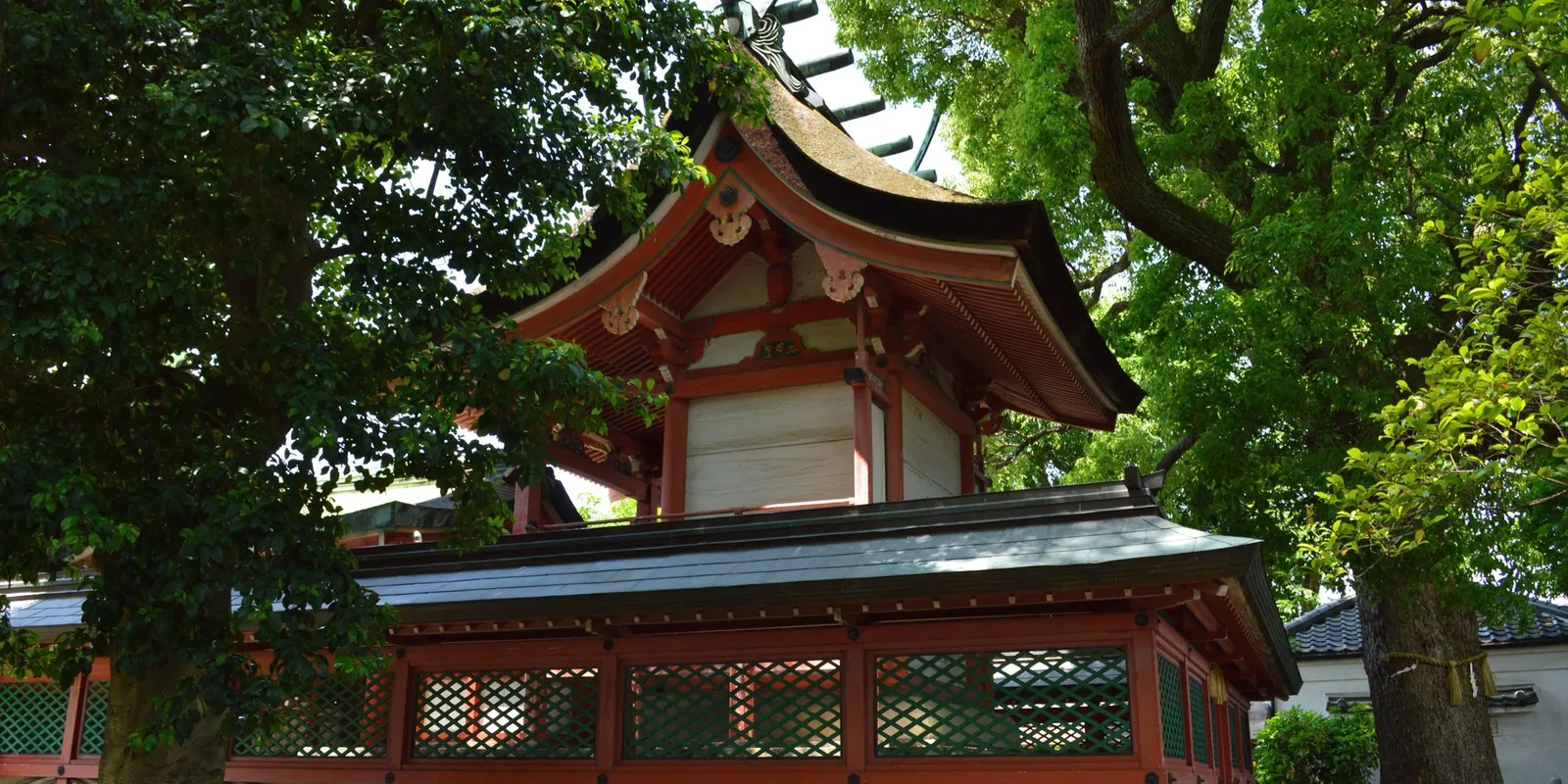
From the medieval period onward, Ikune Jinja came under the administration of Sumiyoshi Taisha together with its associated Buddhist temple, but it was restored to independent status as a village shrine (gosha) in 1872. Today it serves as the tutelary shrine (ubusuna-gami) for parishioners across parts of Sumiyoshi-ku and Suminoe-ku in Osaka. During the Toyotomi era in particular, the shrine was venerated by Yodo-dono, a consort of Toyotomi Hideyoshi, and the present main hall was built under her patronage around 1600–1601, with the retainer Katagiri Katsumoto serving as the construction magistrate. That main hall, preserving the Momoyama-period architectural style in complete form, is now designated an Important Cultural Property of Osaka Prefecture.
The shrine’s popular nickname, Oku no Tenjin (“the inner Tenjin”), is said to derive either from its location further back from Sumiyoshi Taisha, or from “Oki no Amatsu-kami,” an alternate name for Sukunahikona no Mikoto. Note that a separate, unrelated shrine also called Ikune Jinja (nicknamed Kami no Tenjin) exists in the Tamade area of Osaka’s Nishinari Ward; the Sumiyoshi shrine’s own official website explicitly advises visitors not to confuse the two, especially when arranging a prayer service.
Highlights
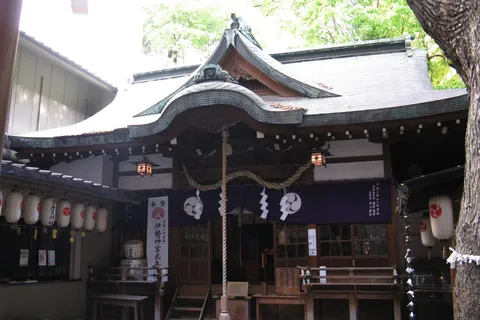
The main hall (honden), rebuilt around 1600 through the patronage of Yodo-dono, is the shrine’s foremost highlight. Built in the nagare-zukuri style with a gabled chidori-karahafu porch, a cypress-bark roof, and elaborate polychrome decoration, it preserves the Momoyama-period architectural style in complete form and is designated an Important Cultural Property of Osaka Prefecture. The worship hall (haiden), constructed of Kiso cypress and renovated in 1936, likewise carries strong Momoyama-era design influences.
Within the precincts stands the Tenmangu sub-shrine, home to a wooden seated statue of Sugawara no Michizane said to have been carved in 1479 and now designated a Tangible Cultural Property of Osaka City — a testament to the depth of devotion this shrine has drawn over the centuries. Several smaller shrines also stand on the grounds, including Ryuo-sha, Sae-no-kami-sha, Tanekashi Jinja, and an Inari shrine (Tenjo Inari Okami), and a building known as the Kobai-den is said to have been relocated from Shinra-ji, the Buddhist temple once attached to Sumiyoshi Taisha. Standing immediately north of Sumiyoshi Taisha’s own grounds, Ikune Jinja offers a quieter, more contemplative sense of an old and dignified shrine.
Visiting Tips
The grounds themselves can be visited freely, but the shrine office — for goshuin and amulets — is open 9:00 AM–5:00 PM. Goshuin are hand-written on request, and seasonal limited editions are sometimes offered, but there is no mail-order service, so a visit in person is required. On-site parking is available for worshippers, though anyone driving should be mindful that the surrounding roads can become congested during Sumiyoshi Taisha’s own busy New Year and festival periods, given how close the two shrines sit to each other. A restroom is located on the west side of the grounds. Many visitors combine a stop here with a visit to Sumiyoshi Taisha just to the south.
Annual Festivals
- Saitansai (January 1): The first festival of the new year.
- Setsubun Festival (February): A rite for warding off misfortune held around the traditional turn of the season.
- Awashima Festival (April 1): A festival honoring the Awashima deity.
- Tanabata Festival (July 7): The star festival, marked with its own rites.
- Summer Festival Eve and procession (July 18–19): The summer festival’s eve is followed the next day by a formal mikoshi procession (togyoshiki).
- Reisai (October 9): The shrine’s most important annual festival, held together with a mikoshi procession and a children’s festival.
- Shichi-Go-San visits (November): A season of visits to mark children’s growth milestones.
- Daikon-daki and New Year’s Eve Festival (December): A rite of simmered daikon radish, followed by the joyasai on December 31 to close out the year.
Nearby Food & Sightseeing
- Sumiyoshi Taisha: The head shrine of roughly 2,300 Sumiyoshi shrines nationwide, standing immediately south of Ikune Jinja. The two shrines share a historical connection, as Ikune Jinja was once administered together with Sumiyoshi Taisha’s associated temple, and many visitors combine a visit to both.
- Sumiyoshi Park: A historic park bordering the west side of Sumiyoshi Taisha, once part of a continuous pine-lined approach that stretched all the way to the coastline. A pleasant place for a stroll after visiting the shrines.
- Tezukayama: A quiet, upscale residential neighborhood a few stops away on the Hankai Uemachi Line, known for its patisseries, cafes, and boutiques — a popular addition to a visit to the shrines.
Frequently Asked Questions
- Q. What are the goshuin hours at Ikune Jinja?
- A. The shrine office is open 9:00 AM–5:00 PM, and goshuin are hand-written on request. Seasonal limited-edition goshuin, such as a Hinamatsuri design, are sometimes released. Goshuin cannot be requested by mail, so a visit in person is required.
- Q. Is there parking at Ikune Jinja?
- A. Yes, on-site parking is available for worshippers. Because the shrine sits immediately next to Sumiyoshi Taisha, nearby roads can get congested during the New Year holidays and Sumiyoshi Taisha's own festival periods.
- Q. How do I get to Ikune Jinja?
- A. The closest stop is Sumiyoshi on the Hankai Line or Hankai Uemachi Line, a 4-minute walk. It's also about a 6–7 minute walk from Sumiyoshi-taisha, Komahama, or Sumiyoshi-higashi Stations on the Nankai lines. The shrine stands just north of Sumiyoshi Taisha's own grounds.
- Q. Is this the same shrine as the Ikune Jinja in Nishinari Ward, Osaka?
- A. No, they are separate shrines. This Ikune Jinja in Sumiyoshi Ward (nicknamed Oku no Tenjin) and the Ikune Jinja in Nishinari Ward's Tamade area (nicknamed Kami no Tenjin) both enshrine Sukunahikona no Mikoto but operate independently. The Sumiyoshi shrine's own website specifically notes that the two should not be confused, particularly when booking a prayer service.
- Q. When is Ikune Jinja's main annual festival?
- A. The reisai (annual festival) is held every year on October 9, together with a mikoshi (portable shrine) procession and a children's festival. The summer festival on July 18–19, with its festival eve and procession, is another major event on the calendar.
Related Shrines
Osaka, Higashiosaka
Ishikiri Tsurugiya Jinja
Ishikiri Tsurugiya-jinja
- Good Health
- Protection from Misfortune
- Household Safety
Hyogo, Nishinomiya
Namaze Kotai Jinja
Namaze Kōtai Jinja
- Household Safety
- Protection from Misfortune
- Business Prosperity
Osaka, Osaka (Chuo-ku)
Sukunahikona Jinja
Sukunahikona Jinja
- Good Health
- Business Prosperity
- Protection from Epidemics