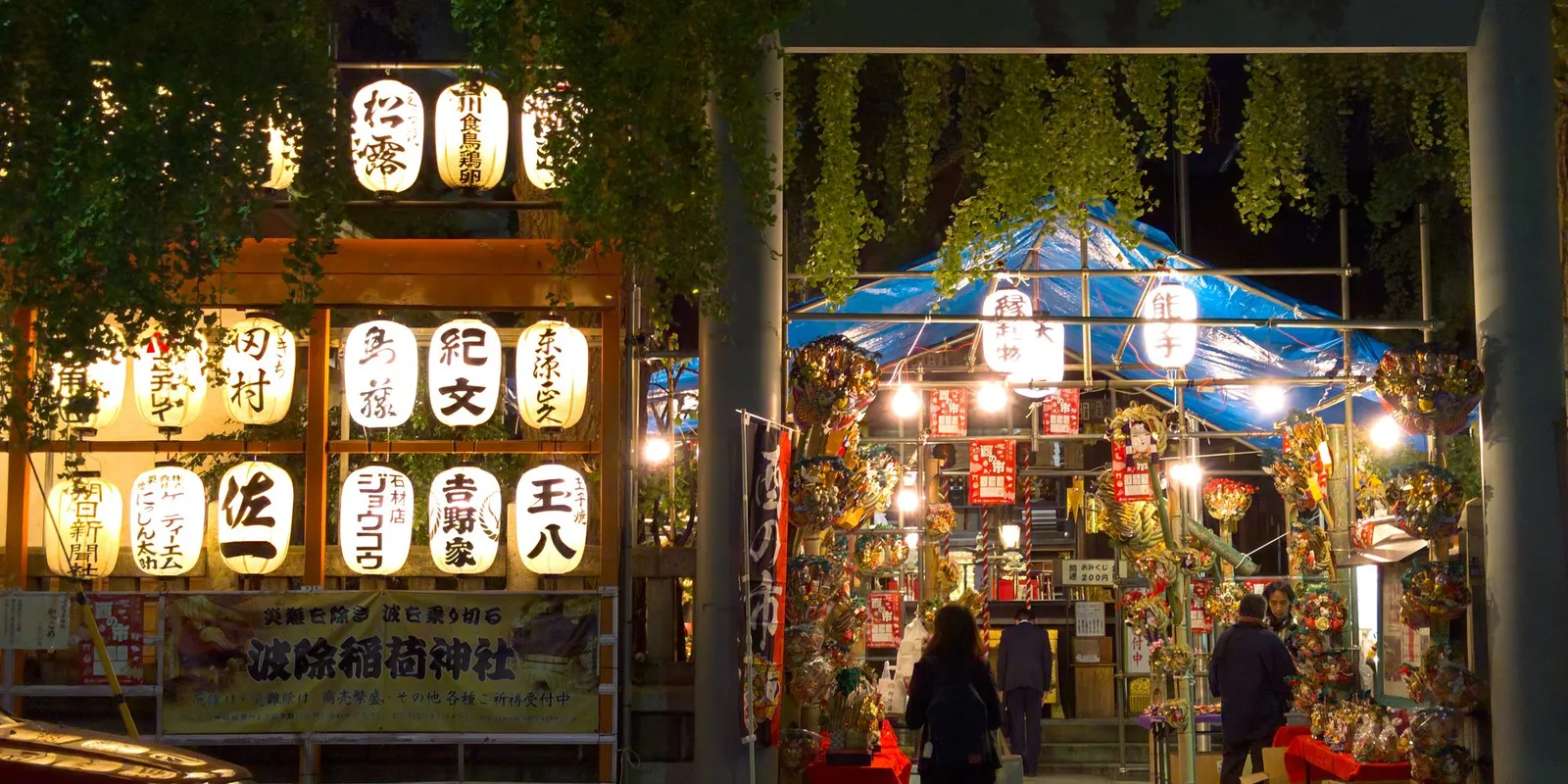
History
Namiyoke Inari Jinja was, according to tradition, founded in 1659, early in the Edo period. At the time, the city of Edo was expanding rapidly, and land reclamation work was underway throughout the Tsukiji area — but the project was repeatedly hampered by fierce winds and rough seas. One night, a mysterious object was seen drifting on the water, glowing softly; when the workers retrieved it and enshrined it as the manifestation of an Inari deity, holding a grand festival in its honor, the rough waves are said to have calmed at once, and the reclamation work proceeded smoothly from then on. In recognition of this miraculous protection, the shrine took its name, Namiyoke — “wave protection” or “warding off waves.”
After Tokyo’s central wholesale market relocated to Tsukiji following the 1923 Great Kanto Earthquake, Namiyoke Inari Jinja came to be deeply revered as the guardian shrine of the market and everyone connected to it. Its divine reputation for “warding off disaster and riding out the waves” resonated naturally with the market workers’ own hopes for business prosperity and safety on the water, and the shrine remains today a spiritual home for people whose livelihoods are tied to food.
Highlights
The single greatest highlight of Namiyoke Inari Jinja is the pair of enormous lion heads enshrined in the Shishiden hall on the grounds. The protective “Tenjo Odaijishi” and the black-toothed “Ohaguro Jishi” both stand over 2 meters tall, and every year around June the shrine’s main festival, the Tsukiji Lion Festival, features a ceremonial procession carrying the giant lion heads out of the shrine — drawing large crowds of spectators. The main hall also preserves a smaller wooden lion head carved in 1848 by Shimaya Tojiro III, which miraculously survived the 1923 earthquake and is still enshrined with great care today.
Equally distinctive are the many stone monuments dedicated to food scattered throughout the grounds. Sushi-zuka, ebi-zuka (shrimp), anko-zuka (anglerfish), katsugyo-zuka (live fish), tamago-zuka (eggs), and konbu-zuka (kelp) — each was donated by a trade association connected to the Tsukiji market, offering thanks for a particular ingredient central to its members’ livelihoods. Together they form a uniquely food-centered style of devotion found nowhere else quite like it, fitting for a shrine so closely tied to Tokyo’s most famous food market.
Visiting Tips
The grounds can be visited at any time, but the shrine office — for amulets and goshuin — is open 9:00–17:00. Because of its proximity to the Tsukiji Outer Market, many visitors combine a morning stroll through the market’s food stalls with a stop at the shrine. There is no parking for visitors on the grounds, so anyone arriving by car should use the nearby Tsukijigawa No.1 parking lot or a coin-operated lot instead. The shrine is especially busy during the June Lion Festival, so visiting at a different time of year is recommended for a quieter experience.
Annual Festivals
- Tsukiji Lion Festival / main annual festival (around June): The shrine’s biggest event of the year, featuring a ceremonial procession of the giant lion heads out of the shrine and drawing large crowds of spectators.
- Memorial rites for sushi-zuka, ebi-zuka, and other food monuments (held by individual trade associations): Ceremonies of thanks and remembrance held before each stone monument by the trade association that dedicated it.
- New Year visits (from January 1): Draws worshippers from across the Tsukiji and Nihonbashi areas praying for business prosperity in the year ahead.
Nearby Food & Sightseeing
- Tsukiji Outer Market: A bustling area right next to Namiyoke Inari Jinja, famous for street food like fresh seafood bowls and tamagoyaki (rolled omelet) sold by the piece.
- Hama-rikyu Gardens: A spacious Edo-period feudal lord’s garden within walking distance of Tsukiji, offering beautiful seasonal scenery.
- Tsukiji Hongwanji Temple: A striking temple built in an ancient Indian architectural style, within walking distance of the shrine, with a popular cafe serving breakfast.
Frequently Asked Questions
- Q. Why is it called Namiyoke ('wave protection') Jinja?
- A. In the Edo period, land reclamation work in Tsukiji was repeatedly disrupted by fierce wind and waves. According to tradition, a mysterious glowing object was found floating on the water one night; when it was enshrined as an Inari deity and a grand festival held, the rough waves calmed and construction proceeded without further trouble. The shrine takes its name, meaning "warding off waves," from this legend.
- Q. What is the shrine's connection to the Tsukiji fish market?
- A. After Tokyo's central wholesale market relocated to Tsukiji following the 1923 Great Kanto Earthquake, Namiyoke Inari Jinja came to be revered as the guardian shrine of the market and everyone who worked there. The grounds hold numerous stone monuments dedicated by food-industry trade associations — including memorials for sushi, shrimp, eggs, live fish, and kelp — each thanking the shrine for the ingredients of their trade.
- Q. What are the goshuin hours and fee at Namiyoke Inari Jinja?
- A. Goshuin are available 9:00–17:00, at ¥500 each. Beyond the standard year-round designs, limited goshuin are also released on specific days such as New Year visits and the Seven Lucky Gods pilgrimage.
- Q. Is there parking at Namiyoke Inari Jinja?
- A. No, there is no parking for visitors on the grounds. The large Tsukijigawa No.1 parking lot is nearby, and several coin-operated lots are also available in the area.
- Q. What are the giant lion heads at Namiyoke Inari Jinja?
- A. The Shishiden hall on the grounds houses two lion heads (shishigashira) over 2 meters tall: the protective "Tenjo Odaijishi" and the black-toothed "Ohaguro Jishi." A wooden lion head carved in 1848, which survived the Great Kanto Earthquake, is also enshrined in the main hall, and the annual Tsukiji Lion Festival held around June features a ceremonial procession of the giant lion heads.