History
Noborito Inari-sha is an Inari shrine in Noborito, Tama-ku, Kawasaki, Kanagawa, and is the local guardian shrine of Noborito, close to the Tama River. No official site could be found, so everything below comes from third-party sources: shrine-guide sites, personal blogs, and Kawasaki City materials.
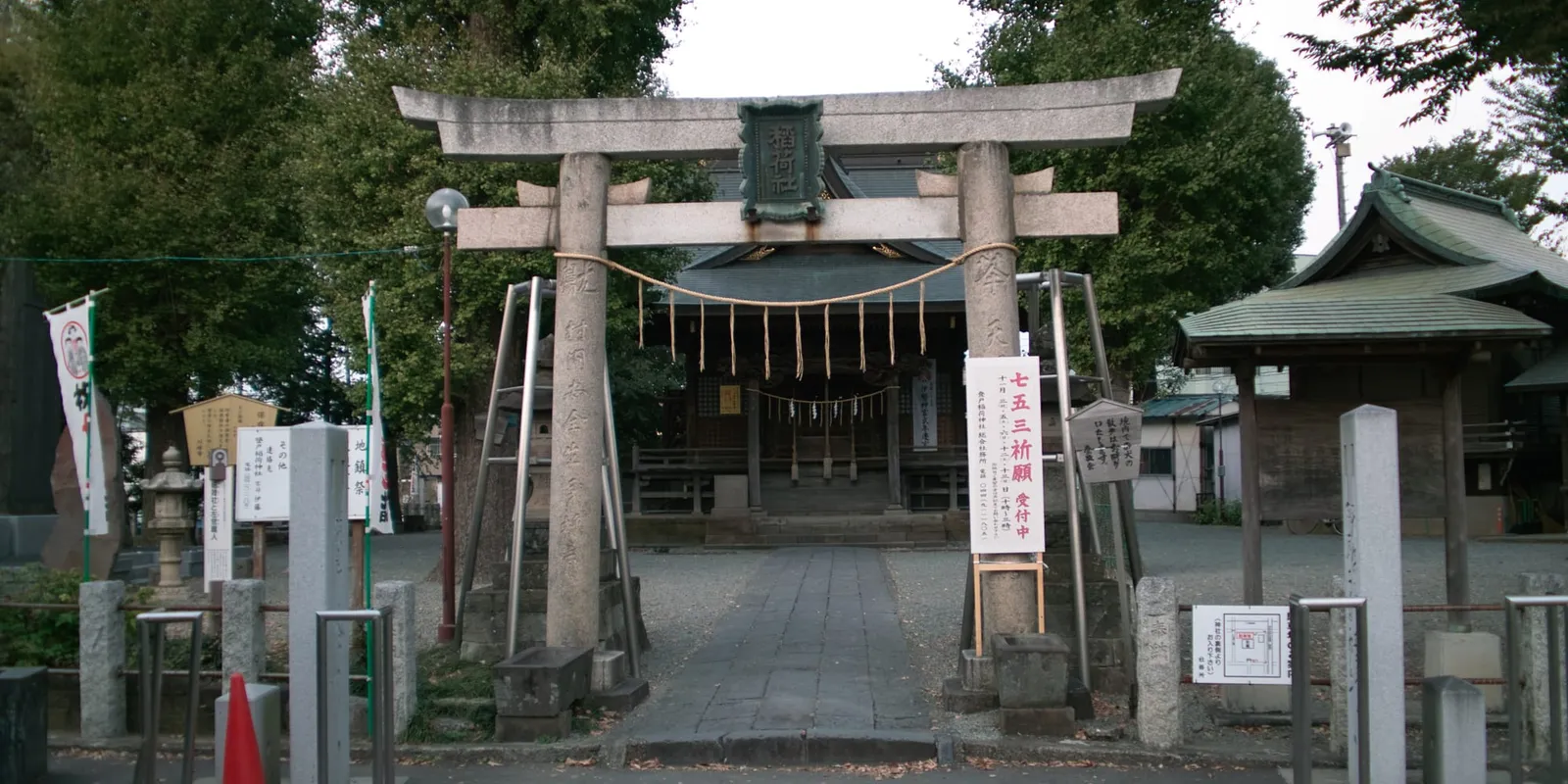
The founding date is unknown. According to a source summarizing the Kanagawa shrine records, Yoshizawa Hyogo, a retainer of the Takeda clan of Kai who served as a supply-train commissioner, returned to farming in Noborito, and the shrine in his residence is said to be the origin of the Inari shrine. The Shinpen Musashi Fudoki Ko is reported to describe it as the guardian shrine of the Higashi-kochi hamlet of Noborito village, a small shrine with a stone torii, looked after by a temple called Komyoin as its administrator.
Later, during the Tensho era, a Tama River flood is said to have washed the buildings away (some sources give 1580, but this conflicts with the era name given, so the year is uncertain), and the shrine was rebuilt on land taken over from the former Nakamura residence. A torii inscribed with the year 1794 and the shrine building are thought to have been destroyed by a storm around the 1840s, and the main hall was rebuilt in 1853. An English-language shrine-guide site says the originally thatched roof was replaced with tiles in 1953 because of the cost of upkeep.
The enshrined deities differ by source. A page based on the Kanagawa shrine records lists only Ukanomitama no Okami (the Inari deity). Another site lists Ukanomitama no Okami as the principal deity with Amaterasu Omikami, Oyamakui no Kami, Kanayamabiko no Kami and Kanayamabime no Kami enshrined together with it, and yet another also names Toyouke no Okami and Gozu Tenno. This page lists Ukanomitama no Okami, which the sources share, as the principal deity; please confirm the details with the shrine.
Highlights
The shrine buildings stand in a row beyond the torii. A personal blog notes carvings and plaster (shikkui) paintings on the main hall and points out that Noborito was home to many plasterers (sakan). No source found links the shrine’s decoration directly to plastering, however.
The blog also says there is a storehouse for the portable shrine (mikoshi) behind the main hall, and at festival time each Noborito neighborhood association sets up its own offering-sake station and brings out mikoshi and drums. The grounds also hold stone guardian dogs, lanterns and monuments, making this a calm local shrine in the middle of town.
Kawasaki City materials introduce a walking course of about 3 km from Noborito Station that passes Zenryuji Temple, Noborito Inari-sha, Komyoin, the Maruyama-kyo headquarters and Chonenji Temple, with the shrine as one stop on a route through the history of Noborito-juku (the old post town).
Visiting Tips
No visiting or shrine-office hours appear in the sources found, and there is no official site, so a visit during daylight hours is the safe choice.
One personal blog says goshuin are normally not offered and are handed out only at New Year at the shrine office. This is not an announcement by the shrine, so please check on-site notices about availability and the fee. A site that introduces a smartphone-based “electronic goshuin” states clearly that it is not an official goshuin of the shrine.
It is about 6–8 minutes on foot from Mukogaoka-Yuen Station on the Odakyu Line, or about 8–10 minutes from Noborito Station on the Odakyu and JR Nambu lines. From Noborito Station, one guide suggests heading west along the Nambu Line tracks and going through the underpass. By bus, the “Hashishita” and “Tama-ku Yakusho-mae” stops are said to be close. A blog mentions a worshippers’ parking area behind the main hall, but the shrine’s own guidance could not be confirmed, and because nearby roads are closed to traffic on festival days, public transport is recommended.
Annual Festivals
- Autumn Grand Festival (around the first weekend of September): The shrine’s largest festival. In 2026 it was listed for Saturday, September 5 and Sunday, September 6. Nearby roads are closed to traffic, and each Noborito neighborhood association sets up an offering-sake station and accepts donations. An event-listing site says the drum procession by the Daiwa-cho (台和町) neighborhood association is well known. A local stone shop’s blog says that in 2025 the eve festival was on September 6 and the main festival on September 7.
- End of the summer festival: According to the same blog, the twice-yearly festivals, summer and autumn, became autumn-only from 2025.
Some sites list other annual events (Setsubun, the prayer for the harvest, the harvest thanksgiving, and so on), but their dates conflict with what could be confirmed, so they are not listed here. Festival dates change from year to year, so check the latest information before you go.
Nearby Food & Sightseeing
- Chonenji Temple: A temple in the same Noborito area. The Kanagawa Prefecture list of designated cultural properties shows the “Torigawase-zu Byobu” (bird-contest folding screen, ink and colors on gold-leaf paper) as a prefectural Important Cultural Property (painting, designated 1984) owned by Chonenji. It is also a stop on the Kawasaki City walking course.
- Komyoin: The temple described in the Shinpen Musashi Fudoki Ko as having once administered Noborito Inari-sha. It is also a stop on the Kawasaki City walking course.
- Monument to the Noborito Ferry Crossing: According to Kawasaki City’s Tama-ku materials, ferries linked Kawasaki and Tokyo until the Tama Suido Bridge was completed in 1953, and Noborito had one of the crossings. A good stop on a stroll along the Tama River.
Frequently Asked Questions
- Q. How do you read Noborito Inari-sha, and where is it?
- A. It is read "Noborito Inari-sha" (according to the reading given on a shrine-guide site). It stands at 2297 Noborito, Tama-ku, Kawasaki, Kanagawa, within walking distance of Mukogaoka-Yuen and Noborito stations, and serves as the local guardian shrine of Noborito. Some sources write the name as "Noborito Inari Jinja."
- Q. What are the visiting hours, and can I get a goshuin?
- A. No official site could be found, and none of the sources checked gives visiting hours. One personal blog says goshuin are normally not offered and are handed out only at New Year at the shrine office, but this is not the shrine's own announcement, so please check on site before you go.
- Q. How do I get there, and is there parking?
- A. It is about 6–8 minutes on foot from Mukogaoka-Yuen Station on the Odakyu Line, or about 8–10 minutes from Noborito Station on the Odakyu and JR Nambu lines (times differ between sources). A personal blog mentions a worshippers' parking area behind the main hall, but the shrine's own guidance could not be confirmed. Nearby roads are closed to traffic on festival days, so the train is the safer choice.
- Q. What is the history of the shrine?
- A. The founding date is unknown. According to a source summarizing the Kanagawa shrine records, a Takeda clan retainer named Yoshizawa Hyogo returned to farming in Noborito, and a shrine in his residence is said to be the origin. The Shinpen Musashi Fudoki Ko is reported to describe it as the guardian shrine of the Higashi-kochi hamlet of Noborito village, a small shrine with a stone torii. It is also said to have been damaged by a Tama River flood.
- Q. When is the annual festival?
- A. The autumn grand festival is held around the first weekend of September. In 2026 it was listed for Saturday, September 5 and Sunday, September 6, with nearby roads closed to traffic and each Noborito neighborhood association setting up its own offering-sake station. According to a local stone shop's blog, the twice-yearly summer and autumn festivals became autumn-only from 2025. Dates change from year to year, so please check beforehand.
Plan Your Visit
Before you go, you can book a stay and get your shrine-visit items ready.
Amazon links open Amazon.co.jp (Japan) in English; whether an item ships overseas depends on the product.
※ Contains ads (PR). Links open external sites such as Amazon, Rakuten, Trip.com and Booking.com.