History
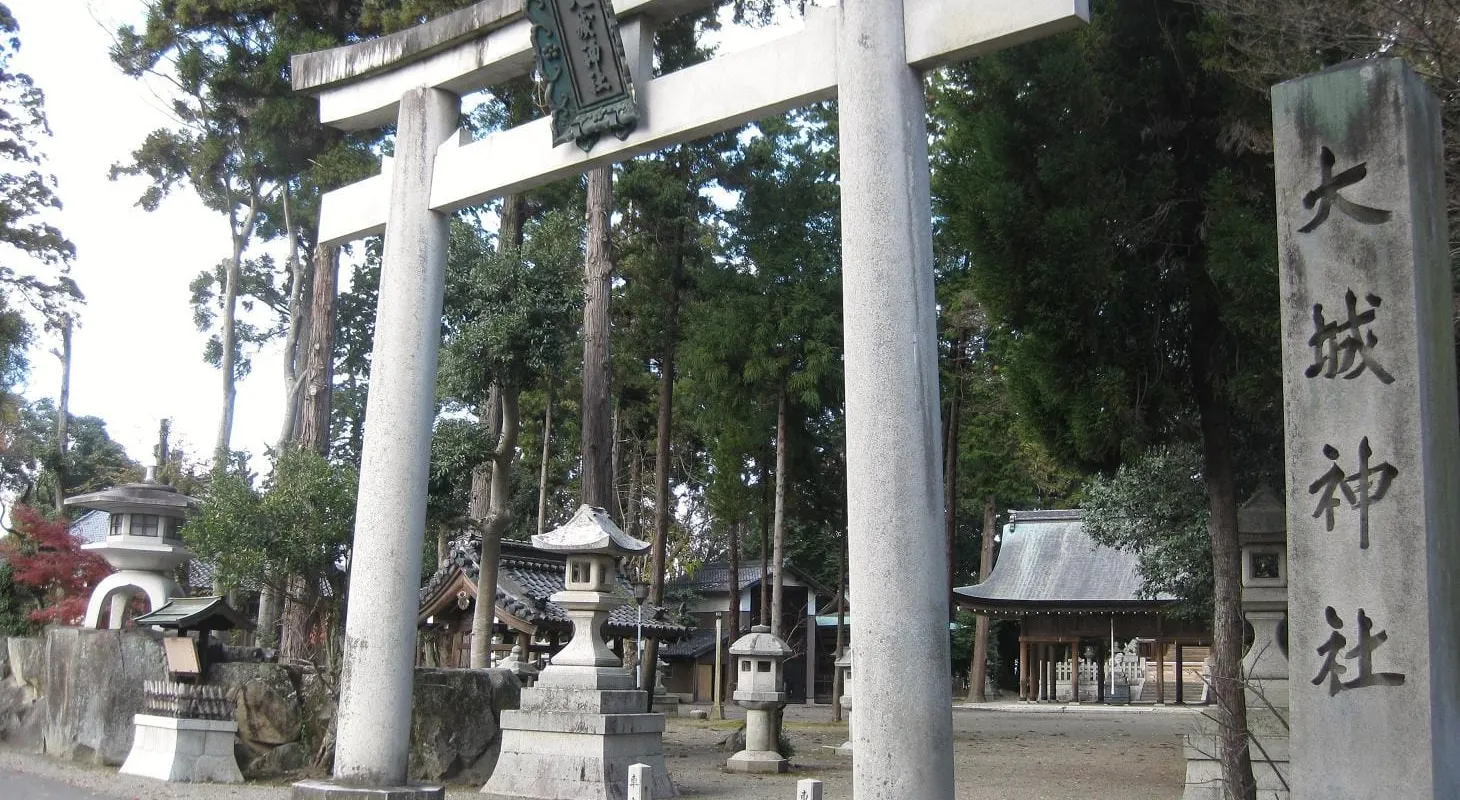
Ogi Jinja stands in Gokasho Kondo-cho, Higashiomi, Shiga. The Shiga Shrine Agency lists its name as “Ogi.” The main deities are Takamimusubi no Kami and Sugawara no Michizane, with Izanagi no Kami, Ame no Koyane no Mikoto and Takeuchi no Sukune no Okami as secondary deities, and the shrine crest is the plum blossom. Some tourist sites give the reading “Oshiro,” so sources differ.
According to the Agency’s history, in the reign of Empress Suiko, Prince Umayado (Shotoku Taishi) built the temple Kondo-ji here and set up a shrine altar at a place called Oshiro to protect it, which is said to be the origin of the shrine. The same history says that in 1170 (Kao 2) the buildings were rebuilt at the present site and Tenman Tenjin, Daibonten-o and Hachiman were enshrined together, and the shrine was revered as the local guardian deity. The Agency gives no founding year, though some guide sites say 621 (Suiko 29).
The Agency’s history also says that, lying to the northeast (ushitora) of Kannonji Castle, the seat of the Sasaki clan, the shrine was especially revered as a protector of the castle, and that Sasaki Takayori offered ritual rice and donated a war drum. It is said that the shrine buildings and records were lost to fire during the Kannonji disturbance of 1563. In the Edo period the area came under the Yamato-Koriyama domain, and after a magistrate’s office was set up in 1693, a representative of the lord visited on January 15 each year. The shrine was once called Omiya Tenjin or Tenmangu; the name was changed to the present one in 1870, and it was ranked as a gosha (village shrine) in 1881. All of this is the shrine’s account as published by the Agency.
Highlights
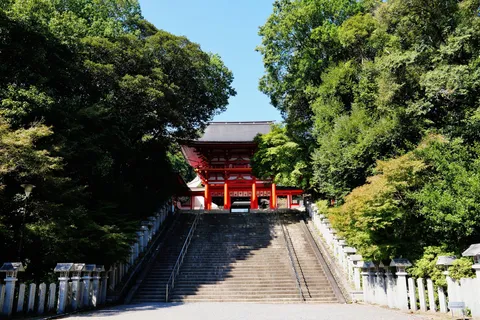
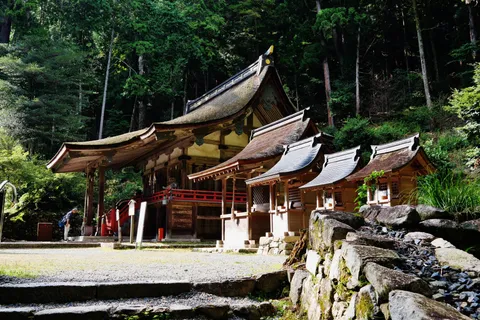
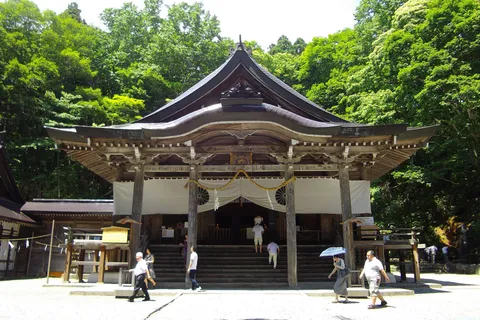
According to the Agency, the main hall is a three-bay nagare-zukuri building and the worship hall is an irimoya-zukuri building. Subsidiary shrines include 黄沙神社 and 日若宮神社 (readings not confirmed), with an Inari Shrine outside the precincts. The stretch of about two cho from the front torii to the resting place for the portable shrine was called the “Sakura Baba” (cherry-tree lane), and the history says small embankments planted with cherry trees once lined both sides (felled when a festival float was built in 1860).
The Higashiomi Tourist Association’s page says the large torii and the fine worship hall suggest the wealth of the Omi merchants who lived here, and that the shrine appeared in episodes 2 and 3 of the NHK morning drama “Boogie Woogie” (same page). Visitor photos and records show a reclining ox statue and a statue and poem monument of Sugawara no Michizane in the grounds.
The shrine stands in the Higashiomi Gokasho Kondo Preservation District for Groups of Traditional Buildings, where merchant houses with earthen storehouses line the streets (per an accessibility guide site). The same site says the front torii can be entered without steps and the grounds are thinly graveled and mostly flat, though the main hall sits at the top of a flight of stairs.
Visiting Tips
No official visiting hours could be confirmed, and no admission fee is reported. The Agency’s page notes that rituals take place at the shrine but that portable shrines, floats and stalls may appear on different days, so it advises checking with the shrine before you go.
Goshuin are given out, and a visitor post describes a notice reading “Goshuin are given at the chief priest’s house.” The fee and hours could not be confirmed. Because you receive it at the priest’s house, contacting the shrine beforehand is the safer choice.
For access, guide sites give about a 19-minute walk from Gokasho Station on the Ohmi Railway, and by bus you walk from the nearest stop in the Kondo district. By car, open space around the shrine and free parking in the district are reported. Roads other than “Baba-dori” are said to be narrow, so drive carefully.
Annual Festivals
- Annual festival (April 20, “Goka Festival”): In the Agency’s history, the annual festival is on April 20, with portable shrines carried to the shrine from seven villages. The festival-date column reads “the Sunday before the 20th of April,” and one listing gives Sunday, April 19 for 2026.
- The Agency notes that mikoshi, floats and stalls may appear on a different day from the rituals. Dates and details can vary from year to year, so check with the shrine.
Nearby Food & Sightseeing
- Higashiomi Omi Merchant Museum: On the third floor of the “Tenbin no Sato Bunka Gakushu Center,” where you can learn about the Omi merchants (per a travel guide site). The Nakaji Yuto Memorial Museum is on the second floor of the same building.
- Gokasho Omi Merchant Houses (Tonomura Shigeru House): Three houses, those of Tonomura Shigeru, Nakae Jungoro and Fujii Hikoshiro, are presented as merchant residences open to visitors (per a travel guide site). Opening days and fees can change, so check beforehand.
- Gokasho Kondo Townscape: A preservation district where merchant houses with white walls and earthen storehouses remain, pleasant to stroll around the shrine.
Frequently Asked Questions
- Q. What are the visiting hours?
- A. We could not find visiting hours for the grounds on the Shiga Shrine Agency's page or from any other official source. No admission fee is reported. Rituals take place at the shrine, but dates and times can change, so it is safest to check with the shrine before you go.
- Q. Can I get a goshuin at Ogi Jinja?
- A. According to visitor posts, goshuin are given out. One post describes a notice at the shrine reading "Goshuin are given at the chief priest's house." The fee and hours could not be confirmed, so expect to receive it at the priest's house, and check with the shrine in advance in case the priest is out.
- Q. How do I get there, and is there parking?
- A. Guide sites give about a 19-minute walk (about 1.5 km) from Gokasho Station on the Ohmi Railway. Another guide describes taking an Ohmi Railway bus from JR Notogawa Station for about 10 minutes, getting off at "Kondo" or "Plaza Sampo-yoshi" and walking about 10 minutes. By car, guide sites say you can use open space around the shrine or free parking in the Kondo district, but no official information was found.
- Q. Has the shrine appeared in TV dramas?
- A. According to the Higashiomi Tourist Association's page, Ogi Jinja appeared in episodes 2 and 3 of the NHK morning drama "Boogie Woogie" (ブギウギ). The Shiga Location Office's page says scenes of the characters visiting the festival at Fukushima Tenmangu and a New Year's visit, in episodes 2 and 3, were filmed at the shrine. A staff blog of the Biwako Visitors Bureau also says it appeared in the morning drama "Come Come Everybody" (カムカムエヴリバディ).
- Q. When is the annual festival?
- A. In the history on the Shiga Shrine Agency's page, the annual festival is on April 20 and is called the "Goka Festival" (Goka Sairei), when portable shrines were carried to the shrine from seven villages. The festival-date column reads "the Sunday before the 20th of April," and one listing gives Sunday, April 19 for 2026. The Agency notes that mikoshi, floats and stalls may appear on a different day from the rituals, so check with the shrine.
Plan Your Visit
Before you go, you can book a stay and get your shrine-visit items ready.
Amazon links open Amazon.co.jp (Japan) in English; whether an item ships overseas depends on the product.
※ Contains ads (PR). Links open external sites such as Amazon, Rakuten, Trip.com and Booking.com.