History
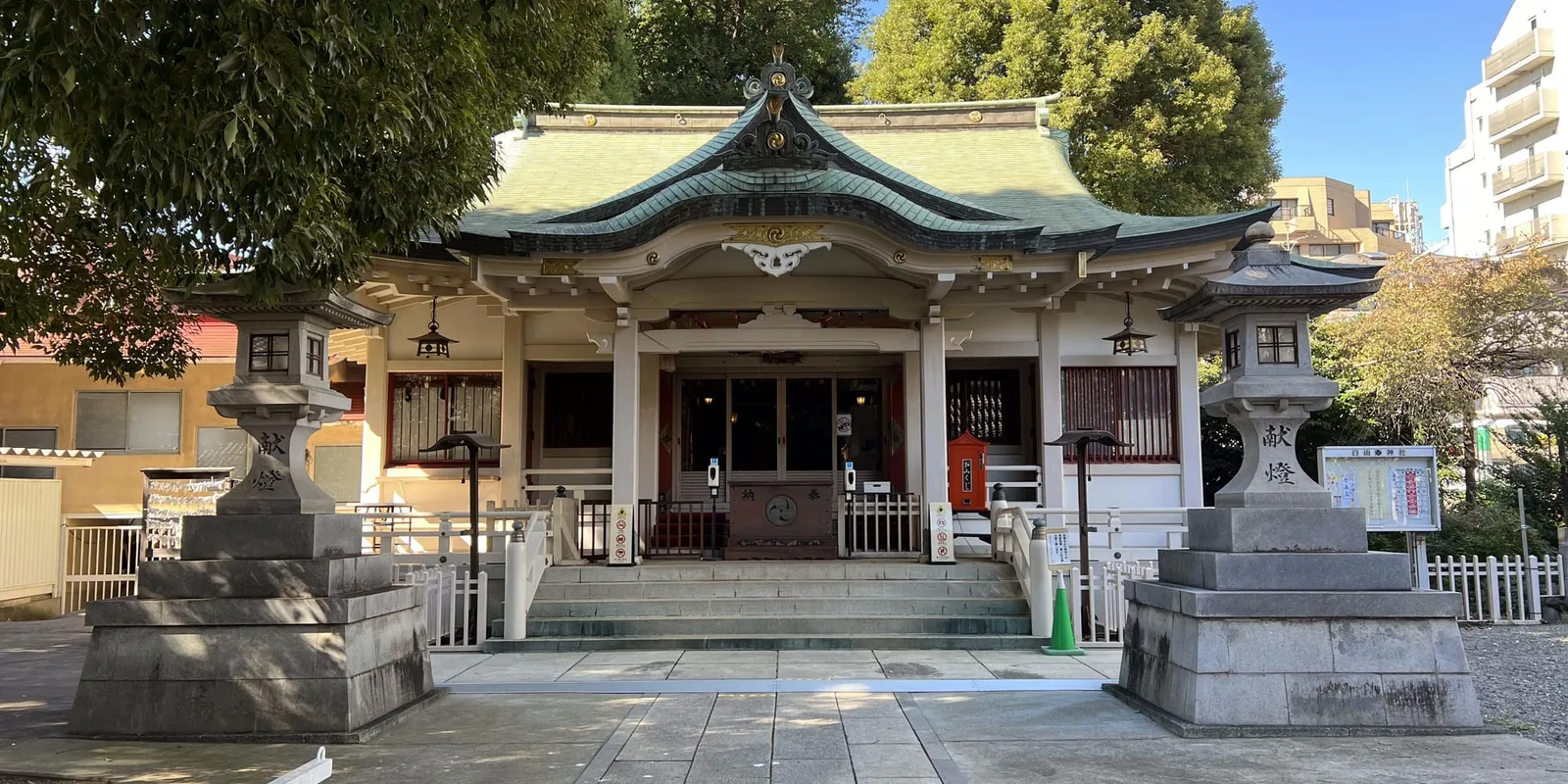
Ogikubo Hakusan Shrine stands in Kamiogi 1-chome, Suginami Ward, and has long been revered as the guardian shrine of the former Shimo-Ogikubo village (the area around present-day Ogikubo). Its deity is Izanami no Mikoto, whom the official site describes as a mother goddess widely worshiped for good relationships, safe childbirth, child-rearing, household safety, and family prosperity.
According to shrine tradition, around 1470 in the Bunmei era, Nakada Kaga-no-kami, a retainer of the Kanto Kanrei Uesugi Akisada, invited a branch deity from Shirayama Hime Shrine, which enshrines Mount Haku in his native Kaga, and enshrined it as the Gosha Gongen within his residence. As the Nakada family prospered, the villagers of Shimo-Ogikubo who came to pray at his residence asked for the shrine to be moved, and it is said to have been relocated to serve as the village’s guardian shrine. The official site notes that the temple which managed the shrine in the Edo period suffered a fire and the shrine’s records were lost, so little is certain beyond what was handed down orally.
The shrine was also featured on TV Tokyo’s program “Shutsubotsu! Ad-machic Tengoku” (Adomachi), in its broadcast of Saturday, February 17, 2024 (Ogikubo episode), where the program’s official page lists Ogikubo Hakusan Shrine at No. 5. The page describes it as the guardian shrine of the former Shimo-Ogikubo village, founded in the Muromachi period, known as the “god of teeth,” and says it has tooth amulets.
Highlights
The shrine’s best-known aspect is its role as a god of teeth. According to the “origin of Hakusan Shrine as a god who wards off toothache” on the official site, Hyogo, the younger brother of Nakada Kaga-no-kami, once suffered severe toothache. That night the deity of Hakusan told him to make chopsticks from the hagi (bush clover) growing in front of the shrine and eat with them, promising the pain would soon heal. He did, and the pain vanished as if it had never been. Word spread, and people suffering from toothache came to pray from far away; those who recovered made it a custom to offer hagi chopsticks in thanks. When the old shrine buildings were taken down in 1967, many hagi chopsticks reportedly came out of the beams. Because hardly any hagi remains today, the shrine no longer hands out hagi chopsticks; as an offering for first shrine visits it gives out chopsticks for the baby’s first-meal ceremony instead.
The present buildings date from a 1967 rebuilding, prompted by aging and the widening of Kanpachi (Route 8), when the shrine office was rebuilt too. Roof tiles of the twelve zodiac animals, donated by a tile-maker who was then a parish representative, were set to guard the four sides of the office, but the official site says they were all broken in the 2011 Great East Japan Earthquake along with the office’s other tiles. The stone cat statue, close to the ground, was unharmed, and more cat statues have been added one by one since; today they can be spotted around the grounds. The story goes that a priest felt sorry for the cat that missed out on a place in the zodiac and placed a calmly sleeping stone cat in the grounds.
Behind the kagura stage stand three auxiliary shrines: Shoichii Inari Shrine, moved from Nakada Kaga-no-kami’s residence; Tamori Inari Shrine, once a prayer shrine of the village; and Mitsumine Shrine, invited in the Showa era at the request of local people. They were relocated and rebuilt as new shrines in 2004. A Suginami Ward cultural property signboard also records that the large taiko drum made during the 1967 rebuilding, 149 cm in diameter, was at that time the second largest in Tokyo after the one at Okunitama Shrine in Fuchu.
Visiting Tips
Hours: The grounds open at 6:00 AM and close at 5:00 PM (subject to change with shrine events, season, and weather). The shrine office (amulets and goshuin) is open 10:00 AM–4:00 PM, with a lunch break from 12:00 to 1:00 PM, though it may also take other breaks irregularly.
Tooth amulets: The official list of amulets includes, under the heading for dental health prayers, a tooth amulet (歯守り, ¥1,000) and a toothache-ward amulet (歯痛除け守り, ¥700) as of October 2026. Many other amulets are offered too, including ones for recovery from illness, protection from misfortune, traffic safety, safe childbirth, and good relationships.
Goshuin: According to the official site, a handwritten goshuin is ¥500, and a pre-written sheet whose design changes slightly every month is ¥300 each. Handwritten entries can be made only in a goshuin book bought at the shrine (purple, ¥1,000); the shrine says it is currently not writing in books that visitors bring. Hours may be limited on festival days, so please check the official site for the latest information.
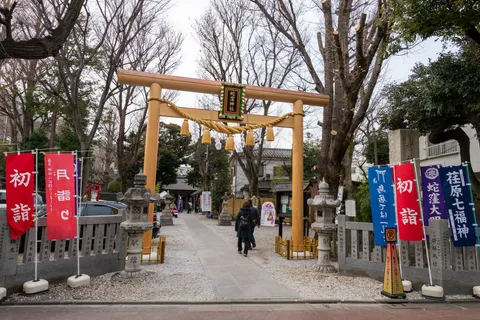
Access and parking: It is about a 5-minute walk from the west exit gate of Ogikubo Station (JR Chuo and Sobu Lines; Tokyo Metro Marunouchi Line), or about 10 minutes if you use the tax-office underpass along Kanpachi (Route 8). By car, follow the side road from the Hakusan Jinja Kita intersection on Kanpachi; when the vehicle entrance beside the approach is open, you can park briefly on the grounds (only 2–3 cars). If you are attending a prayer ceremony, ask when you book. The shrine office’s phone number is 03-3398-0517 (10:00 AM–4:00 PM).
Annual Festivals
- Autumn Grand Festival (September 7–8): The official site gives the festival dates as September 7 and 8. It honors the princess deity of Hakusan with thanks for the year, and prayers for the town’s prosperity and Japan’s flourishing, with food stalls filling the grounds. Details can change from year to year (for example, the shrine announced that the main mikoshi procession would not be held in 2025), so please check the official site for the latest information.
- Dental Health Prayer Festival (November 8): A ritual unique to this shrine, which is venerated as a god of teeth, held on November 8, “Good Teeth Day” in Japan. It was once held as the Shida Kenko Kigansai by the priests alone, but since 2025 those who wish to may attend. According to the official announcement, in 2026 it will begin at 2:00 PM on November 8, with no reservation needed. The offering (participation fee) is from ¥5,000 per person (from ¥3,000 for elementary school children and younger), and a “tooth wish letter” for writing down dental worries and wishes is also available for those who cannot attend.
- Other events: The official site lists New Year’s events and first visits, the Setsubun festival, the Toshigoi festival, the summer Great Purification, Shichi-Go-San, the Niiname festival, and the year-end Great Purification, among others. Please check the official site for dates.
Nearby Food & Sightseeing
- Ogikubo Station: The nearest station, served by the JR Chuo and Sobu Lines and the Tokyo Metro Marunouchi Line; the shrine is about 5 minutes on foot from the west exit gate.
- Ogikubo Town Seven: Listed at No. 1 in the “Ad-machic Tengoku” Ogikubo broadcast of February 17, 2024 mentioned above (per the program’s official page). A good stop for shopping after your visit.
- Suginami Public Hall (Suginami Kokaido): Listed at No. 3 in the same broadcast (per the program’s official page).
Frequently Asked Questions
- Q. Has the shrine been featured on TV?
- A. Yes. TV Tokyo's program "Shutsubotsu! Ad-machic Tengoku" (Adomachi) featured Ogikubo in its broadcast of Saturday, February 17, 2024, and the program's official page lists Ogikubo Hakusan Shrine at No. 5. The page describes it as the guardian shrine of the former Shimo-Ogikubo village, founded in the Muromachi period, known as a shrine of the "god of teeth," and says it has tooth amulets.
- Q. Why is it called the "god of teeth"?
- A. According to the shrine's official site, Hyogo, the younger brother of the traditional founder Nakada Kaga-no-kami, once suffered terrible toothache. That night the deity of Hakusan gave him an oracle to make chopsticks from the bush clover (hagi) growing in front of the shrine and eat with them, and the pain vanished. The story spread, people with toothaches came to pray, and it became the custom for those who recovered to offer hagi chopsticks in thanks. When the old shrine buildings were taken down in 1967, many hagi chopsticks are said to have been found in the beams.
- Q. Does the shrine offer tooth amulets?
- A. Yes. The official list of amulets, under the heading for dental health prayers, includes a tooth amulet (歯守り, ¥1,000) and a toothache-ward amulet (歯痛除け守り, ¥700) as of October 2026. The official site says that because there is hardly any hagi left, it no longer hands out hagi chopsticks, though at certain times a hagi twig symbolizing chopsticks may be placed inside the toothache amulet. The shrine office is open 10:00 AM–4:00 PM.
- Q. Can I get a goshuin?
- A. Yes, during office hours (10:00 AM–4:00 PM). According to the official site, a handwritten goshuin is ¥500, and a pre-written sheet with a design that changes monthly is ¥300 each. Handwritten entries can be made only in a goshuin book bought at the shrine (purple, ¥1,000); the shrine says it is currently not writing in books that visitors bring. The office closes for lunch from 12:00 to 1:00 PM and may take other breaks.
- Q. How do I get there, and is there parking?
- A. The shrine is at 1-21-7 Kamiogi, Suginami, about a 5-minute walk from the west exit gate of Ogikubo Station (JR Chuo and Sobu Lines; Tokyo Metro Marunouchi Line), according to the official site. The grounds open at 6:00 AM and close at 5:00 PM. By car, follow the side road from the Hakusan Jinja Kita intersection on Kanpachi (Route 8); when the vehicle entrance beside the approach is open, you can park briefly on the grounds (only 2–3 cars).
Plan Your Visit
Before you go, you can book a stay and get your shrine-visit items ready.
Amazon links open Amazon.co.jp (Japan) in English; whether an item ships overseas depends on the product.
※ Contains ads (PR). Links open external sites such as Amazon, Rakuten, Trip.com and Booking.com.