History
Sanya Hachiman Jinja stands in Koyama 5-chome, Shinagawa, Tokyo, near Musashi-Koyama Station on the Tokyu Meguro Line. The official site reads the name “Sanya Hachiman Jinja” and presents it as a “Hachiman-sama” loved by the local community. (A page from the Shinagawa tourism association gives the reading “Mitani,” so sources differ.)
The main deity is Homuda-wake no Mikoto, also known as Emperor Ojin, the deity of Hachiman faith. According to the official site, he was revered as a god of war until before World War II, and since the war has been honored as a “god of peace” (the dove being his messenger) and as a deity who guides everyday wishes such as education and good matches. The auxiliary Shusse Inari shrine enshrines Ugano-mitama no Kami, and the grounds also hold a Jizo statue, a horse-headed Kannon and a Koshin mound.
The official history says the shrine was founded as a branch of the nearby Koyama Hachiman Shrine (founded in 1030 and the guardian shrine of the whole Koyama village area). In the Enpo–Genroku era (1673–1704) of the Edo period, Ishii Sukedayu, the headman of the Mitani district, is said to have brought the Hachiman statue from Koyama Hachiman into his residence; it was later moved into the grounds of the Shusse Inari shrine already on this site and came to be called “Mitani Hachiman,” the guardian shrine of Koyama village’s Mitani district. The Shinagawa tourism association likewise describes it as the guardian shrine of the former Mitani hamlet of Koyama village, branched from Koyama Hachiman in the Genroku era.
The official site also touches on the history of the parish area. In the Edo period the Musashi-Koyama area was covered with fields, bamboo thickets and woods, and is said to have produced most of the bamboo shoots sold in Edo and Tokyo. The present street layout was completed in 1929 (Showa 4) by the Mitani Land Readjustment Association, but the area was badly damaged in the wartime Tokyo air raids and the shrine buildings burned down. The hall was rebuilt in 1957 (Showa 32).
Highlights
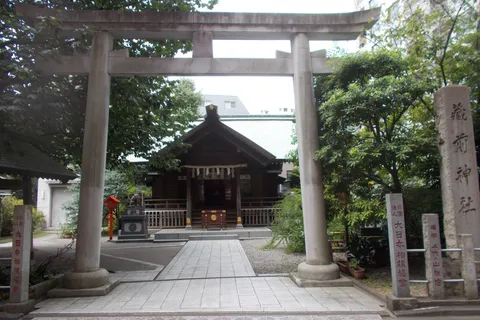
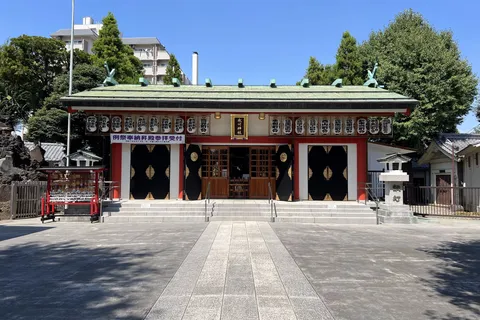
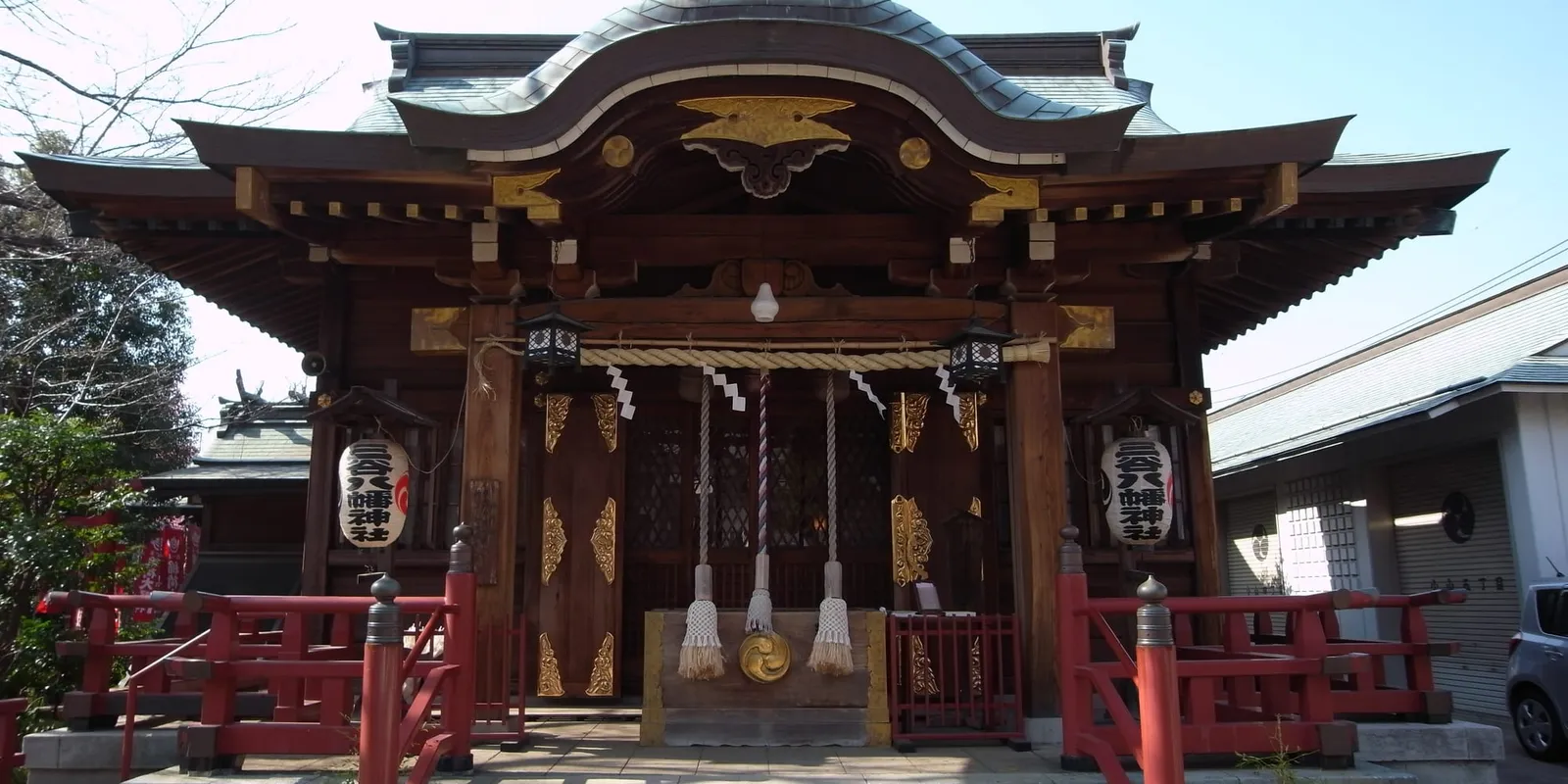
The grounds hold the worship hall and the auxiliary Shusse Inari shrine. The Shinagawa tourism association calls it a shrine “beautiful with spring cherry blossoms,” and notes that to the left of the shrine stand Kanayama Jizo Hall, three Koshin memorial towers and a horse-headed Kannon memorial. A news item on the official site (January 2024) also mentions white and red plum blossoms at their best in the grounds around the new year, so the grounds change with the seasons.
According to the official site, Musashi-Koyama has the Musashi-Koyama shopping street (Palm), with an 800 m arcade said to be the longest in Tokyo, and the shrine is also revered as a deity of business prosperity.
Among its amulets, the official news section has an article introducing the “Kofuku Shichifukujin Mamori” (Seven Lucky Gods amulet), which went on sale at the end of 2023. A list of amulets and their fees was not found on the official pages we could check.
Visiting Tips
The official pages we could check do not list visiting hours, shrine-office hours or goshuin hours. One guide site (Tabiiro) gives 9:30 AM–4:00 PM, open daily, with the goshuin at ¥300 (pre-written copies) and the limited goshuin for the September Koyama Ryosha Festival at ¥1,000 in limited quantities (2024 and 2025). This is not official information, so it is safest to check with the shrine (+81-3-3782-2615) before you go.
According to the official site, prayer services include those at the hall such as first shrine visits for babies, Shichi-Go-San and purification for unlucky years, as well as off-site ceremonies such as groundbreaking rites, and the shrine accepts requests from individuals, families, companies and shops. Advance booking by phone (+81-3-3782-2615) or in person is required. The news section also carries notices about Shinto weddings and randoseru (school backpack) blessings.
The official site gives about 5 minutes on foot from the east exit of Musashi-Koyama Station and about 7 minutes from Nishi-Koyama Station (the tourism association gives 6 minutes from each). Parking is not mentioned on the official site, so public transport is recommended.
Annual Festivals
Events confirmed in the official news section (2024–2025) are listed below. Dates vary from year to year, so check the official site for the latest.
- Setsubun, Hatsuuma and Kinensai (February): The official 2024 reports cover the Setsubun and Hatsuuma festivals and the Kinensai (annual prayer festival) on February 17.
- Inari Shrine annual festival (March): Held on Sunday, March 2 in 2025.
- Nagoshi no Oharae (June 28): A purification rite closing the first half of the year, announced for 5:00 PM on June 28 in both 2024 and 2025.
- Annual festival and Koyama Ryosha Festival (early September): In 2025, September 6 (Sat) was the eve festival and September 7 (Sun) was the annual festival and Koyama Ryosha Festival. It is held jointly with Koyama Hachiman Shrine, and according to the Shinagawa tourism association it falls on the weekend nearest September 6–7, with seven parish mikoshi gathering in front of Musashi-Koyama Station on the Sunday evening. This mikoshi procession has been selected as one of the “Shinagawa Hyakkei.”
- Shichi-Go-San visits (autumn to winter): The official news section has a notice about Shichi-Go-San visits with prayer services inside the hall.
- Niiname-sai, New Year’s and Kadomatsu Donto-yaki: The official news section carries notices or reports for each (see each article for dates).
Nearby Food & Sightseeing
- Musashi-Koyama Shopping Street Palm: An arcade shopping street of 800 m that the official site calls the longest in Tokyo. A good area for a meal or shopping before or after your visit, and on the Sunday evening of the Koyama Ryosha Festival the parish mikoshi gather in front of the station (according to the tourism association).
- Koyama Hachiman Shrine: The shrine from which Sanya Hachiman branched. The official site says it was founded in 1030 and was the guardian shrine of the whole Koyama village area. The two shrines hold the Koyama Ryosha Festival together.
Frequently Asked Questions
- Q. How do you pronounce the name Sanya Hachiman Jinja?
- A. The official site gives the reading "Sanya Hachiman Jinja." A page from the Shinagawa tourism association gives the reading "Mitani Hachiman Jinja," so sources differ. This page follows the official site.
- Q. What are the visiting hours, and when can I get a goshuin?
- A. The official pages we could check do not list visiting hours or goshuin hours. One guide site (Tabiiro) gives 9:30 AM–4:00 PM, open daily, with the goshuin at ¥300 and a limited goshuin for the September Koyama Ryosha Festival at ¥1,000 (limited quantities). None of this is confirmed on the official site, so please check with the shrine (+81-3-3782-2615) before you go.
- Q. How do I get there, and is there parking?
- A. The official site says it is about a 5-minute walk from the east exit of Musashi-Koyama Station and about 7 minutes from Nishi-Koyama Station on the Tokyu Meguro Line. Parking is not mentioned on the official site, and only one guide site says "5 or more spaces, advance reservation required," so if you are driving, it is best to ask the shrine first.
- Q. What is the history of the shrine?
- A. According to the official site, it was founded as a branch of the nearby Koyama Hachiman Shrine (said to date from 1030). In the Enpo–Genroku era (1673–1704) of the Edo period, Ishii Sukedayu, the headman of the Mitani district, is said to have brought the Hachiman statue from Koyama Hachiman into his residence; it was later moved into the grounds of the Shusse Inari shrine already on this site and came to be called "Mitani Hachiman," the guardian shrine of Koyama village's Mitani district.
- Q. What is the Koyama Ryosha Festival?
- A. It is the annual festival that Sanya Hachiman Jinja holds jointly with Koyama Hachiman Shrine. The Shinagawa tourism association's calendar places it on the weekend nearest September 6–7. On the Sunday evening, seven mikoshi from the two shrines' parish associations gather in front of Musashi-Koyama Station for a joint procession, which has been selected as one of the "Shinagawa Hyakkei" (Shinagawa's 100 scenes). According to the official site, in 2025 September 6 (Sat) was the eve festival and September 7 (Sun) was the annual festival and Koyama Ryosha Festival. Dates vary by year, so check the official site.
Plan Your Visit
Before you go, you can book a stay and get your shrine-visit items ready.
Amazon links open Amazon.co.jp (Japan) in English; whether an item ships overseas depends on the product.
※ Contains ads (PR). Links open external sites such as Amazon, Rakuten, Trip.com and Booking.com.